
Resources
Explore a wide range of valuable resources on GCED to deepen your understanding and enhance your research, advocacy, teaching, and learning.
684 Results found
 Aider nos enfants à composer avec la cyberintimidation: Guide à l’intention des parents Year of publication: 2018 Corporate author: TELUS Wise | MediaSmarts Ce guide contient de l’information sur la cyberintimidation et comment puis-je aider à prévenir ou à réduire l’impact de la cyberintimidation, que faire si votre enfant est victime de cyberintimidation ou est un cyberintimidateur, et comment aider votre enfant à résister à la cyberintimidation?
  Digital Education Action Plan 2021-2027: Resetting Education and Training for the Digital Age Year of publication: 2020 Corporate author: European Union (EU) The Digital Education Action Plan (2021-2027) outlines the European Commission’s vision for high quality, inclusive and accessible digital education in Europe.It is a call to action for stronger cooperation at European level to learn from the COVID-19 crisis during which technology is being used at a scale never seen before in education and training make education and training systems fit for the digital age
  Teaching Media Literacy in Europe: Evidence of Effective School Practices in Primary and Secondary Education; Analytical Report Year of publication: 2018 Author: Julian McDougall | Marketa Zezulkova | Barry van Driel | Dalibor Sternadel Corporate author: NESET II | European Union (EU) This report is aimed at policymakers, practitioners and researchers in the fields of school education, media and digital policies. It reviews relevant European and international research to better understand how teaching and learning practices can support students’ media literacy in primary and secondary education. It also aims to understand how media literacy education in schools can help address the challenges related to the spread of disinformation and ‘fake news’.
  Sexual Violence and the News Media: Issues, Challenges and Guidelines for Journalists in India Year of publication: 2021 Author: Chindu Sreedharan | Einar Thorsen Corporate author: UNESCO New Delhi This report presents the findings of a multilingual national study on the news reporting of sexual violence in India. Drawing on a content analysis of 10 newspapers covering six languages, and semi-structured interviews with 257 journalists working across 14 languages, it provides comparative insights into the routines journalists follow and the challenges they face when they cover sexual violence.The report evidences how news outlets tend to disproportionately publish unusual cases, such as those involving extreme brutality; focus on rape in urban areas; and rely heavily on police sources. Journalists rarely undertake in-depth inquiries into the cases they cover. The challenges they face include safety issues while newsgathering, difficulties in accessing key sources, and distress from the requirements of their assignments. Overall, nearly 20% of our respondents experienced psychological challenges while reporting on sexual violence, and 55% of women journalists reported workplace sexual harassment or violence.Based on the evidence, the report presents seven national and 10 organisational recommendations. It concludes by offering guidelines that individual journalists and media houses can adapt to suit their news routines.
 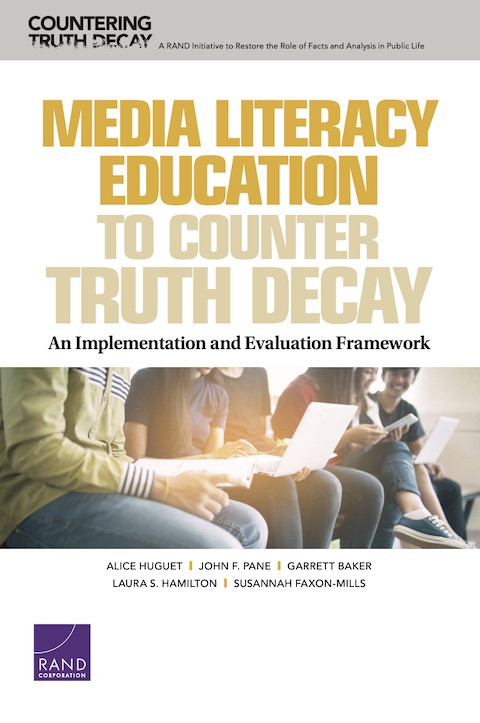 Media Literacy Education to Counter Truth Decay: An Implementation and Evaluation Framework Year of publication: 2021 Author: Alice Huguet | John F. Pane | Garrett Baker | Laura S. Hamilton | Susannah Faxon-Mills Corporate author: RAND Corporation Media literacy (ML) education has emerged as a promising approach to slowing the spread of Truth Decay, described as the diminishing role that facts, data, and analysis play in political and civil discourse. Several factors contribute to Truth Decay, including a rapidly evolving information ecosystem and overburdened educational institutions. Many teachers believe their students lack the complex skills that are necessary to navigate today’s information- saturated world. This gap—between students’ existing competencies and those required to engage responsibly in a fast-paced media environment— could lead to negative consequences for individuals and society writ large.However, teachers report a lack of guidance around promoting ML education in their practice, and rigorous research about what kinds of ML educationwork best, and in what conditions, remains limited. This report presents a framework for implementing and evaluating ML educational efforts. Following an introduction to the framework, the authors discuss six steps of ML implementation and evaluation: setting ML learning expectations; identifying conditions that can influence ML instructional efforts; exploring instructional resources; identifying measures of ML competencies; monitoring progress; and finally, measuring the summative impacts of ML education on student learning. By bringing this information together for implementors—such as district decisionmakers and teachers—as well as evaluators, the authors emphasize the important connections between these too often separate groups.
 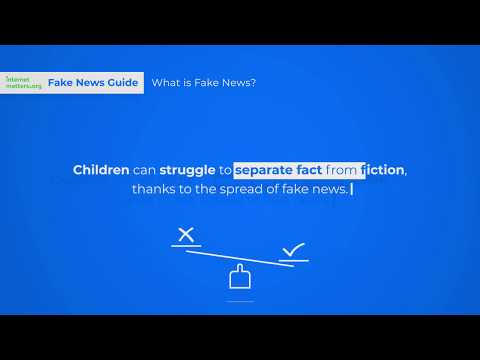 How to Help Kids Spot Fake News and Misinformation Year of publication: 2020 Corporate author: Internet Matters This video gives practical tips on how to help children spot fake news and avoid being misled into believing something that might impact their wellbeing.
 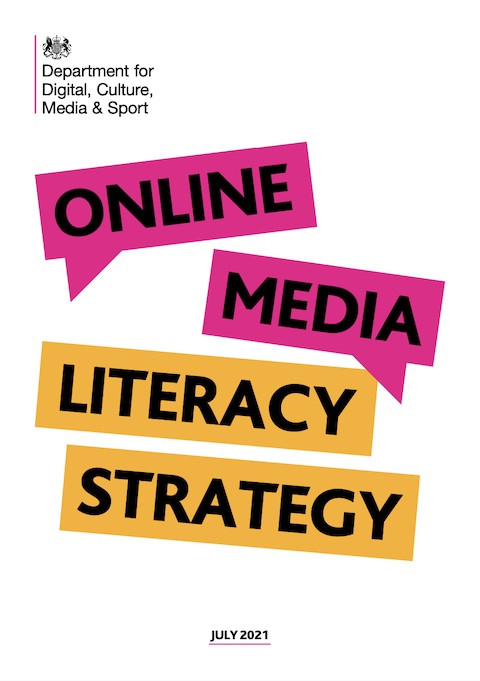 Online Media Literacy Strategy Year of publication: 2021 Corporate author: Government of the United Kingdom The Online Harms White Paper set out a commitment to develop an Online Media Literacy Strategy ahead of the implementation of the online harms regulator. The aim of the strategy is to educate and empower internet users across the UK to manage their online safety. Over 170 organisations are currently involved in delivering media literacy education in the UK. The Media Literacy Strategy sets out the government’s multi-year plan to bring coordination to the media literacy landscape and outlines a Media Literacy Framework of best practice principles to inform the content and delivery of media literacy education.
 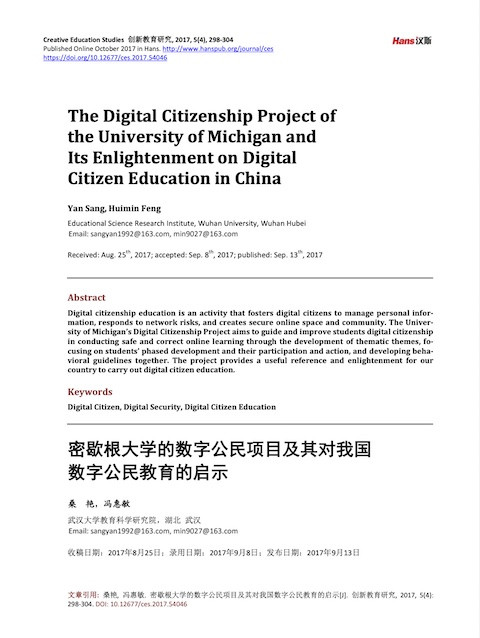 The Digital Citizenship Project of the University of Michigan and Its Enlightenment on Digital Citizen Education in China (Creative Education Studies; vol. 5, no. 4) Year of publication: 2017 Author: Yan Sang | Huimin Feng Digital citizenship education is an activity that fosters digital citizens to manage personal infor- mation, responds to network risks, and creates secure online space and community. The Univer- sity of Michigan’s Digital Citizenship Project aims to guide and improve students digital citizenship in conducting safe and correct online learning through the development of thematic themes, fo- cusing on students’ phased development and their participation and action, and developing beha- vioral guidelines together. The project provides a useful reference and enlightenment for our country to carry out digital citizen education. 密歇根大学的数字公民项目及其对我国数字公民教育的启示 (创新教育研究; vol. 5. no. 4) Year of publication: 2017 Author: Yan Sang | Huimin Feng 数字公民教育是培养数字公民管理个人信息、应对网络风险、打造安全的在线空间和社区的活动。密歇 根大学的数字公民项目,通过制定特色主题、关注学生的阶段性发展、注重学生参与和行动、共同制定 行为准则等活动,旨在引导学生进行安全的、正确的在线方式的学习,提高学生的数字公民素养。该项 目为我国开展数字公民教育提供了有益的借鉴和启示。
 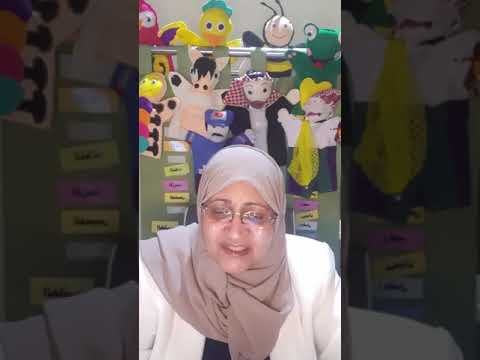 [فيديو] استراتيجية التعلم باللعب Year of publication: 2021 Author: Mama Fowzia تستعرض الأستاذة المختصة في التربية المبكرة استراتيجية التعلم باللعب المستخدمة في رياض الأطفال. تبدأ الأستاذة بالتعريف بالاستراتيجية. ومن ثم تعرض طرق وأساليب التعلم باللعب التي يمكن للمعلمات استخدامها.