
Resources
Explore a wide range of valuable resources on GCED to deepen your understanding and enhance your research, advocacy, teaching, and learning.
730 Results found
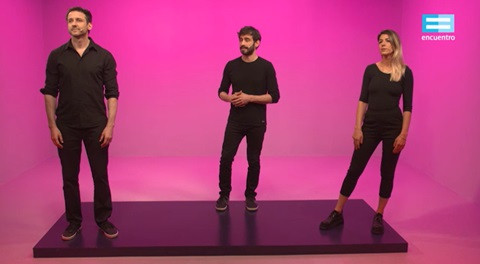 Migrations and Displacements: Racism and Discrimination Year of publication: 2021 Corporate author: Argentina. Ministry of Education This video describes the phenomenon of migration within the framework of global citizenship. It was produced within the framework of the Seguimos Educando Program, which during 2020 and 2021 allowed, through different means, students to remain in contact with school. The proposed activities and content are guided by the Priority Learning Cores common to the entire country. Migraciones y desplazamientos: Racismo y discrimanción Year of publication: 2021 Corporate author: Argentina. Ministry of Education Este video describe el fenómeno de las migraciones en el marco de una ciudadanía global. Fue elaborado en el marco del Programa Seguimos Educando, que durante 2020 y 2021 permitió, a través de distintos medios, que las y los estudiantes siguieran en contacto con la escuela. Las actividades y contenidos propuestos están orientados por los Núcleos de Aprendizajes Prioritarios comunes para todo el país.
  Podcast: Learning for the Future; Digital Citizenship; Tools to Prevent and Eradicate Cyberbullying Year of publication: 2022 Author: Alheli Arona | Patricio Romero Corporate author: Chile Foundation | Educarchile One of the dimensions of digital citizenship is protection and security. This includes digital harassment or cyberbullying, a problem that affected more than 22% of students in Chile during the months of October and December 2021, according to the Citizen Participation Survey “Together against cyberbullying and digital violence” applied by the Superintendency of Education. What can we, as teachers, management teams and education professionals, do to prevent and eradicate this type of violence and help our students? Podcast: Aprendizaje para el futuro; Ciudadanía digital; Herramientas para prevenir e irradicar el ciberacoso Year of publication: 2022 Author: Alheli Arona | Patricio Romero Corporate author: Chile Foundation | Educarchile Una de las dimensiones de la ciudadanía digital es la protección y la seguridad. Dentro de esta se encuentra el acoso digital o ciberacoso, un problema que durante los meses de octubre y diciembre de 2021 afectó a más de un 22% de estudiantes en Chile según la Encuesta de Participación Ciudadana “Juntos frente al ciberacoso y la violencia digital” aplicada por la Superintendencia de Educación. ¿Qué podemos hacer las y los docentes, equipos directivos y profesionales de la educación para prevenir y erradicar este tipo de violencia y ayudar a nuestros estudiantes?
  The Butterfly Effect on Social Networks Year of publication: 2021 Corporate author: Canada Learning Code This video shows the dangers of the internet and social networks through the story of 12-year-old Amira in the form of a comic strip. L'effet papillon sur les réseaux sociaux Year of publication: 2021 Corporate author: Canada Learning Code Cette vidéo montre les dangers d'internet et des réseaux sociaux à travers l'histoire d'Amira 12 ans sous la forme d'une bande dessinée.
 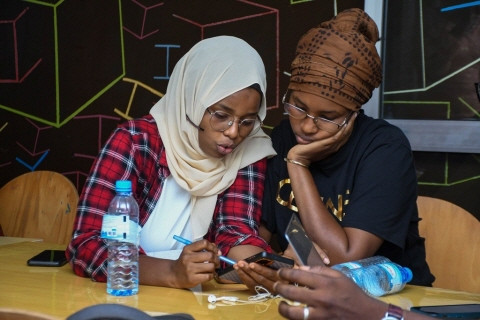 Fighting Against Disinformation and Hate Speech Year of publication: 2024 Corporate author: Association of Guinean Bloggers (ABLOGUI) This online MOOC is completely free. It is offered by the Association des Blogueurs de Guinée (ABLOGUI) through the IMPACT project (Implication of Digital Media in the Active Prevention of Conflicts and Tensions). It aims at raising awareness among young Guineans of the dangers of misinformation and hate speech, and to equip them with the knowledge and skills they need to combat information disorder in a digital world. Lutte contre la désinformation et les propos haineux Year of publication: 2024 Corporate author: Association of Guinean Bloggers (ABLOGUI) Ce MOOC en ligne est entièrement gratuit. Il est proposé par l'Association des Blogueurs de Guinée (ABLOGUI) dans le cadre du projet IMPACT (Implication des médias numériques dans la prévention active des conflits et des tensions). Il vise à sensibiliser les jeunes Guinéens aux dangers de la désinformation et des discours de haine, et à les doter des connaissances et des compétences nécessaires pour lutter contre le désordre de l'information dans un monde numérique.
  Are Journalists Objective?: The Keys to the Media Year of publication: 2021 Corporate author: Centre pour l’éducation aux médias et à l’information (CLEMI) Dans cette vidéo proposée par Clemi nous suivons l'arrivée d'une nouvelle professeur de mathématiques dans un collège. Chacun a un avis très tranché sur elle. Kamel l’adore, Cindy ne comprend rien à ce qu’elle raconte, Leonard la trouve sévère et Fama l’aime bien. Qui a raison, qui a tort ? Peut-être un peu tout le monde… Chacun la regarde selon son point de vue. Cette comparaison permet de s'interroger sur l'objectivité des médias. In this video from Clemi, we follow the arrival of a new maths teacher at a secondary school. Everyone has a very strong opinion of her. Kamel adores her, Cindy doesn't understand a word she says Leonard thinks she's harsh and Fama likes her. Who's right, who's wrong? Maybe a bit of everyone... Everyone looks at her from their own point of view. This comparison raises questions about the objectivity of the media. Les journalistes sont-ils objectifs ? : Les clés des médias Year of publication: 2021 Corporate author: Centre pour l’éducation aux médias et à l’information (CLEMI) Dans cette vidéo proposée par Clemi nous suivons l'arrivée d'une nouvelle professeur de mathématiques dans un collège. Chacun a un avis très tranché sur elle. Kamel l’adore, Cindy ne comprend rien à ce qu’elle raconte, Leonard la trouve sévère et Fama l’aime bien. Qui a raison, qui a tort ? Peut-être un peu tout le monde… Chacun la regarde selon son point de vue. Cette comparaison permet de s'interroger sur l'objectivité des médias. In this video from Clemi, we follow the arrival of a new maths teacher at a secondary school. Everyone has a very strong opinion of her. Kamel adores her, Cindy doesn't understand a word she says Leonard thinks she's harsh and Fama likes her. Who's right, who's wrong? Maybe a bit of everyone... Everyone looks at her from their own point of view. This comparison raises questions about the objectivity of the media.