
Resources
Explore a wide range of valuable resources on GCED to deepen your understanding and enhance your research, advocacy, teaching, and learning.
2,194 Results found
 2020 Online SSAEM Conference: Teaching Across Borders; Final Report (November 24-30, 2020) Year of publication: 2020 Corporate author: APCEIU | Korea R. Ministry of Education 2020 Online SSAEM (Sharing Stories of Asia-Pacific Education Movements) Conference is a space for examining and sharing the educational outcomes of the participating teachers and schools of the Programme. This Conference, which has been held annually since 2014, aims to provide an excellent opportunity for the Programme participants and stakeholders to showcase the impact of the Programme and to explore methods on strengthening cooperation for further development of the Programme. Main Programme included the Panel Discussion of the Ministry representatives of the 8 countries, the Presentation and Live Talk show of 2012-2019 programme alumni, and the exhibition of various educational materials etc. More than 450 teachers participated and their educational network has strengthened. Table of Contents PrologueWhat is 「Asia-Pacific Teacher Exchange about」?Ⅰ. 2020 Online SSAEM ConferenceBackground and ObjectivesConference OutlineConference ContentsConference OutcomesⅡ. Presentations by Exchange TeachersDay 1Day 2Day 3 2020 온라인 쌤(SSAEM) 컨퍼런스: 최종보고서 Year of publication: 2020 Corporate author: 유네스코 아시아태평양 국제이해교육원 | 대한민국 교육부 쌤 컨퍼런스(SSAEM Conference)는 「다문화가정 대상국가와의 교육교류사업」 종합 성과보고회로서, 교류국가 교육부 관계자를 비롯한 국내·외 사업 참가교사가 사업 참가 경험 및 활동을 소개하는 소통의 장이다. 비대면으로 개최된 2020 온라인 쌤 컨퍼런스에서는, 8개국 교육부 관계자의 사업 성과 공유 패널토론, 2012~2019 사업 참가 교사의 후속활동 발표, 아태지역으로 파견되었던 한국 교사들의 라이브 토크쇼, 교육활동 결과물 전시, 촉하공연, 영상·사진 공모전, 포토 방명록 등이 진행되었다. 2020 온라인 쌤 컨퍼런스를 통해, 약 450명의 국내외 사업 참가 교사들이 네트워킹 하였으며, 사업성과 공유 및 비전 수립 등이 이루어졌다. 목차프롤로그Ⅰ. 2020 Online SSAEM Conference행사배경 및 목적행사개요행사내용행사 주요성과Ⅱ. 활동발표1일차2일차3일차
 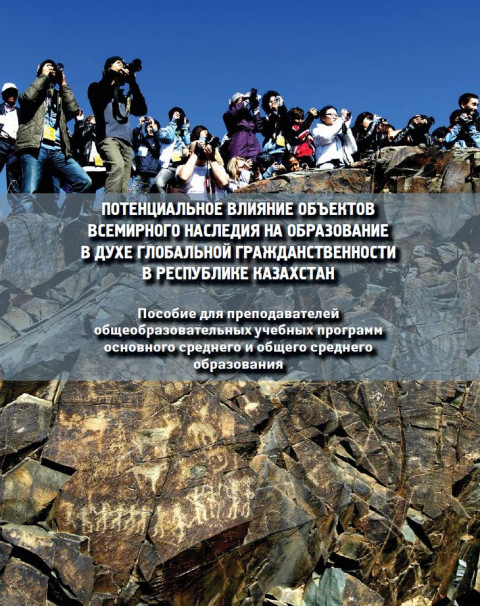 Potential Influence of World Heritage Sites over the Global Citizenship Education in the Republic of Kazakhstan: Manual for Teachers of General Secondary and High school Education Programmes Year of publication: 2017 Author: Baipakov K.M. | Voyakin D.A. | Massanov M.N. | Sarsenova E.A. | Shaigozova Z.N. Corporate author: APCEIU | National World Heritage Committee (Kazakhstan) Present publication is a manual for teachers for of general secondary and high school education programmes of the Republic of Kazakhstan and Central Asia. It aims to raise awareness of teachers and students on the issue of local cultural and natural heritage, and Global Citizenship Education Concept, and to introduce World Heritage and Global Citizenship Education topics to the general secondary and high school education programmes of Kazakhstan. For Kazakhstan and Central Asian, it is a first attempt to understand the potential contribution of UNESCO World Heritage Sites to the Global Citizenship Education.This publication can be separated in three parts. First part presents general description of UNESCO and its cooperation with the Republic of Kazakhstan. It pays particular attention to each Kazakhstan’s site from the UNESCO World Heritage list. Second part covers Global Citizenship Education concept, and main international trends in field of school education in the world. Third part of this publication provides practical guide on the ways that Kazakhstan’s teachers of general secondary and high school education programmes can use World and Intangible Heritage for promotion of global citizenship concept among their students. All three examples of education courses were made as much different from each other as possible in order to provide to Kazakhstan’s teachers a wider choice for preparation of their own classes dedicated to the World Heritage sites and Global Citizenship Education.
 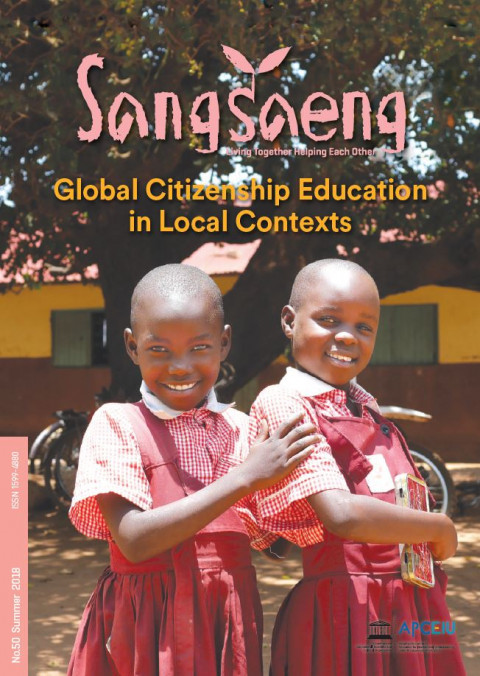 Global Citizenship Education in Local Contexts (SangSaeng no. 50 summer 2018) Year of publication: 2018 Corporate author: APCEIU The 50th issue of SangSaeng has been published with the theme “Global Citizenship Education in Local Contexts.” This edition reviews the divergent efforts to implement Global Citizenship Education(GCED) in the indigenous context of each region. Readers are invited to explore the fields of GCED from national and regional perspectives, as well as in formal, non-formal and informal education. 3 Director’s Message4 Special ColumnEngaging Learners’ Hearts and Minds8 Focus : Global Citizenship Education in Local Context8 Embracing Global Citizenship Education in a Tough Place12 Teaching Teachers to Teach GCED15 GCED Shapes New Cambodian History Curriculum19 Constructing Defences of Peace in the Minds of Future Leaders 22 Special ReportWhy [Use] Comics in School?26 Best Practices26 Beyond Zombie Apocalypse30 Transforming Space into Meaningful Learning Place34 InterviewThrough the Lens, Out of Africa, into Our Hearts and Minds38 LetterTowards a Green, Peaceful and Just World through GCED 40 Youth NetworkYouth for Learning, Exchanging, Growing and Taking Action43 Peace in my MemoryUnwanted Nation Living in Own Land47 Understanding the Asia-Pacific RegionTatau: A Pacific Journey50 APCEIU in Action Education à la citoyenneté mondiale dans des contextes locaux (SangSaeng N° 50 Eté 2018) Year of publication: 2018 Corporate author: APCEIU SangSaeng (상생), mot coréen d’origine chinoise, se compose de deux caractères : Sang (相), qui signifie « mutual » (les uns les autres) et Saeng (生), qui signifie « vie ». Mis ensemble, ils signifient « vivre ensemble », « s’entraider ». C’est notre vision pour la région Asie-Pacifique. SangSaeng (相生) se veut une plateforme de débats constructifs sur les sujets, méthodes et expériences dans le domaine de l’éducation à la compréhension internationale. SangSaeng vise aussi à promouvoir l’Éducation à la citoyenneté mondiale, une des trois priorités de l’Initiative mondiale pour l’éducation avant tout, lancée par les Nations Unies en 2012. SangSaeng est publié deux fois par an par le Centre Asie-Pacifique d’éducation pour la compréhension internationale (APCEIU) sous l’égide de l’UNESCO. Version française produite par le Bureau régional de l'UNESCO pour l'Afrique de l'Ouest (Sahel) et édiitée avec l'appui de l'APCEIU. 3 MESSAGE DU DIRECTEUR4 RUBRIQUE SPECIALE Susciter l'engagement du coeur et de l'esprit des apprenants8 FOCUS: ÉDUCATION À LA CITOYENNETÉ MONDIALE DANS DES CONTEXTES LOCAUX 8 ADOPTER L'EDUCATION À LA CITOYENNETÉ MONDIALE DANS UN CONTEXTE DIFFICILE Les écoles des camps de réfugiés ougandais renoncent à la différentiation et s'orientent vers une coexistance pacifique 12 APPRENDRE AUX ENSEIGNANTS À ENSEIGNER L’ECM Changer les temps implique de mettre en oeuvre et s'adapter au nouveau programme d'enseignement de l’ECM dans la nouvelle Corée 15 L’ECM FAÇONNE LE NOUVEAU PROGRAMME D'HISTOIRE DU CAMBODGE L'histoire a pris vie grâce à un nouveau programme d'enseignement qui prépare l'avenir avec un regard sur le passé 19 CONSTRUIRE DES DÉFENSES DE LA PAIX DANS L'ESPRIT DES FUTURS DIRIGEANTS Eduquer les jeunes à relever les défis de la paix et de la sécurité en Afrique de l'Ouest et dans le Sahel 22 REPORTAGE SPÉCIAL Pourquoi (utiliser) des bandes dessinées dans les écoles?26 BONNES PRATIQUES 26 Au-del à de l'apocalypse Zombie 30 Transformer l'espace en un lieu d'apprentissage significatif33 ENTRETIEN À travers l'objectif, en dehors de l'Afrique, dans nos coeurs et nos esprits38 LETTRE Vers un monde vert, pacifique et juste grâce à l’ECM 40 RÉSEAU DE JEUNES Des jeunes apprennent, échangent, grandissent et passent à l'action43 LA PAIX DANS MA MÉMOIRE Une nation non désirée sur ses propres terres47 COMPRENDRE LA REGION ASIE-PACIFIQUE Tatau : un voyage dans le Pacifique50 APCEIU EN ACTION 지역적 맥락 속에서의 세계시민교육 (상생 제50호 2018년 여름호) Year of publication: 2018 Corporate author: 유네스코 아시아태평양 국제이해교육원 3 발간사4 스페셜 칼럼: 학습자들의 머리와 마음을 사로잡는 교육8 포커스: 지역적 맥락 속에서 이루어지는 세계시민교육8 난관 속에서 세계시민교육을 수용하기12 교사들에게 가르치는 세계시민교육15 세계시민교육을 통해 제정된 캄보디아 역사교육과정19 미래의 지도자들의 마음 속에 평화의 방벽 쌓기 22 스페셜 리포트: 왜 학교에서 만화를 활용하는 것일까?26 모범사례26 좀비 재앙을 넘어서30 공간을 뜻깊은 배움의 장소로 탈바꿈하다34 인터뷰: 카메라 렌즈를 거쳐, 아프리카로부터 우리의 마음에게38 APCEIU에 보내는 편지 : 세계시민교육을 통해 친환경적이고, 평화롭고, 정의로운 세상으로 나아가기 40 유스 네트워크: 배우고, 주고 받고, 성장하고, 행동하는 청년들43 내 기억 속의 평화: 자기 땅에서 환영 받지 못하는 국가47 아시아-태평양 국가 지역 이해하기: 타투 : 태평양 지역에서의 여정50 교육원 활동
  APCEIU-MNUAC Joint Research on Establishing the Foundation for Promoting Global Citizenship Education in Higher Education Institutions in Mongolia Year of publication: 2025 Author: Daehoon Jho | Jihyang Lee | Odsuren Dagmid | Mandukhai Baldandorj | Tumennast Dashtsenden | Amartuvshin Myagmarsuren | Delgertsetseg Choijilsuren | Punsaldulam Binderiya Corporate author: APCEIU | Mongolia National University of Arts and Culture (MNUAC) This report reviews the integration of global citizenship education (GCED) in higher education and examines various approaches to establishing a foundation for promoting GCED in Mongolian HEIs. To this end, the study conducted a situational analysis on the current status of GCED at MNUAC. Based on this analysis, the report proposes a GCED integration roadmap for MNAUC, outlining a sequenced pathway that begins with achievable initiatives while also offering insights for other HEIs in Mongolia. The report is available in both English and Mongolian.
  Supporting Change in Practice: Case Studies on the Use of the ACER-APCEIU Global Citizenship Education Monitoring Toolkit: Country Case-Republic of Korea Year of publication: 2025 Author: Suyeon Park | Sunmi Ji | Yoonyoung Lee Corporate author: APCEIU APCEIU is pleased to announce the release of its new publications, Supporting Change in Practice: Case Studies on the Use of the ACER-APCEIU Global Citizenship Education Monitoring Toolkit, which shares key findings from the research conducted in Australia and the Republic of Korea. The two reports, based on case studies from two countries, build upon the three-phase Asia-Pacific GCED Monitoring Project (2022–2024) jointly undertaken by ACER and APCEIU to strengthen monitoring and evaluation of GCED and support progress toward SDG 4.7 across the region. The three phases of the initiative identified enabling conditions for GCED, validated the regional GCED Monitoring Framework, and developed the ACER-APCEIU GCED Monitoring Toolkit. The reports for each phase can be found here: Phase I, Phase II, and Phase III. The newly released reports move the project forward by examining how the Toolkit can be practically applied in real educational settings. The study aimed to examine how the Toolkit could be used to support collaboration among key education stakeholders—teachers, school leaders, and education supervisors—in 1) goal setting, 2) planning, 3) implementing, and 4) reflecting on GCED practices. Through this process, the research sought to understand how the Toolkit could help strengthen the connection between policy commitments and everyday educational practice, supporting teachers, school leaders, and system leaders to embed GCED more systematically and sustainably within their existing framework. Both studies conducted in Australia and the Republic of Korea have been guided by the following research questions: 1. How does the GCED Monitoring Toolkit support key stakeholder groups to collaboratively embed GCED in policy and practice? a. What aspects of the Toolkit enable or challenge stakeholders to achieve their GCED goals and objectives? b. How do key stakeholders perceive its usefulness? 2. Are there any aspects of the Toolkit that stakeholders would change to improve its usefulness in supporting the implementation and contextualisation of GCED in policy and practice?The reports demonstrate how a GCED Monitoring Toolkit can be translated into actionable processes within real educational settings. It offers valuable insights for policymakers, school leaders, teachers, and researchers aiming to monitor and strengthen GCED implementation and systematically embed GCED within their educational ecosystems.
  Supporting Change in Practice: Case Studies on the Use of the ACER-APCEIU Global Citizenship Education Monitoring Toolkit; Country Case-Australia Year of publication: 2025 Author: Rachel Parker | Karena Menzie-Ballantyne Corporate author: APCEIU APCEIU published Supporting Change in Practice: Case Studies on the Use of the ACER-APCEIU Global Citizenship Education Monitoring Toolkit, which shares key findings from the research conducted in Australia and the Republic of Korea. The two reports, based on case studies from two countries, build upon the three-phase Asia-Pacific GCED Monitoring Project (2022–2024) jointly undertaken by ACER and APCEIU to strengthen monitoring and evaluation of GCED and support progress toward SDG 4.7 across the region. The three phases of the initiative identified enabling conditions for GCED, validated the regional GCED Monitoring Framework, and developed the ACER-APCEIU GCED Monitoring Toolkit. The reports for each phase can be found here: Phase I, Phase II, and Phase III.The reports move the project forward by examining how the Toolkit can be practically applied in real educational settings. The study aimed to examine how the Toolkit could be used to support collaboration among key education stakeholders—teachers, school leaders, and education supervisors—in 1) goal setting, 2) planning, 3) implementing, and 4) reflecting on GCED practices. Through this process, the research sought to understand how the Toolkit could help strengthen the connection between policy commitments and everyday educational practice, supporting teachers, school leaders, and system leaders to embed GCED more systematically and sustainably within their existing framework. Both studies conducted in Australia and the Republic of Korea have been guided by the following research questions: How does the GCED Monitoring Toolkit support key stakeholder groups to collaboratively embed GCED in policy and practice? a. What aspects of the Toolkit enable or challenge stakeholders to achieve their GCED goals and objectives? b. How do key stakeholders perceive its usefulness?Are there any aspects of the Toolkit that stakeholders would change to improve its usefulness in supporting the implementation and contextualisation of GCED in policy and practice?The reports demonstrate how a GCED Monitoring Toolkit can be translated into actionable processes within real educational settings. It offers valuable insights for policymakers, school leaders, teachers, and researchers aiming to monitor and strengthen GCED implementation and systematically embed GCED within their educational ecosystems.
  Educator's Guide to Global Citizenship Education: From Asia-Pacific Perspectives Year of publication: 2025 Author: Athapol Anunthavorasakul | Keith C. Barton | Sicong Chen | Suzanne S. Choo | Thippapan Chuosavasdi | Li-Ching Ho | Aigul Kulnazarova | Mousumi Mukherjee | Mousumi Roy | Tania Saeed | Tanya Wendt Samu | Kyujoo Seol | Jun Teng Corporate author: APCEIU Educators’ Guide to Global Citizenship Education from Asia-Pacific Perspectives is designed to translate rich discussions from Rethinking Global Citizenship Education from Asia-Pacific Perspectives (2024) into a more accessible resource for educators. This Guide supports educators by presenting scholarly insights in practical and actionable ways. Serving as a bridge between theory and practice, it helps educators grasp key ideas of global citizenship education (GCED) from Asia-Pacific perspectives, reflect on their relevance to their own contexts, and apply them through concrete activities, stories, cases examples, and instructional strategies. This Guide, which is grounded in the diverse philosophies, religions, and lived realities of the Asia-Pacific region, is intended to serve as a practical companion that helps educators understand GCED from a decolonial perspective, adapt its ideas to their own contexts, and translate it all into meaningful learning experiences for their learners. It is our sincere hope that this Guide fosters ongoing dialogue, experimentation, and collaboration, and that it contributes to nurturing learners who think critically, act with empathy and justice, and participate responsibly in shaping a more harmonious and sustainable world.