
Resources
Explore a wide range of valuable resources on GCED to deepen your understanding and enhance your research, advocacy, teaching, and learning.
2,161 Results found
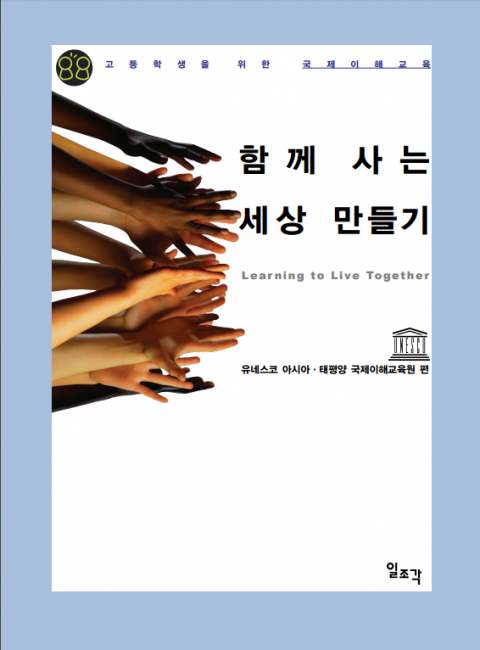 함께 사는 세상 만들기 Year of publication: 2004 Corporate author: 유네스코 아시아태평양 국제이해교육원 유네스코 아시아태평양 국제이해교육원에서는 국제이해교육을 가르치는 교사와 배우고자 하는 고등학생들에게 도움을 주기 위하여 고등학생을 위한 국제이해교육 교재를 출간하게 되었습니다우리 교육원은 아시아·태평양 지역의 45개 나라들과 함께 국제이해교육을 학교와 시민사회에서 강화하고 발전시킬 책임을 부여받았기 때문에, 여러가지 국제 회의와 연수과정, 전문가 협의회 등을 통해 이 과목의 교육 내용과 교과 과정에 대한 그림을 그려보는 노력을 부단히 전개하고 있습니다. 우리 교육원은 국내·외 여러 전문가들과 함께 많은 토론을 거쳐 국제이해교육의 기본 골격을 ① 문화 간 이해, ② 세계화, ③ 인권, ④ 평화, ⑤ 지속가능발전의 다섯 가지로 정했으며, 이를 바탕으로 초·중·고 국제이해교육 교육과정을 개발했습니다.우리 교육원은 앞으로 수년간 이러한 토대 위에서 교육자료나 수업 모형 등을 개발해보려고 합니다. 이번에 발간되는 교재 『함께 사는 세상 만들기』도 이러한 노력의 한 결실입니다. 이 책이 세계화 시대의 사회구조와 문제들을 파악하고, 함께 살 수 있는 가치관과 태도를 길러주는 데 크게 도움이 될 수 있기를 바랍니다.
  Electronic resources on education for sustainable development Year of publication: 2007 Corporate author: APCEIU | UNESCO Bangkok The Asia-Pacific Programme of Educational Innovation for Development (APEID) of UNESCO Bangkok and the Asia-Pacific Centre of Education for International Understanding (APCEIU) collaborated to produce this document listing these electronic resources. The value of such resources is not limited to teachers alone; it is also useful to policy and decision makers, teacher educators, researchers and academics as well as students themselves. Les ressources électroniques sur l'éducation pour le développement durable Year of publication: 2007 Corporate author: Centre Asie-Pacifique d'éducation pour la compréhension internationale (APCEIU) | UNESCO Bangkok Le Programme d'innovation éducative en vue du développement en Asie et dans le Pacifique(APEID)e l'UNESCO à Bangkok et le Centre d'Asie-Pacifique pour la Compréhension Internationale(APCECI) ont collaboré pour produire ce document énumérant ces ressources électroniques. La valeur de ces ressources ne se limite pas aux seuls enseignants; il est également utile pour les politiques et les décideurs, formateurs d'enseignants, des chercheurs et des universitaires ainsi que des étudiants eux-mêmes.
  세계시민교육 학교 만들기 가이드 -전학교적 접근으로 실천하는 세계시민교육 Year of publication: 2018 Corporate author: 유네스코 아시아태평양 국제이해교육원 '전학교적 접근으로 실천하는 세계시민교육'이라는 부제를 갖고 있는 본 도서는 학교 차원에서 세계시민교육을 실천할 때 참고할 수 있는 유용한 가이드를 제공한다. 세계시민교육은 지식뿐 아니라 가치관, 태도, 행동의 변화까지 아우르기 때문에 교실을 넘어 학교, 가정, 지역사회까지 그 실천 범위가 확장되었을 때 더욱 효과적이다. 본 도서는 세계시민교육의 범위를 확장시켜 전학교적으로 실천하기 위한 전략과 활동 계획 구축에 대한 가이드를 구체적으로 제공하고 있다. 또한, 현장의 목소리를 담아 세계시민교육을 실천하며 겪었던 어려움, 고민, 극복 방안, 참고 사례 등을 나누고자 하였다. 여는 글PART I. 함께 그려보는 세계시민교육 학교의 비전Step 1_세계시민교육 학교, 왜 필요한가요?Step 2_세계시민교육 학교, 누가 만들 수 있나요?Step 3_세계시민교육 학교, 어떻게 만들 수 있나요?Step 4_세계시민교육 학교, 무엇을 하면 되나요? PART II. 학교에 부는 변화의 바람Story 1_아이들을 위한 변화를 만드는 교사 Story 2_학교 변화의 디자이너, 교장Story 3_다시 생각하는 학교의 역할
  Global Citizenship Education: A Guide for Trainers Year of publication: 2018 Corporate author: APCEIU APCEIU has published Global Citizenship Education: A Guide for Trainers in order to aid trainers to conduct introductory workshops for educators on Global Citizenship Education (GCED). Designed as a training manual for trainers, the Guide offers overview of GCED, including backgrounds and core concepts as well as pedagogical principles, but also provides guidelines on the workshop design and facilitation. Consisting of five chapters, the Guide first introduces the rise of GCED within the latest shift in education and global development agendas. Under this framework, the next chapter explores the meanings of a ‘global citizen’ and ‘global citizenship,’ and introduces key concepts and principles of GCED. The next two chapters deal with how to teach GCED, presenting topic areas and themes as well as pedagogies and strategies. The Guide concludes with the last chapter that summarizes and integrates the contents learned in previous chapters by sharing case studies as examples and providing guidelines on how to design GCED activities.The Guide is available in English and French. <Contents> Chapter 1- Why GCED Now?Chapter 2- What is GCED?Chapter 3- GCED: What to Teach?Chapter 4- How to Teach GCED?Chapter 5- Preparing for ActionAnnex: Global Education AgendasUNESCO’s Topics and Learning ObjectivesGCED Resources & Reference Materials ECM: Un guide pour les formateurs Year of publication: 2018 Corporate author: Centre Asie-Pacifique d'éducation pour la compréhension internationale (APCEIU) Ce guide est un manuel de formation pour les formateurs qui organiseront un atelier de formation des éducateurs en éducation à la citoyenneté mondiale (ECM) avec les objectifs suivants: - Présenter les informations de base et les concepts clés de l’ECM aux participants de l’atelier- Aider les participants à découvrir les notions de base de l’ECM et les méthodes constructifs connexes en termes d’enseignement/apprentissage - Encourager les participants à explorer les méthodes et les opportunités à travers lesquelles ils peuvent pratiquer l’ECM à l’école et dans d’autres contextes éducatifs
 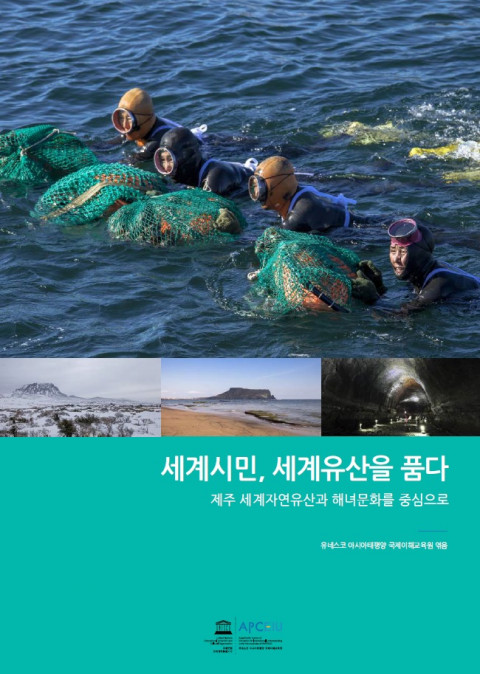 세계시민, 세계유산을 품다 - 제주 세계자연유산과 해녀문화를 중심으로 Year of publication: 2018 Corporate author: 유네스코 아시아태평양 국제이해교육원 유네스코 아시아태평양 국제이해교육원은 세계유산을 활용한 세계시민교육 교재개발 사업으로 “세계시민, 세계유산을 품다”를 출간하였다. 이 책은 세계유산을 단순한 관광의 대상으로 소개하는 것이 아니라, 현장체험, 토론, 조사 등의 다양한 활동을 통해 세계유산이 가진 가치와 의미를 깨달아 세계시민으로 성장하도록 하는 내용으로 구성했다. 세계유산을 통해 국제이해, 평화, 인권, 문화다양성, 지속가능한 발전 등의 보편적 가치를 배우고 내재화하도록 돕는 교재이다.한국의 세계유산을 활용한 이번 세계시민교육 자료는 제주를 중심으로 구성하였다. 제주도는 현재 유네스코 세계자연유산과 인류무형문화유산을 가지고 있다. 이 책은 세계자연유산 ‘제주 화산섬과 용암동굴’과 인류무형문화유산 ‘제주 해녀문화’의 가치를 세계시민교육으로 연계하여 교육함으로써 세계시민의식 함양의 길잡이가 되고자 한다. 특히 유형유산과 무형유산을 통합적으로 연계하여 소개하는 시도를 하였다.이 책의 세계시민교육은 제주세계자연유산과 더불어 제주 해녀문화의 공동체 의식에 주목하고 이를 소개했다. 또한 이 책은 학교 현장의 교사가 세계유산 교육과 세계시민교육을 동시에 하고자 할 때 학습자료로서 도움이 될 것이다. 또한 학생이 세계유산을 통하여 지속가능성을 이해하고, 이를 통하여 세계시민으로 성장하는데 기여할 것이다.
 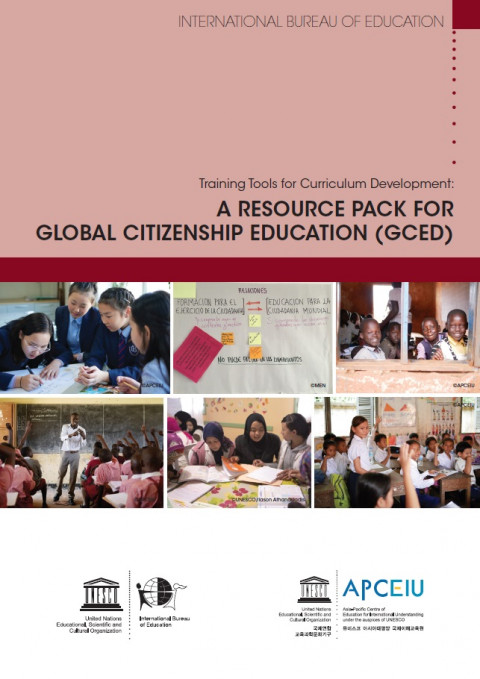 Training Tools for Curriculum Development: A Resource Pack for Global Citizenship Education (GCED) Year of publication: 2018 Corporate author: UNESCO International Bureau of Education (IBE) | APCEIU The overarching objective of ‘A Resource Pack for Global Citizenship Education (GCED)’ is to share a broader understanding of GCED theory and practice, in order to support its effective development and implementation at the policy, school and classroom levels. The Resource Pack provides comprehensive guidance for national policymakers, curriculum specialists and developers, teacher educators, teachers, school leaders and district level administrators.The key topics covered are:Module 1: IntroductionModule 2: National PoliciesModule 3: CurriculumModule 4: Teaching, Learning and AssessmentModule 5: Teaching and Learning ResourcesModule 6: Whole School ApproachModule 7: Teacher Education and Professional Development
 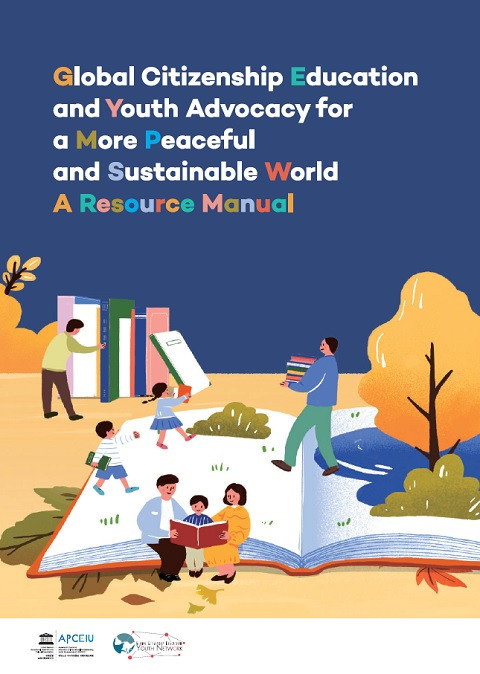 Global Citizenship Education and Youth Advocacy for a More Peaceful and Sustainable World: A Resource Manual Year of publication: 2020 Author: Dylan Wray | Lisa Van Wyk | Rigoberto D. Banta Jr. | Roy Hellenberg | Anna Susarenco | Diego Manrique | Guranda Bursulaia | Noora Elkenawi | Shawgi Ahmed | Tshering Zangmo | Valeriia Moroz Corporate author: APCEIU Since 2016 the Global Citizenship Education (GCED) Youth Network and UNESCO Asia-Pacific Centre of Education for International Understanding(APCEIU) have been working together to support young people to take action to make their communities and the world a better place.This manual, which is the outcome of a joint initiative by the GCED Youth Network and APCEIU, is intended to provide a useful resource for those who teach GCED, for youth organisations that are engaged in advocacy on themes that relate to global citizenship, and those who are supporting youth advocacy.The manual is organized in three main sections: Section 1 focuses on GCED and the teaching of history as a strategy for building a peaceful world.Section 2 provides step by step practical guidelines and ideas for youth advocacy organisations to help them plan advocacy initiatives.Section 3 includes background information and practical ideas for youth advocacy on a series of themes that are relevant to GCED, including empowerment of vulnerable communities, media literacy and peace building. It also considers the role of GCED, and young people, in global crises, using the example of the COVID-19 pandemic, and provides suggestions to help youth advocacy and other organisations to prepare for and respond to such crises
 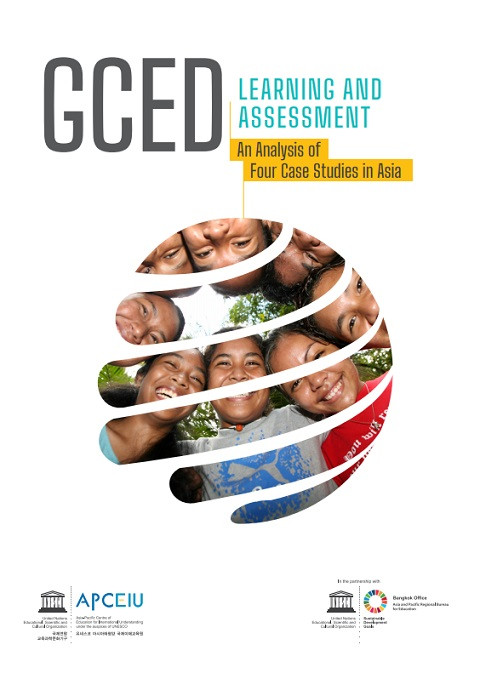 GCED Learning and Assessment: An Analysis of Four Case Studies in Asia Year of publication: 2020 Corporate author: APCEIU | UNESCO Bangkok “GCED Learning and Assessment: An Analysis of Four Case Studies in Asia” is a result report of research jointly led by UNESCO Asia-Pacific Regional Bureau for Education, the Asia-Pacific Centre of Education for International Understanding (APCEIU) and the Asia-Pacific Regional GCED Network. The report encompasses four case studies of GCED Learning in the region and its assessment. Four leading researchers in the field of GCED, Satya Bushan from the National Council of Educational Research and Training (NCERT), India; Sayaka Matsukura of Ageo Oishi Junior High School, Japan; Dawon Kim from Gwangju National University of Education, Republic of Korea; and Le Anh Vinh from the Vietnam National Institute of Educational Science (VNIES), Viet Nam, contributed to this research. Through presenting and sharing the cases of India, Japan, Republic of Korea and Viet Nam, the publication is expected to shed light on the assessment on how GCED is implemented in the region and further inspire and encourage the GCED practitioners on the ground to take another step forward to reflect GCED in their respective educational systems. <List of Contents>ForewordAcknowledgementsAcronymsExecutive summaryChapter 1: IntroductionChapter 2: Schoollevel approaches at integrating GCEDChapter 3: Assessment of GCED learning Chapter 4: Reflections on GCED learning assessment Chapter 5: Conclusions and recommendations References