
Resources
Explore a wide range of valuable resources on GCED to deepen your understanding and enhance your research, advocacy, teaching, and learning.
2,776 Results found
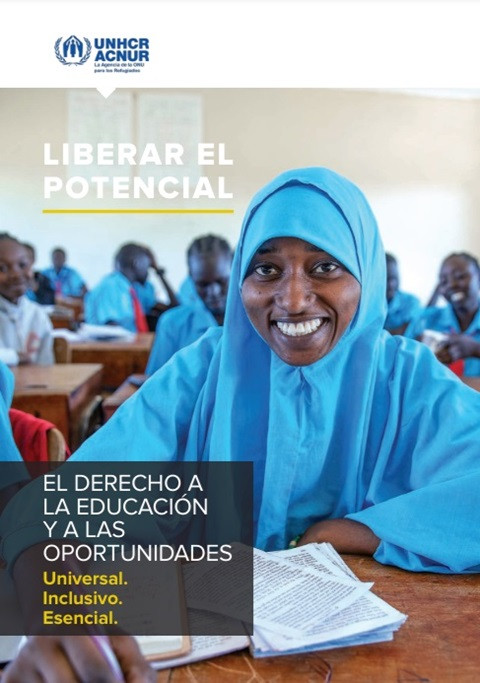 Unleashing Potential: The Right to Education and Opportunity Year of publication: 2023 Corporate author: UN. Office of the United Nations High Commissioner for Refugees (UNHCR) The UNHCR Refugee Education Report 2023 presents the challenges faced by almost 15 million school-aged refugee girls and boys under UNHCR mandate, including others in need of international protection. It also highlights the achievements and aspirations of young refugees who, with the right support, achieved the highest educational goals through perseverance, resilience, determination and enormous effort. Liberar el potencial: El derecho a la educación y a las oportunidades Year of publication: 2023 Corporate author: UN. Office of the United Nations High Commissioner for Refugees (UNHCR) El Informe de Educación de Personas Refugiadas de ACNUR de 2023 presenta los desafíos que enfrentan casi 15 millones de niñas y niños refugiados en edad escolar bajo el mandato de ACNUR, que incluyen a otras personas que necesitan protección internacional. También destaca los logros y las aspiraciones de personas jóvenes refugiadas que, con el apoyo adecuado, lograron los objetivos educativos más altos gracias a la perseverancia, la resiliencia, la determinación y un enorme esfuerzo.
  다문화수용성이 청소년의 난민 태도에 미치는 영향 (시민교육연구; Vol. 56, No. 2) Year of publication: 2024 Author: 홍승표 Corporate author: 한국사회과교육학회 본 연구의 목적은 다문화수용성이 청소년의 난민에 대한 태도에 미치는 차별적 영향력을 규명하고 교육적 시사점을 도출하는 것이다. 이를 위해 여성가족부가 수행한 ‘2021년 국민 다문화수용성 조사’의 청소년 자료를 활용하여 다중회귀분석을 실시하였다. 분석 결과는 다음과 같다. 첫째, 다문화수용성의 하위요인 가운데 다양성 차원에서 문화 개방성은 정적인 효과를 나타낸 반면, 고정관념 및 차별은 부적인 효과를 확인할 수 있었다. 둘째, 관계성 차원에서는 일방적 동화기대 요인이 청소년의 난민에 대한 태도에 부적인 효과를 나타냈다. 셋째, 보편성 차원에서 세계시민 행동의지는 정적인 효과를 나타냈지만 이중적 평가는 부적인 효과를 확인하였다. 본 연구는 이러한 연구 결과를 토대로 청소년의 난민 태도 개선을 위한 교육적 시사점을 도출하였다. 첫째, 이주민과 구별되는 난민의 특성에 대한 교육의 필요성을 제안하였다. 둘째, 수업에서 난민 문제를 다룰 때는 난민의 다양한 상황과 목소리를 학생들이 심층적으로 이해하고 공감할 수 있는 환경 조성이 필요하다. 셋째, 시민교육과 사회과교육에서는 난민 문제와 관련한 윤리적, 사회적 쟁점을 토론하고 이를 통해 학생들이 비판적 사고와 사회적 공감 능력을 육성할 수 있도록 지도해야 한다. 이는 시민교육과 사회과에서 적극적으로 수행할 수 있을 것이다.
 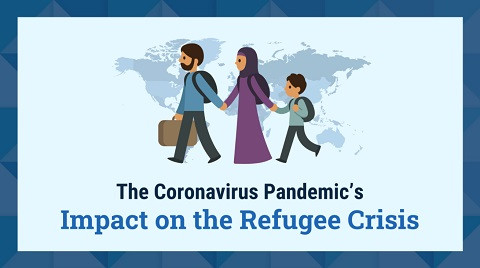 The Coronavirus Pandemic and the Refugee Crisis Year of publication: 2020 Author: Alice Corner Corporate author: Venngage Inc. One group of people most impacted by the Coronavirus Pandemic is the world’s population of refugees and displaced people. There are approximately 25 million refugees in the world, facing unique struggles in access to healthcare, government assistance, and sanitation. Venngage analyzed the data and created this collection of infographics to help paint a fuller picture of COVID-19’s impact on the refugee crisis. This resource includes clear infographics detailing how the conronavirus crisis and refugee crisis relate to each other globally
  문화다양성협약 국내 이행을 위한 논의: 유튜브에서 AI까지, 21세기 한국에서의 문화다양성 Year of publication: 2020 Author: 김재인 | 염신규 | 이광석 | 이동연 | 이상욱 | 홍성수 | 황승흠 Corporate author: 대한민국 문화체육관광부 | 한국문화예술위원회 | 유네스코한국위원회 「문화다양성협약 국내 이행을 위한 논의 - 유튜브에서 AI까지, 21세기 한국에서의 문화다양성」는 모두 세 차례에 걸쳐 진행된 전문가회의에서 각 분야 전문가들이 발표하고 토론한 내용을 담은 종합보고서입니다. 올해는 문화다양성협약의 이행과 관련된 이슈들 중 특히 디지털플랫폼의 급부상, 인공지능 기술의 급격한 발달에 초점을 두어 논의하는 한편, 우리들의 일상을 송두리째 바꿔놓은 코로나19가 낳은 불안과 공포, 이로 인한 적대감이 초래한 소외와 고립, 혐오와 갈등의 문제를 짚어보았습니다. 전문가회의에서 나온 전문가들의 진단과 논의가 앞으로 한국사회에서 문화다양성협약 이행 관련 의제를 주도하는 데 있어서 필요한 비전과 전략 수립에도 기여하기를 기대합니다.
 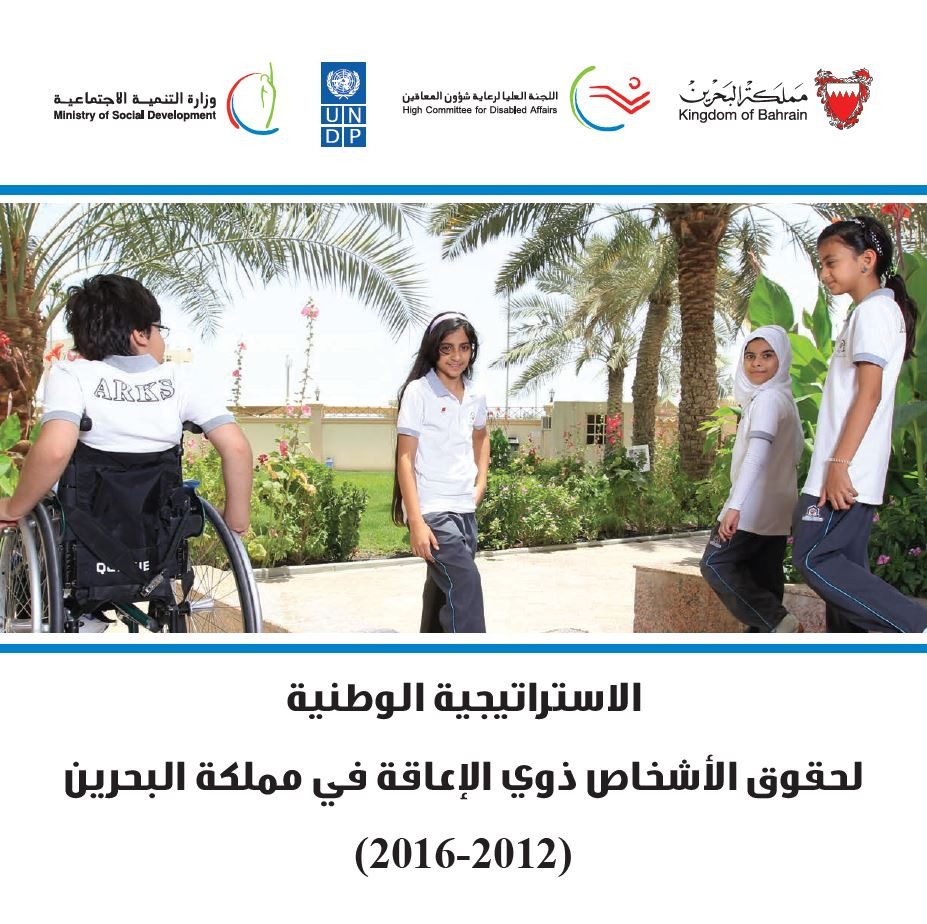 The National Strategy for the Rights of People with Disabilities in the Kingdom of Bahrain (2012-2016) Year of publication: 2012 Corporate author: Bahrain. Ministry of Social Dvelopment The document is a national strategy for the State of Bahrain with regard to the rights of persons with disabilities. This document is based on the Convention on the Rights of Persons with Disabilities, ratified by the Kingdom of Bahrain. This strategy comes in seven axes: legislation, health, rehabilitation, inclusive education, economic empowerment, social empowerment, and the media. الاستراتيجية الوطنية لحقوق الأشخاص ذوي الإعاقة في مملكة البحرين (2012-2016) Year of publication: 2012 Corporate author: Bahrain. Ministry of Social Dvelopment المستند عبارة عن استراتيجية وطنية لدولة البحرين فيما يخص حقوق الأشخاص ذوي الإعاقة. وتستند هذه الوثيقة الى اتفاقية حقوق الاشخاص ذوي الإعاقة والتي صادقت عليها مملكة البحرين. وتأتي هذه الاستراتيجية في سبعة محاور وهي: التشريعات، الصحة، التأهيل، والتربية والتعليم الدامج، والتمكين الاقتصادي، والتمكين الاجتماعي، الاعلام.
 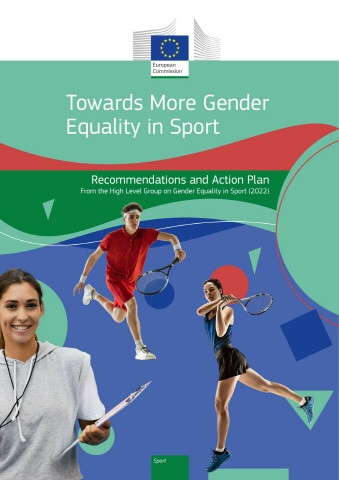 Towards More Gender Equality in Sport: Recommendations and Action Plan From the High Level Group on Gender Equality in Sport (2022) Year of publication: 2022 Corporate author: European Commission | European Union (EU) Gender equality is a fundamental European Union (EU) principle. Enshrined in the Treaties, it is something the EU is actively trying to achieve – most recently through its Gender Equality Strategy 2021-2025. The Strategy aims to give women, men, girls and boys, in all their diversity, the freedom to pursue their chosen path in life and equal opportunities to thrive and to participate in and lead European society. Looking back at the steps already taken, the ‘Gender equality in sport – Proposal for strategic actions 2014-2020’ has certainly led to achievements, but the pace of reforms needs to be accelerated. Firstly, the principle of gender equality now underpins all actions funded under Erasmus+ Sport and projects supporting women’s sport are actively encouraged. Secondly, awareness raising is at the core of EU action in this field, notably through studies or discussions, such as within the Commission Expert Group on Good Governance. Finally, initiatives such as the annual #BeInclusive EU Sport Awards recognise those organisations using sport to increase social inclusion, including gender equality. In 2020, Commissioner Gabriel announced the setting up of an expert group with the aim of discussing the way forward and proposing future actions in the area of gender equality in sport to the European Commission, EU Member States and sports organisations. The work of the experts will lead to the implementation of concrete actions at local, national and European level. This report is the result of the work of the European Commission High-Level Group (HLG) on Gender Equality in Sport. The 15 members of the HLG were appointed in December 2020. Work began in February 2021 and was completed in December 2021. Meetings focused on six areas of engagement identified by the experts. Scientists and practitioners shared findings of their research and good practices. Each meeting was followed by working sessions to summarise the presentations and formulate recommendations. Vers une plus grande égalité des genres dans le sport: Recommandations et plan d'action du groupe de haut niveau sur l’égalité des genres dans le sport (2022) Year of publication: 2022 Corporate author: European Commission | European Union (EU) L’égalité des genres est l’un des principes fondamentaux de l’Union européenne (UE). Inscrite dans les traités, elle constitue un objectif que l’UE s’efforce activement d’atteindre – notamment dans le cadre de sa stratégie en faveur de l’égalité entre les femmes et les hommes 2021-2025. Cette stratégie a pour objectif de donner aux femmes, aux hommes, aux jeunes filles et aux jeunes garçons, dans toute leur diversité, la liberté de suivre le chemin qu’ils ont choisi dans la vie et des chances égales de s’épanouir, de participer à la société européenne et de la diriger. Si l’on considère les mesures déjà prises, le rapport « Égalité des genres dans le sport – Proposition d’actions stratégiques 2014-2020 » a certes permis des avancées, mais le rythme des réformes doit être accéléré. Tout d’abord, le principe de l’égalité des genres sous-tend désormais toutes les actions financées dans le cadre du programme Erasmus+ Sport, et les projets soutenant le sport féminin sont activement encouragés. Ensuite, la sensibilisation est au coeur de l’action de l’UE dans ce domaine, notamment par le biais d’études ou de discussions, comme au sein du groupe d’experts de la Commission sur la bonne gouvernance. Enfin, des initiatives telles que les prix annuels #BeInclusive EU Sport Awards récompensent les organisations qui se servent du sport pour accroître l’inclusion sociale, notamment l’égalité des genres. En 2020, la commissaire Mariya Gabriel a annoncé la création d’un groupe d’experts chargé de déterminer la marche à suivre et de proposer des actions à implémenter dans le domaine de l’égalité des genres dans le sport à la Commission européenne, aux États membres de l’UE et aux organisations sportives. Le travail des experts permettra de mettre en oeuvre des actions concrètes aux niveaux locaux, nationaux et européen. Ce rapport est le résultat du travail du groupe de haut-niveau (GHN) de la Commission européenne sur l’égalité des genres dans le sport. Les 15 membres du groupe de haut-niveau ont été nommés en décembre 2020 Les travaux ont commencé en février 2021 et se sont terminés en décembre 2021. Les réunions ont porté sur six domaines d’engagement identifiés par les experts. Des scientifiques et des praticiens ont partagé le fruit de leurs recherches et leurs bonnes pratiques. Chaque réunion a été suivie par des sessions de travail destinées à résumer les présentations et à formuler des recommandations.
 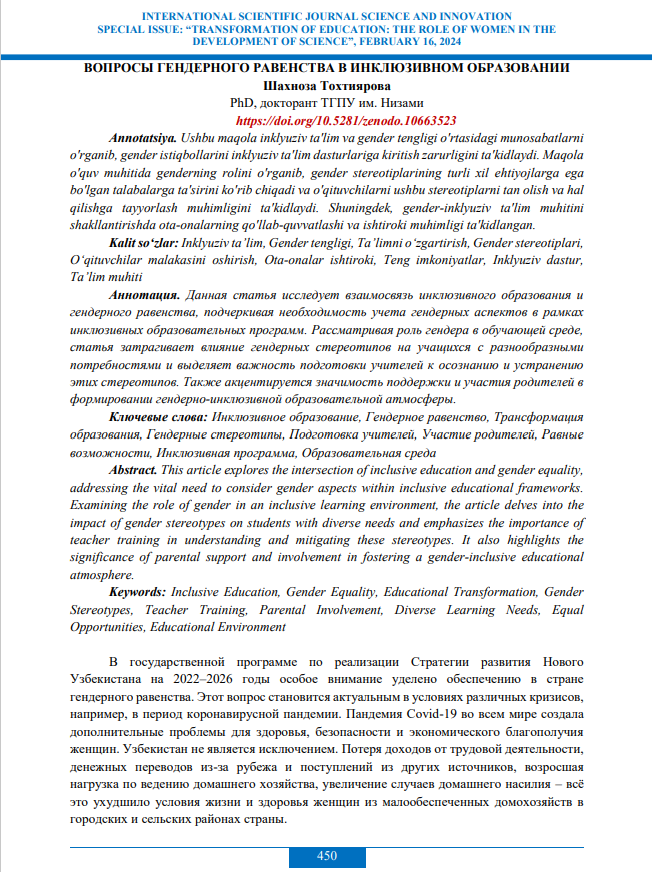 Gender Equality Issues in Inclusive Education Year of publication: 2024 Author: Шахноза Тохтиярова Corporate author: Наука и ииновации This article explores the intersection of inclusive education and gender equality, addressing the vital need to consider gender aspects within inclusive educational frameworks. Examining the role of gender in an inclusive learning environment, the article delves into the impact of gender stereotypes on students with diverse needs and emphasizes the importance of teacher training in understanding and mitigating these stereotypes. It also highlights the significance of parental support and involvement in fostering a gender-inclusive educational atmosphere.