
Resources
Explore a wide range of valuable resources on GCED to deepen your understanding and enhance your research, advocacy, teaching, and learning.
2,161 Results found
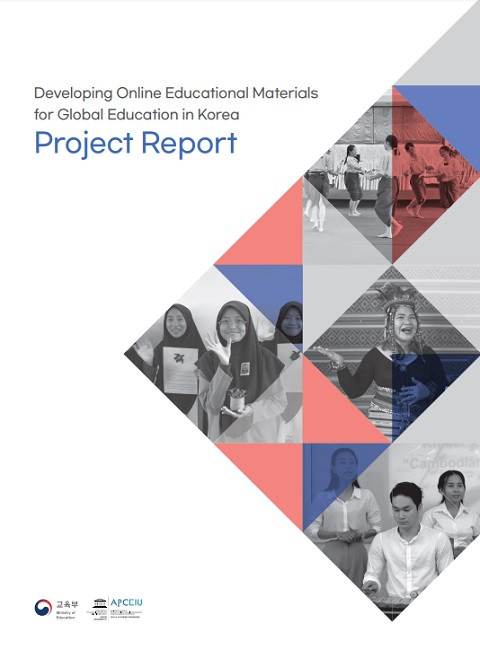 Developing Online Educational Materials for Global Education in Korea: Project Report Year of publication: 2020 Corporate author: APCEIU | Korea R. Ministry of Education This project aims to enhance the intercultural understanding of Korean teachers and students by utilizing global education and Global Citizenship Education(GCED) materials produced by partner countries’ teachers. Simultaneously, for the teachers from partner countries, the project is expected to enhance their educational competency, global competency, and online teaching competency required in this pandemic era. The project also aims to establish an online teaching and learning model by using online educational materials in Korean classrooms and accumulate and expand educational achievements in response to the spread of online exchange. 초청교사 온라인 교수자료 제작: 최종 보고서 Year of publication: 2020 Corporate author: 유네스코 아시아태평양 국제이해교육원 | 대한민국 교육부 본 프로젝트는 대상국 교사가 제작한 글로벌·세계시민교육 자료 활용을 통해, 국내 학교 교원 및 학생의 다문화 감수성을 제고하는 것을 목표로 한다. 동시에 강의자로 참여하는 대상국 교사의 교육 역량과 글로벌 역량, 그리고 언택트 시대에 요구되는 온라인 강의 역량을 향상시키고자 한다. 또한 외국 교사가 제작한 온라인 교수자료를 국내 교육 현장에 활용하여 이를 토대로 온라인 교수-학습 체제를 구축하고, 온라인 교류 확산 추세에 대응하며 교육성과를 축적·확산하고자 한다.
  2022 개정 교육과정을 위한 제안: 평화문화를 만들어 가는 세계시민교육 Year of publication: 2021 Corporate author: 유네스코 아시아태평양 국제이해교육원 유네스코 아시아태평양 국제이해교육원은 미래 세대를 위한 2022 개정 교육과정에 꼭 포함되어야 할 교육의 가치, 목표, 인간상, 핵심 역량을 제안하였다. 본 자료에서는 교육과정에 대한 제안에 그치지 않고 학생의 삶과 학교 문화의 변화로 이어질 수 있도록 실행 원칙도 아래와 같이 제시하고 있다.평화문화를 만드는 세계시민교육이 전 교육과정의 실행 원칙이자 모든 교과 구성의 핵심 원리가 되어야 한다.세계시민교육은 추상적인 거대 담론을 제시하기보다 학습자가 주도적으로 자기 삶의 문제를 인식하고 해결을 위한 대안을 찾아 실천하는 데서 시작해야 한다.시민교육의 다양한 주제는 통합적으로 제시되어야 한다.
 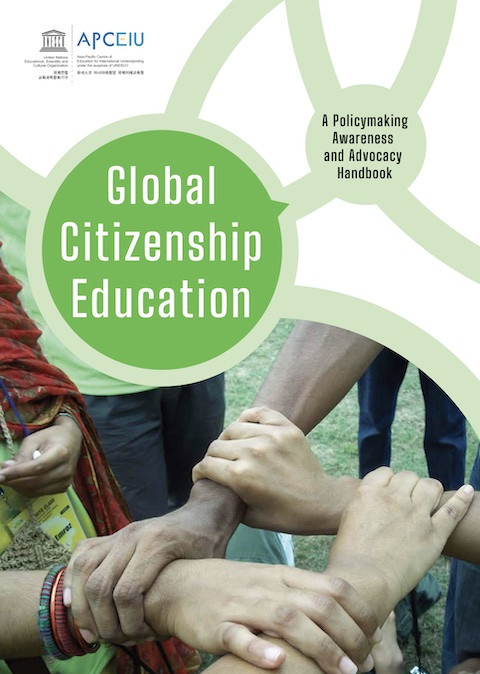 Global Citizenship Education: A Policymaking Awareness and Advocacy Handbook Year of publication: 2021 Corporate author: APCEIU | UNESCO Bangkok GCED is critical for learners and countries to reach the SDG-Education 2030 targets. Many countries have GCED elements, either explicitly or implicitly, within their education policies. However, to fully realize SDG target 4.7 and to enable our learners to achieve the knowledge, skills, values and attitudes needed to succeed in an ever-changing and adaptable world, countries may need to explicitly build these components directly into various education policies. This policymakers’ handbook provides some guidance on how policymakers can develop and adapt local level policies in order to strengthen GCED learning.
 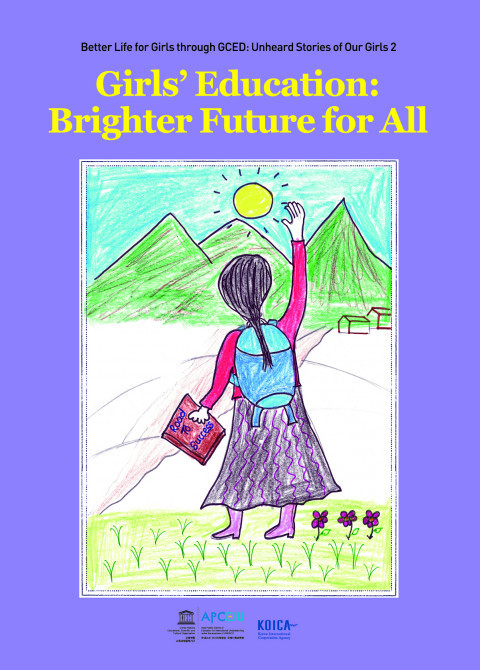 Better Life for Girls through GCED: Unheard Stories of Our Girls 2: Girl's Education: Brighter Future for All Year of publication: 2016 Corporate author: APCEIU The "Better Life for Girls through GCED: Unheard Stories of Our Girls" series depict stories of girls from different parts of the world. Coming from Africa and Asia, 25 educators have written stories about their girls during the programme to share with readers all over the world. As the title implies, these series are about real people living on the fringes of society especially girls in their neighbor having challenges on their way to access quality education.
 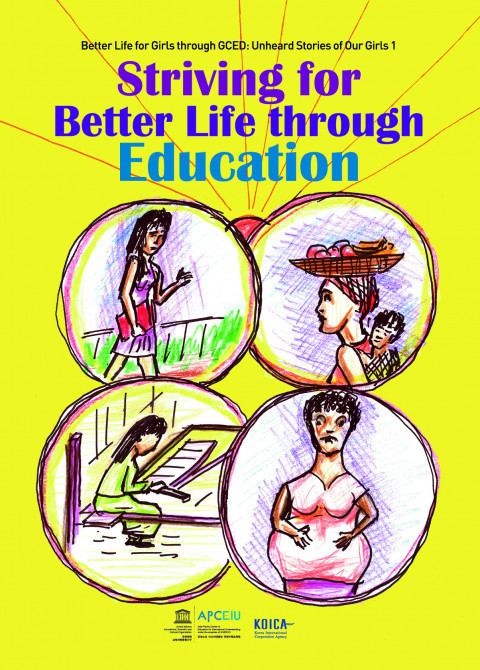 Better Life for Girls through GCED: Unheard Stories of Our Girls 1: Striving for Better Life through Education Year of publication: 2016 Corporate author: APCEIU 2016 UNESCO/KOICA Fellowship Programme Better Life for Girls through GCED: Unheard Stories of Our Girls The "Better Life for Girls through GCED: Unheard Stories of Our Girls" series depict stories of girls from different parts of the world. Coming from Africa and Asia, 25 educators have written stories about their girls during the programme to share with readers all over the world. As the title implies, these series are about real people living on the fringes of society especially girls in their neighbor having challenges on their way to access quality education.
  새로운 교육과정에 담은 세계시민교육: 2015 개정 교육과정 맞춤 교수학습 가이드 Year of publication: 2017 Corporate author: 유네스코 아시아태평양 국제이해교육원 유네스코 아시아태평양 국제이해교육원(APCEIU)은 교사용 세계시민교육 교수학습 가이드 『새로운 교육과정에 담은 세계시민교육』을 출간했다. 이 교수학습 가이드는 유네스코 세계시민교육 가이드(Global Citizenship Education: Topic and Learning Objectives)를 2015 개정 교육과정에 연계시켜 실제 학교 수업에 적용하는 방안을 제시하고자 개발된 것으로, 초등학교 교사용, 중학교 교사용, 고등학교 교사용 등 총 3종으로 구성되어 있다. 세계시민교육은 어떤 교육이고, 그것이 필요한 이유는 무엇인지, 유네스코 세계시민교육과 한국의 국가 교육과정은 어떤 연관성을 지니고 있는지, 세계시민교육을 주요 유관 과목에 접목시키고자 할 때에는 어떤 학습 요소를 강조하는 것이 적절한지, 그리고 세계시민교육 수업은 어떤 방식으로 구성할 수 있는지 등과 같은 질문에 대한 답을 찾고 있다면 이 교수학습 가이드를 펼쳐 보기 바란다.
  EIU Best Practices Series No. 6: Practical Research on Current Issues: Studies on Global Perspectives in Schools in Japan Year of publication: 2007 Corporate author: APCEIU This monograph is one of APCEIU's EIU Best Practices Series, which aims to encourage educators, scholars, and activists to implement and share local initiatives on EIU. The Series No.6 is a research undertaken on two schools of Japan and Korea, in which students were tasked to conduct research on bilateral conflict issues and devise suggestions for peaceful resolution. Besides classroom discussions and presentations, student exchange visit further allowed active learning and engaging of issues, historical awareness and perception, and mutual understanding as global citizens.
  GCED Curriculum Development and Integration Project (Sri Lanka): 2021 Final Report Year of publication: 2021 Corporate author: National Institute of Education (Sri Lanka) | Centre Asie-Pacifique d'éducation pour la compréhension internationale (APCEIU) This resource is a compiled documentation of the final outcomes of the Sri Lankan National Institute of Education (NIE) and APCEIU’s joint partnership to develop the GCED curriculum, particularly for the secondary school level. The report includes the materials created and used to evaluate, monitor, and execute the GCED curriculum, as well as the documentation of the process of its creation. It is written in both English and Sinhalese. In the compilation, you may find:- Introduction to the project (ENG)- Annexure of evaluative materials (ENG, SNH)- GCED Framework (ENG)- GCED Learning ModulesGrade 6 English (ENG)Grade 6 Sound Test (SNH)Grade 8 (SNH)Grade 8 English World of Work (ENG)Grade 8 School Try Out (SNH)
  GCED Curriculum Development and Integration Project (Lebanon): 2021 Final Report Year of publication: 2021 Corporate author: Center for Educational Research and Development (CRDP) | مركز آسيا والمحيط الهادي للتربية من أجل التفاهم الدولي (APCEIU) This resource is a compiled documentation of the final outcomes of the Center for Educational Research and Development (CRDP), Lebanon and APCEIU’s joint partnership to develop the GCED curriculum across both primary and secondary school levels. The report includes the materials created and used to evaluate, monitor, and execute the GCED curriculum, as well as the documentation of the process of its creation. It is written in both English and Arabic.In the compilation, you may find:- Report on the Implementation of the Project Stages- Digital Activities for GCED Integration in the Civics and National Education Curriculum: Grade 1 - 12 (ARA)- Digital Activities for GCED Integration in the Civics and National Education Curriculum: Grade 1 - 12 (ENG)- Teacher’s Guide: Grade 1 - 12 (ARA)- Teacher’s Guide: Grade 1 - 12 (ENG)- Training of Trainers (TOT): TOT Materials (ENG; ARA)- The Project of Training the Trainers on Global Citizenship Education and Integrating it into the Pre-university Educational Curricula: Preamble (ENG)- Technical Cards (ENG; ARA)