
Resources
Explore a wide range of valuable resources on GCED to deepen your understanding and enhance your research, advocacy, teaching, and learning.
2,776 Results found
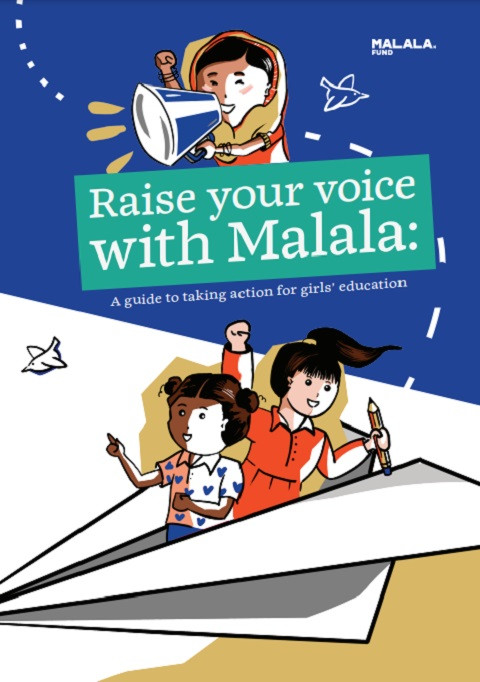 Raise Your Voice With Malala: A Guide to Taking Action for Girls’ Education Year of publication: 2018 Author: Emily Laurie | Eleanor Gall Corporate author: Malala Fund This guide gives young activists the tools to raise their voices and make change happen. Girls around the world are standing up in support of their out-of-school sisters and fighting to see every girl complete 12 years of free, safe, quality education. By taking action in their communities, girls can contribute to the peace and prosperity of our entire world. The guide includes real stories about girls around the world working to make sure all girls have the opportunity to go to school.
 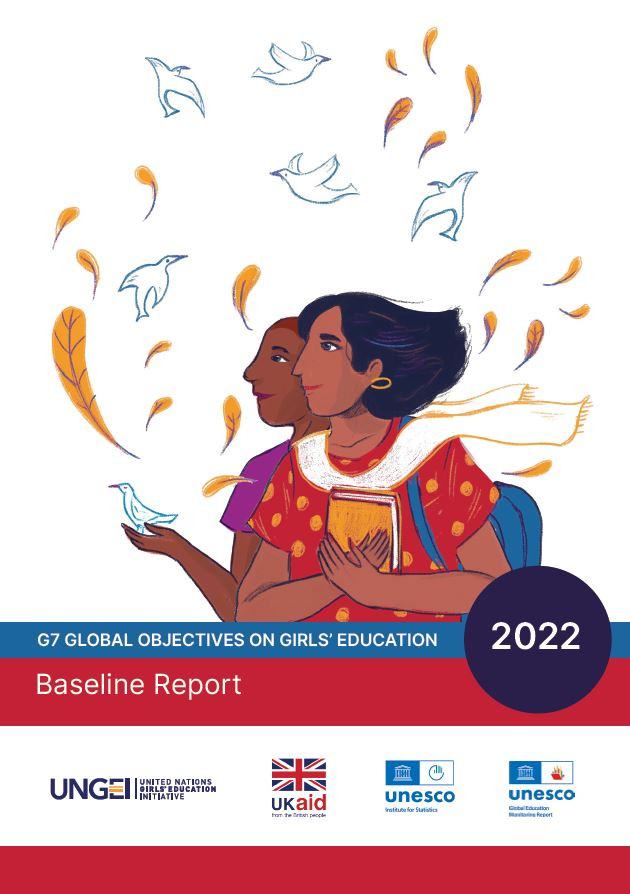 G7 Global Objectives On Girls’ Education: Baseline Report Year of publication: 2022 Corporate author: United Nations Girls' Education Initiative (UNGEI) This publication serves as a baseline report to accompany efforts of the G7 Accountability Working Group to monitor progress towards the two global objectives. It presents evidence on low- and lower-middle-income countries’ progress in achieving the two global objectives and what remains to be done.It is important to stress that the two G7 global objectives on girls’ education are measures of gender parity, which are necessary but not sufficient as measures of gender equality. Assessing progress towards the latter requires information, which tends not to be available systematically enough to allow a comparative perspective. However, this report provides insights to remaining challenges.
  2nd European congress on global education: education, interdependence and solidarity in a changing world; final report Year of publication: 2012 Corporate author: North-South Centre of the Council of Europe | Global Education Network Europe (GENE) | CONCORD Europe | Portuguese Institute of Cooperation and Language | Portuguese NDGO Platform | University of Lisbon | European Commission The 2nd European Congress on Global Education: Education, Interdependence and Solidarity in a Changing World took place on 27 – 28 September 2012 in Lisbon. It was organised by the North-South Centre of the Council of Europe (NSC) in partnership with Global Education Network Europe (GENE) and CONCORD Europe, in cooperation with the Portuguese Institute of Cooperation and Language - Camões, the Portuguese NDGO Platform and the University of Lisbon and with the financial support of the European Commission. This Congress brought together approximately 200 stakeholders in global education, in particular international organisations, governments, parliamentarians, local and regional authorities, civil society organisations, as well as educators from Europe and beyond, using the principle of “quadrilogue” and a holistic approach to global education. This two-day event built on the efforts of the North-South Centre (NSC) and other stakeholders to promote global education since the Maastricht Congress Declaration (2002) which established a European strategy framework for improving and increasing global education in Europe to the year 2015. Thematic dialogue and exchange of ideas and practices together with a reflection on the political dimension of global education contributed to the formulation of a Lisbon Statement and the revision of the proposed Strategic Recommendations for Strengthening Global Education till 2015. The resume of the thematic dialogues, the Lisbon Statement on Global Education and the Strategic Recommendations represent an integral part of this report. This is also complemented with a short concluding section with follow-up proposals. 2nd European congress on global education: education, interdependence and solidarity in a changing world; final report Year of publication: 2012 Corporate author: North-South Centre of the Council of Europe | Global Education Network Europe (GENE) | CONCORD Europe | Portuguese Institute of Cooperation and Language | Portuguese NDGO Platform | University of Lisbon | European Commission Ce rapport national sur l'éducation globale en Autriche fait partie du processus d'évaluation intra-européenne Éducation Mondiale, qui a été lancé en 2002 dans le but d'augmenter et d'améliorer l'éducation mondiale dans les États membres du Conseil de l'Europe. Ce rapport est l'aboutissement d'un processus d'examen par les pairs mené par une équipe d'examen international par des pairs. Grâce à la recherche et des entrevues avec des intervenants clés, des informations ont été recueillies et des perspectives critiques développé sur l'état actuel et les perspectives d'avenir pour l'éducation mondiale en Autriche. Ce processus long de l'année, facilitée par le Centre Nord-Sud du Conseil de l'Europe, a été développé en partenariat avec le Groupe Stratégie autrichienne pour l'éducation mondiale comme la contrepartie nationale dans le processus. Il a impliqué le Ministère des Affaires étrangères, le Ministère de l'Education, l'Agence Autrichienne de Développement (AAD), KommEnt, et les ONG et les milieux universitaires. Ce rapport d'évaluation intra reconnaît la relativement forte tradition d'éducation mondiale en Autriche. le soutien autrichien de EM se reflète dans l'éventail des organisations engagées impliquées dans EM, et les nombreuses initiatives et projets dans les secteurs formels et non formels d'éducation, et dans la société civile. Le chapitre 1 ci-dessous fournit une introduction au rapport et le processus général. Le chapitre 2 décrit le contexte de l'éducation mondiale en Autriche. Le chapitre 3 examine l'éducation mondiale dans le secteur de l'éducation formelle. Le chapitre 4 met l'accent sur le travail important et varié qui se déroule dans l'éducation non formelle, les organisations de la société civile et d'autres secteurs dans ce domaine. Le chapitre 5 fournit, de façon sommaire, un aperçu des observations et recommandations de l'examen par les pairs clés. 세계 교육에 관한 제 2차 유럽 의회: 변화하는 세계에서의 교육, 상호 의존 및 연대; 최종 보고서 Year of publication: 2012 Corporate author: North-South Centre of the Council of Europe | Global Education Network Europe (GENE) | CONCORD Europe | Portuguese Institute of Cooperation and Language | Portuguese NDGO Platform | University of Lisbon | European Commission 오스트리아 글로벌 교육에 관한 이 국가 보고서는 유럽 의회 회원국들의 글로벌 교육을 증진 및 향상시키기 위한 목적으로 2002년에 시작된, 유럽 글로벌 교육의 공동 심의 과정(the European Global Education Peer Review Process)의 일부이다. 이 보고서는 국제 공동 심의 과정 팀에 의해 주도되는 공동 심의 과정의 정점이다. 리서치 및 주요 이해 관계자들과의 인터뷰를 통해서 정보를 수집하고, 오스트리아 글로벌 교육 현황 및 미래 전망에 대한 비판적 시각도 발전시켰다. 유럽 의회 남북 센터가(the North-South Centre of the Council of Europe)가 추진한 이 1년 과정은 현재 진행중인 국가적 대응 사업으로서, 글로벌 교육을 위한 오스트리아 전략 그룹(Austrian Strategy Group for Global Education)과 협력하여 개발되었다. 여기에는 외무부, 교육부, 오스트리아 개발기구(ADA), KommEnt, NGO 및 학계가 포함된다. 이 피어 리뷰 보고서(Peer Review report)에서는 오스트리아 글로벌 교육의 상대적으로 강한 전통을 인지하고 있다. 글로벌 교육(이하 GE)을 위한 오스트리아 국가 서포트와 GE와 관련된 열성적인 조직과 공식 및 비공식적 교육 분야, 시민 사회 내의 다수 이니셔티브 및 프로젝트에 반영이 되어 있다. 다음의 제 1장에서는 보고서와 프로세스 전반에 대한 소개를 제공한다. 제 2장에서는 오스트리아 글로벌 교육의 맥락을 개략적으로 보여준다. 제 3장에서는 정규 교육 부분에서의 글로벌 교육에 대해 살펴본다. 제 4장에서는 비정규 교육, 시민사회 조직 및 다른 부문에서 일어나는 중요하고 다양한 교육 작업에 중점을 둔다. 제 5장에서는 요약 방식으로, 피어 리뷰의 권고안들 및 주요 관찰에 대한 아웃라인을 제공한다. Repositioning and reconceptualizing the curriculum for the effective realization of Sustainable Development Goal Four, for holistic development and sustainable ways of living Year of publication: 2015 Corporate author: UNESCO International Bureau of Education (IBE) The purpose of this discussion paper is two-fold, it is to reposition curriculum at the center of the national and the global development dialogue and to highlight its power to give effect to national and to global aspirational statements on the role of education in holistic development. When well designed and effectively enacted, curriculum determines the quality, inclusiveness and development-relevance of education.Second, is to reconceptualize curriculum as a fundamental force of integration of education systems and as an operational tool for giving effect to policies on lifelong learning. Curriculum leads all core aspects of education that are known to determine quality, inclusion, and relevance such as content, learning, teaching, assessment and the teaching and learning environments among others. Its horizontal and vertical articulation, as well as its articulation across learning settings is what gives effect to lifelong learning policies.This paper therefore seeks to reposition curriculum as an indispensable tool for giving effect to SDG Goal 4. Repositionnement et reconceptualiser le programme d'études pour l'utilisation Efficace du Développement Durable Objectif Quatre, pour le développement holistique et modes de vie durables Year of publication: 2015 Corporate author: UNESCO International Bureau of Education (IBE) Le but de ce document de travail est double, il est de repositionner curriculum au centre national et le dialogue mondial du développement et de mettre en évidence son pouvoir pour donner effet aux nationaux et aux états ambitieux mondiaux sur le rôle de l'éducation dans le développement holistique . Quand bien conçu et efficacement adopté, le curriculum détermine la qualité, l'inclusion et le développement-pertinence de l'éducation. Deuxièmement, il faut reconceptualiser programme comme une force fondamentale de l'intégration des systèmes d'éducation et comme un outil opérationnel pour donner effet aux politiques sur l'apprentissage continu. Curriculum conduit tous les aspects essentiels de l'éducation qui sont connus pour déterminer la qualité, l'inclusion et la pertinence tels que le contenu, l'apprentissage, l'enseignement, l'évaluation et l'enseignement et des environnements d'apprentissage entre autres. Son articulation horizontale et verticale, ainsi que son articulation dans tous les milieux d'apprentissage est ce qui donne effet aux politiques d'apprentissage continu. Ce document vise donc à repositionner programme comme un outil indispensable pour donner effet à ODD Objectif 4. Global citizenship: abstraction or framework for action Year of publication: 2006 Author: Lynn Davies Corporate author: Educational Review This paper explores whether the notion of ‘global citizenship’ is too abstract to be valuable in driving curriculum policy and active citizenship for students. The paper looks firstly at three of the key aspects of an active role: a concern for social justice; rights; and culture and cultural conflict. It then examines actual curricula and programmes of study for global citizenship, and compares the conceptual frameworks, progression routes and emphases within these curricula. It moves on to review the research on teachers’ practices and orientations in teaching global citizenship, finding some variation and problems, particularly in areas such as teaching controversial issues. Factors in successful impact of global citizenship education are outlined, such as various forms of democratic decision-making and community service. Constraints are nonetheless identified of curriculum overload, resources, time and confidence. The paper then describes existing research on the needs and wishes of learners within global citizenship. The conclusion confirms the consensus on the importance of global citizenship and argues that it can be turned into a more radical and politicised curriculum area; however, more research is needed on impact of the learning, including research by students themselves. Global citizenship: abstraction or framework for action Year of publication: 2006 Author: Lynn Davies Corporate author: Educational Review Cet article examine si la notion de ‘citoyenneté mondiale’ est trop abstraite pour être utile dans la conduite de la politique des programmes et la citoyenneté active pour les étudiants. Le document examine tout d'abord à trois des aspects clés d'un rôle actif: un souci de justice sociale; droits; et de la culture et de conflits culturels. Il examine ensuite les programmes et les programmes d'études à la citoyenneté mondiale réelle, et compare les cadres conceptuels, des voies de progression et emphases au sein de ces programmes. Il se déplace en revue les recherches sur les pratiques et les orientations des enseignants dans l'enseignement de la citoyenneté mondiale, de trouver une certaine variation et des problèmes, en particulier dans des domaines tels que l'enseignement des questions controversées. Facteurs de succès de l 'éducation à la citoyenneté mondiale sont exposés, tels que les diverses formes de prise de décision démocratique et le service communautaire. Les contraintes sont néanmoins identifiées de la surcharge des programmes, les ressources, le temps et la confiance. Le document décrit ensuite les recherches existantes sur les besoins et les souhaits des apprenants au sein de la citoyenneté mondiale. La conclusion confirme le consensus sur l'importance de la citoyenneté mondiale et fait valoir qu'il peut être transformé en une zone de curriculum plus radicale et politisée; cependant, plus de recherche est nécessaire sur l'impact de l'apprentissage, y compris la recherche par les étudiants eux-mêmes. How can you embed global citizenship in your curriculum? Year of publication: 2012 Corporate author: National Committee for International Cooperation and Sustainable Development (NCDO) This handbook offers tips, guidelines and inspiration for embedding global citizenship in your curriculum. It also helps your school answer the following questions: 1. What do you want to achieve? 2. Where is your school today? 3. What needs to be done? 4. Where to start? This publication is not a blueprint for embedding global citizenship in secondary education, but hopefully it will help you on your way to achieving that goal.