
Resources
Explore a wide range of valuable resources on GCED to deepen your understanding and enhance your research, advocacy, teaching, and learning.
2,668 Results found
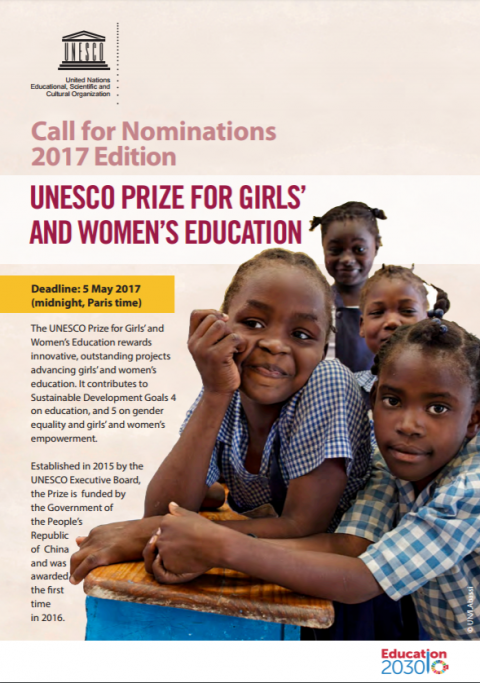 UNESCO Prize for Girls' and Women's Education, 2017 edition: call for nominations Year of publication: 2017 Corporate author: UNESCO The UNESCO Prize for Girls’ and Women’s Education rewards innovative, outstanding projects advancing girls’ and women’s education. It contributes to Sustainable Development Goals 4 on education, and 5 on gender equality and girls’ and women’s empowerment.
 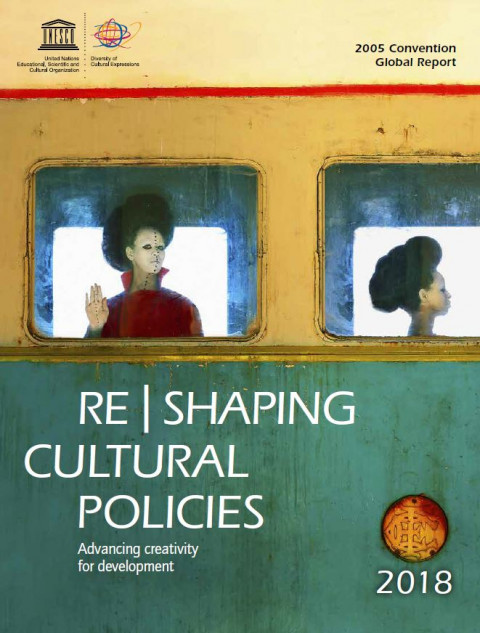 문화정책의 (재)구성: 발전을 위한 창의성 증진; 문화다양성 협약 글로벌 리포트, 2018 Year of publication: 2018 Corporate author: 유네스코 '글로벌 리포트(Global Report)' 시리즈는 유네스코 「문화적 표현의 다양성 보호과 증진에 관한 협약(2005)」의 이행을 모니터링하기 위해 기획되었다. 본 시리즈는 이러한 이행 과정이 UN의 2030 지속가능발전목표 및 세부목표를 달성하는 데 어떻게 기여하는지 증거를 통해 보여주고 있다.2018년 글로벌 리포트는 2015년에 첫 번째 리포트가 출간된 이후 협약을 이행하면서 이루어진 진전 사항을 분석하고 있다.본 보고서는 협약 당사국들이 제출한 국가보고서에 대한 분석과 그와 관련된 새로운 연구 결과를 바탕으로 협약이 10개의 모니터링 분야에서 세계 및 국가 수준의 정책 변화에 어떻게 영향을 주었는지 검토하고 있다. 또한 본 보고서는 디지털 환경의 급속한 변화에 맞는 문화정책을 다루면서 인권과 기본적 자유를 기반으로 하는 향후 일련의 정책 권고안을 제시하고 있다.이 두 편의 글로벌 리포트는 문화정책을 수립하고 발전을 위한 창의성을 증진시킬 수 있는 새롭고 가치 있는 증거를 제시하기 시작하고 있다. Re|shaping Cultural Policies: Advancing Creativity for Development; 2005 Convention Global Report, 2018 Year of publication: 2018 Corporate author: UNESCO The Global Report series has been designed to monitor the implementation of the UNESCO Convention on the Protection and Promotion of the Diversity of Cultural Expressions (2005). It also provides evidence of how this implementation process contributes to attaining the United Nations 2030 Sustainable Development Goals and targets.The 2018 Global Report analyses progress achieved in implementing the 2005 Convention since the first Global Report was published in 2015.Grounded in the analysis of the Quadrennial Periodic Reports submitted by Parties to the Convention and relevant new findings, this report examines how the 2005 Convention has inspired policy change at the global and country level in ten areas of monitoring. It puts forward a set of policy recommendations for the future, addressing the adaptation of cultural policies to rapid change in the digital environment, based on human rights and fundamental freedoms.When deployed together, the two editions of the Global Report are beginning to produce new and valuable evidence to inform cultural policy making and advance creativity for development.
  教科文组织在实施全球公民教育以及促进和平与人权教育和可持续发展教育中的作用和责任 Year of publication: 2015 Corporate author: 联合国教科文组织 (UNESCO) This document is an addendum to document 196 EX/32. This item was included in the provisional agenda of the 196th session of the Executive Board at the request of Austria and Italy Repenser les politiques culturelles: la créativité au coeur du développement; Rapport mondial Convention 2005, 2018 Year of publication: 2018 Corporate author: Organisation des Nations Unies pour l'éducation, la science et la culture (UNESCO) La série des Rapports mondiaux a été conçue pour faire le suivi de la mise en oeuvre de la Convention de l’UNESCO sur la protection et la promotion de la diversité des expressions culturelles (2005). Elle sert également à montrer comment ce processus contribue à la réalisation des Objectifs de développement durable des Nations Unies à l’horizon 2030.Le Rapport mondial 2018 analyse les progrès accomplis dans la mise en oeuvre de la Convention de 2005 depuis la publication du premier Rapport mondial en 2015.A partir des rapports périodiques quadriennaux soumis par les Parties à la Convention et de nouvelles analyses, ce Rapport examine comment la Convention de 2005 a inspiré des changements politiques aux niveaux mondial et national dans dix domaines clés de l’action politique. Il propose un ensemble de recommandations politiques pour le futur et met l’accent sur l’adaptation des politiques culturelles, fondées sur les droits de l’homme et les libertés fondamentales, afin de faire face aux transformations rapides suscitées par l’environnement numérique.
 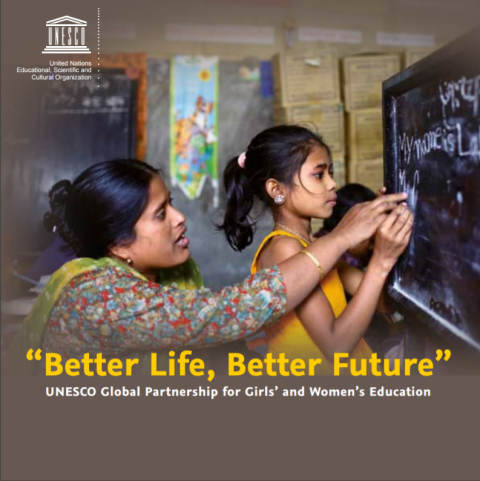 Better Life, Better Future: UNESCO Global Partnership for Girl's and Women's Education Year of publication: 2011 Corporate author: UNESCO “Better Life, Better Future”, UNESCO’s global partnership for girls’ and women’s education, addresses two main areas requiring increased attention – secondary education and adult literacy. It will seek to introduce programmes aimed at stemming the dropout of adolescent girls in the transition from primary to secondary education and in lower secondary schools, as well as focus on scaling up women’s literacy programmes through stronger advocacy and partnerships. As a first step, and in complement to other United Nations initiatives, UNESCO has recently concluded several dynamic public and private partnerships, which stand to benefit marginalized girls and women in Africa and Asia.
 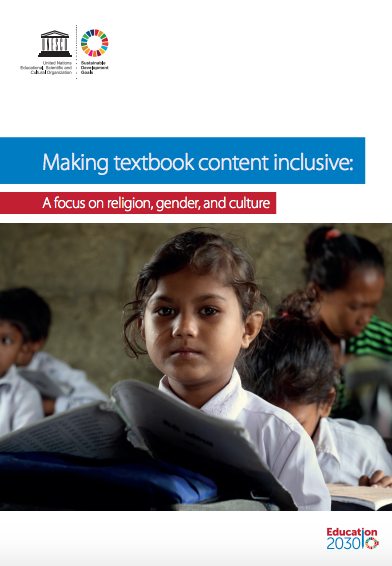 Making Textbook Content Inclusive: A Focus on Religion, Gender, and Culture Year of publication: 2017 Corporate author: UNESCO UNESCO has been working on textbook development issues since its inception in 1945 as part of its fundamental mandate to “build peace in the minds of men and women.” The present guide’s primary task is to enable its users to address and counter stereotypes in a variety of educational contexts, through teaching and learning materials. The three key issues – religion, gender and culture – were chosen for their common link to the concept of human diversity. These three potentially controversial topics are important aspects of inclusive education because they help shape the learning environment of a school as well as its educational practices.The guide was intentionally written in a simple, practical style so as to be immediately accessible to textbook developers, adopters, and users, even those who are working on their own. Although it is designed primarily for textbook authors, curriculum developers, and teachers, it might also be particularly useful for publishers, political stakeholders, and teacher educators. Pour des manuels scolaires au contenu inclusif Year of publication: 2017 Corporate author: Organisation des Nations Unies pour l'éducation, la science et la culture (UNESCO) UNESCO has been working on textbook development issues since its inception in 1945 as part of its fundamental mandate to “build peace in the minds of men and women.” The present guide’s primary task is to enable its users to address and counter stereotypes in a variety of educational contexts, through teaching and learning materials. The three key issues – religion, gender and culture – were chosen for their common link to the concept of human diversity. These three potentially controversial topics are important aspects of inclusive education because they help shape the learning environment of a school as well as its educational practices.The guide was intentionally written in a simple, practical style so as to be immediately accessible to textbook developers, adopters, and users, even those who are working on their own. Although it is designed primarily for textbook authors, curriculum developers, and teachers, it might also be particularly useful for publishers, political stakeholders, and teacher educators.
  Consolidated Report on the Implementation of the 1974 Recommendation Concerning Education for International Understanding, Cooperation and Peace and Education Relating to Human Rights and Fundamental Freedoms Year of publication: 2013 Corporate author: UNESCO Background: In accordance with 34 C/Resolution 87, 177 EX/Decision 35 (I) and 184 EX/Decision 20, the Executive Board has monitored the implementation of the 1974 Recommendation concerning Education for International Understanding, Cooperation and Peace and Education relating to Human Rights and Fundamental Freedoms. Pursuant to 192 EX/Decision 20 (III), the Director-General hereby submits the consolidated report on the implementation by Member States of the Recommendation.Purpose: This document reports on the results of the Fifth Consultation on the Implementation of the Recommendation concerning Education for International Understanding, Cooperation and Peace and Education relating to Human Rights and Fundamental Freedoms (covering the period 2009-2012). The analysis was prepared on the basis of 55 national reports from Member States received by the Secretariat.
  Education aux médias et à l'information: programme de formation pour les enseignants Year of publication: 2011 Author: Carolyn Wilson | Alton Grizzle | Ramon Tuazon | Kwame Akyempong | Chi Kim Cheung Corporate author: Organisation des Nations Unies pour l'éducation, la science et la culture (UNESCO) Nous vivons dans un monde où la qualité de l’information que nous recevons détermine largement nos choix et nos actions et en particulier, notre capacité à pro ter des libertés fondamentales et notre possibilité d’autodétermination et de développement. Ce programme d’éducation aux médias et à l’information pour les enseignants est une ressource importante pour les États membres de l’UNESCO et une publication expérimentale. Elle est prospective et s’efforce de réaliser la convergence de la radio, la télévision, l’Internet, les journaux, les livres, les archives numériques et les bibliothèques sur une même plate-forme. Elle est aussi spécialement conçue pour permettre l’intégration de ce programme dans le système formel de formation des enseignants. L’UNESCO croit que ce programme sera une étape importante d’innovation et de progrès pour tous les niveaux d’éducation.