
Resources
Explore a wide range of valuable resources on GCED to deepen your understanding and enhance your research, advocacy, teaching, and learning.
3,446 Results found
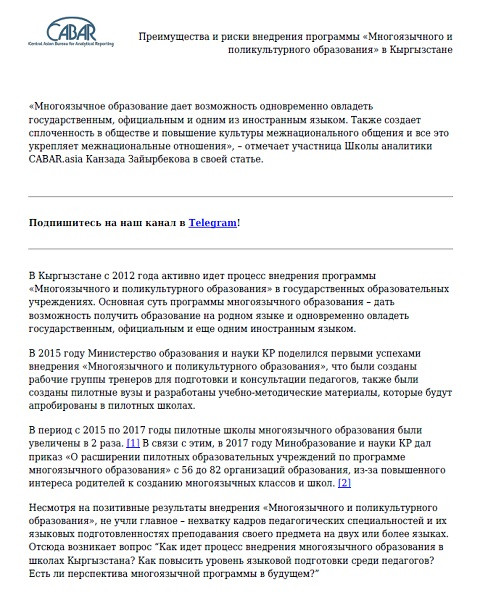 Advantages and Risks of Introducing the “Multilingual and Multicultural Education” Program in Kyrgyzstan Year of publication: 2019 Author: Kanzada Zayirbekova Corporate author: Central Asian Bureau for Analytical Reporting (CABAR) According to the author, multilingual education makes it possible to simultaneously master the state, official and one of the foreign languages, and also creates cohesion in society and enhances the culture of interethnic communication, and all this strengthens interethnic relations.
  تعزيز رفاه الشباب عبر الصحة والتعليم: رؤى وفرص Year of publication: 2019 Author: Wing Yi Chan | Jennifer Sloan | Anita Chandra Corporate author: RAND Corporation أضحى الرفاه، باعتباره ركيزة أساسية في عمليات التخطيط وصناعة السياسات وتخصيص الموارد، ضرورةً لا غنى عنها لتنمية المجتمعات والدول التي تسير في درب الازدهار، مما دفعنا في هذا التقرير لدراسة المؤلفات الأكاديمية وغير الأكاديمية وثيقة الصلة بالموضوع لتحديد الأطر النظرية التي تحقق التكامل بين الصحة والتعليم داخل منظومة واحدة. Promoting Youth Well-Being Through Health and Education: Insights and Opportunities Year of publication: 2019 Author: Wing Yi Chan | Jennifer Sloan | Anita Chandra Corporate author: RAND Corporation Putting well-being at the heart of planning, policy making, and resource allocation is emerging as critical to the development of thriving communities and nations. We examined the academic and grey literature to identify theoretical frameworks that integrate health and education. We identified and described policies and programs supporting well-being around the world, and interviewed experts from each location to gain a deeper understanding of them.The report found that although wellbeing frameworks that integrate education and health exist, few of them have been examined rigorously to reveal how both educational and health outcomes can be achieved together.
  Hacia una Educación para la Sostenibilidad: 20 años después del Libro Blanco de la Educación Ambiental en España Year of publication: 2019 Author: Javier Benayas | Carmelo Marcén Corporate author: Red Española para el Desarrollo Sostenible (REDS) | Centro Nacional de Educación Ambiental (CENEAM) | Ecoembes El document presenta las luces y sombras de la multiforme intervención de la Educación Ambiental en los últimos 30 años; a la vez identifica pautas para recorrer el camino hacia la sostenibilidad de una forma más eficaz y segura pero sobre todo con la implicación de toda la sociedad.
  المجتمع المدني وسؤال المواطنة: فرص التفعيل وحدود التأثير Year of publication: 2017 Author: Assia Belkhir Corporate author: Larbi Ben M'Hidi أدت التغيرات السريعة والمتلاحقة التي عرفتها المجتمعات المعاصرة، إلى إعادة النظر في منظومة المفاىي المرتبطة بالدولة والمجتمع، وفي طبيعة العلاقة بينيما، وفيما يربط الأفراد بمجتمعاتهم ودولهم، وأصبحت قوة الدولة لا تقاس فقط بقدراتها العسكرية، ولكن أساسا بقدرتها على تنفيذ السياسات العامة التي توفر الخدمات الاساسية للمواطنين، وقدرتها على توزيع الأدوار مع المجتمع المدني بما يزيد المشاركة ويحقق المواطنة السياسية والاجتماعية، التي يعاد التساؤل بشأنهاهي الأخرى مع بروز فكرة المواطنة العالمية. Civil Society and the Question of Citizenship : Opportunities for Activation and Limits of Influence Year of publication: 2017 Author: Assia Belkhir Corporate author: Larbi Ben M'Hidi The rapid and progressive changes that contemporary societies have undergone, have led to a reconsideration of the system of concepts associated to the state and the society, the nature of their relationship, and the connection of individuals to their societies and states. The power of the state is not only measured by its Military capabilities but mainly by its ability to implement public policies that provide essential services to the citizens, and its capacity to distribute roles within civil society, there by increasing participation and achieving the requirements of political and social citizenship, which is questioned as well, with the emergence of the idea of a global citizenship.
 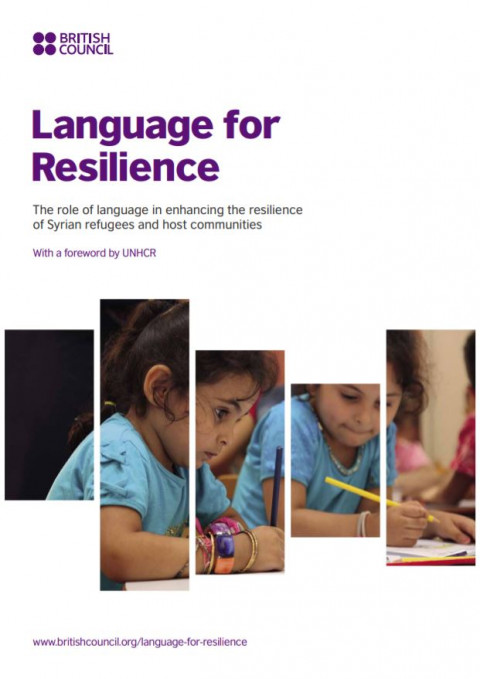 اللغة لتعزيز القدرة على مواجهة الأزمات: فهم الدور الذي تؤديه اللغة في تعزيز قدرة اللاجئين السوريين والمجتمعات المستضيفة لهم على مواجهة الأزمات Year of publication: 2018 Author: Tony Capstick | Marie Delaney Corporate author: British Council | UN. Office of the United Nations High Commissioner for Refugees (UNHCR) يستند التقرير الى دروس مستفادة من برامج اللغة الانجليزية التي يقدمها المجلس الثقافي البريطاني، ويستخدم كمرجع في تطوير البرامج المستقبلية الخاصة بتعليم اللغات للمتأثرين بالأزمة السورية. Language for Resilience: The Role of Language in Enhancing the Resilience of Syrian Refugees and Host Communities Year of publication: 2018 Author: Tony Capstick | Marie Delaney Corporate author: British Council | UN. Office of the United Nations High Commissioner for Refugees (UNHCR) The Language for Resilience report examines the impact of language on refugees and host communities affected by the Syrian crisis, identifying the different ways that language skills enhance resilience and providing suggestions for programme responses that address key needs.The report shows that for children and young people attending schools or post-school education, and for educators in host communities handling influxes of refugee students, quality language learning improves attainment and attendance and builds safer and more inclusive classrooms. It also illustrates how creative approaches to language education can support the development of life skills and help meet psycho-social needs.
  Cosmopolitan Sidestep: University Life, Intimate Geopolitics and the Hidden Costs of “Global” Citizenship (Area; Vol. 51, No. 4) Year of publication: 2018 Author: Mike Dimpfl | Sara Smith Corporate author: Royal Geographical Society | Wiley In higher education in the US today, particular practices of global engagement are positioned as essential to student learning. Institutional stakeholders foreground the potential of outward‐facing orientation to the globe while sidestepping local connections to racial inequality and injustice foregrounded by student and waged‐worker activism. Faculty and student composition, course content and hierarchies of waged work have been targeted by activists from within and without. In this example, relations between labour, students and administrators at a large southern research university in the USA reveal the mechanisms by which especially neoliberal cosmopolitanisms require an intentional and narrow rendering of what and who counts in the production of campus life. A discussion of student activism and changes to housekeeping work practices reveal how power is produced and divided by controlling and corralling particular kinds of social reproductive labour. In light of the redistribution and erasure of this labour, we argue that US universities are geopolitical in nature, shaping young people's orientations to an imagined global citizenship to create a specific form of cosmopolitanism that centres whiteness and makes claim to a globally oriented generosity rather than a justice‐oriented framework with explicit connections to the breadth of waged work undergirding university life and practice. To create this possibility, the university frequently side‐steps complex interconnections between student life and systems of racialised, ethnicised and gendered exploitation in local spaces in favour of a focus of similar inequalities in the world “out there.”
  Global Education for Ontario Learners: Practical Strategies; A Summary of Research Year of publication: 2018 Author: Caroline Manion | Nadya Weber Corporate author: Ontario (Canada). Ministry of Education This summary report flows from the policy outlined in Ontario’s Strategy for K–12 International Education (OME, 2015). The report highlights current knowledge about good and/or promising practices in global education in order to suggest practical strategies for improved teaching, learning, and achievement. The intended audience for this piece includes all education stakeholders – community members, parents, learners, system leaders, school leaders, and educators – as active agents of change in support of an education strategy designed to integrate global perspectives, cultures, and experiences in the curriculum and learning environment. The purpose is to enable students to develop the competencies they will need to thrive as citizens in an increasingly globalized world.