
Resources
Explore a wide range of valuable resources on GCED to deepen your understanding and enhance your research, advocacy, teaching, and learning.
82 Results found
 How to Develop Solidarity Service-Learning Projects: Manual for Various Educational Levels and Non-formal Education Year of publication: 2024 Author: María Nieves Tapia Corporate author: Latin American Center for Service-Learning (CLAYSS) The publication presents the concept and practice of solidarity-based service-learning (SLL) focusing on its implementation in Uruguay from a Latin American perspective. With this approach, throughout its 88 pages it explores local applications and compares experiences from other regions, providing a broad and enriching view of this methodology. Solidarity-based service-learning is a recommended pedagogical strategy to face the educational challenges of the 21st century. According to the Delors report (1996), this methodology is aligned with the four pillars of education: learning to be, learning to learn, learning to do and learning to live together. The manual details how SLL projects can be a powerful tool for social change. Cómo desarrollar proyectos de aprendizaje-servicio solidario: Manual para los diversos niveles educativos y la educación no formal Year of publication: 2024 Author: María Nieves Tapia Corporate author: Latin American Center for Service-Learning (CLAYSS) La publicación presenta el concepto y la práctica del aprendizaje y servicio solidario (AySS) centrándose en su implementación en Uruguay con una perspectiva latinoamericana. Con este enfoque, a lo largo de sus 88 páginas explora las aplicaciones locales y compara experiencias de otras regiones, proporcionando una visión amplia y enriquecedora de esta metodología. El aprendizaje-servicio solidario es una estrategia pedagógica recomendada para enfrentar los desafíos educativos del siglo XXI. Según el informe Delors (1996), esta metodología está alineada con los cuatro pilares de la educación: aprender a ser, aprender a aprender, aprender a hacer y aprender a vivir juntos. El manual detalla cómo los proyectos de AySS pueden ser una herramienta poderosa para el cambio social.
  Sustainable Development and Responsible Citizenship Year of publication: 2021 Corporate author: Argentina. Ministry of Education Social inequalities, epidemics and ecological disasters seem to be at an all-time high. Therefore, it is necessary for governments to recognize the freedoms and obligations to exercise responsible citizenship. This resource was developed within the framework of the Seguimos Educando Program, which during 2020 and 2021 allowed, through different means, students to remain in contact with school. The proposed activities and content are guided by the Priority Learning Cores common to the entire country. Desarrollo sustentable y ciudadanía responsable Year of publication: 2021 Corporate author: Argentina. Ministry of Education Las desigualdades sociales, las epidemias y los desastres ecológicos parecen estar en su punto más alto. Por ello, es necesario que los gobiernos reconozcan las libertades y obligaciones para ejercer una ciudadanía responsable. Este recurso fue elaborado en el marco del Programa Seguimos Educando, que durante 2020 y 2021 permitió, a través de distintos medios, que las y los estudiantes siguieran en contacto con la escuela. Las actividades y contenidos propuestos están orientados por los Núcleos de Aprendizajes Prioritarios comunes para todo el país.
 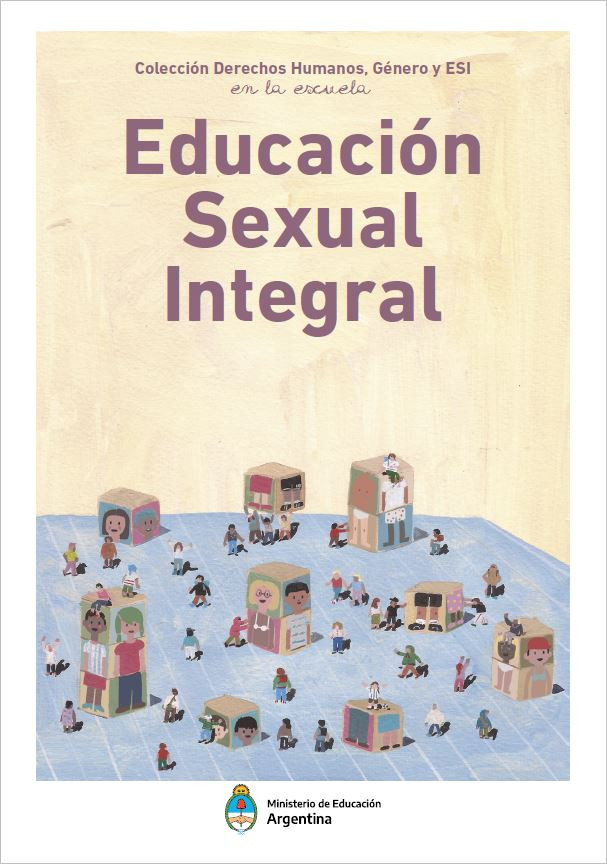 Comprehensive Sex Education Year of publication: 2021 Corporate author: Ministry of Education, Argentina What are we talking about when we say Comprehensive Sex Education? What challenges does integrality take on? In this issue of the Human Rights, Gender and CSE at school collection you will find a series of activities to work in the classroom and a theoretical framework to think about CSE. Educación Sexual Integral Year of publication: 2021 Corporate author: Ministry of Education, Argentina ¿De qué hablamos cuando decimos Educación Sexual Integral? ¿Qué desafíos asume la integralidad? En este número de la colección Derechos Humanos, Género y ESI en la escuela encontrarán una serie de actividades para trabajar en el aula y un marco teórico para pensar ESI.
  Buenos Aires Recommendations Year of publication: 2007 Corporate author: PRELAC II Recognizing that education is a public good and is the key to building a more just and better world for all, the Second Intergovernmental Meeting of the Regional Education Project, PRELAC II, held in the city of Buenos Aires, on the 29th and March 30, 2007, agrees the following recommendations as criteria and lines of action for national policies and international cooperation. Recomendaciones de Buenos Aires Year of publication: 2007 Corporate author: PRELAC II Reconociendo que la educación es un bien público y es la llave para la construcción de un mundo más justo y mejor para todos, la Segunda Reunión Intergubernamental del Proyecto Regional de Educación, PRELAC II, reunida en la ciudad de Buenos Aires, los días 29 y 30 de marzo de 2007, acuerda las siguientes recomendaciones como criterios y líneas de acción para las políticas nacionales y la cooperación internacional.
  For a Transnational History of Disability: Argentina, Brazil and Spain 20th Century Year of publication: 2022 Author: Gildas Bregain Corporate author: Latin American Council of Social Sciences (CLACSO) Publications on disability have been mostly limited to health, rehabilitation and education editorials. On the other hand, this new Editorial Series, open to social movements, platforms of struggle, academic groups, collaboration networks, public policy makers, citizens of all of our Latin America and the Caribbean and other latitudes of the global South, combines a multiplicity of edges, perspectives and approaches. This volume comes to occupy a vacant place in critical studies on disability in Latin America, which is to record the struggles for the rights of these people in our region. Introducing a historical problematization in this regard not only has an epistemological and political relevance, but also makes a contribution to the present and to contemporary disability policies. Para una historia transnacional de la discapacidad: Argentina, Brasil y España Siglo XX Year of publication: 2022 Author: Gildas Bregain Corporate author: Latin American Council of Social Sciences (CLACSO) Las publicaciones sobre discapacidad han estado circunscriptas mayoritariamente a las editoriales de salud, rehabilitación y educación. En cambio, esta nueva Serie Editorial, abierta a los movimientos sociales, a las plataformas de lucha, a los grupos académicos, a las redes de colaboración, a los hacedores de políticas públicas, a los ciudadanos y ciudadanas de toda nuestra América Latina y el Caribe y otras latitudes del Sur global, conjuga una multiplicidad de aristas, perspectivas y enfoques. El presente volumen viene a ocupar un lugar de vacancia en los estudios críticos sobre discapacidad en América Latina, que es el historiar las luchas por los derechos de dichas personas en nuestra región. Introducir una problematización histórica al respecto no solo posee una relevancia espistemológica y política, sino que también realiza una contribución al presente y a las políticas contemporáneas de discapacidad.