
Resources
Explore a wide range of valuable resources on GCED to deepen your understanding and enhance your research, advocacy, teaching, and learning.
126 Results found
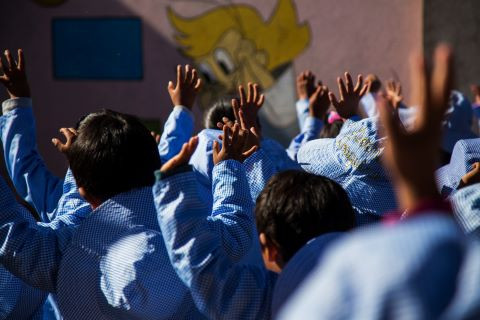 Weaving Education and Equity in Ibero-America Year of publication: 2024 Author: Ricardo Cuenca Corporate author: Organization of Ibero-American States for Education, Science and Culture (OEI) Addressing the complex relationship between education and inequality in Latin America is a challenge. Economic and social disparities create a complex network in the region. Despite progress, access remains an obstacle for many. During its 75-year history, the OEI has been working to break down the barriers that hinder equitable education for all. Ricardo Cuenca, member of the OEI Advisory Board, explains to what extent educational policies can contribute to mitigating these inequalities in Latin America. Tejiendo educación y equidad en Iberoamérica Year of publication: 2024 Author: Ricardo Cuenca Corporate author: Organización de Estados Iberoamericanos para la Educación, la Ciencia y la Cultura (OEI) Abordar la compleja relación entre educación y desigualdad en Iberoamérica es todo un desafío. Las disparidades económicas y sociales tejen un entramado complejo en la región. A pesar de los avances, el acceso sigue siendo un obstáculo para muchos. En esta travesía, la OEI ha venido trabajando durante sus 75 años de historia para derribar las barreras que obstaculizan una formación equitativa para todos. Ricardo Cuenca, miembro del Consejo Asesor de la OEI, nos explica hasta qué punto las políticas educativas pueden contribuir a mitigar esas desigualdades en Iberoamérica.
 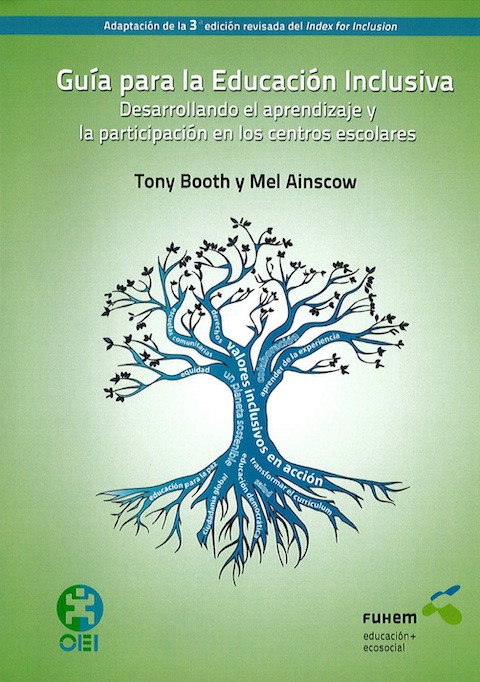 Index for Inclusion: Developing Learning and Participation in Schools Year of publication: 2015 Author: Tony Booth | Mel Ainscow Corporate author: Organization of Ibero-American States for Education, Science and Culture (OEI) | FUHEM Education This guide provides a set of support materials for self-assessment of all aspects of a school, related to inclusive education, including activities at recess and in the classroom, as well as in the communities and in the context in which it's found. All staff, parents and guardians, as well as the students themselves (whether children, adolescents, or youth) are invited to contribute to the implementation of a plan for inclusion. Guía para la Educación Inclusiva: Desarrollando el aprendizaje y la participación en los centros escolares Year of publication: 2015 Author: Tony Booth | Mel Ainscow Corporate author: Organización de Estados Iberoamericanos para la Educación, la Ciencia y la Cultura (OEI) | FUHEM Education Está guía brinda un conjunto de materiales de apoyo a la autoevaluación de todos los aspectos de un centro escolar, relacionados con la educación inclusiva, incluyendo las actividades en el recreo y en las aulas, así como en las comunidades y en el contexto en el que se encuentra. Se invita a que todo el personal, los padres y tutores, así como los propios estudiantes (sean niños, adolescentes o jóvenes), contribuyan a la implementación de un plan para la inclusión.
 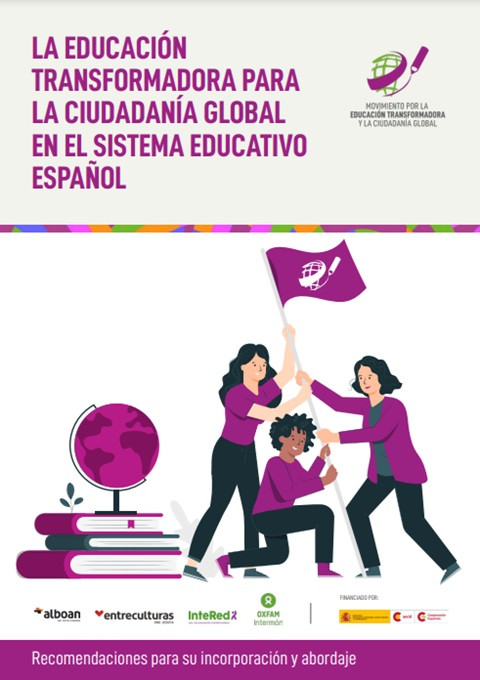 Transformative Education for Global Citizenship in the Spanish Education System: Recommendations for Its Incorporation and Approach Year of publication: 2022 Author: Fabiola Fares Sade | Carolina Del Río Usábel | Yénifer López Ramos | Marta Martín Pastor | Elisabet Santpere Baro Corporate author: Movement for Transformative Education and Global Citizenship This document is the Report corresponding to the research commissioned by the Movement for Transformative Education and Global Citizenship to the University of Santiago de Compostela within the framework of the agreement "For a transformative education and for Global Citizenship committed to the fulfillment of the SDGs" led by the NGOs Alboan, Entreculturas, InteRed and Oxfam Intermón, which has been approved and financed by the Spanish Agency for International Development Cooperation, AECID. This publication aims to highlight the most significant elements of the analysis and conclusions obtained in the research, whose ultimate objective is to state recommendations for the inclusion of Transformative Education approaches for Global Citizenship in the formal education system. These recommendations seek to be a contribution to the intersectoral dialogue between the different agents with responsibilities in the educational field, both at the state and regional level. La educación transformadora para la ciudadanía global en el sistema educativo español: Recomendaciones para su incorporación y abordaje Year of publication: 2022 Author: Fabiola Fares Sade | Carolina Del Río Usábel | Yénifer López Ramos | Marta Martín Pastor | Elisabet Santpere Baro Corporate author: Movement for Transformative Education and Global Citizenship El presente documento es el Informe correspondiente a la investigación encargada por el Movimiento por la Educación Transformadora y la Ciudadanía Global a la Universidad de Santiago de Compostela en el marco del convenio “Por una educación transformadora y para la Ciudadanía Global comprometida con el cumplimiento de los ODS” liderado por las ONGD Alboan, Entreculturas, InteRed y Oxfam Intermón que ha sido aprobado y financiado por la Agencia Española de Cooperación Internacional para el Desarrollo, AECID. Esta publicación pretende destacar los elementos más significativos del análisis y de las conclusiones obtenidas en la investigación, cuyo objetivo último es enunciar recomendaciones para la inclusión de los enfoques de la Educación Transformadora para la Ciudadanía Global en el sistema educativo formal. Estas recomendaciones buscan ser un aporte para el diálogo intersectorial entre los diferentes agentes con responsabilidades en el ámbito educativo, ya sea a nivel estatal así como autonómico.
 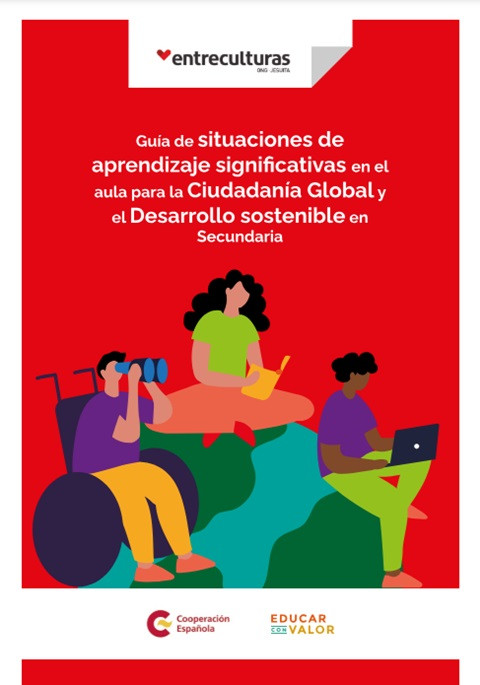 Guide to Significant Learning Situations in the Classroom for Global Citizenship and Sustainable Development in Secondary School Year of publication: 2024 Author: Helena Rodriguez de Guzmán Corporate author: Entreculturas | Spanish Agency for International Development Cooperation (AECID) This didactic proposal aims to promote new models of education so that they are more attractive, more conscious and with a profound and greater influence on the exercise of citizenship. Designed from the foundations of Transformative Education, it is committed to giving all students the opportunity to acquire the necessary skills for global and critical citizenship by supporting their vital growth in a comprehensive manner, as proposed by UNESCO (UNESCO, 2022). In turn, this teaching resource provides tools that support the educational strategies promoted by the LOMLOE whose main objective is to guarantee the comprehensive training of students, contributing to the development of their personality, the full exercise of human rights and active and democratic citizenship in the actual society. Guía de situaciones de aprendizaje significativas en el aula para la ciudadanía global y el desarrollo sostenible en secundaria Year of publication: 2024 Author: Helena Rodriguez de Guzmán Corporate author: Entreculturas | Spanish Agency for International Development Cooperation (AECID) Esta propuesta didáctica pretende impulsar nuevos modelos de educación para que éstos sean más atractivos, más conscientes y con una profunda y mayor influencia en el ejercicio de la ciudadanía. Diseñada desde los fundamentos de la Educación Transformadora, apuesta por dar la oportunidad a todo el alumnado a adquirir las competencias necesarias para una ciudadanía global y crítica desde el acompañamiento a su crecimiento vital de forma integral, tal y como propone la UNESCO (UNESCO, 2022). A su vez, este recurso didáctico aporta herramientas que apoyan las estrategias educativas que promueve la LOMLOE cuyo objetivo principal es garantizar la formación integral del alumnado contribuyendo al desarrollo de su personalidad, el ejercicio pleno de los derechos humanos y a una ciudadanía activa y democrática en la sociedad actual.
  Being and Knowing: Teaching Profile for Sustainable Development and Global Citizenship Year of publication: 2023 Corporate author: InteRed Document of a pedagogical nature that describes the characteristics of the teaching profile necessary to educate in Sustainable Development and Global Citizenship. Identify what skills are necessary to carry out transformative education that responds to global challenges as proposed by social movements, NGOs and civil society. This publication is the result of collaborative work carried out during the years 2022 and 2023 by a Movement 4.7 team formed for this purpose. Ser y Saber: Perfil docente para el Desarrollo Sostenible y la Ciudadanía Global Year of publication: 2023 Corporate author: InteRed Documento de carácter pedagógico que describe qué características tiene el perfil docente necesario para educar en el Desarrollo Sostenible y la Ciudadanía Global. Identifica qué competencias necesarias para llevar a cabo una educación transformadora que dé respuesta a los retos globales conforme proponen movimientos sociales, ONG y sociedad civil. Esta publicación es el resultado de un trabajo colaborativo realizado durante los años 2022 y 2023 por un equipo del Movimiento 4.7 conformado con ese fin.