
Resources
Explore a wide range of valuable resources on GCED to deepen your understanding and enhance your research, advocacy, teaching, and learning.
16 Results found
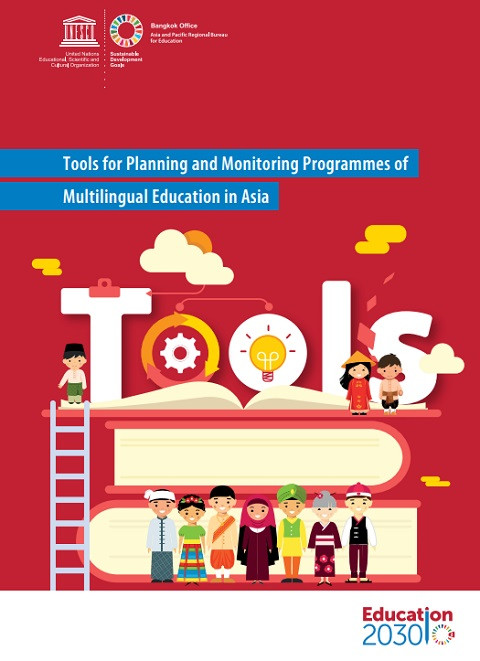 Tools for Planning and Monitoring Programmes of Multilingual Education in Asia Year of publication: 2020 Corporate author: UNESCO | UNESCO Bangkok This booklet provides some tools that programme personnel may use in the M&E of their multilingual education (MLE) programmes. This booklet complements the five booklets of UNESCO’s MTB MLE Resource Kit – Including the Excluded: Promoting Multilingual Education (2018).
 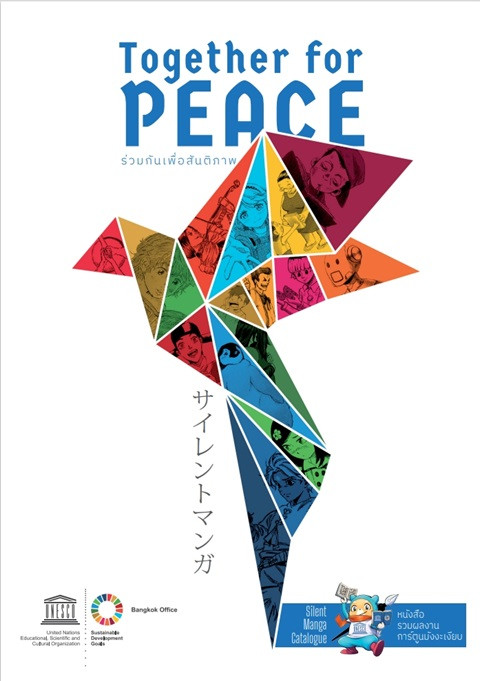 Together for Peace: Silent Manga Catalogue Year of publication: 2020 Author: Walden Schertz | Jeremy Clay | Santibhap Ussavasodhi Corporate author: UNESCO Bangkok | Coamix This Together for Peace Silent Manga Catalogue is a compilation of silent manga – manga stories told entirely through illustration without the use of dialogue. These works of art were selected from 274 entries submitted by artists in 117 countries worldwide to join SILENT MANGA AUDITION® Round 13 held under the theme Together for Peace, in collaboration with UNESCO Bangkok, the Asia and Pacific Regional Bureau for Education. Silent manga is a powerful medium of communication in the Asia-Pacific. Although the region is the most diverse in the world, it can be enjoyed by anyone regardless of their background. Silent manga has no language barrier. These works showcase different reflections of peace as expressed by artists around the world while conforming to the Japanese manga style.
 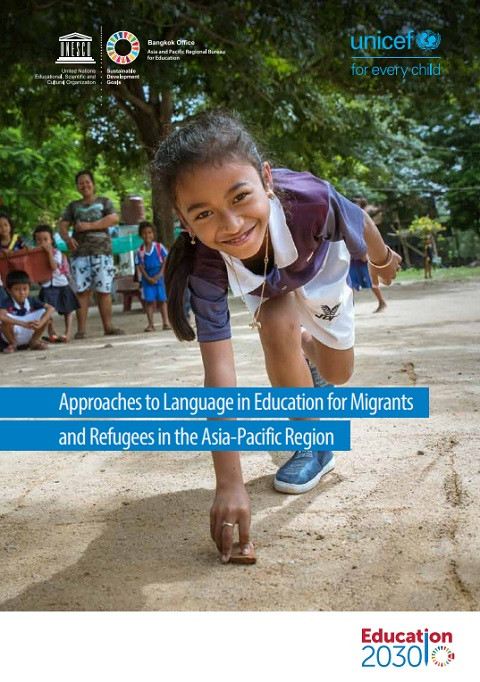 Approaches to Language in Education for Migrants and Refugees in the Asia-Pacific Region Year of publication: 2020 Corporate author: UNESCO | United Nations Children's Fund (UNICEF) UNESCO Bangkok commissioned this paper to examine strategies for addressing the needs of refugee, migrant and internally displaced children in the Asia-Pacific region. This document aims to create a stronger knowledge base to support Member States as they formulate education policies that are responsive to the needs of such children. This document aims to:Examine how linguistic diversity and human mobility intersect and impact minority, migrant and refugee children’s access to quality, inclusive educationLink policy priorities to promising practices, based on international frameworks and lessons learned from successful programmesRecommend steps for improving language-in-education policies and their implementation. To do this, this paper examines:Global and regional trends in migrationThe impact of migration on children’s educationLinguistic diversity and its implications for language-in-education policies and practicesResearch and resources that support inclusive quality education for migrant and refugee children.
  Multi-Stakeholder Approaches to Education for Sustainable Development in Local Communities: Towards Achieving the Sustainable Development Goals in Asia Year of publication: 2020 Corporate author: UNESCO The idea for this publication first emerged from the ‘10th Asia-Pacific RCE Regional Meeting and Symposium on the Sustainable Development Goals: From Goals to Action’, held from 2 to 4 November 2017 at the India Habitat Centre in New Delhi, India. The case studies presented at the symposium became the basis for this publication.The cases presented in this publication show how RCEs create solutions that enable sustainable development practices in local communities by utilizing education, innovative learning methods and multi-stakeholder partnerships. Local stakeholders take ownership of the sustainability processes, consistently address the targeted SDGs, and demonstrate RCE contributions to the ESD for 2030 priority action areas – policy, education and training settings, educators, youth and community.
  Reflect–Share–Act: A Guide to Community-based Education for Sustainable Development Year of publication: 2021 Corporate author: UNESCO This guidebook aspires to build a community where learning for sustainable development takes place everywhere for everyone as an ongoing practice. It introduces you to Reflect-Share-Act, a process to discover and define sustainable development in your own contexts together with others in your community. The guide compiles resources that can support this learning process, including stories of various communities’ actual experiences of Reflect-Share-Act.
 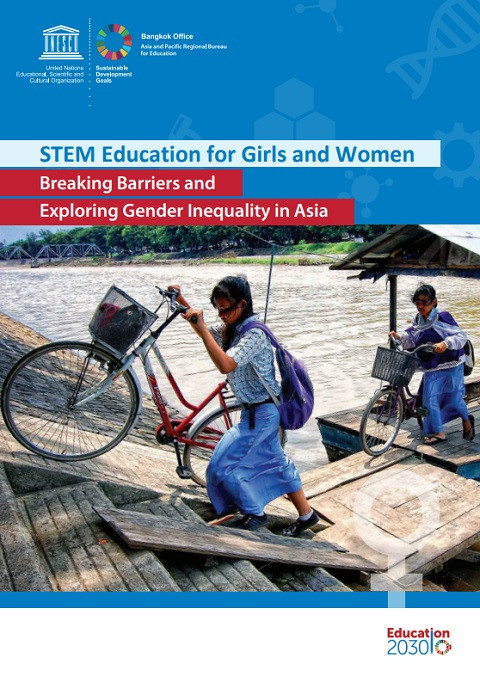 STEM Education for Girls and Women: Breaking Barriers and Exploring Gender Inequality in Asia Year of publication: 2020 Corporate author: UNESCO Bangkok | UNESCO Science, Technology, Engineering and Mathematics (STEM) fields are considered catalysts for the achievement of the 2030 Agenda for Sustainable Development. Yet, particularly for STEM fields, girls and women, for a multitude of social, cultural and psychological reasons, engage and participate at a lower rate than boys and men. This research collection aims to highlight the contextual barriers that girls and women face in STEM education and careers and offer concrete examples of interventions that successfully encourage participation of girls and women in STEM. These eight case studies from across Asia explore both the barriers and the achievements in SDG 4 and SDG 5, and give context-specific analysis of different aspects of gender disparities in the respective countries.