
Resources
Explore a wide range of valuable resources on GCED to deepen your understanding and enhance your research, advocacy, teaching, and learning.
518 Results found
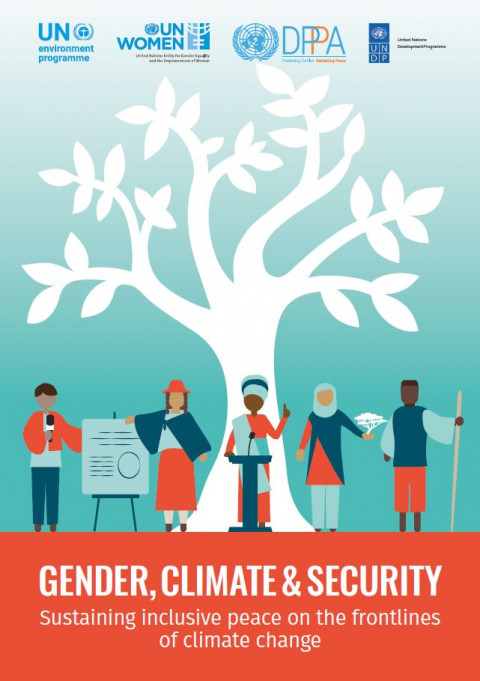 Gender, Climate & Security: Sustaining Inclusive Peace on the Frontlines of Climate Change Year of publication: 2020 Corporate author: United Nations Environment Programme (UNEP) | United Nations Entity for Gender Equality and the Empowerment of Women (UN Women) | United Nations Development Programme (UNDP) Climate change is a defining threat to peace and security in the 21st century – its impacts felt by everyone, but not equally. Gender norms and power dynamics shape how women and men of different backgrounds experience or contribute to insecurity in a changing climate. Grounded in a series of case studies from research and programming experience, this report offers a comprehensive framework for understanding how gender, climate and security are inextricably linked. The report assesses entry points for action across existing global agendas and suggests concrete recommendations for how policymakers, development practitioners and donors can advance three inter-related goals: peace and security, climate action and gender equality.
  Adult education and development: global citizenship education (no 82, 2015) Year of publication: 2015 Corporate author: DVV International Issue 82/2015 of the international journal Adult Education and Development (AED) explores the topic global citizenship education. In the international debates, we are witnessing a growing interest in the concept of global citizenship education. It is one of the three pillars of the Global Education First Initiative (GEFI) launched by the United Nations Secretary-General in 2012 and is being internationally promoted by the work of UNESCO. According to the GEFI, education that fosters global citizenship “must fully assume its central role in helping people to forge more just, peaceful, tolerant and inclusive societies”. The 2030 Agenda for Sustainable Development, adopted by the United Nations General Assembly in September 2015, refers to global citizenship as one tool to “ensure that all learners acquire the knowledge and skills needed to promote sustainable development”. The ambitions are high, but the concrete understanding of global citizenship education and its implications differ widely. Is it just another abstract concept? What meaning can the word citizenship have if it does not refer to a specific nation? What do people in different parts of the world understand by global citizenship? And how can global citizenship education be put into practice? Adult Education and Development decided to engage in the debate and invited authors from different regions, backgrounds and disciplines to share their thoughts and experiences on the topic and related questions such as identity, migration, peace, the meaning of citizenship, globalisation and sustainable development. Irina Bokova, Director-General of UNESCO, explains the organisation’s understanding of global citizenship education, and why adult education and “learning beyond the classrooms” are crucial when it comes to promoting global citizenship. Canadian author and journalist Doug Saunders (“Arrival City: How the Largest Migration in History Is Reshaping Our World”) talks about the challenges and opportunities of what he refers to as the last great human migration, that from the countryside to the cities, and about the positive role adult education can play during this transition. In the section “Citizens’ voices” people from all over the world talk about what global citizenship means to them and in what ways they see themselves as global citizens. And photographer Viktor Hilitksi travelled through Belarus and captured with his camera how villages rediscover their local traditions and cultures. Éducation des adultes et développement: L'éducation à la citoyenneté mondiale (ECM) (no 82, 2015) Year of publication: 2015 Corporate author: DVV International Le numéro 82/2015 de la revue internationale l’Éducation des Adultes et Développement(AED) explore le sujet de l'éducation à la citoyenneté mondiale. Dans les débats internationaux, nous assistons à un intérêt croissant pour le concept d'éducation à la citoyenneté mondiale. Il est l'un des trois piliers de l'Initiative Mondiale pour l'Éducation Avant Tout (GEFI) lancé par le Secrétaire général des Nations Unies en 2012 et est promu à l'échelle internationale par le travail de l'UNESCO. Selon le GEFI, l'éducation qui favorise la citoyenneté mondiale "doit assumer pleinement son rôle central en aidant les gens à forger plus justes, des sociétés pacifiques, tolérantes et inclusives". L'Agenda 2030 pour le développement durable, adoptée par l'Assemblée générale des Nations Unies en Septembre 2015, se réfère à la citoyenneté mondiale comme un outil pour «faire en sorte que tous les apprenants à acquérir les connaissances et les compétences nécessaires pour promouvoir le développement durable». Les ambitions sont grandes, mais la compréhension concrète de L'éducation à la citoyenneté mondiale(ECM) et ses implications diffèrent largement. Est-il juste un autre concept abstrait? Quel sens le mot citoyenneté peut avoir si elle ne se réfère pas à une nation spécifique? Qu'est-ce que les gens dans les différentes parties du monde comprennent par la citoyenneté mondiale? Comment l'éducation à la citoyenneté mondiale(ECM) peut-elle être mise en pratique? Education des adultes et développement ont décidé de participer au débat et a invité les auteurs de différentes régions, milieux et disciplines à partager leurs réflexions et expériences sur le sujet et les questions connexes telles que l'identité, la migration, la paix, le sens de la citoyenneté, la mondialisation et le développement durable. Irina Bokova, Directrice générale de l'UNESCO, explique la compréhension de l'organisation de l'éducation à la citoyenneté mondiale, et pourquoi l'éducation des adultes et de «l'apprentissage au-delà des salles de classe" sont cruciales en matière de promotion de la citoyenneté mondiale. L'auteur et journaliste canadien Doug Saunders ( «La ville d'arrivée: comment la plus grande migration dans l'histoire remodèle notre monde») parle des défis et des opportunités de ce qu'il appelle la dernière grande migration humaine, celle des campagnes aux villes et Sur le rôle positif que l'éducation des adultes peut jouer au cours de cette transition. Dans la section «La voix des citoyens», des gens du monde entier parlent de ce que la citoyenneté mondiale signifie pour eux et de la manière dont ils se perçoivent comme des citoyens du monde. Et le photographe Viktor Hilitksi a parcouru la Biélorussie et a capturé avec sa caméra comment les villages redécouvrent leurs traditions et cultures locales.
  Éducation des adultes et développement: l’éducation à la citoyenneté mondiale (no 82, 2015) Year of publication: 2015 Corporate author: DVV International Issue 82/2015 of the international journal Adult Education and Development (AED) explores the topic global citizenship education. In the international debates, we are witnessing a growing interest in the concept of global citizenship education. It is one of the three pillars of the Global Education First Initiative (GEFI) launched by the United Nations Secretary-General in 2012 and is being internationally promoted by the work of UNESCO. According to the GEFI, education that fosters global citizenship “must fully assume its central role in helping people to forge more just, peaceful, tolerant and inclusive societies”. The 2030 Agenda for Sustainable Development, adopted by the United Nations General Assembly in September 2015, refers to global citizenship as one tool to “ensure that all learners acquire the knowledge and skills needed to promote sustainable development”. The ambitions are high, but the concrete understanding of global citizenship education and its implications differ widely. Is it just another abstract concept? What meaning can the word citizenship have if it does not refer to a specific nation? What do people in different parts of the world understand by global citizenship? And how can global citizenship education be put into practice? Adult Education and Development decided to engage in the debate and invited authors from different regions, backgrounds and disciplines to share their thoughts and experiences on the topic and related questions such as identity, migration, peace, the meaning of citizenship, globalisation and sustainable development. Irina Bokova, Director-General of UNESCO, explains the organisation’s understanding of global citizenship education, and why adult education and “learning beyond the classrooms” are crucial when it comes to promoting global citizenship. Canadian author and journalist Doug Saunders (“Arrival City: How the Largest Migration in History Is Reshaping Our World”) talks about the challenges and opportunities of what he refers to as the last great human migration, that from the countryside to the cities, and about the positive role adult education can play during this transition. In the section “Citizens’ voices” people from all over the world talk about what global citizenship means to them and in what ways they see themselves as global citizens. And photographer Viktor Hilitksi travelled through Belarus and captured with his camera how villages rediscover their local traditions and cultures.
 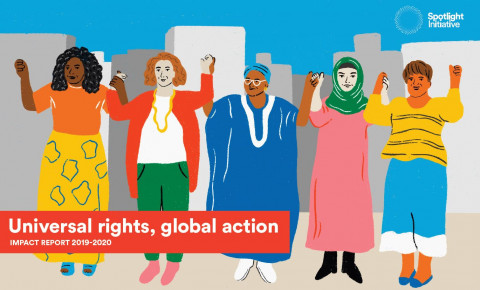 Universal Rights, Global Action: Impact Report 2019-2020 Year of publication: 2020 Corporate author: Spotlight Initiative Universal rights, global action is a shortened, visual adaptation of the 2019 Global Annual Narrative Progress Report. The Spotlight Initiative is a global, multi-year partnership between the European Union and the United Nations to eliminate all forms of violence against women and girls by 2030. This report outlines the Spotlight Initiative’s key signature results from 2019.The 32-page document highlights the ways the Spotlight Initiative country and regional programmes have meaningfully reached women and girls, including those facing multiple and intersecting forms of discrimination.
  Programs of Peace Education in Pre-University Education on the Light of Some Countries’ Experiences and the Extent of Benefit in Egypt Year of publication: 2014 Author: Amel Ahmed Hassan Mohamed Corporate author: Association of Arab Educators Education for peace has got an international, regional and local interests, in particular, today's world desperately needs more than ever before to face the problems afflicting the human race, and the conflict expected to increase in the coming years. This situation confirms the importance of achieving peace in all dimensions with oneself, family, society, and the environment.This study aimed to investigate the experiences of some countries in the field of education for peace and to draw some benefits from them. For achieving this aim, the study followed the Descriptive-Analytic Approach because of its appropriateness to the nature of the study. The sample of study dealt with three experiments in the field of education for peace in Northern Ireland, Bosnia and Herzegovina, and Sierra Leone, which were chosen after passing through a relatively long period of conflicts and disputes. By analyzing the three experiments, the similarities and differences among countries were reviewed in terms of, period and nature of conflict, foundations, objectives and content of the programs, teacher training. The study achieved some benefits through reviewing literature and analyzing the three experiences. The suggestions of the study were classified under some themes, including: foundations of peace education, its objectives, contents, and teacher training. برامج التربية من أجل السلام بالتعليم قبل الجامعي في بعض الدول وامكانية الاستفادة منها في مصر Year of publication: 2014 Author: Amel Ahmed Hassan Mohamed Corporate author: Association of Arab Educators تحظى التربية من أجل السلام باهتمام دولي وإقليمي ومحلى، ولا سيما أن عالم اليوم أحوج أكثر من ذي قبل لمواجهة المشكلات التي يعاني منها الجنس البشري والصراعات المرتقب زيادتها في السنوات القادمة؛ هذا بالإضافة إلى تنامي معدلات العنف المجتمعي ومظاهره؛ مما يدعم ضرورة السعي لتحقيق السلام بكافة أبعاده مع النفس وفي الأسرة وداخل المجتمع ومع البيئة. لذا هدفت هذه الدراسة إلى رصد تجارب بعض الدول في مجال التربية من أجل السلام وتقديم أوجه الاستفادة منها للارتقاء بمستوى تقديم هذا الاتجاه التعليمي المعاصر بنظام التعليم بمصر. لتحقيق هذا الهدف تم الاستناد إلى المنهج الوصفي التحليلي حيث أنه أكثر ملائمة لطبيعة الدراسة، وقد تكونت عينة الدراسة من ثلاث تجارب في مجال التربية من أجل السلام بالدول الآتية: إيرلندا الشمالية، والبوسنة والهرسك، وسيراليون، والتي تم اختيارها لكونها عاصرت فترة من الصراعات والنزاعات الطويلة نسبياً، تلتها مبادرات لدمج التربية من اجل السلام في النظام التعليمي. وقد تم تحليل التجارب الثلاث في ضوء عدد من المحاور شملت: السياق العام للدولة، والجهود المبكرة للتربية من أجل السلام، وأسسها، وأهدافها، وأليات تضمينها في نظام التعليم، وتدريب المعلمين بكل دولة. وقد توصلت الدراسة إلى عدد من الدروس المستفادة التي تم رصدها من خلال ما ورد من أدبيات عربية وأجنبية، وتجارب الدول الثلاث، والتي تم تصنيفها تحت المحاور الآتية: فترة الصراع وطبيعته، أسس التربية من أجل السلام، وأهدافها، وأليات تضمينها في نظام التعليم، وتدريب المعلمين.
 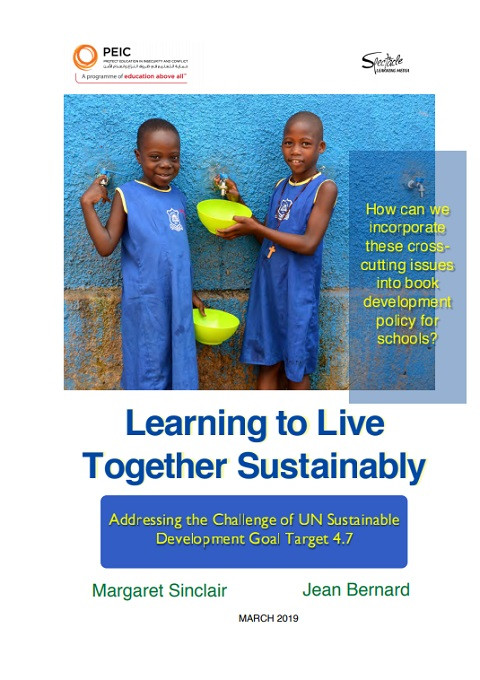 Learning to Live Together Sustainably: Addressing the Challenge of UN Sustainable Development Goal Target 4.7 Year of publication: 2019 Author: Margaret Sinclair | Jean Bernard Corporate author: Protect Education in Conflict and Insecurity (PEIC) | Spectacle Learning Media The practical advice and guidelines in this book help support learning to live together, conflict transformation and peace at the individual, group and community levels. The framework for developing widely accessible, high quality learning materials supports the UN Sustainable Development Goals and is relevant to formal and non-formal education activities and projects. This document also raises important issues about the professional responsibilities of policy-makers at global and national level, who determine what content is addressed in the classroom. In particular, it addresses the need for education materials that support cross-cutting issues such as learning to live together, global citizenship education, and education for sustainable development.
 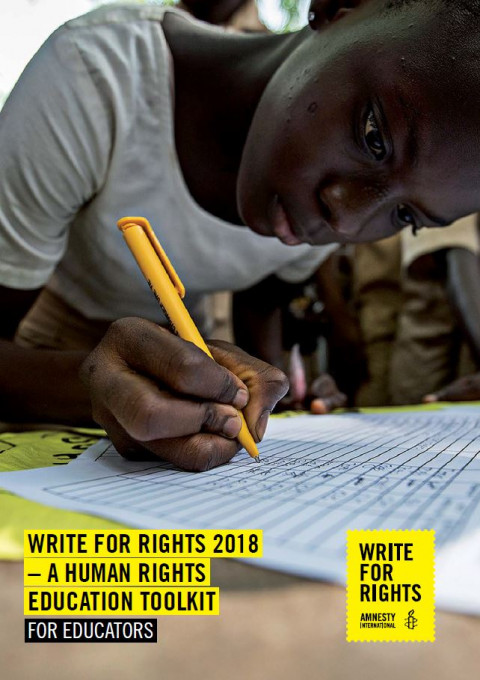 Write for Rights 2018: A Human Rights Education Toolkit for Educators Year of publication: 2018 Corporate author: Amnesty International The annual Write for Rights (W4R) campaign is one of Amnesty International’s biggest human rights events. In 2018 the campaign focuses on women human rights defenders who have suffered human rights violations or are at great risk because of the positions they have taken on certain human rights issues.This Human Rights Education toolkit was created to support teachers’ participation with their students in the W4R campaign. It provides a broad perspective on human rights issues and offers the opportunity to open young people’s minds to global concerns. By learning about and writing persuasive letters to help end human rights violations and achieve justice, teachers and students contribute to the international human rights movement and see for themselves how words can make a difference in the world.This toolkit was created for students aged 13 and above and is primarily designed for use in a school setting: both inside the classroom as well as in clubs or school-wide events. Activities can also be adapted for use in other, non-formal education contexts such as youth groups and community settings. The toolkit contains general activities on human rights and highlights six women human rights defenders from the W4R campaign who have made extraordinary contributions to the advancement of human rights around the world. Écrire pour les droits 2018: Manuel d´éducation aux droits humains pou les éducateurs et éducatrices Year of publication: 2018 Corporate author: Amnesty International La campagne annuelle Écrire pour les droits est l’une des plus importantes actions d’Amnesty International autour des droits humains. L’édition 2018 est axée sur les défenseures des droits humains qui sont victimes de violations de leurs droits fondamentaux ou en grand danger du fait de leur position sur certaines questions relatives aux droits humains.Le manuel Éducation aux droits humains vise à favoriser la participation des enseignant-e-s et de leurs élèves à la campagne Écrire pour les droits. Il offre une perspective large sur les questions relatives aux droits humains et la possibilité de sensibiliser les jeunes à des préoccupations mondiales. En en apprenant davantage et en rédigeant des lettres convaincantes pour aider à mettre fin aux violations des droits humains et à obtenir justice, les enseignant-e-s et leurs élèves contribuent au mouvement international des droits humains et voient par elles/eux-mêmes que les mots peuvent faire la différence.Ce manuel est destiné aux élèves de 13 ans et plus pour une utilisation en contexte scolaire, tant en classe que dans des clubs ou des manifestations organisées à l’école. Les activités peuvent cependant être adaptées à des contextes d’apprentissage plus informels comme des groupes de jeunes et des associations. Le manuel propose des activités générales sur les droits humains et met en avant six défenseures des droits humains choisies au titre de la campagne Écrire pour les droits qui ont apporté des contributions extraordinaires à la progression des droits fondamentaux dans le monde entier.