
Resources
Explore a wide range of valuable resources on GCED to deepen your understanding and enhance your research, advocacy, teaching, and learning.
2,193 Results found
 Learning with Intangible Heritage for a Sustainable Future: Guidelines for Educators in the Asia-Pacific Region Year of publication: 2015 Corporate author: UNESCO Bangkok The guide provides teacher educators and teachers with an understanding of the concept of intangible cultural heritage (ICH) and explains why ICH should be integrated into the curriculum in tandem with the principles and perspectives of Education for Sustainable Development (ESD). This guide explains how the strategic incorporation of ICH elements and ESD principles into the curriculum can enable learners to gain the knowledge and skills that are necessary for ensuring sustainable development in the future. Нематериальное наследие в системе обучения в интересах устойчивого будущего Year of publication: 2015 Corporate author: UNESCO Bangkok Руководство предоставляет работникам образования и преподавателям понимание концепции нематериального культурного наследия и объясняет внедрения нематериального культурного наследия в учебные планы вместе с принципами и теорией Образования в интересах устойчивого развития (ОУР). Руководство объясняет, как стратегическое включение элементов нематериального культурного наследия и принципов ОУР в учебные планы может помочь учащимся получить знания и навыки, необходимые для обеспечения устойчивого развития в будущем.ЮНЕСКО разработала настоящее руководство на основании результатов пилотных проектов, проведенных в четырех странах в Азиатско-Тихоокеанском регионе, где участники разработали своиместные руководства и материалы для включения элементов нематериального культурного наследия и принципов ОУР в образовательный процесс. Примеры нематериального культурного наследия, приведенные в данном руководстве, не являются более важными, чем другие, и не обязательно должны быть приоритетными. Они скорее представлены в качестве иллюстративных примеров.
 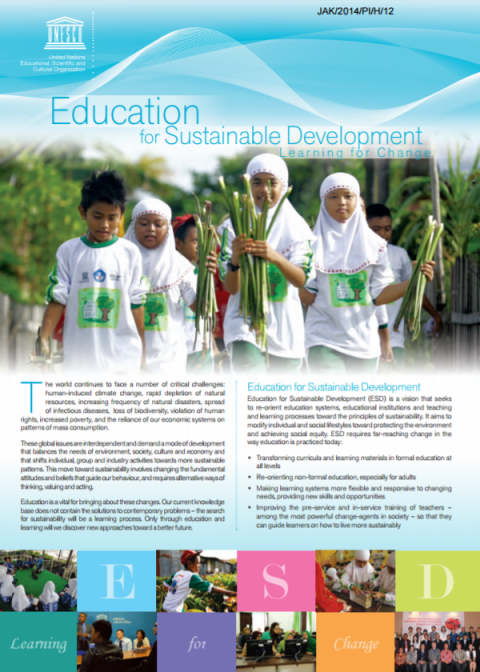 Education for Sustainable Development: Leaning for Change Year of publication: 2014 Corporate author: UNESCO Jakarta Education for Sustainable Development: Leaning for Change
  Education and Lifelong Learning for Sustainable Development: Asia-Pacific Regional Consultation; 12 - 13 February, 2015, Vientiane, Lao PDR Year of publication: 2015 Author: Heribert Hinzen | Ounpheng Khammang | Somsy Southivong | Timote Masima Vaioleti The book contains all the texts which were transformed from the presentations during the consultations into written manuscripts.
 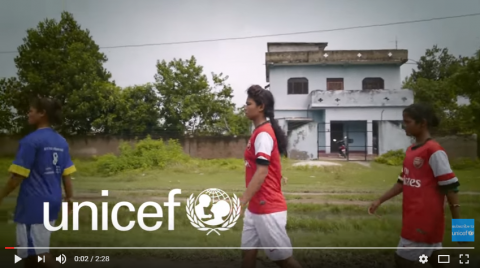 From the football field to the classrooms of Nepal Year of publication: 2015 Corporate author: United Nations Children's Fund (UNICEF) “Before, we didn’t know how to study. We were not motivated. I am transformed because of sports. And my studies have also improved,” Kalita says. In Solakhpur, Nepal, football is improving the life of 16-year-old Kalita and those of other adolescent girls through a sports programme meant to get more children into school and boost their academic success.
 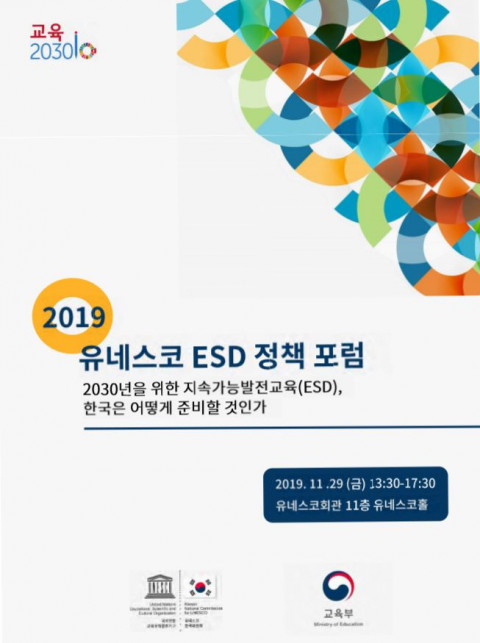 2019 유네스코 ESD 정책 포럼: 2030년을 위한 지속가능발전교육(ESD), 한국은 어떻게 준비할 것인가 Year of publication: 2019 Corporate author: 대한민국 교육부 | 유네스코한국위원회 2019년 11월에 유네스코한국위원회(ESD한국위원회)에서 주최한 '2019 유네스코 지속가능발전교육 정책 포럼'의 자료집으로 행사개요와 토론자료, 지속가능발전교육에 대한 부록을 수록하고 있다.2030년을 위한 지속가능발전교육(ESD), 한국은 어떻게 준비할 것인가를 주제로 ESD for 2030 체계 수립 및 이행 준비에 대한 국제사회 최신 동향 공유, 국가 이니셔티브 구축 관련 한국 차원의 정책적 준비 및 운영 체계 수립 방안 논의, GAP 참여기관 등 국내 ESD 이행 핵심 주체별 활동 내용 공유 및 제언 등이 주요 내용이다.
 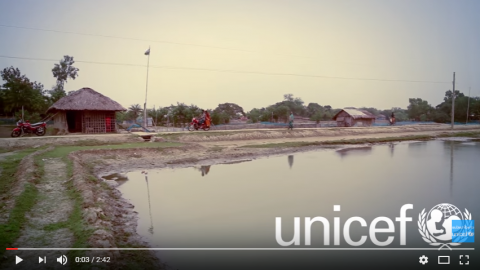 Bridging the education gap in Bangladesh Year of publication: 2015 Corporate author: United Nations Children's Fund (UNICEF) “If this school didn’t exist, I wouldn’t be here… I would be forced to work,” Mohammed, 13, says. Mohammed attends an ability-based learning school in Shyamnagar, Bangladesh supported by UNICEF’s Let Us Learn initiative. Many children in Bangladesh are out of school because they never enrolled or dropped out, largely due to poverty and child labour.
 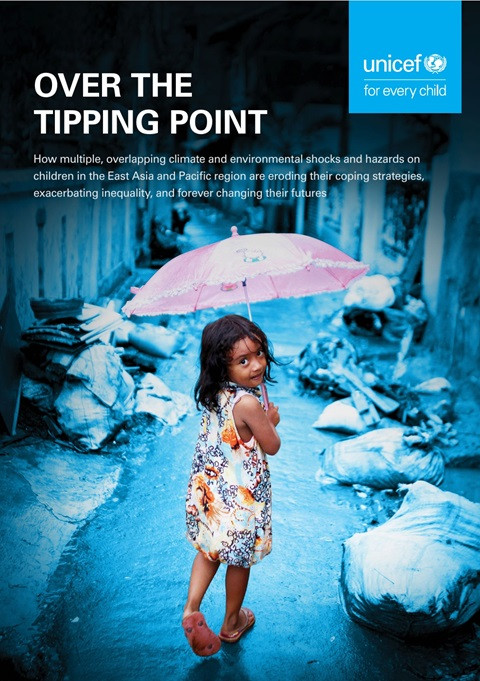 Over the Tipping Point: How Multiple, Overlapping Climate and Environmental Shocks and Hazards on Children in the East Asia and Pacific Region are Eroding their Coping Strategies, Exacerbating Inequality, and Forever Changing Their Futures Year of publication: 2023 Corporate author: United Nations Children's Fund (UNICEF) This report unveils the intensifying frequency and compounding effects of climate-related hazards intertwined with non-climate shocks like the COVID-19 pandemic and socio-economic challenges. Given that children are already facing the impacts of climate change, adaptation and resilience measures are needed now to reduce the full force of impacts. This report recommends three areas to do so: Children have continued access to the key services they need: This requires investing in climate-smart and disaster-resilient education, health, and water, sanitation and hygiene (WASH) services for children, so that children can access these services despite the shocks they face; Child protection and social protection systems are in place and are climate-responsive; and There is understanding of what to expect and how to adjust as necessary, establishing and utilizing strong early warning, risk management and disaster preparedness systems. In all of this, children and young people must be at the forefront of our actions. Urgency demands that they take action themselves, leading the way with innovative solutions for both mitigation and adaptation. We must support their efforts, providing them with the necessary skills and resources to amplify their work. Above all, we owe them every opportunity for success as we work together to secure a better world for generations to come.
  한국의 SDGs 이행보고서 2021 Year of publication: 2021 Author: 박영실 | 홍현정 | 진유강 | 윤민희 | 이은경 Corporate author: 통계개발원 2030년 기한의 유엔 지속가능발전목표(SDGs) 이행 상황을 점검하는『한국의 SDGs 이행보고서 2021』을 발간. 동 보고서는 유엔 SDGs 지표를 근거로 성평등, 산업재해, 기후변화 등에 관한 한국의 지속가능발전 현황을 국제 비교 분석하였고, 이행과정에서 어떤 집단이 뒤처져 있는지도 보여준다. 특히, 이번 보고서에서는 코로나19의 영향을 볼 수 있는 SDGs 지표를 중심으로 분석하였다. 이를 통해, 회복을 위한 사회·환경·경제 정책의 방향성을 가늠해 볼 수 있을 것으로 기대된다. 본 저작물은 통계청 통계개발원에서 2021년작성하여 공공누리 제3유형으로 개방한 '한국의 SDGs 이행보고서 2021(작성자:박영실)'을 이용하였으며, 해당 저작물은 통계청 통계개발원 홈페이지(https://kostat.go.kr/)에서 무료로 내려받으실 수 있습니다.
  한국의 SDGs 이행보고서 2022 Year of publication: 2022 Author: 박영실 | 진유강 | 윤민희 | 김소연 Corporate author: 통계개발원 『한국의 SDGs 이행보고서 2022』는 데이터와 통계를 근거로 한국의 지송가능발전 현황을 진단하였고 고품질의 국제 비교 가능 자료와 증거 기반 분석에 기초해 이해하기 쉽게 시각화했습니다. 본 보고서가 전 세계가 목표한 SDGs 달성에 한 걸음 더 다가갈 수 있는 나침반 역할을 하기 바라며 증거 기반 정책의 핵심 지표로 이용되기를 기대합니다. 본 저작물은 통계청 통계개발원에서 2022년작성하여 공공누리 제3유형으로 개방한 '한국의 SDGs 이행보고서 2022(작성자:김석호)'을 이용하였으며, 해당 저작물은 통계청 통계개발원 홈페이지(https://kostat.go.kr/)에서 무료로 내려받으실 수 있습니다.