
Resources
Explore a wide range of valuable resources on GCED to deepen your understanding and enhance your research, advocacy, teaching, and learning.
1,471 Results found
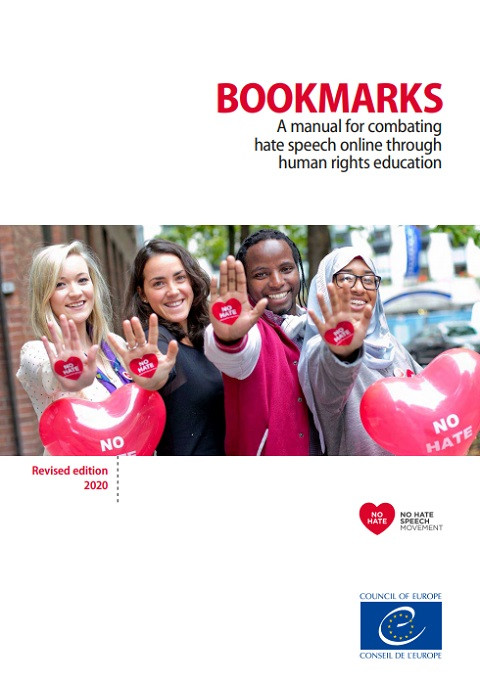 Connexions: Manuel pour la lutte contre le discours de haine en ligne par l’éducation aux droits humains Year of publication: 2020 Author: Ellie Keen | Mara Georgescu Corporate author: Conseil de l'Europe L’action du Conseil de l’Europe en faveur de la démocratie est fortement axée sur l’éducation : l’éducation à l’école, mais aussi l’éducation en tant que pratique de la démocratie tout au long de la vie, comme dans le cadre des activités d’apprentissage non formel. L’éducation aux droits humains et l’éducation à la citoyenneté démocratique font partie intégrante du socle que nous devons bâtir pour faire de la démocratie une réalité durable.Le discours de haine est l’une des formes les plus inquiétantes de racisme et de discrimination qui sévit aujourd’hui en Europe, amplifiée par Internet et par les médias sociaux. Le discours de haine en ligne n’est que la partie visible de l’iceberg de l’intolérance et de l’ethnocentrisme. Les jeunes sont directement concernés, en tant qu’acteurs et victimes d’atteintes aux droits humains en ligne. L’Europe a besoin que les jeunes veillent aux droits de l’homme et les protègent : c’est là l’assurance-vie de la démocratie.Connexions a été créé dans le cadre du Mouvement contre le discours de haine, autrement dit, la campagne de la jeunesse du Conseil de l’Europe pour les droits humains en ligne. C’est un outil précieux pour les éducateurs qui souhaitent aborder le discours de haine en ligne sous l’angle des droits de l’homme, tant dans le système éducatif formel que dans le cadre de l’éducation informelle. Ce manuel a été conçu pour travailler avec des apprenants de 13 à 18 ans, mais les activités proposées peuvent être adaptées à d’autres groupes d’âge.Cette édition de Connexions a été révisée après que le Conseil de l’Europe a mis fin à la coordination de la campagne de jeunesse liée au Mouvement contre le discours de haine. Bien que la campagne ait pris officiellement fin, il importe de poursuivre l’éducation et la sensibilisation des jeunes pour combattre le discours de haine et promouvoir les valeurs liées aux droits humains.
  Peace Education: Handbook for Educators Year of publication: 2015 Corporate author: International Falcon Movement-Socialist Educational International (IFM-SEI) | Council of Europe This document presents peace education tools so that children and adolescents can play a vital role, changing individual attitudes and examining the social, economic and political context to understand where conflicts come from and how to transform them. Education à la Paix: Manuel de l’éducatrice et de l’éducateur Year of publication: 2015 Corporate author: International Falcon Movement-Socialist Educational International (IFM-SEI) | Conseil de l'Europe Cet ouvrage en deux parties est basé sur les résultats de notre travail, ainsi que des outils developpés et testés par certaines de nos organisations membres: • De la matière à réflexion, des conseils et des informations pour les éducateurs·trices à la paix. Des activités éducatives que vous pouvez réaliser avec les enfants, les jeunes ou les autres chefs de groupe et les pairs éducateurs·trices. La deuxième partie comprend trois chapitres. Chacun de ces derniers se concentre sur un aspect différent de l’éducation de la paix. Comprendre le conflit introduit différentes questions sur le conflit et la guerre, la sensibilisation sur ses causes et ses conséquences. Transformer le conflit met l’accent sur la dynamique du conflit et les différentes façons dont nous pouvons traiter avec elle - de manière agressive ou constructive. Faire la paix vous invite à réfléchir et à développer des idées pour la paix et donne des outils pour la consolidation de la paix, comme la communication et le dialogue compétences. Educación por la Paz: Guía para educadores y educadoras Year of publication: 2015 Corporate author: International Falcon Movement-Socialist Educational International (IFM-SEI) | Council of Europe Este documento presenta herrameintas de ediuación para la paz de manera que niñas, niños y adolescentes puedan jugar un papel vital, cambiando las actitudes individuales y examinando el contexto social, económico y político para comprender de dónde provienen los conflictos y cómo transformarlos.
  Measuring Intercultural Dialogue: A Conceptual and Technical Framework Year of publication: 2020 Author: Ciara Aucoin | Euan Mackway-Jones | Marcel Smits Corporate author: UNESCO | Institute for Economics and Peace The challenges of addressing growing diversity have amply demonstrated that this vision is needed now more than ever. We all have much to gain from more open and connected societies yet misunderstanding, exclusion and discrimination continue to push identity and culture-based grievances towards conflict and violence, challenging the very foundations of sustainable and inclusive development.This report represents a first step in the UNESCO-IEP joint initiative to strengthen the evidence-base on dialogue for peace and development. Through mobilizing better data on effective dialogue, it is our sincere hope that policymakers and practitioners can better support meaningful and transformative dialogue, holistically supporting the aspirations of the 2030 Agenda. Through this, we hope to elevate dialogue as a connecting enabler of all pillars of UN action, accelerating progress towards the Sustainable Development Goals and making good on the promise of ‘leaving no one behind’. Mesurer le dialogue interculturel: cadre conceptuel et technique Year of publication: 2020 Author: Ciara Aucoin | Euan Mackway-Jones | Marcel Smits Corporate author: UNESCO | Institute for Economics and Peace Les défis rencontrés pour tenir compte de la diversité croissante ont amplement démontré que cette vision était plus que jamais nécessaire. Nous avons tous beaucoup à gagner de sociétés plus ouvertes et plus connectées, mais l’incompréhension, l’exclusion et la discrimination continuent de nourrir les griefs identitaires et culturels conduisant au conflit et à la violence, en remettant en question les fondements mêmes du développement durable et inclusif.Ce rapport représente une première étape dans l’initiative conjointe UNESCO-IEP visant à renforcer la base de données factuelles sur le dialogue pour la paix et le développement. En favorisant la collecte de données de meilleure qualité sur un dialogue efficace, nous espérons sincèrement que les décideurs politiques et les spécialistes pourront mieux soutenir un dialogue constructif et transformateur, afin d’appuyer de manière globale les objectifs du Programme 2030. Ainsi, nous espérons faire du dialogue un élément essentiel commun à tous les piliers de l’action des Nations Unies, afin d’accélérer les progrès vers la réalisation des objectifs de développement durable et de la promesse de « ne laisser personne de côté ».
 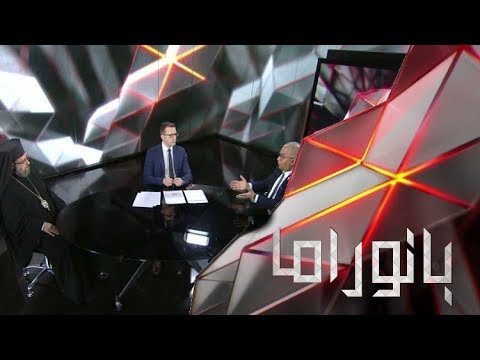 Interfaith Dialogue .. Dialogue of Life and Wise People Year of publication: 2019 Corporate author: RT Arabic Online Through this program, RT channel provides a seminar by hosting speakers to discuss the importance of interfaith dialogue and coexistence between all people from different religions. حوار الأديان .. حوار الحياة وحوار العقلاء Year of publication: 2019 Corporate author: RT Arabic Online تقدم قناة RT من خلال هذا البرنامج ندوة من خلال استضافة المتحدثين لمناقشة أهمية الحوار بين الأديان، والتعايش بين الجميع من مختلف الأديان.
 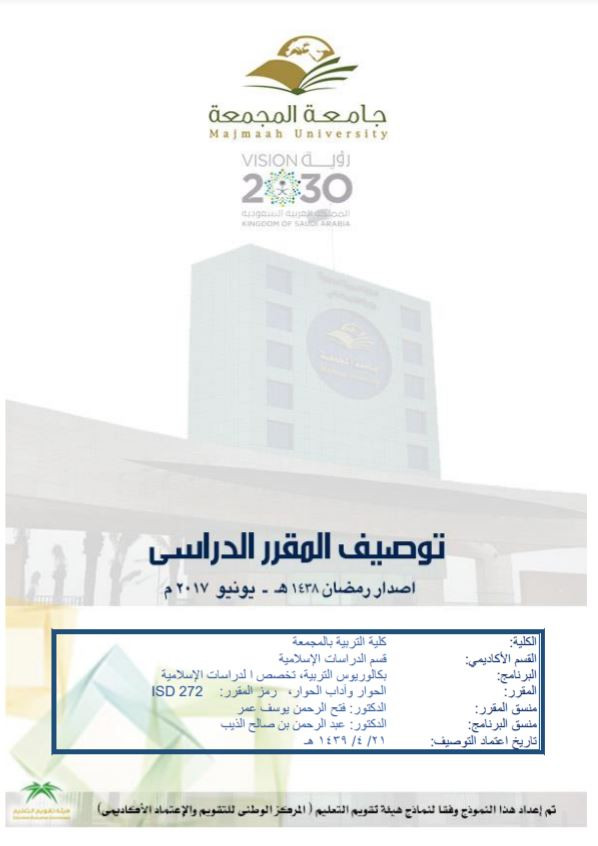 Course: Dialogue and Dialogue Etiquette Year of publication: 2017 Author: Fath Omar Corporate author: Majmaah University The course includes two topics of dialogue and disagreement. It seeks to form the Muslim to be a tactful interlocutor and able to manage the conflict between him and his society and his counterparts. The course deals with one of the important pillars of global citizenship issues, which is dialogue. مقرر دراسي: الحوار وآداب الحوار Year of publication: 2017 Author: Fath Omar Corporate author: Majmaah University يتضمن المقرر موضوعي الحوار والخلاف. ويسعى لتشكيل المسلم ليكون محاوراً لبقاً، وقادراً على إدارة الخالف بينه ، وبين مجتمعه ومناظريه. المقرر يتعرض لأحد الركائز المهمة من مواضيع المواطنة العالمية وهو الحوار.