
Resources
Explore a wide range of valuable resources on GCED to deepen your understanding and enhance your research, advocacy, teaching, and learning.
882 Results found
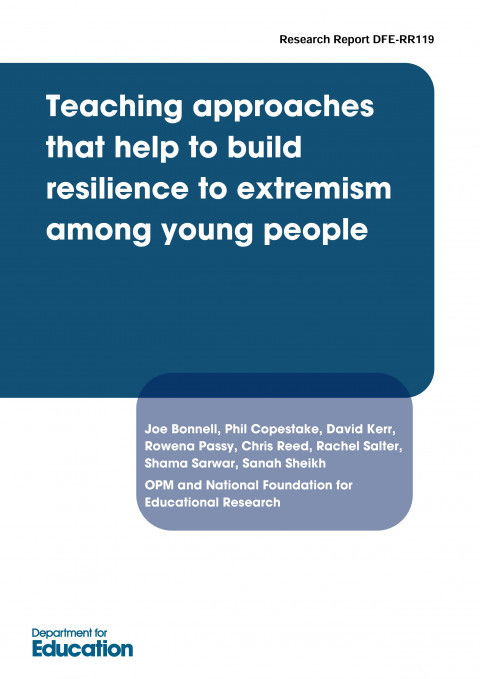 Teaching approaches that help to build resilience to extremism among young people Year of publication: 2011 Corporate author: United Kingdom. Department of Education Il s’agit d’un résumé des éléments clés des approches et interventions éducatives qui se sont avérées efficaces pour développer et renforcer la résilience des jeunes à l’extrémisme, destiné aux décideurs politiques ou non, chefs d’établissement scolaire, enseignants et autres acteurs du domaine éducatif, comme les jeunes et les animateurs socio-culturels. Le livre détaille également le soutien à apporter aux écoles et autres environnements éducatifs pour maximiser les bénéfices et l’impact de ces interventions.
  I Don’t Want… War! Year of publication: 2024 Corporate author: Amnesty International | Entreculturas | Mundo Cooperante | Save the Children On the occasion of the International Day of the Girl Child, which is commemorated on October 11, the organizations Amnesty International, Entreculturas, Mundo Cooperante and Save the Children, under the framework of the joint alliance NO QUIERO, denounce the serious consequences that armed conflicts have on girls and their integral development. Today, more than ever, it is urgent to address the effects of wars that prevent millions of girls from living a future free of violence, such as child and forced marriage or sexual violence. ¡No Quiero… la guerra! Year of publication: 2024 Corporate author: Amnesty International | Entreculturas | Mundo Cooperante | Save the Children Con motivo del Día Internacional de la Niña, que se conmemora el 11 de octubre, las organizaciones Amnistía Internacional, Entreculturas, Mundo Cooperante y Save the Children, bajo el marco de la alianza conjunta NO QUIERO, denunciamos las graves consecuencias que los conflictos armados tienen sobre las niñas y su desarrollo integral. Hoy, más que nunca, es urgente abordar los efectos de las guerras que impiden que millones de niñas puedan vivir un futuro libre de violencias, como el matrimonio infantil y forzoso o la violencia sexual.
  School Coexistence Toolkit: Prevention of Gender-Based Violence Corporate author: Ministry of Education of Colombia The infographics on the prevention of gender-based violence are intended precisely to raise awareness about this naturalized phenomenon so that families, children, adolescents and young people, and educators understand that this type of violence is not normal, it causes suffering and serious consequences for victims, and cannot be tolerated in any way. The infographics, based on the protocol, provide information in a simple and easy-to-understand way about what gender-based violence is, which can be sexual, physical, psychological or symbolic violence, how to prevent it, and what to do if you identify a victim or are a victim of this aggression. Kit de herramientas para la convivencia escolar: Prevención de las violencias basadas en el género Corporate author: Ministry of Education of Colombia Las infografías de prevención de las violencias basadas en el género, tienen la intencionalidad precisamente de sensibilizar sobre este fenómeno naturalizado para que las familias, las niñas, niños, adolescentes y jóvenes y los educadores, entiendan que estas violencias no son normales, producen sufrimiento y graves secuelas entre las víctimas y no pueden ser toleradas de ninguna manera. Las infografías, basadas en el protocolo, informan, de una manera sencilla y fácil de comprender, sobre qué son las violencias de género, las cuales pueden ser violencia sexual, física, psicológica o simbólica, cómo prevenirlas y qué hacer en caso de identificar una víctima o ser víctima de estas agresiones.
 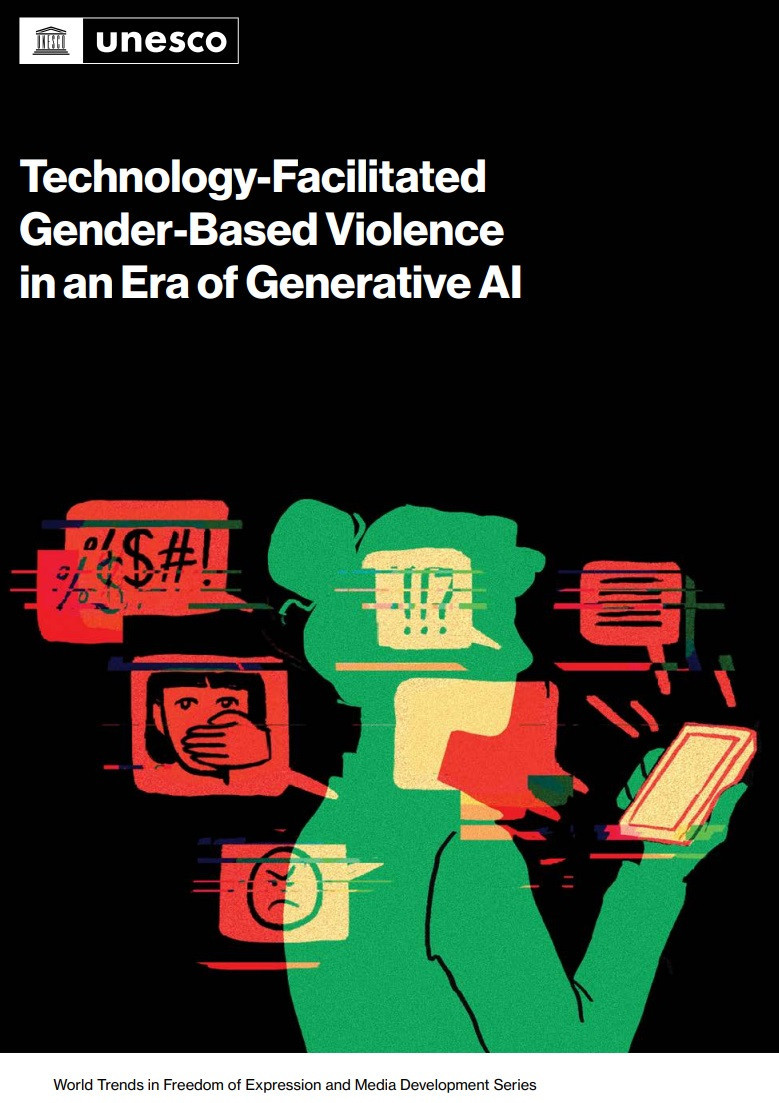 Technology-facilitated gender-based violence in an era of generative AI Year of publication: 2023 Corporate author: UNESCO <Short summary>Experiments reveal how generative AI facilitates gender-based violence Generative Artificial Intelligence (AI) — deep-learning models that create voice, text, and image — are revolutionizing the way people access information and produce, receive and interact with content. While technological innovations like ChatGPT, DALL-E and Bard offer previously unimaginable gains in productivity, they also present concerns for the overall protection and promotion of human rights and for the safety of women and girls.The arrival of generative AI introduces new, unexplored questions: what are the companies’ policies and normative cultures that perpetuate technology-facilitated gender-based violence and harms? How do AI-based technologies facilitate gender-specific harassment and hate speech? What “prompt hacks” can lead to gendered disinformation, hate speech, harassment, and attacks? What measures can companies, governments, civil society organisations and independent researchers take to anticipate and mitigate these risks?A combination of measures are proposed to be put in place by generative AI companies and the technology companies that platform them, regulators and policy makers, by civil society organisations and independent researchers, as well as users.
 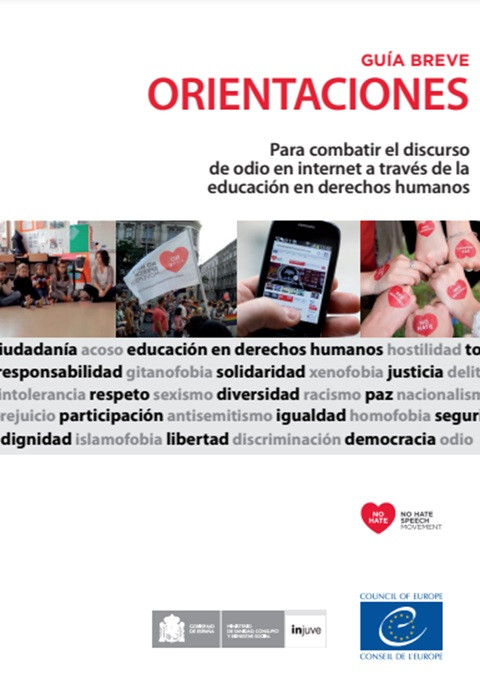 Brief Guidance Guide: To Combat Hate Speech on the Internet Through Human Rights Education Year of publication: 2016 Author: Ellie Keen | Mara Georgescu Corporate author: Youth Institute | Council of Europe The Youth Institute has published “Bookmarks”, a guide to combat hate speech on the Internet, which aims to be a brief and useful manual for the dissemination of concepts related to human rights and freedom of expression, as well as to raise and face the challenge of defending these rights on the Internet from a young perspective. It also aims to become a practical tool for action, training and awareness-raising work, aimed at both young people themselves and trainers, to establish in a simple way the essential concepts related to online hate speech and provide mechanisms to combat it. Guía breve orientaciones: Para combatir el discurso de odio en internet a través de la educación en derechos humanos Year of publication: 2016 Author: Ellie Keen | Mara Georgescu Corporate author: Youth Institute | Council of Europe El Instituto de la Juventud ha editado “Orientaciones”, una guía para luchar contra el odio en internet que pretende ser un breve manual útil para la difusión de los conceptos relacionados con los derechos humanos y la libertad de expresión, así como plantear y afrontar el reto de defender estos derechos en internet desde una perspectiva joven. También nace con el objetivo de convertirse en una herramienta práctica para la acción, el trabajo formativo y de sensibilización, dirigida tanto a los propios jóvenes como a los formadores, para fijar de manera sencilla los conceptos esenciales relacionados con el discurso de odio online y aportar mecanismos para combatirlo.
 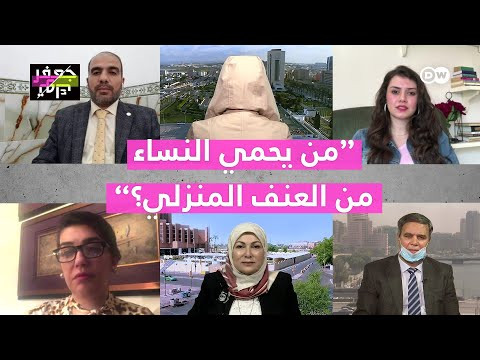 Domestic Violence Escalated in the Time of Corona ... Who Protects Women? Year of publication: 2020 Author: Jaafar Abdul Karim Corporate author: DW Jaafar Talk A program of DW TV broadcasting from Berlin. The program talks about the physical violence experienced by some women in the Arab world during the time of the new Corona virus. The program is characterized by its review of multiple cases of violence during quarantine, and seeks to discuss the causes and solutions to this issue. تصاعد العنف المنزلي في زمن كورونا... من يحمي النساء؟ Year of publication: 2020 Author: Jaafar Abdul Karim Corporate author: DW Jaafar Talk أحد برامج تلفزيون DW والذي يبث من برلين. يتحدث البرنامج عن العنف الجسدي الذي تتعرض له بعض النساء في الوطن العربي في زمن فيروس كورونا المستجد. يتميز البرنامج باستعراضه لحالات متعددة تعرضت للعنف وقت الحجر الصحي، ويسعى لمناقشة الاسباب والحلول لهذه القضية.