
Resources
Explore a wide range of valuable resources on GCED to deepen your understanding and enhance your research, advocacy, teaching, and learning.
1,443 Results found
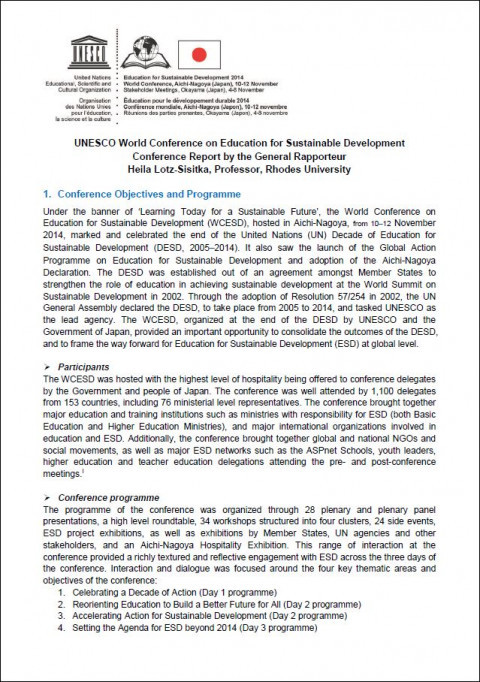 Conferencia Mundial de la UNESCO sobre la Educación para el Desarrollo Sostenible: Informe de la Conferencia elaborado por la Relatora General Year of publication: 2015 Author: Heila Lotz-Sisitka Bajo el título de “Aprender hoy para un futuro sostenible”, la Conferencia Mundial sobre la Educación para el Desarrollo Sostenible, celebrada en Aichi-Nagoya del 10 al 12 de noviembre de 2014, señaló y celebró el final del Decenio de las Naciones Unidas de la Educación para el Desarrollo Sostenible (DEDS, 2005-2014). Asimismo, en la conferencia se puso en marcha el Programa de acción mundial de Educación para el Desarrollo Sostenible y se adoptó la Declaración de Aichi-Nagoya. El DEDS nació de un acuerdo suscrito por los Estados Miembros en 2002 en la Cumbre Mundial sobre Desarrollo Sostenible encaminado a fortalecer la función que desempeña la educación en el logro del desarrollo sostenible. En 2002, mediante la aprobación de la resolución 57/254, la Asamblea General de las Naciones Unidas proclamó el DEDS, que se extendería de 2005 a 2014, y designó a la UNESCO organismo rector del Decenio. La Conferencia Mundial sobre la Educación para el Desarrollo Sostenible, organizada por la UNESCO y el Gobierno del Japón al final del DEDS, brindó una importante oportunidad para consolidar los resultados del DEDS y marcar el camino a seguir en materia de Educación para el Desarrollo Sostenible (EDS) en el plano mundial.
  Education and Lifelong Learning for Sustainable Development: Asia-Pacific Regional Consultation; 12 - 13 February, 2015, Vientiane, Lao PDR Year of publication: 2015 Author: Heribert Hinzen | Ounpheng Khammang | Somsy Southivong | Timote Masima Vaioleti The book contains all the texts which were transformed from the presentations during the consultations into written manuscripts.
 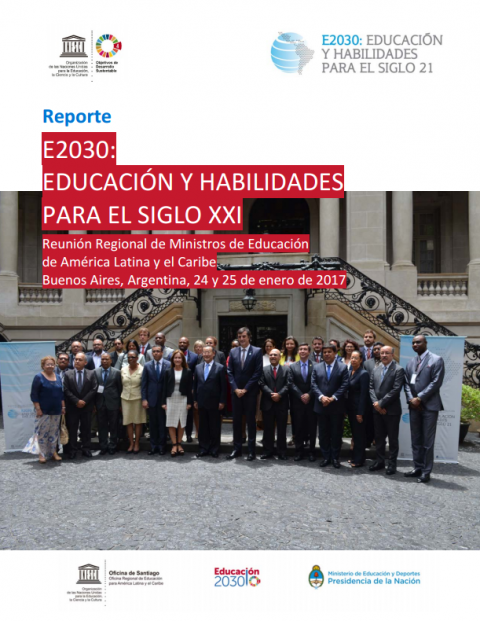 E2030: education and skills for the 21st century: Regional Meeting Year of publication: 2017 Corporate author: UNESCO Santiago This report provides a systematization of the discussions at the Regional Meeting of Ministers of Education of Latin America and the Caribbean “E2030: Education and skills for the 21st century” held 24‐25 January 2017 in Buenos Aires, Argentina. The objectives of the meeting were to: • adopt a Ministerial Declaration on a joint approach to achieve the SDG4-E2030 Agenda in the region, including means of implementation, technical instruments of support and follow-up mechanisms. • agree on a roadmap for the implementation of E2030, including a contextualized followup mechanism that responds to the region’s educational challenges and expectations. Reporte: Educación y habilidades para el siglo XXI; Reunión Regional de Ministros de Educación de América Latina y el Caribe, Buenos Aires, Argentina, 24 y 25 de enero 2017 Year of publication: 2017 Corporate author: UNESCO Santiago This report provides a systematization of the discussions at the Regional Meeting of Ministers of Education of Latin America and the Caribbean “E2030: Education and skills for the 21st century” held 24‐25 January 2017 in Buenos Aires, Argentina. The objectives of the meeting were to: • adopt a Ministerial Declaration on a joint approach to achieve the SDG4-E2030 Agenda in the region, including means of implementation, technical instruments of support and follow-up mechanisms. • agree on a roadmap for the implementation of E2030, including a contextualized followup mechanism that responds to the region’s educational challenges and expectations.
  2019 유네스코 ESD 정책 포럼: 2030년을 위한 지속가능발전교육(ESD), 한국은 어떻게 준비할 것인가 Year of publication: 2019 Corporate author: 대한민국 교육부 | 유네스코한국위원회 2019년 11월에 유네스코한국위원회(ESD한국위원회)에서 주최한 '2019 유네스코 지속가능발전교육 정책 포럼'의 자료집으로 행사개요와 토론자료, 지속가능발전교육에 대한 부록을 수록하고 있다.2030년을 위한 지속가능발전교육(ESD), 한국은 어떻게 준비할 것인가를 주제로 ESD for 2030 체계 수립 및 이행 준비에 대한 국제사회 최신 동향 공유, 국가 이니셔티브 구축 관련 한국 차원의 정책적 준비 및 운영 체계 수립 방안 논의, GAP 참여기관 등 국내 ESD 이행 핵심 주체별 활동 내용 공유 및 제언 등이 주요 내용이다.
 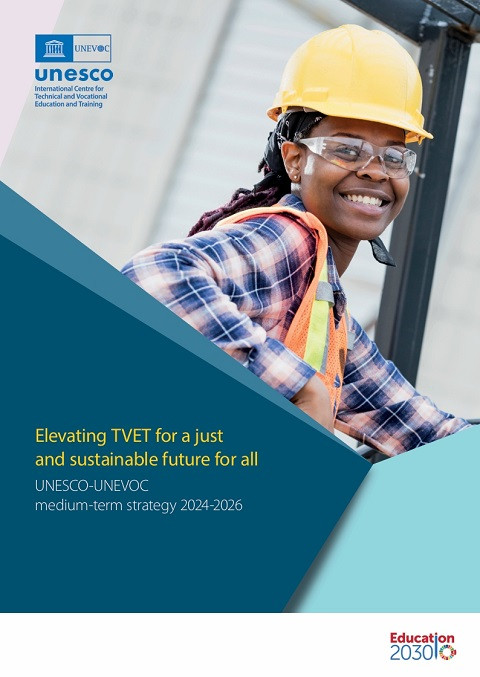 Elevating TVET for a Just and Sustainable Future for All: UNESCO-UNEVOC Medium-term Strategy 2024-2026 Year of publication: 2024 Corporate author: UNESCO International Centre for Technical and Vocational Education and Training (UNEVOC) The UNESCO-UNEVOC medium-term strategy for 2024 to 2026 sets out a roadmap to elevate technical and vocational education and training (TVET) for a just and sustainable future and empower TVET institutions to address the demands of digital, green and inclusive societies and economies. In alignment with the 2030 Agenda for Sustainable Development and the UNESCO strategy for TVET 2022-2029, UNESCO-UNEVOC will support Member States to upgrade their TVET systems and equip all youth and adults with skills for employment, decent work, entrepreneurship and lifelong learning. By working alongside international organizations, governments, UNEVOC Centres and partners, UNESCO-UNEVOC will implement a transformative TVET agenda focused on building flexible pathways for individuals to learn, work and live in a world that demands innovative solutions to complex, interconnected challenges.
  A Report on Education for Democratic Citizenship and Human Rights Education Policy and Practice in Six Eastern Partnership Countries: Promoting Human Rights Education and Democratic Citizenship in Eastern Partnership Countries Year of publication: 2017 Author: Ralph Edward Huddleston | Karine Harutyunyan | Ulviyya Mikayilova | Irina Fursa | Shorena Gharibashvili | Cezar Gavriliuc | Polina Verbytska Corporate author: Council of Europe This report has been produced within the framework of the EU/CoE Joint Programme “Supporting Education Policies in Democratic Citizenship and Human Rights Education in 6 Eastern Partnership countries”. The Programme embraces the six countries of the EU’s Eastern Partnership: Armenia, Azerbaijan, Belarus, Georgia, Moldova and Ukraine. Its aim is to support integration and/or further develop of education for democratic citizenship and human rights education in national education systems (including school curriculum) in Eastern Partnership countries, in accordance with the Council of Europe Charter on Education for Democratic Citizenship and Human Rights Education. The report draws on the results of a research exercise designed to map the most important initiatives and priorities in the area of Education for Democratic Citizenship and Human Rights Education (EDC/HRE) in the six countries. The research exercise was carried out 2015-16 by local experts within each country. It resulted in six individual country reports outlining the current situation in relation to the integration of the principles of EDC/HRE within the national education system, and identifying opportunities for further development.
  Media Literacy for All: Supporting Marginalised Groups Through Community Media Year of publication: 2020 Author: Martina Chapman | Nadia Bellardi | Helmut Peiss Corporate author: Council of Europe Being media literate means being able to critically understand and evaluate media content and to responsibly and safely use digital media services. Media literacy helps us engage with others in the public sphere, using the creative and participatory potential that new technologies and services can offer. Nowadays, it also includes understanding how data is used and how algorithms and AI can influence media production and choices.The importance of community media in supporting the formation of an ‘informed citizenry’ is well recognised by the Council of Europe. Community media have the ability to empower community groups with the neces- sary access and skills to create their own communica- tion channels and to foster their participation in the public sphere in a structured and professional man- ner. However, in many European countries community media still lack formal, legal recognition, fair access to distribution platforms and sustainable funding.This background paper explores how the community media sector promotes media literacy and how this work can strengthen marginalised communities’ partic- ipation in the media environment and public discourse. Comparing five models of community media from Cyprus, Ireland, Luxembourg, Spain and the United Kingdom, it seeks to inform and inspire practitioners and policy-makers, highlighting a number of findings and policy responses that can help member States fully realise the potential of community media. 모두를 위한 미디어 리터러시: 공동체 미디어를 통해 소외된 사람들 지원하기 Year of publication: 2020 Author: Martina Chapman | Nadia Bellardi | Helmut Peiss Corporate author: Council of Europe 미디어 리터러시를 갖춘다는 것은 미디어 콘텐츠를 비판적으로 이해 하고 평가할 수 있으며, 디지털 미디어 서비스를 책임감 있고 안전하 게 이용할 수 있다는 뜻이다. 미디어 리터러시는 새로운 기술과 서비 스가 제공할 수 있는 창의적이고 참여적인 잠재력을 이용해서 공론장 에서 다른 사람들과 교류할 수 있도록 돕는다. 오늘날에는 데이터가 어떻게 사용되는지, 알고리즘과 인공지능이 미디어의 생산과 선택에 어떤 영향을 미치는지 이해하는 것도 미디어 리터러시에 포함된다.유럽평의회는 공동체 미디어가 ‘정보에 밝은 시민’의 형성을 지원하 는 데에 얼마나 중요한 역할을 하는지 잘 인식하고 있다. 공동체 미디 어는 공동체 집단들이 자체적인 커뮤니케이션 수단을 만들 때 필요한 접근과 역량을 제공하고, 체계적이고 전문적인 방법으로 공론장에 대 한참여를조성할수있는능력을갖추고있다.그러나많은유럽국가 에서 공동체 미디어는 여전히 공식적인 법률적 인정과 유통 플랫폼에 대한 공정한 접근, 지속 가능한 자금 조달이 부족한 상태다.이 배경자료는 공동체 미디어 부문이 어떻게 미디어 리터러시를 증진 하는지, 그리고 이 활동이 어떻게 미디어 환경과 공적 담론에서 소외 된 공동체의 참여를 고양하는지 탐구한다. 키프로스와 아일랜드, 룩 셈부르크, 스페인, 영국의 공동체 미디어 다섯 가지 모델을 비교해서, 회원국들이 공동체 미디어의 잠재력을 충분히 실현하는 데 도움을 줄 수 있는 일련의 연구 결과와 정책적 조치를 조명하며, 실무자와 정책 입안자에게 정보를 제공하고 영감을 줄 수 있기를 바란다.
  Supporting Quality Journalism Through Media and Information Literacy Year of publication: 2020 Author: Martina Chapman | Markus Oermann Corporate author: Council of Europe This report provides the findings of a study on Media and Information Literacy (MIL) that was conducted in support of the work of the Committee of experts on quality journalism in the digital age (MSI-JOQ), as well as a series of recommendations from the authors of the study to be considered by member states and other stakeholders.The purpose of this study is to provide context and evidence to MSI-JOQ, member states and all other relevant stakeholders on media literacy activities in Europe supporting quality journalism.