
Resources
Explore a wide range of valuable resources on GCED to deepen your understanding and enhance your research, advocacy, teaching, and learning.
661 Results found
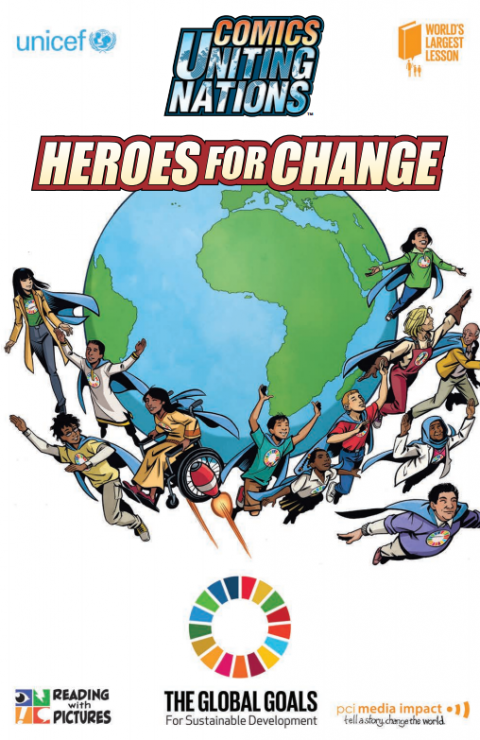 改革英雄 Year of publication: 2015 Author: Josh Elder | Natabara Rollosson | Sean Southey | Grace Allison | Karl Kesel | Grace Allison Corporate author: Project Everyone | PCI Media Impact | Reading With Pictures Heroes for Change has been created for the World's Largest Lesson Initiative to share information on the global goals.
 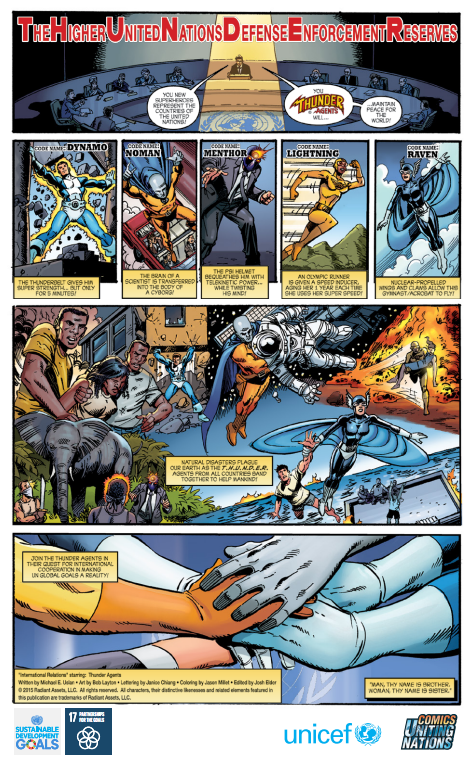 T.H.U.N.D.E.R. Agents Year of publication: 2015 Author: Michael E. Ulsan | Bob Layton | Janic Chiang | Jason Millet | Josh Elder Corporate author: Radiant Assets | LLC | United Nations Children's Fund (UNICEF) T.H.U.N.D.E.R. -- The Higher United Nations Defense Enforcement Reserves -- are UN Superheroes tasked with promoting global cooperation to make the world a better place. The T.H.U.N.D.E.R. Agentswas a comic originally created in the 1960s and is set to be made into a major motion picture in 2018.
  Address by Irina Bokova, Director-General of UNESCO, on the occasion of the UNESCO Week for Peace and Sustainable Development: The Role of Education; Ottawa, Canada, 8 March 2017 Year of publication: 2017 Corporate author: UNESCO. Director-General, 2009-2017 (Bokova, I.G.) This address was presented by Irina Bokova, Director-General of UNESCO on the occasion of the UNESCO Week for Peace and Sustainable Development. She highlights on the role of education.
 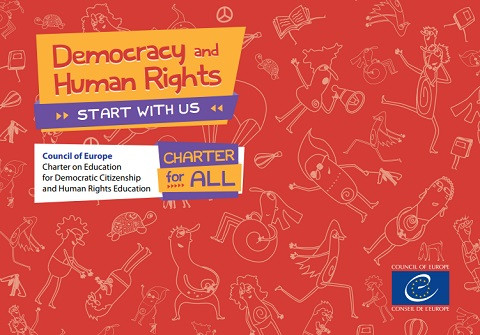 Democracy and Human Rights: Start with Us; Charter for All Year of publication: 2012 Corporate author: Council of Europe The brochure for children explores the principles of human rights and democracy, what we can all do to make them possible, and how education can be of help. La democratie et les droits de l’homme; A nous de les faire vivre; La charte pour tous Year of publication: 2012 Corporate author: Conseil de l'Europe La brochure pour les enfants explore les principes des droits de l'homme et de la démocratie, ce que nous pouvons tous faire pour que cela devienne une réalité, et comment l'éducation y contribue. Демократия и права человека: Начинаются с нас; Хартия для всех Year of publication: 2012 Corporate author: Council of Europe Настоящий вариант Хартии ("Хартия для всех") ориентирован на всех тех, и прежде всего молодежь, кто хотел бы узнать о том, чему посвящен данный международный юридический документ, и как он может быть использован для содействия демократии и правам человека в классе, в молодежных организациях и в обществе в целом.
  Discours de M. Koïchiro Matsuura, Directeur général de l'UNESCO, à l'occasion du lancement international de la Décennie pour l'éducation au service du développement durable (2005-2014), Siège de l'Organisation des Nations Unies, New York, 1er mars 2005 Year of publication: 2005 Corporate author: UNESCO. Director-General, 1999-2009 (Matsuura, K.) This speech was presented by Mr Koïchiro Matsuura, Director-General of the United Nations Educational, Scientific and Cultural Organization (UNESCO), on the occasion of the International launch of the United Nations Decade on Education for Sustainable Development (2005-2014). Address by Mr Koïchiro Matsuura, Director-General of UNESCO, on the occasion of the International Launch of the United Nations Decade on Education for Sustainable Development (2005-2014); United Nations Headquarters, New York, 1 March 2005 Year of publication: 2005 Corporate author: UNESCO. Director-General, 1999-2009 (Matsuura, K.) This speech was presented by Mr Koïchiro Matsuura, Director-General of the United Nations Educational, Scientific and Cultural Organization (UNESCO), on the occasion of the International launch of the United Nations Decade on Education for Sustainable Development (2005-2014). Discours de M. Koïchiro Matsuura, Directeur général de l'UNESCO, à l'occasion du lancement international de la Décennie des Nations Unies sur l'éducation pour le développement durable (2005-2014); Siège des Nations Unies, New York, 1er Mars 2005 Year of publication: 2005 Corporate author: UNESCO. Director-General, 1999-2009 (Matsuura, K.) Ce discours a été présenté par M. Koïchiro Matsuura, Directeur général de l'Organisation des Nations Unies pour l'éducation, la science et la culture (UNESCO), à l'occasion du lancement international de la Décennie des Nations Unies sur l'éducation pour le développement durable (2005-2014). Address by Irina Bokova, Director-General of UNESCO on the occasion of the Seminar on Climate Change and Education at the UN University: Responding to Climate Change Starts with Education; Tokyo, 26 November 2010 Year of publication: 2010 Corporate author: UNESCO. Director-General, 1999-2009 (Matsuura, K.) This document is an address of Irina Bokova, Director-General of UNESCO on the occasion of the Seminar on Climate Change and Education at the UN University “Responding to Climate Change Starts with Education” in Tokyo, 26 November 2010. She highlighted the importance of climate change education for the sustainable future and underlined the importance of several programme such as Sandwatch and YouthXchange which have been lead by the UNESCO.