
Resources
Explore a wide range of valuable resources on GCED to deepen your understanding and enhance your research, advocacy, teaching, and learning.
1,402 Results found
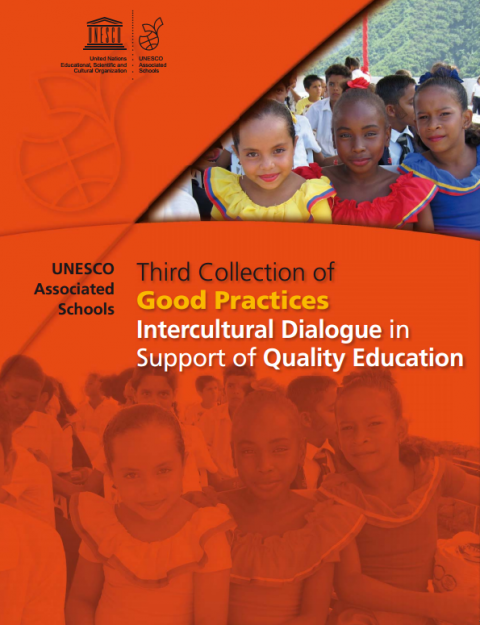 Troisième recueil de bonnes pratiques: le dialogue interculturel à l'appui de l'éducation de qualité Year of publication: 2013 Corporate author: UNESCO Associated Schools Project Network (ASPnet) Les écoles associées de l'UNESCO (réSEAU) mènent des projets pilotes visant à renforcer les principes humanistes et éthiques de l'UNESCO dans les programmes scolaires et tout au long du processus d'apprentissage, souvent dans le cadre de l'ONU et de la Journée internationale de l'UNESCO, années et décennies, la promotion du dialogue interculturel est donc une priorité Reseau. Les initiatives présentées dans ce troisième Collection de Reseau bonnes pratiques ont été réalisées par les écoles Reseau et leurs institutions partenaires dans le cadre de l'Année internationale du rapprochement des cultures (2010). Les projets sélectionnés illustrent à la fois l'éducation multiculturelle et l'éducation interculturelle dans l'action.
 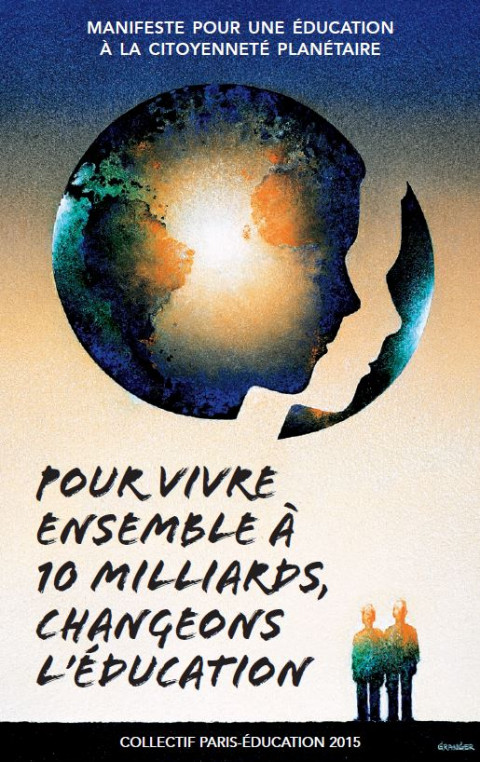 Manifeste pour une éducation à la citoyenneté planétaire: Pour vivre ensemble à 10 milliards, changeons l'éducation Year of publication: 2015 Corporate author: Collectif Paris-Education 2015 Face à l’ampleur, l’urgence, la diversité et la complexité des problématiques engendrées par le modèle de développement de nos sociétés contemporaines, nous sommes donc obligés, dans l’urgence, de nous pencher sur les questions d’éducation et de formation des générations futures qui devront affronter des réalités biophysiques, économiques et politiques inédites, dont nous commençons à peine à entrevoir l’ampleur. Ce qui est dès lors en jeu, avec l’avenir de l’homme et de la Terre, c’est l’humain, ce qu’il deviendra, ce qu’il sera capable de porter comme projet pour l’humanité.Quelles qualités d’humains devons-nous faire advenir pour que ces réalités inédites puissent être rencontrées demain, sans que l’humanité bascule dans la violence et le dépeçage égoïste de la planète? Quels enfants voulons-nous laisser à notre Terre?Cette urgence impose un changement d’échelle dans la transformation des systèmes éducatifs, des contenus et des méthodes d’enseignement. Malgré la volonté et la compétence de nombreux acteurs de l’école, force est de constater que les actions menées pour une éducation plus en cohérence avec les enjeux climatiques et, plus largement, sociétaux restent à la marge. Elles sont réalisées par des individus clairvoyants. Il est temps d’enclencher la vitesse supérieure.
 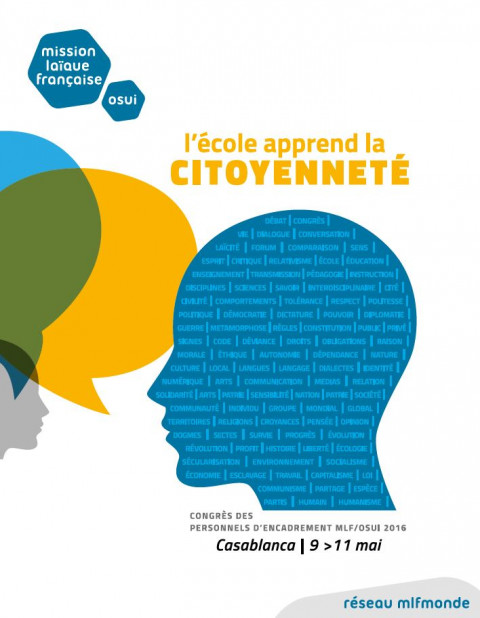 L’école apprend la citoyenneté (Congrès des personnels d’encadrement MLF/OSUI 2016) Year of publication: 2017 Corporate author: Mission laïque française Le groupe scolaire Louis-Massignon à Bouskoura (Casablanca, Maroc) a accueilli du 9 au 11 mai 2016 près de 300 acteurs de l’enseignement français, représentants des établissements du réseau mlfmonde, du réseau de l’AFLEC, des académiespartenaires (Dijon, Paris, Poitiers et Reims), des représentants du MAEDI, du MENESR, de la DNE, de la DGESCO et de l’AEFE, des grands établissements de l’Éducation nationale (CNED, Canopé, ESENESR, CIEP), des représentants de l’organisation du baccalauréat international, de l’Unesco et de la société civile.Les mesures qui entrent en vigueur sur l’éducation à la citoyenneté concernent les «valeurs de la République».Parce que l’enseignement moral et civique est conçu et établi pour et dans un contexte strictement national, se pose dès lors la question d’une adaptation à l’usage de l’enseignement français à l’étranger qui ne soit pas en contradiction avec l’intention et l’esprit de cette partie du programme.
  The United Nations World Water Development Report 2019: Leaving No One Behind Year of publication: 2019 Corporate author: UNESCO World Water Assessment Programme (WWAP) The UNESCO World Water Assessment Programme brings together the work of numerous UN-Water Members and Partners to produce the United Nations World Water Development Report series.The annual editions focus on strategic water issues. UN-Water Members and Partners as well as other experts contribute the latest knowledge on a specific theme.The 2019 Report seeks to inform policy and decision-makers, inside and outside the water community, how improvements in water resources management and access to water supply and sanitation services are essential to overcoming poverty and addressing various other social and economic inequities.In an increasingly globalized world, the impacts of water-related decisions cross borders and affect everyone. Extreme events, environmental degradation, population growth, rapid urbanization, unsustainable and inequitable consumption patterns, conflicts and social unrest, and unprecedented migratory flows are among the interconnected pressures faced by humanity, often hitting those in vulnerable situations the hardest through their impacts on water.Addressing the inequalities faced by disadvantaged groups requires tailored solutions that take account of the day-to-day realities of people and communities in vulnerable situations. Properly designed and adequately implemented policies, efficient and appropriate use of financial resources, as well as evidence-based knowledge on water resources and water-related issues are also vital to eliminating inequalities in access to safe drinking water and sanitation.Titled ‘Leaving No One Behind ’, the report reinforces the commitments made by the UN member states in adopting the 2030 Agenda for Sustainable Development and in recognizing the human rights to safe drinking water and sanitation, both of which are essential for eradicating poverty and for building prosperous, peaceful societies. Informe mundial de las Naciones Unidas sobre el desarrollo de los recursos hídricos 2019: no dejar a nadie atrás Year of publication: 2019 Corporate author: UNESCO World Water Assessment Programme (WWAP) El Programa Mundial de la UNESCO de Evaluación de los Recursos Hídricos reúne el trabajo de numerosos miembros y socios de ONU-Agua para producir la serie de informes de las Naciones Unidas sobre el desarrollo de los recursos hídricos en el mundo.Los informes anuales sobre el desarrollo de los recursos hídricos en el mundo se centran en cuestiones estratégicas relacionadas con el agua.Los miembros y socios de ONU-Agua, así como otros expertos, aportan los últimos conocimientos sobre un tema específico.La edición de 2019 del Informe Mundial de las Naciones Unidas sobre el Desarrollo de los Recursos Hídricos pretende informar a los responsables de las políticas y de la toma de decisiones, tanto dentro como fuera de la comunidad del agua, de hasta qué punto las mejoras en la gestión de los recursos hídricos y el acceso al suministro de agua y a los servicios de saneamiento son esenciales para superar la pobreza y afrontar varias otras desigualdades sociales y económicas.En un mundo cada vez más globalizado, los impactos de las decisiones relacionadas con el agua cruzan las fronteras y afectan a todas las personas. Los eventos extremos, la degradación del medio ambiente, el crecimiento demográfico, la rápida urbanización, unos patrones de consumo insostenibles e injustos y unos flujos migratorios sin precedentes son algunas de las presiones interrelacionadas a que se enfrenta la humanidad, y que a menudo golpean con mayor dureza a quienes se hallan en situaciones vulnerables a través de sus impactos en el agua.Abordar las desigualdades a que se enfrentan los grupos desfavorecidos requiere soluciones a medida, que tengan en cuenta las realidades del día a día de la gente y las comunidades en situaciones vulnerables. Políticas bien diseñadas y adecuadamente aplicadas, un uso eficiente y apropiado de los recursos financieros, así como un conocimiento de los recursos hídricos y las cuestiones relacionadas con el agua basado en la evidencia también son vitales para acabar con las desigualdades en el acceso al agua potable y al saneamiento seguros.El informe, titulado “No dejar a nadie atrás”, refuerza los compromisos asumidos por los Estados miembros de la ONU al adoptar la Agenda 2030 para el Desarrollo Sostenible y al reconocer los derechos humanos al agua potable y el saneamiento seguros, ambos esenciales para erradicar la pobreza y construir unas sociedades prósperas y pacíficas. Rapport mondial des Nations Unies sur la mise en valeur des ressources en eau 2019: ne laisser personne pour compte Year of publication: 2019 Corporate author: UNESCO World Water Assessment Programme (WWAP) Le Programme mondial de l’UNESCO pour l’évaluation des ressources en eau (WWAP) réunit les travaux de nombreux membres et partenaires d’ONU-Eau afin de donner naissance à la série des Rapports mondiaux des Nations Unies sur la mise en valeur des ressources en eau (WWDR).Chaque année, ces Rapports mettent en lumière les enjeux stratégiques actuels liés à l’eau et les membres et partenaires d’ONU-Eau ainsi que d’autres experts ont recours aux connaissances les plus récentes sur un thème spécifique.L’édition 2019 du Rapport sur la mise en valeur des ressources en eau a pour objectif d’informer les décideurs et les responsables politiques, qu’ils fassent ou non partie de la communauté de l’eau, au sujet de la nécessité d’améliorer la gestion des ressources en eau et l’accès aux services d’approvisionnement en eau et d’assainissement en vue de venir à bout de la pauvreté et des diverses autres formes d’inégalités sociales et économiques.À l’heure de la mondialisation, les répercussions des décisions portant sur l’eau traversent les frontières et concernent tout un chacun. Les phénomènes extrêmes, la dégradation de l’environnement, la croissance démographique, l’urbanisation rapide, les modes de consommation non durables et non équitables, les conflits et les mécontentements sociaux, ainsi que les flux migratoires sans précédent, constituent les défis interdépendants auxquels est confrontée l’humanité et qui touchent souvent le plus durement ceux en situation de vulnérabilité de par leurs impacts sur les ressources en eau.La lutte contre les inégalités auxquelles font face les groupes défavorisés requiert également des solutions adaptées qui tiennent compte des réalités quotidiennes des personnes et des communautés en situation de vulnérabilité. Des politiques correctement conçues et mises en oeuvre, une utilisation efficace et appropriée des ressources financières, ainsi que des connaissances factuelles relatives aux ressources et aux questions liées à l’eau, sont également indispensables de manière à mettre fin aux inégalités d’accès à l’eau potable et à l’assainissement.Ce rapport, intitulé « Ne laisser personne pour compte », renforce les engagements pris par les États membres de l’ONU lors de l’adoption du Programme de développement durable à l’horizon 2030 et de la reconnaissance des droits de l’homme à l’eau potable et à l’assainissement, qui sont tous deux indispensables à l’éradication de la pauvreté et à la mise en place de sociétés prospères et pacifiques.
 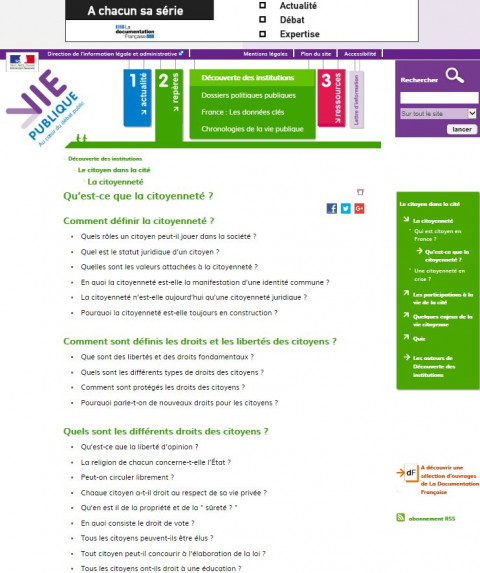 Qu’est-ce que la citoyenneté ? Year of publication: 2018 Corporate author: Direction de l'information légale et administrative Qu’est-ce que la citoyenneté ? Comment définir la citoyenneté ? Comment sont définis les droits et les libertés des citoyens ? Quels sont les différents droits des citoyens ? Les citoyens ont-ils des devoirs ? Quels sont les devoirs des citoyens ?
 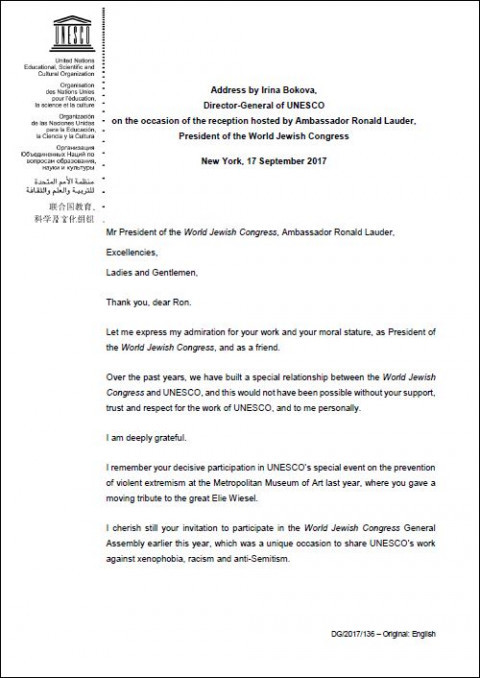 Address by Irina Bokova, Director-General of UNESCO, on the occasion of the reception hosted by Ambassador Ronald Lauder, President of the World Jewish Congress Year of publication: 2017 Corporate author: UNESCO. Director-General, 2009-2017 (Bokova, I.G.) This address was delivered by Irina Bokova, Director-General of UNESCO, on the occasion of the reception hosted by Ambassador Ronald Lauder, President of the World Jewish Congress; New York, 17 September 2017.
  Prévenir la radicalisation des jeunes Year of publication: 2015 Corporate author: Ministère de l'Education nationale, de l'Enseignement supérieur et de la Recherche This booklet is a tool to prevent youth radicalizationtargetting school administrators and other educational staff. It characterizes radicalization and guides on the identification of number of its identifiable signs. Finally, it indicates what should be done when these signs are observed. Prévenir la radicalisation des jeunes Year of publication: 2015 Corporate author: Ministère de l'Education nationale, de l'Enseignement supérieur et de la Recherche Cette brochure est un outil de prévention de la radicalisation des jeunes, principalement destiné aux directeurs des écoles et au personnel éducatif. Il apporte une définition de la radicalisation et explique comment reconnaître les signes distinctifs. Enfin, il apporte des renseignements sur ce qui doit être fait lorsque certains de ces signes sont observés.