
Resources
Explore a wide range of valuable resources on GCED to deepen your understanding and enhance your research, advocacy, teaching, and learning.
874 Results found
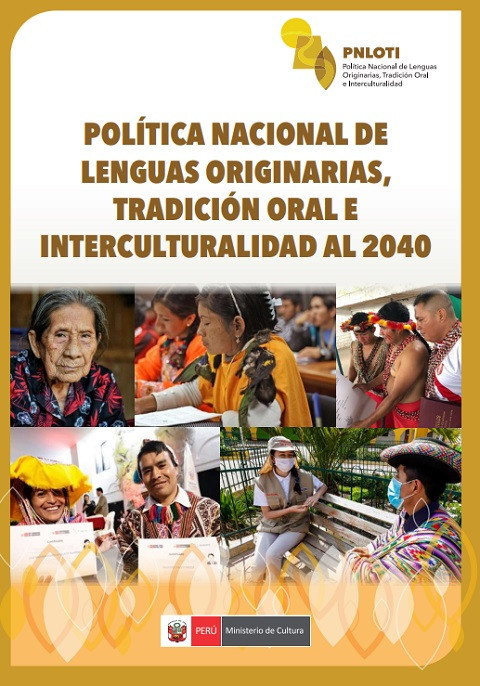 National Policy on Native Languages, Oral Tradition and Interculturality by 2040 Year of publication: 2021 Corporate author: Ministry of Culture of Peru The Ministry of Culture, in coordination with the different sectors of the State, has carried out the process of updating the National Policy on Native Languages, Oral Tradition and Interculturality by 2040 (PNLOTI), which will be the main instrument of guidance and attention in subject of indigenous languages. Seeking to guarantee the participation of citizens in public decisions, the Ministry of Culture makes the PNLOTI proposal for 2040 available to them, with the aim that they can access it and learn about the 41 services declared in charge of the different sectors. In this way, the PNLOTI ensures the full exercise of the linguistic rights of the more than 4 million citizens who speak one of the 48 indigenous or native languages of the country. Política nacional de lenguas originarias, tradición oral e interculturalidad al 2040 Year of publication: 2021 Corporate author: Ministry of Culture of Peru El Ministerio de Cultura, en coordinación con los diferentes sectores del Estado, han llevado a cabo el proceso de actualización de la Política Nacional de Lenguas Originarias, Tradición Oral e Interculturalidad al 2040 (PNLOTI), que será el principal instrumento de orientación y atención en materia de lenguas indígenas. Buscando garantizar la participación de la ciudadanía en las decisiones públicas, el Ministerio de Cultura pone a su disposición la propuesta de la PNLOTI al 2040, con el objetivo de que puedan acceder a él y conocer los 41 servicios declarados a cargo de los diferentes sectores. De esta manera, la PNLOTI asegura el ejercicio pleno de los derechos lingüísticos de los más de 4 millones de ciudadanos y ciudadanas hablantes de alguna de las 48 lenguas indígenas u originarias del país.
  Education for Integration: Ideas and Resources for the Formation of Regional Citizenship Year of publication: 2021 Corporate author: Mercosur Educational Sector Support Program (PASEM) For Latin American and Caribbean countries, regional integration is a tool to expand their margins of autonomy and promote economic development with social inclusion. From the events that led to independence to the present day, the ideals of unity and integration have been present in many men and women who conceived emancipatory national-regional political projects and sought to form sovereign and developed nations. The Common Market of the South - or as it is commonly known, Mercosur - is one of those regional political projects that seeks to build a supportive, inclusive region, open to citizen participation and that guarantees the right of peoples to development. Educación para la integracion: Ideas y recursos para la formación de una ciudadanía regional Year of publication: 2021 Corporate author: Mercosur Educational Sector Support Program (PASEM) Para los países latinoamericanos y caribeños la integración regional constituye una herramienta para ampliar sus márgenes de autonomía y promover desarrollo económico con inclusión social. Desde los acontecimientos que llevaron a la independencia hasta nuestros días, los ideales de unidad e integración estuvieron presentes en numerosos hombres y mujeres que concibieron proyectos políticos nacional-regionales emancipatorios y buscaron conformar naciones soberanas y desarrolladas. El Mercado Común del Sur -o como comúnmente se lo conoce, el Mercosur- es uno de esos proyectos políticos regionales que busca construir una región solidaria, inclusiva, abierta a la participación ciudadana y que garantice el derecho de los pueblos al desarrollo.
  Migrations and Displacements: Racism and Discrimination Year of publication: 2021 Corporate author: Argentina. Ministry of Education This video describes the phenomenon of migration within the framework of global citizenship. It was produced within the framework of the Seguimos Educando Program, which during 2020 and 2021 allowed, through different means, students to remain in contact with school. The proposed activities and content are guided by the Priority Learning Cores common to the entire country. Migraciones y desplazamientos: Racismo y discrimanción Year of publication: 2021 Corporate author: Argentina. Ministry of Education Este video describe el fenómeno de las migraciones en el marco de una ciudadanía global. Fue elaborado en el marco del Programa Seguimos Educando, que durante 2020 y 2021 permitió, a través de distintos medios, que las y los estudiantes siguieran en contacto con la escuela. Las actividades y contenidos propuestos están orientados por los Núcleos de Aprendizajes Prioritarios comunes para todo el país.
  On Educating and Learning for Better Futures: A Journey Through Education in Times of Transformation Year of publication: 2024 Author: Renato Opertti The author of the book, Renato Opertti, president of the OEI Advisory Board, presents this publication divided into six chapters: On the global and the local, On Ibero-America, opportunities and pending challenges, On thinking, educating and learning, PISA findings and the resilience of educational systems, Regarding Meirieu and educators and On the new generations and the future of education in Uruguay. Sobre educar y aprender para futuros mejores: Un viaje por la educación en tiempos de transformación Year of publication: 2024 Author: Renato Opertti El autor del libro, Renato Opertti presidente del Consejo Asesor de la OEI, nos presenta esta publicación que divide en seis capítulos: Sobre lo global y lo local, Sobre Iberoamérica, oportunidades y desafíos pendientes, Sobre pensar, educar y aprender, Hallazgos de pisa y la resiliencia de los sistemas educativos, A propósito de Meirieu y los educadores y Sobre las nuevas generaciones y los futuros de la educación en Uruguay.
  A Tree to Bloom Year of publication: 2023 Corporate author: Center for Memory, Peace and Reconciliation The Camino a Casa room of the Memory, Peace and Reconciliation Center is committed to memory processes that recognize children as active subjects with the full capacity to reflect and dialogue about the recent past of violence and struggles for the construction of democracy and peace. This document is written under the metaphor of a tree: it is proposed that change and movement become a possibility for continued growth, therefore the role of adults is related to being the nutrients of the tree. In so far as their daily work can contribute to other axes, which would be the branches. And finally, children play the role of caretakers of memory - they are the tree - based on their authenticity and creativity. Un árbol para florecer Year of publication: 2023 Corporate author: Center for Memory, Peace and Reconciliation La sala Camino a Casa del Centro de Memoria, Paz y Reconciliación apuesta por procesos de memoria que reconozcan en los niños y las niñas sujetos activos con capacidad plena para reflexionar y dialogar en torno al pasado reciente de violencias y luchas por la construcción de democracia y paz. Este documento está escrito bajo la metáfora de un árbol: se propone que el cambio y el movimiento se convierta en una posibilidad para que siga creciendo, por ello el papel de las personas adultas está relacionado con ser los nutrientes del árbol. En tanto su labor cotidiana pueden aportar a otros ejes, que vendrían siendo las ramas. Y por último, los niños y niñas cumplen el rol de cuidadores de la memoria -ellos son el árbol- a partir de su autenticidad y creatividad.