
Resources
Explore a wide range of valuable resources on GCED to deepen your understanding and enhance your research, advocacy, teaching, and learning.
2,772 Results found
 MTB MLE resource kit: Including the excluded: promoting multilingual education Year of publication: 2016 Author: Susan Malone Corporate author: UNESCO Bangkok Who Can Use this Resource Kit?This MTB MLE Resource Kit is for people who are committed to the idea that all children have the right to quality education in a language they speak and understand. MTB MLE programmes that are sustained within the formal education system require contributions from all stakeholders, working together and supporting one another. The next three booklets were developed for three specific stakeholder groups: policy makers, programme implementers and community members. These three booklets, with the case studies, provide a “big picture” of successful MTB MLE programmes and suggestions for the roles each group can take as they plan, implement and maintain their programmes. How Can You Use this Resource Kit?Each booklet is organized around key questions about MTB MLE that are frequently asked by policy makers, implementers and community members. Responses to each question include examples of specific activities that are part of successful MTB MLE programmes in a variety of contexts. Working together, stakeholders can identify the specific activities that are best suited for their own situation and make the best use of all available resources.
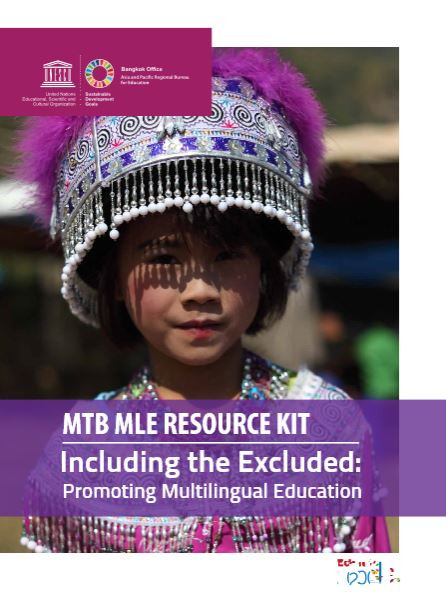
  Education for developing a global Omani citizen: current practices and challenges Year of publication: 2014 Author: Saif Al-Maamari Corporate author: Redfame Publishing Oman is a developing country which reformed its educational system in 1998 in order to meet the challenges of the 21st century, especially economic challenges. Strength of national identity and developing a sense of global citizenship were among the priorities of the new educational reform. This paper is based on a review of current practices regarding global citizenship education in educational system. The purpose of this theoretical study was to explore the current provision of the aspects of global citizenship education in Omani schools. Specifically, the study attempts to identify the current practices that are implemented by Omani schools to help Omani students to develop a sense of effective global citizenship. The study indicates that Omani education is not nationally centered as it aims to develop students who have global awareness. The study shows employing different approaches to develop a sense of global citizenship, namely, a separate school subject; integrated theme in social studies education, participation in some international initiatives in global citizenship education, and celebrating the international days and decades. L'éducation pour le Développement d'ONU Citoyen Omanais Mondiale: Pratiques et Défis Actuels Year of publication: 2014 Author: Saif Al-Maamari Corporate author: Redfame Publishing Oman est un pays en développement qui a réformé son système éducatif en 1998 dans le but de relever les défis du 21e siècle, en particulier les défis économiques. Force de l'identité nationale et de développer un sentiment de citoyenneté mondiale étaient parmi les priorités de la nouvelle réforme de l'éducation. Cet article est basé sur un examen des pratiques actuelles concernant L'éducation à la citoyenneté Mondiale (ECM) dans le système éducatif. Le but de cette étude théorique était d'explorer la disposition actuelle des aspects de L'éducation à la citoyenneté Mondiale (ECM) dans les écoles omanaises. Plus précisément, l'étude tente d'identifier les pratiques actuelles qui sont mises en œuvre par les écoles omanaises pour aider les étudiants omanais à développer un sentiment de citoyenneté mondiale efficace. L'étude indique que l'éducation omanaise est pas centrée à l'échelle nationale car elle vise à développer chez les élèves qui ont la conscience globale. L'étude montre en utilisant différentes approches pour développer le sens de la citoyenneté mondiale, à savoir, un sujet d'écoles séparées; thème intégré dans l'enseignement des études sociales, la participation à des initiatives internationales en matière d'éducation à la citoyenneté mondiale, et célébrant les jours et les décennies internationales. Global education in Austria Corporate author: North-South Centre of the Council of Europe This National Report on Global Education in Austria is part of the European Global Education Peer Review Process, which was initiated in 2002 with the purpose of increasing and improving global education in Council of Europe member states. This report is the culmination of a peer review process led by an international peer review team. Through research and interviews with key stakeholders, information was gathered and critical perspectives developed about the current state of, and the future prospects for, global education in Austria. This year–long process, facilitated by the North-South Centre of the Council of Europe, was developed in partnership with the Austrian Strategy Group for Global Education as the national counterpart in the process. It involved the Ministry of Foreign Affairs, the Ministry of Education, the Austrian Development Agency (ADA), KommEnt, and the NGO and academic communities.This Peer Review report recognises the relatively strong tradition of global education in Austria. Austrian support for GE is reflected in the range of committed organisations involved in GE, and the many initiatives and projects in the formal and non-formal education sectors, and in civil society. Chapter 1 below provides an introduction to the report and the process generally. Chapter 2 outlines the context of global education in Austria. Chapter 3 examines global education in the formal education sector. Chapter 4 focuses on the important and varied work taking place in non-formal education, civil society organisations and other sectors in this field. Chapter 5 provides, in summary fashion, an outline of the key observations and recommendations of the Peer Review. Aprender a vivir juntos: ¿hemos fracasado? Síntesis de las reflexiones y los aportes surgidos durante la 46a Conferencia Internacional de Educación de la UNESCO, Ginebra, 5-8 de septiembre de 2001 Year of publication: 2003 Corporate author: UNESCO International Bureau of Education (IBE) | UNESCO Brasilia The present book is based mainly on the work of the forty-sixth session of the International Conference on Education (ICE), organized by UNESCO’s International Bureau of Education (IBE) and held in Geneva from 5 to 8 September 2001. The theme of the conference was ‘Education for All for Learning to Live Together: Contents and Learning Strategies - Problems and Solutions’. Unless stated otherwise, the numerous quotations chosen to illustrate the points made in this book are from ICE documents and contributions. The Conclusions and Proposals for Action adopted by the 2001 ICE are provided in Chapter V.The ICE is the only regularly occurring event during which Ministers of Education from all over the world can meet. It therefore serves as a unique and highly appreciated international forum for high-level dialogue on educational issues and their policy implications.The 2001 ICE brought together over 600 participants from 127 countries, including in particular 80 Ministers and 10 Vice-Ministers of Education, as well as representatives of intergovernmental and non-governmental organizations. The themes of the 2001 ICE were, and still are, very relevant all over the world: those in charge of education have become well aware of the necessity and complexity of living together, as well as of the role and limits of education in this respect.The ICE was inspired by abundant literature dealing with the principle issues that participants debated, including: Preparatory reports;National reports presented by the Member States;Examples of initiatives and good practice (including those presented at the conference as video case studies);Messages from Ministers of Education attending the Conference;And contributions from the numerous researchers, experts, educationists and decision makers at all levels of education who also participated in the Netforum between April and August 2001.More information and opinions on the vast issue of Education for All for Learning to Live Together were added during the Conference itself, in the form of keynote addresses, presentations and debates during the two plenary sessions, six thematic workshops and the special session devoted to partnerships with civil society.The present book draws on this wealth of experience, research, opinions, ideas and visions of the future. It seeks to contribute to bringing the debate on Education for All for Learning to Live Together closer to actors of the global educational community. By setting out ins concise way the key issues and proposed actions, and illustrating them with concrete examples, numerous quotations and a number of questions, this book is intended particularly for teacher trainers, teachers themselves and their professional organizations, as well as for all actors in civil society who endeavour to improve the quality of education, to encourage dialogue and to foster in this way the capacity for living together.Neither a ‘conference report’ nor a scientific or academic work, this book is intended to be a sort of ‘gallery of photographs’ of the forty-sixth session of the ICE – its atmosphere of dialogue, the themes of its debates, and the first-hand descriptions and experiences exchanged. Far from prescribing norms or standards, it intends to share information, ideas and practices, rather like the ICE itself, in a spirit of exchange and dialogue. Advocacy kit for promoting multilingual education: including the excluded Year of publication: 2007 Corporate author: UNESCO Bangkok This kit was prepared for all of those who want to ensure that “Education for All” does, indeed, include everyone! The kit will be especially valuable for policy makers, education practitioners and specialists who want to improve access to and quality of education for those excluded by language. It will also be helpful for speakers of ethnic minority languages who want to improve the education situation in their own communities. This kit is designed to raise awareness on the importance of mother tongue-based multilingual education (MLE). It presents key arguments and facts about MLE and provides important insights about the value and benefits of providing education in learners’ mother tongue. The kit also presents ideas, research findings and concrete examples that you can use to think about your own situation and suggests steps for taking actions to make your school system more responsive to linguistic diversity. The kit is not a definitive textbook, and it will not have an answer for every problem that you might face. To help you as much as possible, at the end of each booklet we have included lists of references. In addition, each booklet contains a glossary of terms and, at the front of each booklet is a one-page summary of its contents. This kit contains three main booklets. Each booklet has a designated audience: 1) policy makers, 2) education programme planners and practitioners and 3) community members. Please remember that developing MLE requires contributions from everyone at all levels. For that reason, we encourage you to use all three booklets along with other available resources as you work together to plan, implement and sustain your MLE programmes. This kit can be used in many different ways. For those who are already involved in MLE programmes, you might use these ideas to help you to promote mother tongue instruction and strengthen your programme. Those who are not familiar with multilingual education but want to improve educational access for minority language students might use these booklets to identify specific points that they can investigate and discuss in their own contexts. MTB MLE resource kit: Including the excluded: promoting multilingual education (chi) Year of publication: 2016 Author: Susan Malone Corporate author: UNESCO Bangkok Who Can Use this Resource Kit?This MTB MLE Resource Kit is for people who are committed to the idea that all children have the right to quality education in a language they speak and understand. MTB MLE programmes that are sustained within the formal education system require contributions from all stakeholders, working together and supporting one another. The next three booklets were developed for three specific stakeholder groups: policy makers, programme implementers and community members. These three booklets, with the case studies, provide a “big picture” of successful MTB MLE programmes and suggestions for the roles each group can take as they plan, implement and maintain their programmes. How Can You Use this Resource Kit?Each booklet is organized around key questions about MTB MLE that are frequently asked by policy makers, implementers and community members. Responses to each question include examples of specific activities that are part of successful MTB MLE programmes in a variety of contexts. Working together, stakeholders can identify the specific activities that are best suited for their own situation and make the best use of all available resources.
 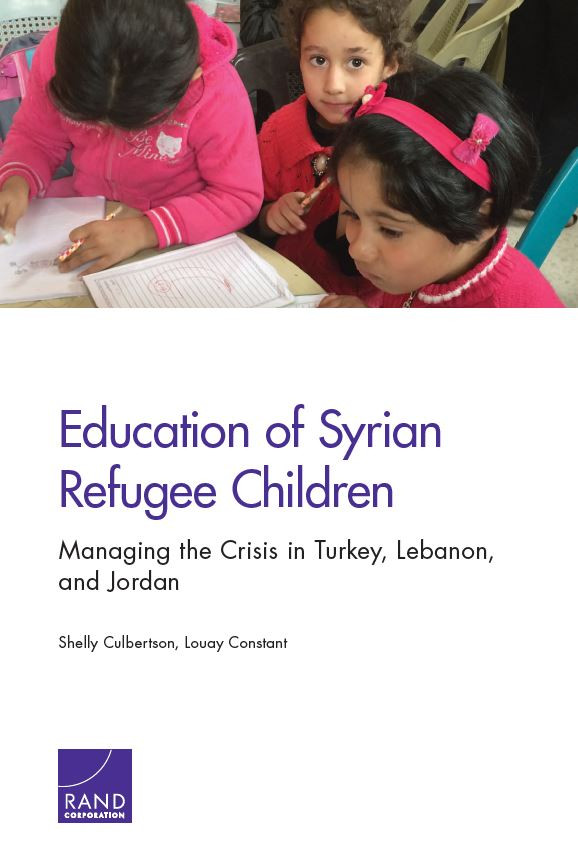 تعليم اللاجئين السوريين: إدارة الازمة في تركيا ولبنان والأردن Year of publication: 2015 Author: Shelly Culbertson | Louay Constant Corporate author: RAND Corporation مع وجود أربعة ملايين لاجئ سوري اعتبارًا من سبتمبر 2015 ، هناك حاجة ملحة لتطوير مناهج قصيرة وطويلة الأجل لتوفير التعليم لأطفال هذه الفئة من السكان. يستعرض هذا التقرير تعليم اللاجئين السوريين للأطفال في البلدان الثلاثة المجاورة التي تضم أكبر عدد من اللاجئين - تركيا ولبنان والأردن - ويحلل أربعة مجالات: الوصول والإدارة والمجتمع والجودة. وتشمل آثار السياسة إعطاء الأولوية للحاجة الملحة لزيادة فرص الحصول على التعليم بين اللاجئين ؛ الانتقال من استجابة إنسانية قصيرة المدى إلى استجابة إنمائية طويلة المدى ؛ الاستثمار في كل من قدرة الحكومة على توفير التعليم وفي البدائل الرسمية عالية الجودة لأنظمة المدارس العامة ؛ تحسين البيانات لدعم صنع القرار ؛ تطوير استراتيجية تداولية حول كيفية دمج أو فصل الأطفال السوريين وأطفال الدول المضيفة في المدارس لتعزيز التماسك الاجتماعي ؛ الحد من عمالة الأطفال وتمكين التعليم من خلال وضع سياسات توظيف للبالغين ؛ وتنفيذ خطوات معينة لتحسين جودة التعليم لكل من اللاجئين والمواطنين.
  Languages in adult literacy: policies and practices during the 15 years of EFA (2000-2015) Year of publication: 2015 Author: Clinton Robinson Linguistic diversity characterises many countries with large literacy needs. Meeting these needs will require a multilingual approach based on learning initial literacy in the learner’s mother tongue, with other languages used subsequently. This paper identifies five major challenges in implementing multilingual programmes, and traces the international policy developments over the 15 years of the EFA period. Four case studies – Mexico, Morocco, Papua New Guinea and Senegal – illustrate a range of policies, showing differing approaches and levels of commitment in providing literacy acquisition based on the mother tongue. The paper concludes with six policy orientations to guide action as part of the post- 2015 agenda.
  Переосмысление школьного обучения ДЛЯ XXI ВЕКА Состояние образования ради мира, устойчивого развития и глобальной гражданственности в Азии Year of publication: 2017 Corporate author: Mahatma Gandhi Institute of Education for Peace and Sustainable Development (MGIEP) В публикации «Переосмысление школьного образования в XXI веке: состояние образования в интересах мира, устойчивого развития и в духе глобальной гражданственности в Азии» Института ЮНЕСКО Махатмы Ганди по образованию в интересах мира и устойчивого развития (МГИЭП) обсуждается о необходимости изменения фундаментальных целей школьного образования, включая идеалы образования в интересах устойчивого развития, в духе глобальной гражданственности и мира и (ЦУР 4.7). Кроме того, в исследовании рассматривается разработка сравнительных показателей – так называемые «бенчмарки», позволяющие оценить будущий прогресс в этой области.В этом отчете приняли участие более 60 исследователей из 22 стран Азии и он также основан на анализе ключевой образовательной политики и образовательных стандартов этих стран. Отчет также включает обширный обзор литературы по школьному образованию в Азии. В шестой главе публикации можно найти анализ текущего состояния и вопросов, стоящих по внедрению образования в интересах мира, устойчивого развития и в духе глобальной гражданственности в различных субрегионах Азии, включая Центральной Азии. Во-первых, глава раскрывает реформы в школьном образовании в постсоветской Центральной Азии, которые проводились в целях удовлетворения потребности в быстром создании собственной государственности в странах региона, которые не были готовы к независимости при распаде СССР. Во-вторых, в главе подчеркивается трансформация понимания советского восприятия образования как «общего блага» и его вытеснение, по крайней мере, на уровне политического дискурса, с неустанным акцентом на образование как инструмента развития «человеческих ресурсов» с учетом спроса рынка на компетенции.Глобальное сообщество обязалось достичь целей устойчивого развития (ЦУР), включая ЦУР4 по образованию, к 2030 году. Задача ЦУР4.7 направлена на предоставление учащимся знаний и компетенций, необходимых им для реализации всех целей устойчивого развития. Основное внимание уделяется когнитивным, социально-эмоциональным и поведенческим результатам обучения, которые помогают учащимся решать конкретные задачи, рассматриваемые ЦУР. Поскольку государства-члены Организации Объединенных Наций работают над достижением ЦУР, им предлагается переосмыслить образование для внесения вклада в ЦУР. В то время как ЦУР4.7 обеспечивает необходимую структуру в этом отношении.