
Resources
Explore a wide range of valuable resources on GCED to deepen your understanding and enhance your research, advocacy, teaching, and learning.
3,446 Results found
 Towards Compassionate Global Citizenship: Educating the Heart through Development Education and Cognitively-Based Compassion Training (Vol. 19, Autumn, 2014) Year of publication: 2014 Author: Caroline Murphy | Brendan Ozawa-de Silva | Michael Winskel Corporate author: Centre for Global Education (CGE) The authors present an argument for developing emotional literacy which can be applied to critical development education to bring about active citizens who have capacity to take compassionate action for global justice. It is argued that both emotional skills and critical thinking skills are mutually essential, and in fact it is only by cultivating a symbiosis between these, can pedagogy be developed that presents a true transformational agency to people. The paper attempts to synthesise development education (DE) with Cognitively-Based Compassion Training (CBCT), and argues that these are potentially compatible to acquire such pedagogy. While DE can provide individuals with the skills to think critically and react to injustice, CBCT can provide the skills and emotional capacity to intervene for change, without giving in to despair, anger, or burnout. In short, it is argued that DE and CBCT can provide the emotional and intellectual skills necessary for productive social activism and change. Throughout this article it is highlighted how the international development organisation, Children in Crossfire (CIC), has been grappling with the above mentioned and related disciplines, and how it has been working, in partnership with researchers from Emory University and Life University’s Center for Compassion and Secular Ethics, to evolve its DE teacher training practice, Teachers in Development and Learning (TIDAL), towards such a transformative pedagogy, entitled ‘Educating the Heart for Compassionate Global Citizenship’.
  Maintaining Global Citizenship Education in Schools: A Challenge for Australian Educators and Schools (Vol. 43, No. 4) Year of publication: 2018 Author: John Buchanan | Nina Burridge | Andrew Chodkiewicz Corporate author: Australian Journal of Teacher Education Teaching students about global citizenship remains a critical challenge for schools and communities, especially in a developed country like Australia. With increasingly difficult national and international contexts and its marginal place in the school curriculum, there is an urgent need to help maintain support for global citizenship education. Recognising the challenges and limitations, key ways to raise its profile include considering available pedagogies, drawing on the existing Australian Global Education framework, taking up existing curriculum opportunities, accessing quality educational resources and relevant teacher education programs, and working in partnership with key Non-Government Organisations.
  Educating for Global Citizenship: Australia as a Case Study (Vol. 11. No. 1) Year of publication: 2019 Author: Ruth Reynolds | Suzanne MacQueen | Kate Ferguson-Patrick Corporate author: UCL Press Twenty-first-century teaching prepares students for a globalized existence. The long-established goal of schooling to prepare a responsible citizenry who strive for the benefit of the community must now be extended, assisting students to become global citizens, equipped to deal with global issues. This article investigates how civics and citizenship education is addressed in curricula; in particular, to what extent the ongoing issue of supporting a critical citizenry, locally and globally, is addressed. Using Australia as a case study, we present an analysis of selected Australian primary school (ages 5–12) curriculum documents to determine the extent of commitment to educating for global citizenship specifically. While intentions are good, work is needed to ensure that these are enacted within schools.
  Refugee Education: The Crossroads of Globalization (Educational Researcher; vol. 45, no. 9) Year of publication: 2016 Author: Sarah Dryden-Peterson Corporate author: Harvard University In this article, the author probes a question at the core of comparative education – how to realize the right to education for all and ensure opportunities to use that education for future participation in society. She does so thorough examination of refugee education from World War II to the present, including analysis of an original dataset of documents (n=214) and semi-structured interviews (n=208). The data illuminate how refugee children are caught between the global promise of universal human rights, the definition of citizenship rights within nation-states, and the realization of these sets of rights in everyday practices.
  Rethinking Learning: A Review of Social and Emotional Learning for Education Systems Year of publication: 2020 Author: Nandini Chatterjee Singh | Anantha Duraiappah Corporate author: Mahatma Gandhi Institute of Education for Peace and Sustainable Development (MGIEP) This publication titled ‘Rethinking Learning: A Review of Social and Emotional Learning for Education Systems’, published by the UNESCO Mahatma Gandhi Institute of Education for Peace and Sustainable Development (MGIEP) reviews the latest research on Social and Emotional Learning (SEL), its impact on student health and school climate and its transformative role in building happier classrooms. It seeks to inform and impress upon Member States the urgent need to mainstream social and emotional learning in education systems.
  No Poverty: Educational Resource for Teachers and Facilitators Year of publication: 2017 Corporate author: Concern Worldwide No Poverty – Educational resource for teachers and facilitators contains activities, statistics and information to explore the extent of poverty in the world, it’s causes and consequences as well as the aims of the sustainable development goals which aspire to address this issue. The booklet includes statistics, three activities complete with resources ready to photocopy and key terminology.
  Ensuring High Quality Primary Education for Children from Mobile Populations: A Desk Study Year of publication: 2017 Author: Stephanie Bengtsson | Caroline Dyer Corporate author: Educate A Child (EAC) | German Federal Ministry for Economic Cooperation and Development (GIZ) This study focuses on provision for primary school-aged children amongst communities of refugees and Internally Displaced People (IDPs), mobile pastoralists and seasonally migrating workers. For refugee and IDP children, policy, coordination and implementation challenges include: inconsistent ratification and enforcement of conventions and agreements protecting refugees and IDPs; the disproportionate impact of forced displacement on low and middle income countries (LMICs); the lack of a shared agenda among a wide range of stakeholders with differing mandates; and inadequate forced displacement terminology. Promising and emerging policy, coordination and implementation strategies include: expanding existing rights documents and agreements and building policy from the ground up; enshrining forcibly displaced people’s rights to education in national laws and policy; genuine engagement with affected communities; utilising the Education Cluster and other existing multi-stakeholder networks for knowledge sharing and collaboration; and collaborating across sectors to address the needs of the whole child. Financing challenges include: unpredictable and low funding for refugee and IDP education; weak capacity to absorb funds at the national and local level; an over-reliance on short-term financing mechanisms; donor dependence and a lack of funding sustainability; and inappropriate distribution of funds within education programming.
 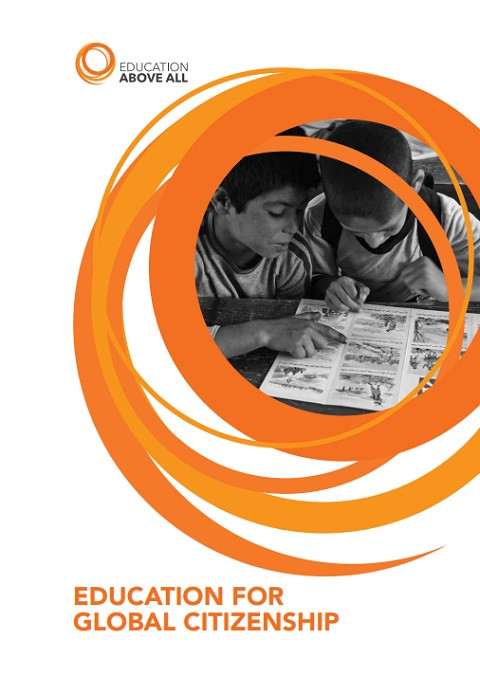 Education for Global Citizenship Year of publication: 2012 Corporate author: Education Above All (Qatar) This book shows that transformative education for local, national and global citizenship and peace can be implemented even under difficult conditions if there is a policy commitment to do so. Authors have provided examples and lessons learned from their own experiences as eminent practitioners in the field. The book is divided into three parts: Part One provides a brief overview of education for global citizenship; including in chapter 1, the subject matter and sub-themes; in chapter 2 the challenges of teaching for personal values and behavior development; and in chapter 3 the importance of having a clearly defined and holistic policy accepted by key stakeholders, and effective implementation.Part Two comprises chapters contributed by practitioners and specialists. Section A of Part Two presents some reflections on the challenges of teaching for values development and behavior change, and on the use of textbooks in this regard. Section B comprises four case studies that focus on or include education for citizenship and civics. Section C presents three cases focused on education for peace, together with a review of peace education in Muslim societies. Section D introduces human rights education and education designed to explore humanitarian law. Section E reviews problems of and possibilities for teaching about a conflictual past. Section F focuses on the development of national and international policy and planning for education to be supportive of peacebuilding and of respect for human rights.Finally, Part Three offers some recommendations for future action
 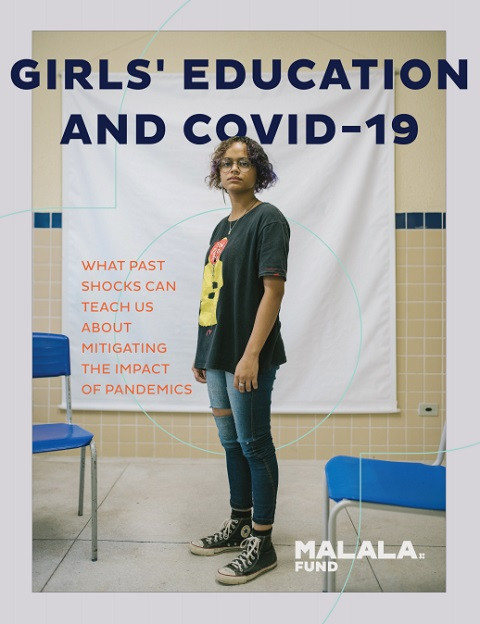 Girls' Education and COVID-19: What Past Shocks Can Teach Us About Mitigating the Impact of Pandemics Year of publication: 2020 Author: Lucia Fry | Philippa Lei Corporate author: Malala Fund Almost 90% of the world’s countries have shut their schools in efforts to slow the transmission of COVID-19. Alongside school closures, governments are also imposing social distancing measures and restricting the movement of people, goods, and services, leading to stalled economies. While this disruption to education and the expected reduction in global growth have far-reaching effects for all, their impact will be particularly detrimental to the most disadvantaged students and their families, especially in poorer countries. The educational consequences of COVID-19 will last beyond the period of school closures, disproportionately affecting marginalized girls.This paper uses insights from previous health and financial shocks to understand how the current global pandemic could affect girls’ education outcomes for years to come. It details how governments and international institutions can mitigate the immediate and longer-term effects of the pandemic on the most marginalized girls. The paper considers the 2014- 15 Ebola epidemic and the 2008 global financial crisis, which both have some parallels to the impact of COVID-19.
  Risks in the Fight for Justice and Human Rights in Central Asia: Protecting Civil Society in the Region in 2017 Year of publication: 2018 Corporate author: International Partnership for Human Rights (IPHR) This 2017 report provides an overview of the main trends regarding civil society in five countries of Central Asia: Kazakhstan, Kyrgyzstan, Tajikistan, Turkmenistan and Uzbekistan. The report is mainly based on the results of monitoring conducted by Central Asian organizations in their countries and on regular reports prepared jointly with IPHR as part of the CIVICUS Monitor initiative aimed at monitoring the state of civil society worldwide.