
Resources
Explore a wide range of valuable resources on GCED to deepen your understanding and enhance your research, advocacy, teaching, and learning.
3,454 Results found
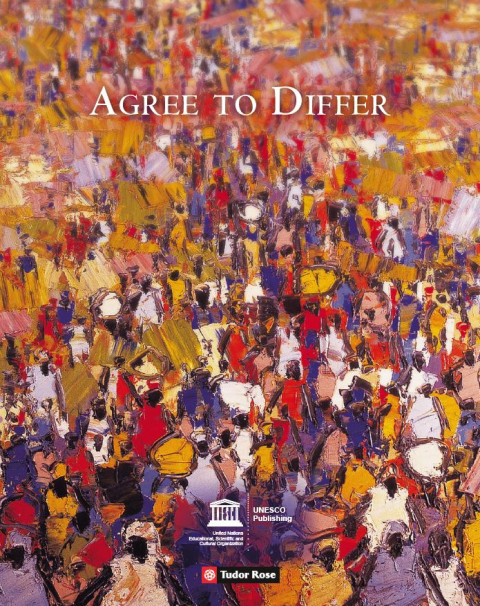 Agree to Differ Year of publication: 2015 Corporate author: UNESCO Dialogue on the basis of respect, tolerance, human rights and dignity has never been so important. This is the spirit of the International Decade for the Rapprochement of Cultures (2013-2022). The International Decade originates in the United Nations General Assembly Resolution 67/104 adopted in December 2012, co-sponsored by Kazakhstan and designating UNESCO as lead agency. This drew on a Resolution of the UNESCO General Conference and the experience of the 2010 International Year for the Rapprochement of Cultures which UNESCO led forward with activities across the world.The objective of the International Decade is to promote mutual understanding and respect for diversity, rights and equal dignity between peoples, through intercultural dialogue and concrete initiatives. This is essential for all societies today, undergoing deep transformation. The surge of conflict, acts of violence, extremism and intolerance pose a threat to peace, undermining the unity of humanity and calling on us all to redouble our efforts to advance a culture of peace, through dialogue, the safeguarding of cultural heritage, and the promotion of global citizenship education.The International Decade for the Rapprochement of Cultures embodies a commitment to explore new articulations between cultural diversity and universal values. The rapprochement of cultures calls for a commitment to the principles of human dignity and solidarity as the corner stones of living together within and between societies, making the most of all sources of diversity.This publication bears testimony to the urgency of addressing contemporary challenges through intercultural and interreligious dialogue in order to deepen understanding and cooperation for peace. Through concrete examples, including experiences at the community level from across the world, the publication showcases why cultural diversity, intercultural dialogue and responsive democratic governance are vital for the enhancement of mutual understanding, the growth of tolerance, and the building of bridges of mutual respect and dignity.
 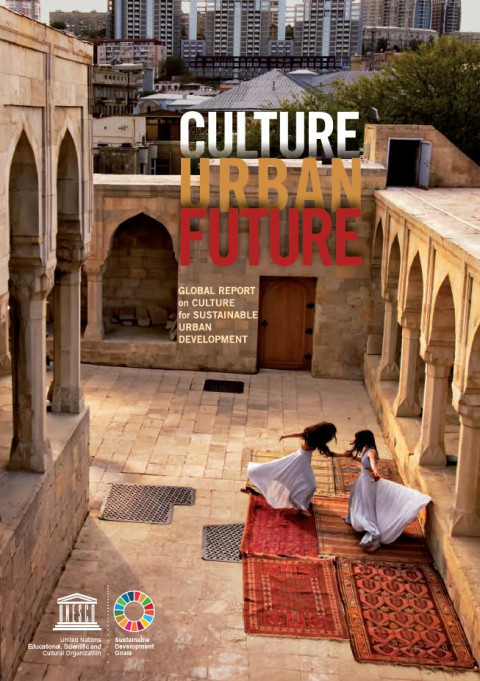 Culture: Urban Future; Global Report on Culture for Sustainable Urban Development Year of publication: 2016 Corporate author: UNESCO As the cornerstone of society, culture must lie at the heart of sustainable policies and strategies. Yet, despite its vital importance, key questions such as: ‘How has culture influenced urban development across the world?’ and ‘How can culture make a difference to our urban future?’ have often remained unexplored.This report, the first of its kind, explores the role of culture for sustainable urban development. It is intended as a policy framework document to support governments in the implementation of the 2030 Agenda for Sustainable Urban Development and the New Urban Agenda.In search of a common thread between the past and the future, the report examines the contribution of culture to urban sustainability from two analytical angles: a global survey implemented with nine regional partners across the world; and key thematic insights. The report thus analyses the situation, trends, threats and existing opportunities in different regional contexts, and presents a global picture of urban heritage safeguarding, conservation and management, as well as the promotion of cultural and creative industries, as resources for sustainable urban development. The report also includes a set of maps and a section on UNESCO’s strategic networks reflecting the Organization’s various fields of competence.Building on the findings of this global research and thematic reflection, the report presents new guidelines and recommendations, rooted in culture, to ensure that the cities of tomorrow are safe, inclusive, resilient and sustainable.
  The King Abdullah bin Abdulaziz International Programme for a Culture of Peace and Dialogue: Key Achievements of Phase I Year of publication: 2016 Corporate author: UNESCO The King Abdullah bin Abdulaziz International Programme for a Culture of Peace and Dialogue arose from the institutional framework of UNESCO’s Programme for a Culture of peace and non-violence. More than a concept, the Culture of Peace is a commitment to make peace a tangible reality for all. It denotes “a set of values, attitudes, traditions and modes of behaviour and ways of life based on respect for life, ending of violence and […] adherence to the principles of freedom, justice, democracy, tolerance, solidarity, cooperation, pluralism, cultural diversity, dialogue and understanding at all levels of society and among nations” (Article 1, Declaration and Programme of Action of a Culture of Peace, UNESCO, 1999). UNESCO continue its work to nurture a Culture of Peace, with development considerations, by joining forces with committed stakeholders in education, the sciences, culture, and communication and information.
  Предложение в отношении Глобальной программы действий по образованию в интересах устойчивого развития в качестве последующей деятельности по итогам Десятилетия образования в интересах устойчивого развития (ДОУР) Организации Объединенных Наций в период после 2014 г. Year of publication: 2013 Corporate author: Организация Объединенных Наций по вопросам образования, науки и культуры (UNESCO) Настоящий документ содержит предложение в отношении Гло-бальной программы действий по образованию в интересах устойчивого развития (ОУР), а также комментарии и замечания Исполнительного со-вета.
  [Video] Snapshot on Education - Global & Regional Perspectives on Progress and Current Challenges Year of publication: 2018 Corporate author: UNESCO The video is a snapshot of the reflection on progress and challenges for education. Taking into consideration the global and regional SDG4-Education 2030 consultations throughout 2018. More at https://en.unesco.org/themes/education/globaleducationmeeting2018 Un apercu sur l’éducation Year of publication: 2018 Corporate author: Organisation des Nations Unies pour l'éducation, la science et la culture (UNESCO) La vidéo est un apercu de la réflexion sur les progrès et les défis de l'éducation. Prenant en considération les consultations mondiales et régionales de l’ODD4-Education 2030 tout au long de 2018. Pour en savoir plus https://fr.unesco.org/themes/education
  Progress on Education for Sustainable Development and Global Citizenship Education: Findings of the 6th Consultation on the Implementation of the 1974 Recommendation Year of publication: 2018 Corporate author: UNESCO Findings of the 6th Consultation on the implementation of the 1974 Recommendation concerning Education for International Understanding, Co-operation and Peace and Education relating to Human Rights and Fundamental Freedoms (2012-2016) Progress on Education for Sustainable Development and Global Citizenship Education “The Recommendation concerning Education for International Understanding, Co-operation and Peace and Education relating to Human Rights and Fundamental Freedoms” was adopted by UNESCO’s General Conference at its 18th session in 1974. Every four years, Member States report to UNESCO on measures taken to implement the Recommendation in pre-primary, primary, secondary and post-secondary/tertiary education. This document summarizes and analyses the main findings of the 6th Consultation on the implementation of the 1974 Recommendation, covering the period of 2012 to 2016. The findings of the 6th Consultation provide important insight into how Member States are implementing the 1974 Recommendation as well as how they are progressing towards Target 4.7 of Sustainable Development Goal 4 on Education. Target 4.7 concerns Education for Sustainable Development and Global Citizenship Education, which are closely related to the 1974 Recommendation. Supporting Member States in implementing Target 4.7 is a UNESCO priority and essential to progress across the 2030 Agenda for Sustainable Development. Avances en la educación para el desarrollo sostenible y la educación para la ciudadanía mundial: resultados de la sexta consulta sobre la aplicación de la Recomendación sobre la Educación para la Comprensión Year of publication: 2018 Corporate author: Organización de las Naciones Unidas para la Educación, la Ciencia y la Cultura (UNESCO) Hallazgos de la 6ta consulta sobre la implementación de la Recomendación de 1974 sobre Educación para la Comprensión, la Cooperación y la Paz Internacionales y la Educación relativa a los Derechos Humanos y a las Libertades Fundamentales (2012-2016). Progresos en Educación para Desarrollo Sostenible y Educación para la Ciudadanía Mundial “La Recomendación concerniente a la Educación para Comprensión, Cooperación y Paz internacional y Educación relativa a los Derechos Humanos y a las Libertades Fundamentales” fue adoptada en la Conferencia General de la UNESCO en su 18ava sesión de 1974. Cada cuatro años, los Estados Miembros reportan a la UNESCO sobre las medidas llevadas a cabo para implementar la Recomendación en los niveles preescolares, primario, secundario y post-secundario/terciario de educación. Este documento resume y analiza los hallazgos principales de la 6ta Consulta sobre la implementación de la Recomendación de 1974, cubriendo el período de 2012 a 2016. Los hallazgos de la 6ta Consulta proporcionan información importante sobre cómo los Estados Miembros están implementando la Recomendación de 1974, y de cómo están progresando hacia la Meta 4.7 del Objetivo de Desarrollo Sostenible 4 en Educación. La Meta 4.7 concierne a la Educación para el Desarrollo Sostenible y la Educación para la Ciudadanía Mundial, que están muy ligadas a la Recomendación de 1974. El apoyo a los Estados Miembros en la implementación de la Meta 4.7 es una prioridad para la UNESCO dado que es esencial para progresar hacia los objetivos de la Agenda 2030 para Desarrollo Sostenible. (Avances en la educación para el desarrollo sostenible y la educación para la ciudadanía mundial: resultados de la sexta consulta sobre la aplicación de la Recomendación sobre la Educación para la Comprensión, la Cooperación y la Paz Internacionales y la Educación relativa a los Derechos Humanos y las Libertades Fundamentales, de 1974 (2012-2016)) 지속가능발전교육과 세계시민교육의 진전: 1974년 「국제이해, 협력, 평화를 위한 교육과 인권, 기본 자유에 관한 교육 권고」의 이행(2012-2016년)에 관한 제6차 설문조사 결과 Year of publication: 2018 Corporate author: 유네스코 「국제이해, 협력, 평화를 위한 교육과 인권, 기본 자유에 관한 교육 권고」(Recommendation concerning Education for International Understanding, Cooperation and Peace and Education relating to Human Rights and Fundamental Freedoms, 이하 1974년 권고안)는 1974년 제18차 유네스코 총회에서 채택되었다. 유네스코 회원국들은 매 4년마다 유아, 초등, 중등, 중등 이후/고등 분야 교육 내 1974년 권고안 이행 조치에 대해 유네스코에 보고한다. 이 보고서는 2012년부터 2016년까지의 1974년 권고안 이행 현황에 대한 제6차 설문조사1) (이하 제6차 설문조사) 결과를 요약·분석하고 있다. 제 6차 설문조사 결과는 회원국들이 지속가능발전목표(Sustainable Development Goal, SDGs) 내 교육 관련 목표(SDG 4) 중 세부목표 4.7을 달성하는 데 어떠한 진전이 있었는지, 그리고 1974년 권고안을 어떻게 이행하고 있는지 판단하기 위해 필요한 통찰력 있는 시각을 제공한다. 세부목표 4.7은 1974년 권고안과 밀접한 연관이 있는 지속가능발전교육(Education for Sustainable Development, ESD) 및 세계시민교육(Global Citizenship Education, GCED)과 관련이 있다(참고1). 세부목표 4.7의 이행을 위한 회원국들의 지원은 유네스코의 우선 순위이자, 지속가능발전을 위한 교육 2030 의제 전반에 걸쳐 진척을 이루는 데 필수적이다.
 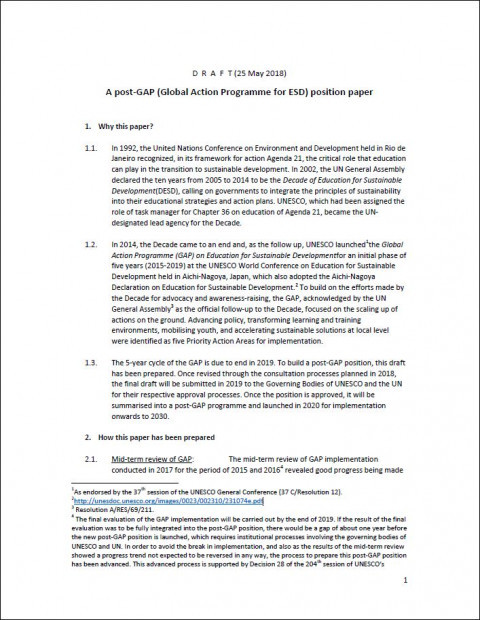 A Post-GAP (Global Action Programme for ESD) Position Paper Year of publication: 2018 Corporate author: UNESCO The 5-year cycle of the GAP is due to end in 2019. To build a post-GAP position, this draft position paper has been prepared. Once revised through the consultation processes planned in 2018, the final draft will be submitted in 2019 to the Governing Bodies of UNESCO and the UN for their respective approval processes. Once the position is approved, it will be summarised into a post-GAP programme and launched in 2020 for implementation onwards to 2030.