
Resources
Explore a wide range of valuable resources on GCED to deepen your understanding and enhance your research, advocacy, teaching, and learning.
2,161 Results found
 Transformar la educación y formación técnica y profesional (EFTP) para transiciones exitosas y justas: Estrategia de la UNESCO 2022-2029 Year of publication: 2022 Corporate author: UNESCO Esta estrategia que abarca del 2022 al 2029, guía a la UNESCO para promover el desarrollo de competencias para el empoderamiento, empleo productivo y trabajo decente, y facilitar la transición hacia economías y sociedades más digitales, verdes e inclusivas. En línea con los Objetivos de Desarrollo Sostenible, la Agenda Educación 2030, y las recomendaciones de la Cumbre sobre la Transformación de la Educación, la UNESCO apoyará la transformación de la educación y formación técnica y profesional en todos los Estados Miembros y trabajara con socios bilaterales y multilaterales, instituciones, gobiernos, el sector privado y educadores de todo el mundo para posicionar a la EFTP como máxima prioridad en la agenda educativa. Es evidente que deben realizarse esfuerzos colectivos para preparar a los jóvenes y adultos en la adquisición de nuevas habilidades, ayudándolos a desarrollar su potencial para afrontar de manera exitosa los cambios sociales, económicos y medioambientales que el mundo está atravesando.
  教育信息化政策和总体规划论纲 Year of publication: 2022 Author: Fengchun Miao | Juan Enrique Hinostroza | Molly Lee | Shafika Isaacs | Dominic Orr | Fabio Senne | Ana-Laura Martinez | Ki-Sang Song | Alexander Uvarov | Wayne Holmes | Benjamin Vergel de Dios Corporate author: UNESCO 几十年来,全球各国都在尝试利用信息与通信技术(Information and Communication Technologies,ICTs)促进教育发展。这些由公共 机构推动并涉及商业技术公司的行动计划却产生了诸如数字不平等 进一步加剧以及高质量数字学习机会不均衡等矛盾。新冠疫情危机 加剧了这一趋势:在2020年新冠疫情危机最严峻的时期,全球至少 三分之一的学生无法获得远程教育。本出版物旨在引导政策制定者在采用技术时提供人 权保障;将包容、公平和性别平等视为解决方案的 核心;将技术创新视为共同利益。 基于以上原则, 本出版物采用以人为本的视角, 审视从低带宽技术到人工智能和互联网3.0或“元宇宙”等新兴技术的潜能。本出版物倡导国家政策应保护教师和学生的数字健康, 减少和中和数字碳排放足迹,并避免“技术解决方案主义”。本出版物提出了一个教育信息化政策规划框架以及 迭接式政策规划路线图,以引导对各地教育系统的数字化准备状态 的评估、对学习者和教师的需求分析,进而规划有充足的配套资源 支持的国家教育信息化方案。随后,本出版物还深入剖析了在教育 的不同领域实施教育信息化的国家总体规划的典型范例。
  Marco de competencias para docentes en materia de IA Year of publication: 2025 Author: Fengchun Miao | Mutlu Cukurova Corporate author: UNESCO Orientación para docentes sobre el uso y el mal uso de la IA en la educaciónLa IA procesa enormes cantidades de información, genera nuevos contenidos y ayuda a la toma de decisiones mediante análisis predictivos. En el ámbito educativo, la IA ha transformado la relación tradicional docente-estudiante, creando una nueva dinámica docente-IA-estudiante. Este cambio exige replantear los roles de los docentes y las competencias que necesitan en la era de la IA. Sin embargo, son pocos los países que han definido estas competencias o desarrollado programas nacionales para capacitar a los docentes en IA, lo que deja a muchos educadores sin una orientación adecuada.El Marco de competencias en materia de IA para docentes aborda esta brecha al definir los conocimientos, habilidades y valores que los docentes deben dominar en la era de la IA. Desarrollada bajo los principios de protección de los derechos de los docentes, del fortalecimiento de la capacidad de acción humana y de la promoción de la sostenibilidad, la publicación describe 15 competencias que atraviesan cinco dimensiones: una forma de pensar centrada en el ser humano, la ética de la IA, los fundamentos y aplicaciones de la IA, la pedagogía de la IA, y la IA para el aprendizaje profesional. Estas competencias se clasifican en tres niveles de progresión: adquirir, profundizar y crear.Como una referencia global, esta herramienta orienta el desarrollo de marcos nacionales de competencias en IA, brinda insumos para los programas de formación docente y ayuda a diseñar parámetros de evaluación. También ofrece estrategias para que los docentes desarrollen conocimientos sobre IA, apliquen principios éticos y apuntalen su crecimiento profesional.
  Référentiel de compétences en IA pour les enseignants Year of publication: 2025 Author: Fengchun Miao | Mutlu Cukurova Corporate author: UNESCO Guider les enseignants à propos de l’usage judicieux ou problématique de l’IA en éducationL’intelligence artificielle (IA) traite une grande quantité d’informations, génère de nouveaux contenus et aide à la prise de décision grâce à des analyses prédictives. Dans le domaine de l’éducation, l’IA a transformé la relation traditionnelle entre l’enseignant et l’apprenant en un triptyque dynamique entre l’enseignant, l’IA et l’apprenant. Cette évolution exige de repenser le rôle des enseignants et les compétences dont ils ont besoin à l’ère de l’IA. Pourtant, peu de pays ont défini ces compétences ou élaboré des programmes nationaux pour former les enseignants à l’IA, ce qui prive de nombreux éducateurs d’un cadre adéquat.Le Référentiel de compétences en IA pour les enseignants comble cette lacune : il définit les connaissances, les habiletés et les valeurs que les enseignants doivent maîtriser à l’ère de l’IA. Élaborée dans le respect de la protection des droits des enseignants, de l’accroissement de l’agentivité humaine et de la promotion de la durabilité, la publication présente 15 compétences réparties en cinq composantes : une approche de l’IA centrée sur l’humain, l’éthique de l’IA, les fondements et les applications de l’IA, la pédagogie de l’IA et l’IA pour l’apprentissage professionnel. Ces compétences sont classées selon trois niveaux de progression : acquérir, approfondir, créer.En tant que référence internationale, cet outil sert de guide pour l’élaboration de référentiels nationaux de compétences en IA, apporte des informations sur les programmes de formation des enseignants et aide à définir des paramètres d’évaluation des apprentissages. Il fournit également aux enseignants des stratégies pour développer leurs connaissances en matière d’IA, respecter des principes éthiques et soutenir leur développement professionnel.
 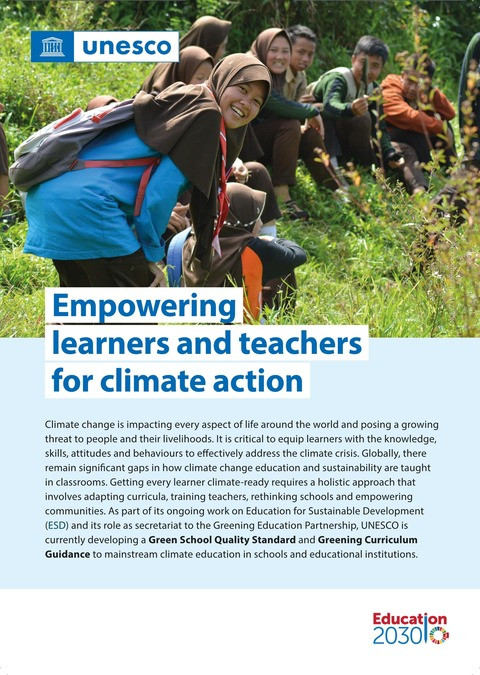 Empowering Learners and Teachers for Climate Action Year of publication: 2023 Corporate author: UNESCO Climate change is impacting every aspect of life around the world and posing a growing threat to people and their livelihoods. It is critical to equip learners with the knowledge, skills, attitudes and behaviours to effectively address the climate crisis. Globally, there remain significant gaps in how climate change education and sustainability are taught in classrooms. Getting every learner climate-ready requires a holistic approach that involves adapting curricula, training teachers, rethinking schools and empowering communities. As part of its ongoing work on Education for Sustainable Development (ESD) and its role as secretariat to the Greening Education Partnership, UNESCO is currently developing a Green School Quality Standard and Greening Curriculum Guidance to mainstream climate education in schools and educational institutions.
  Kit de herramientas global sobre IA y el estado de derecho para el poder judicial Year of publication: 2023 Author: Miriam Stankovich | Ivana Feldfeber | Yasmín Quiroga | Marianela Ciolfi Felice | Vukosi Marivate Corporate author: UNESCO ¿Qué es la Inteligencia artificial (IA)? ¿Cómo funciona? Y lo que es más importante, ¿cómo se abre camino en el contexto judicial? Tecnologías como la IA han existido durante décadas, pero solo recientemente han comenzado a usarse en una variedad de entornos de justicia y aplicación de la ley. Si bien la IA tiene un inmenso potencial para el sistema de justicia, ya que ayuda a los jueces a tomar mejores decisiones, mejora la eficiencia, aumenta el acceso y ayuda a detectar y prevenir el delito, también existen algunas cuestiones importantes que las partes interesadas en la justicia deben tener en cuenta mientras se preparan para un futuro en el que la IA se utiliza cada vez más en los sistemas de justicia. En 2022, la UNESCO lanzó dos evaluaciones de necesidades. En primer lugar, a través de la Encuesta de evaluación de necesidades de inteligencia artificial de la UNESCO en África, el 90 % de los 32 países encuestados solicitaron apoyo para el desarrollo de capacidades para el poder judicial en materia de IA. Al mismo tiempo, una segunda encuesta mundialde actores judiciales en 100 países subrayó la necesidad de comprender mejor el uso de la IA en la administración de justicia y sus repercusiones jurídicas más amplias en las sociedades. El “Kit de herramientas mundial sobre la IA y el Estado de derecho” para el Poder Judicial responde a estas necesidades y proporciona a los actores judiciales (jueces, fiscales, fiscales estatales, abogados públicos, universidades de derecho e instituciones de formación judicial) el conocimiento y las herramientas necesarias para comprender los beneficios y riesgos de la IA en su trabajo. El kit de herramientas ayudará a los actores judiciales a mitigar los posibles riesgos de la IA para los derechos humanos al brindar orientación sobre las leyes, principios, normas y jurisprudencia internacional de derechos humanos relevantes que sustentan el uso ético de la IA.
 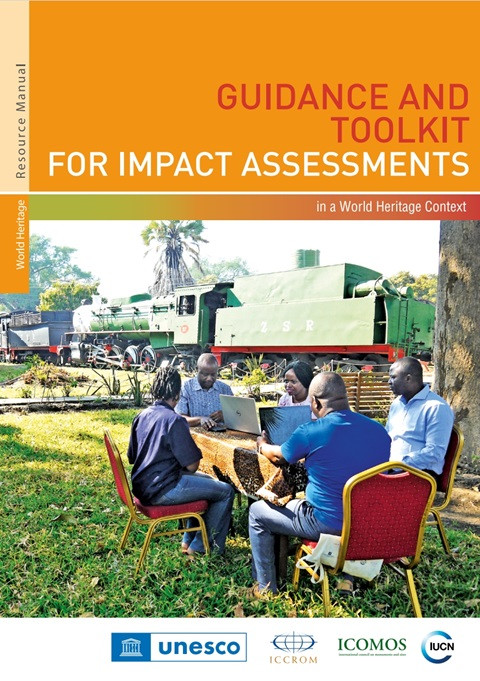 Guidance and Toolkit for Impact Assessments in a World Heritage Context Year of publication: 2022 Author: Sarah Court | Eugene Jo | Richard Mackay | Mizuki Murai | Riki Therivel Corporate author: UNESCO | International Centre for the Study of the Preservation and Restoration of Cultural Property (ICCROM) | International Council on Monuments and Sites (ICOMOS) | International Union for Conservation of Nature (IUCN) | Korea R. Cultural Heritage Administration As the World Heritage Convention celebrates its 50th anniversary in 2022, over 1100 sites around the world are recognized as World Heritage - places that are so valuable to humanity that there conservation has been deemed our collective responsibility. Yet many of these exceptional places face increasing pressure from diverse types of development projects within and around the sites. Assessing the impacts of such projects – before deciding to proceed with their implementation – is essential to both prevent damage to World Heritage and identify sustainable options.The Guidance and Toolkit for Impact Assessments in a World Heritage Context is the go-to reference that explains the process for achieving these goals. Offering practical tips and tools including checklists and a glossary, it provides a framework for conducting impact assessments for cultural and natural heritage sites.Developed by UNESCO and the Advisory Bodies to the World Heritage Committee, ICCROM, ICOMOS and IUCN, this Guidance and Toolkit fosters cross-sectoral, multidisciplinary collaboration to identify solutions for both protecting World Heritage sites and supporting good quality and appropriate development . States Parties to the World Heritage Convention, heritage managers, decision-makers, planners and developers are invited to use it to help realise our collective commitment to passing on our precious heritage to future generations. 세계유산 영향평가 지침서 Year of publication: 2023 Author: Sarah Court | Eugene Jo | Richard Mackay | Mizuki Murai | Riki Therivel Corporate author: 유네스코 | International Centre for the Study of the Preservation and Restoration of Cultural Property (ICCROM) | International Council on Monuments and Sites (ICOMOS) | International Union for Conservation of Nature (IUCN) | Korea R. Cultural Heritage Administration 2022년 '세계유산협약'이 탄생 50주년을 맞았다. 그동안 전 세계적으로 1,100건이 넘는 곳이 세계유산으로 공인되어 그 가치를 보존하는 것이 인류 전체의 의무로 인식되고 있다. 그러나 많은 세계유산이 유산 안팎의 다양한 개발행위로 인해 위협받고 있다. 그러한 개발행위로 인한 유산의 훼손을 예방하고 지속가능한 대안을 찾기 위해서는 개발행위를 실행하기로 결정하기에 앞서 유산에 미칠 영향을 평가해야한다. 이러한 목적을 위해 편리하게 활용할 수 있도록 나온 안내서가 바로 본 '세계유산 영향평가 지침서(이하 '지침서')이다. 지침서는 실무에 바로 쓸 수 있도록 용어정의, 점검목록 등을 제안하며 문화유산과 자연유산의 영향평가에 모두 사용할 수 있다. UNESCO와 세계유산위원회의 자문기구인 ICCROM, ICOMOS와 ICUN이 개발한 이 지침서는 다양한 분야를 넘나드는 학제적 협력을 통해 세계유산보호와 고품질의 적절한 개발이라는 일석이조의 목적을 달성하는 대안을 찾기 위한 안내서이다. 세계유산협약의 당사국, 유산관리자, 계획정책 당국과 개발 사업자까지 본 지침서를 활용하여, 인류의 공동 사명인 소중한 유산을 후세에 전승하는데 기여해 주길 바란다.
 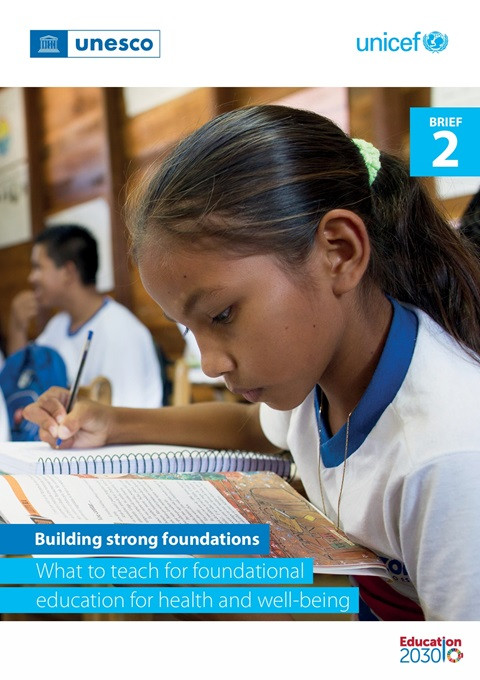 Building Strong Foundations: What to Teach for Foundational Education for Health and Well-being (Building Strong Foundations Brief; 2) Year of publication: 2024 Corporate author: UNESCO | United Nations Children's Fund (UNICEF) In a rapidly changing world, establishing strong foundations for children is vital for their well-being and resilience. Quality education is central to this endeavour and is the key to lifelong health and success. Recognizing that children thrive in the classroom when they are in good health, it is crucial to learn about health and well-being early on in primary schools. The Building strong foundations briefs, developed jointly by UNESCO and UNICEF, provide evidence-based guidance to support primary school-aged children to thrive through foundational education for health and well-being. Drawing from extensive research and consultations with leading experts from various fields and across the world, these briefs serve as a roadmap for education stakeholders to equip learners with the requisite knowledge and skills to navigate their current and future health and well-being needs. The present document is the second of four briefs. It is a go-to resource to better understand what makes a primary school curriculum effective in supporting health, well-being and learning. The brief provides practical tips and insights on integrating core thematic concepts for health and well-being into the curriculum, including concrete examples of learning objectives for lower primary and upper primary curricula. Whether a seasoned curriculum designer, a passionate educator or an individual involved in primary school curriculum processes, this brief equips readers with the tools to design impactful curricula for transformative learning, health and well-being.
  Solidarity as the Future of Education: Perspectives From the Ibero-American Experience of Service-Learning Year of publication: 2024 Author: Elena Massat Corporate author: UNESCO | Latin American Center for Service-Learning (CLAYSS) With this work we have proposed to put into dialogue the recent UNESCO document “Reimagining our futures together. A new social contract for education. Report of the international commission on the futures of education” with the theory and practice of service-learning in Ibero-America. We would like to show how UNESCO's proposal for education for the future can already be verified as a practice in many educational institutions in the region, which develop solidarity service-learning projects even in the most vulnerable contexts. In these experiences, solidarity ceases to be just learning content, to become an educational process, a pedagogy to learn to solve complex problems of reality, and to use the SDGs as a “curriculum” for the education of the future (UNESCO, 2022:54). These practices are deeply innovative, as the experts who comment on them point out, and we hope that they can be inspiring for many other educational institutions.