
Resources
Explore a wide range of valuable resources on GCED to deepen your understanding and enhance your research, advocacy, teaching, and learning.
2,775 Results found
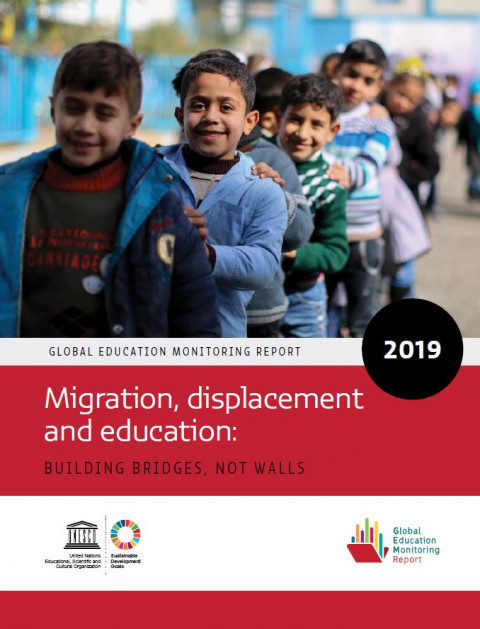 Global Education Monitoring Report, 2019: Migration, Displacement and Education: Building Bridges, Not Walls Year of publication: 2018 Corporate author: UNESCO | Global Education Monitoring Report Team The 2019 Global Education Monitoring Report examines the education impact of migration and displacement across all population movements: within and across borders, voluntary and forced, for employment and education. It also reviews progress on education in the 2030 Agenda for Sustainable Development.Two new global compacts on migrants and refugees recognize education’s role and set objectives aligned with the global commitment to leave no one behind. This report is a vital toolkit for these compacts. It covers policy issues that address seasonal migrants, rural school consolidation, intercultural curricula, refugee inclusion in national education systems and elimination of segregation, qualifications recognition, targeting of school funding, more effective humanitarian education aid and teacher preparedness for diverse classrooms in emergency, protracted and “new normal” contexts.The report calls on countries to see education as a tool to manage migration and displacement and an opportunity for those needing one.
 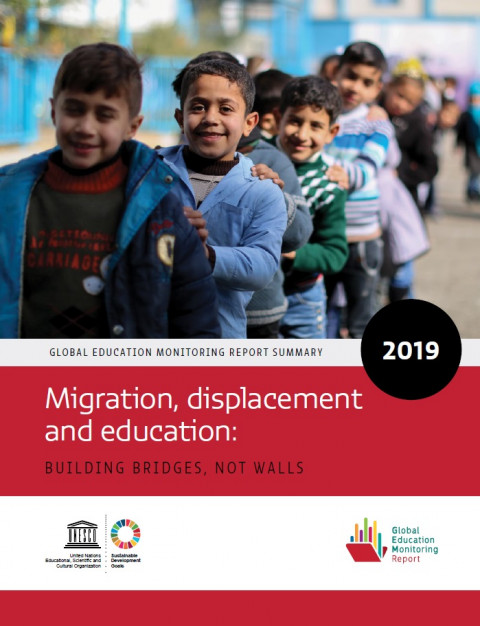 [Summary] Global Education Monitoring Report Summary 2019: Migration, Displacement and Education: Building Bridges, Not Walls Year of publication: 2018 Corporate author: UNESCO | Global Education Monitoring Report Team This Report points directly to a major challenge: How can teachers be supported to practise inclusion? It offers us fascinating insights into humanity and the age-old phenomenon of migration. I invite you to consider its recommendations and to act on them. This report is a vital toolkit for these compacts. It covers policy issues that address seasonal migrants, rural school consolidation, intercultural curricula, refugee inclusion in national education systems and elimination of segregation, qualifications recognition, targeting of school funding, more effective humanitarian education aid and teacher preparedness for diverse classrooms in emergency, protracted and “new normal” contexts. This summary of the 2019 GEM Report calls on countries to see education as a tool to manage migration and displacement and an opportunity for those needing one.
 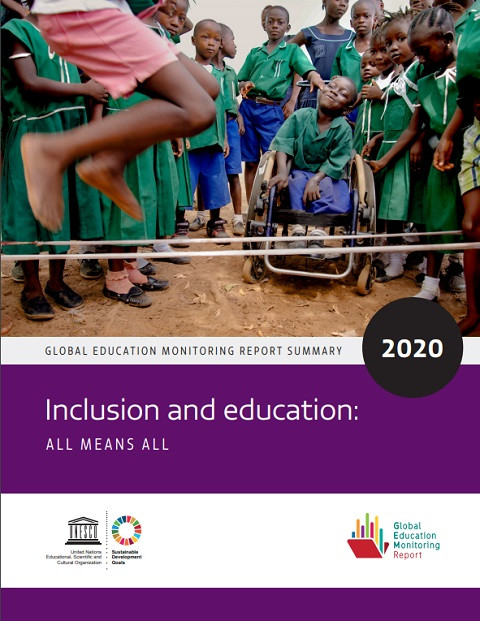 [Summary] Global Education Monitoring Report Summary 2020: Inclusion and Education; All Means All Year of publication: 2020 Corporate author: UNESCO | Global Education Monitoring Report Team The 2020 Global Education Monitoring Report looks at social, economic and cultural mechanisms that discriminate against disadvantaged children, youth and adults, keeping them out of education or marginalized in it. Spurred by their commitment to fulfil the right to inclusive education, countries are expanding their vision of inclusion in education to put diversity at the core of their systems. Yet implementation of well-meaning laws and policies often falters. Released at the start of the decade of action to 2030, and in the middle of the Covid-19 crisis, which has exacerbated underlying inequalities, the Report argues that resistance to addressing every learner’s needs is a real threat to achieving global education targets. [Résumé] Résumé du rapport mondial de suivi sur l’éducation 2020: Inclusion et éducation; Tous, sans exception Year of publication: 2020 Corporate author: UNESCO | Global Education Monitoring Report Team L’édition 2020 du Rapport mondial de suivi sur l’éducation examine les mécanismes sociaux, économiques et culturels qui discriminent les enfants, les jeunes et les adultes défavorisés, les tenant à l’écart de l’éducation ou les marginalisant en son sein. Encouragés par leur engagement à réaliser le droit à l’éducation inclusive, les pays élargissent leur vision de l’inclusion dans l’éducation afin de placer la diversité au cœur de leurs systèmes. Pourtant, la mise en œuvre de lois et de politiques bien intentionnées échoue souvent. Publié au début de la décennie d’action à l’horizon 2030, et en pleine crise de COVID-19 qui a exacerbé les inégalités existantes, rapport affirme que la résistance à la prise en compte des besoins de chaque apprenant constitue une menace réelle pour la réalisation des objectifs mondiaux d’éducation. [Resumen] Resumen del informe de seguimiento de la educación en el mundo 2020: Inclusión y educación; Todos sin excepción Year of publication: 2020 Corporate author: UNESCO | Global Education Monitoring Report Team En el Informe de Seguimiento de la Educación en el Mundo 2020 se examinan los mecanismos sociales, económicos y culturales que discriminan a niños, jóvenes y adultos desprotegidos, manteniéndolos excluidos de la educación o marginados dentro de ella. Estimulados por su compromiso de hacer realidad el derecho a la educación inclusiva, los países están ampliando su visión de la inclusión en la educación y otorgando a la diversidad un lugar central en sus sistemas. Sin embargo, la aplicación de leyes y políticas bienintencionadas suele flaquear. El informe, publicado a principios del decenio de acción que culmina en 2030 y en el contexto de la crisis de Covid-19 que ha exacerbado las desigualdades subyacentes, sostiene que la resistencia a atender las necesidades de todos los educandos es una verdadera amenaza para el logro de los objetivos mundiales de educación. Pезюме всемирного доклада по мониторингу образования 2020: Инклюзивность и образование; для всех означает для всех Year of publication: 2020 Corporate author: UNESCO | Global Education Monitoring Report Team Во Всемирном докладе по мониторингу образования за 2020 г. рассматриваются социальные, экономические и культурные механизмы, которые служат источниками дискриминации обездоленных детей, молодых людей и взрослых, не позволяя им получать образование или отводя им маргинальное место. В подтверждение своей приверженности делу осуществления права на инклюзивное образование страны расширяют свое видение инклюзивности в образовании, отводя разнообразию центральное место в рамках своих систем. Однако воплотить в жизнь правильные, по сути, законы и стратегии часто не удается. В настоящем докладе, вышедшем в начале десятилетия действий на период до 2030 г., в разгар кризиса COVID-19, усугубившего основные формы неравенства, утверждается, что отказ обеспечить удовлетворение потребностей каждого учащегося представляет собой реальную угрозу для решения глобальных задач в области образования.
  Enforcing the right to education of refugees: a policy perspective Year of publication: 2019 Corporate author: UNESCO This paper, aimed at education policymakers, provides analysis and insights on how the right to education for refugees could be ensured from a policy perspective. It does so by reviewing the current status of access to education of refugees, using the scant data that is available in this area. It also outlines some of the extensive barriers to education that refugees face, with recognition of the multifaceted, interlinked and complex nature of exclusion. It provides an overview of the international normative frameworks and global agendas on education that can be applied to refugees to ensure their right to education and achieve SDG 4. Additionally, this document presents practical examples, good practices, and promising measures taken by countries in order to ensure the inclusion of refugees in their national systems and better guarantee the fulfilment of their right to education. As a result of this research, collaboration and the invaluable contributions from the participants in a dedicated Expert Meeting in Barcelona (2018), a set of policy recommendations are provided in the last chapter which aims to guide policymakers to ensure equal access to good quality education for refugees.
  I'd blush if I could: closing gender divides in digital skills through education Year of publication: 2019 Author: Mark West | Rebecca Kraut | Han Ei Chew Corporate author: UNESCO | EQUALS Skills Coalition This publication seeks to expose some of these biases and put forward ideas to begin closing a digital skills gender gap that is, in most parts of the world, wide and growing. Today, women and girls are 25 per cent less likely than men to know how to leverage digital technology for basic purposes, 4 times less likely to know how to programme computers and 13 times less likely to file for a technology patent. Ata moment when every sector is becoming a technology sector, these gaps should make policy-makers, educators and everyday citizens ‘blush’ in alarm. The publication explains the role gender-responsive education can play to help reset gendered views of technology and ensure equality for women and girls. This publication was prepared by UNESCO for the EQUALS Skills Coalition, one of three coalitions that comprise the EQUALS partnership. EQUALS is a global partnership of governments and organizations dedicated topromoting gender balance in the technology sector by championing equality of access, skills and leadership for women and men alike. The Skills Coalition, Access Coalition, Leadership Coalition and a transversal Research Group release knowledge products periodically, organize competitions and funds, and take actions in countries and internationally to advance EQUALS’smission. The German Federal Ministry for Economic Cooperation and Development (BMZ) generously supported this publication financially and co-leads the EQUALS Skills Coalition with UNESCO. A dedicated working group composed of digital skills and gender experts guided the development of the content.
  برنامج الملك عبد الله بن عبد العزيز الدولي لثقافة السلام والحوار: أهم منجَزات المرحلة الأولى Year of publication: 2016 Corporate author: منظمة الأمم المتحدة للتربية والعلم والثقافة (UNESCO) انبثق برنامج الملك عبد الله بن عبد العزيز الدولي لثقافة السلام والحوار من الإطار المؤسسي لبرنامج اليونسكو لثقافة السلام واللاعنف.إن ثقافة السلام لا تقتصر على كونها مفهوماً بل تتعداه إلى كونها التزاماً بجعل السلام واقعاً ملموساً للجميع. فهي تعبِّ عن “مجموعة من القيم والمواقف والتقاليدوأنماط السلوك وأساليب الحياة تستند إلى [...] احترام الحياة وإنهاء العنف [... و] التمسك بمبادئ الحرية والعدل والديمقراطية والتسامح والتضامنوالتعاون والتعددية والتنوع الثقافي والحوار والتفاهم على مستويات المجتمع كافة وفيما بين الأمم” (المادة 1 من إعلان وبرنامج العمل بشأن ثقافة السلام،اليونسكو، 1999 ). وتثابر اليونسكو على العمل لغرس ثقافة السلام مع مراعاة اعتبارات التنمية، بمضافرة القوى مع أصحاب المصلحة الملتزمين فيمجال التربية والعلوم والثقافة، والاتصال والإعلام.
 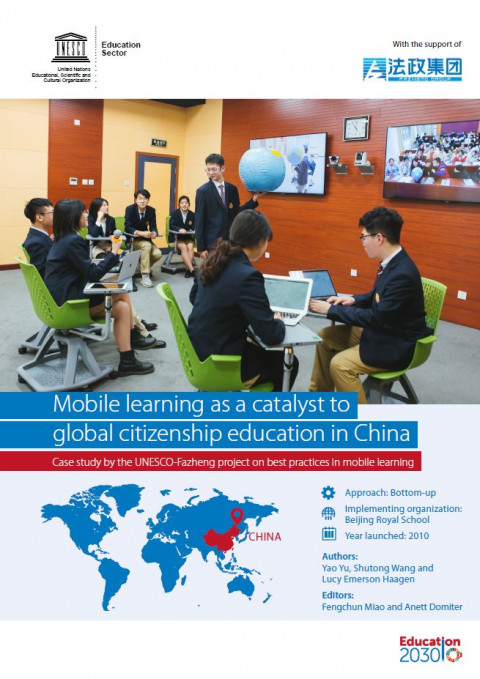 Mobile Learning as a Catalyst to Global Citizenship Education in China: Case Study by the UNESCO-Fazheng Project on Best Practices in Mobile Learning Year of publication: 2019 Author: Yao Yu | Shutong Wang | Lucy Emerson Haagen Corporate author: UNESCO The Beijing Royal School was one of the pioneer schools in China in incorporating mobile learning into pedagogical transformation. Its mobile learning programme started in 2010. Stemming from the school’s orientation towards global citizenship education, the Beijing Royal School recognizes mobile learning as both driver and enabler for supporting the development of students’ cognitive, socio-emotionaland behavioural dimensions, organized around knowledge acquisition, understanding and respect for difference and diversity, and responsible engagement with global issues. It takes advantage of a variety of mobile apps to support students’ multilingual education, and uses open educational resources (OER) to support multicultural education, taking advantage of the up-to-date worldwide data and information available on the web. It also engages with students from other countries in projects and courses that help the students to widen their understanding of diverse cultures and social contexts. Overall, this case study illustrates how to use mobile technologies to support the implementation of a well-defined and clearly structured educational vision by embedding the use of mobile technologies in students’ daily learning lives.