
Resources
Explore a wide range of valuable resources on GCED to deepen your understanding and enhance your research, advocacy, teaching, and learning.
2,775 Results found
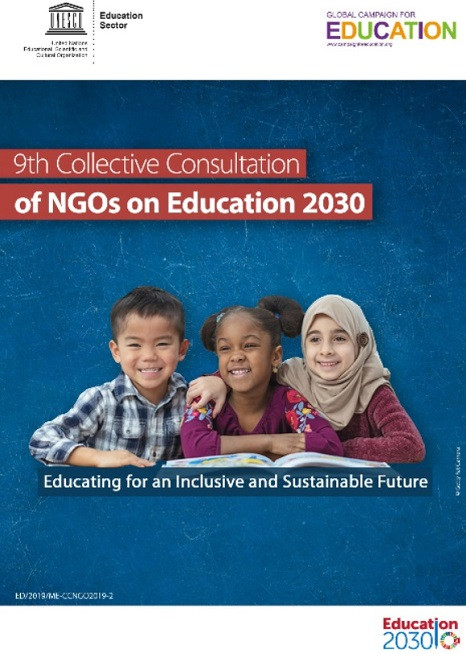 9th Collective Consultation of NGOs on Education 2030: Educating for an Inclusive and Sustainable Future Year of publication: 2020 Corporate author: UNESCO | Global Campaign for Education (GCE) This includes proceedings and key messages of the 9th Global meeting of the Collective Consultation of NGOs on Education 2030 (CCNGO 2019) organized by UNESCO from 2-5 December 2019 in Hammamet, Tunisia and generously hosted by the Global Campaign for Education (GCE), alongside the Arab Campaign for Education for All (ACEA) and the National Association of the Right to Education (ANDET). The CCNGO 2019 aimed to build on CSOs(Civil Society Organisations) experiences and strong commitments to strengthen collective initiatives towards the realisation of the SDGs and education related targets. The focus and major theme of the Meeting was the role and engagement of civil society organizations in supporting equity and inclusion in the implementation of SDG4-Education 2030 at national, regional and global level. 9e Consultation collective des ONG sur l’Éducation 2030: Éduquer pour un avenir inclusif et durable Year of publication: 2020 Corporate author: Organisation des Nations Unies pour l'éducation, la science et la culture (UNESCO) | Global Campaign for Education (GCE) Cela comprend les actes et les messages clés de la 9eRéunion mondialede la Consultation collective des ONG sur l’Éducation 2030(CCONG2019) a été organisée par l’UNESCO du 2 au 5 décembre2019 à Hammamet, Tunisie,où elle a été généreusement accueillie par la Campagne mondiale pour l’éducation(CME), la Campagne arabe pour l’éducation pour tous(ACEA) et l’Association nationale du droit à l’éducation(ANDET). La Réunion mondialede la CCONG2019 avait pour but derenforcer les initiatives collectives visant à la mise en œuvre des ODD et des cibles relatives à l’éducation ens’appuyantsur l’expérience des OSC et leur forte mobilisation. La réunion avait pour thèmecentral l’action et l’engagement des organisations de la société civile en faveur de l’équité et de l’inclusion dans le cadre dela mise en œuvre de l’ODD 4 –Éducation 2030aux niveaux national, régional et mondial.
 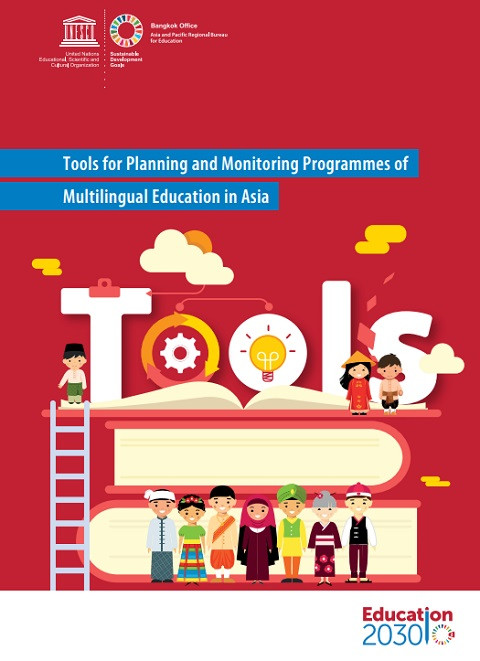 Tools for Planning and Monitoring Programmes of Multilingual Education in Asia Year of publication: 2020 Corporate author: UNESCO | UNESCO Bangkok This booklet provides some tools that programme personnel may use in the M&E of their multilingual education (MLE) programmes. This booklet complements the five booklets of UNESCO’s MTB MLE Resource Kit – Including the Excluded: Promoting Multilingual Education (2018).
 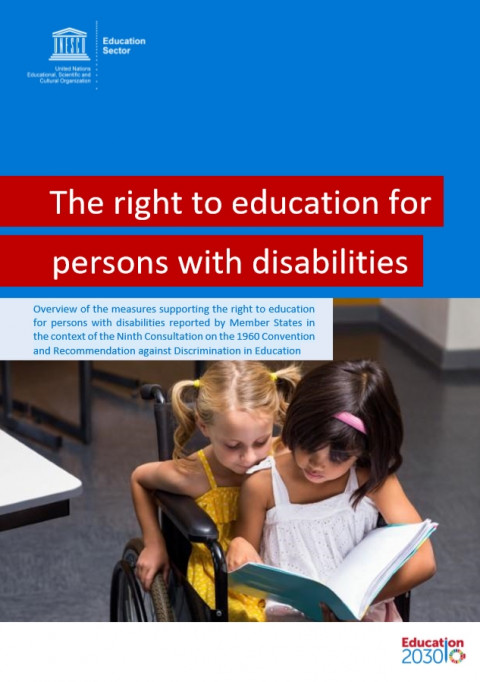 The Right to Education for Persons with Disabilities Year of publication: 2019 Corporate author: UNESCO Persons with disabilities are often excluded from the education system, whether out-of-school entirely, educated in separate institutions or participating in a mainstream system which is not adapted to their needs and abilities. The 2030 Agenda commitment to ‘leave no one behind’ has reinforced the global discourse towards inclusive, equitable education. As part of its mandate, UNESCO monitors the implementation of the 1960 Convention and Recommendation against Discrimination in Education. During the Ninth Consultation on the implementation of this instrument, almost all Member States reported upon measures that they have taken in relation to the right to education for persons with disabilities. This document compiles practical examples extracted from these reports for information sharing and advocacy.
  Her Education, Our Future Year of publication: 2019 Corporate author: UNESCO Too many girls and women are still held back by social norms and traditional school practices influencing their educational right and opportunities. But we know that their education is the most powerful investment to make for our collective future. Her education, our future is UNESCO’s new drive to accelerate action for girls’ and women’s education by leveraging political and financial commitments, as well as leadership for women and girls.Join #HerEducationOurFuture and be a part of our collective movement to advance girls’ and women’s education. Learn more: http://on.unesco.org/HerEducation
  World Reference Levels Year of publication: 2019 Corporate author: UNESCO World Reference Levels (WRL) is a tool that facilitates the comparison of qualifications and skills.It helps those with a stake in the outcomes of learning - authorities, institutions, employers and individuals - to understand, compare and recognize skills, qualifications, other kinds of credential and learning achievements, both on a national level and across borders.The WRL is developed by UNESCO in collaboration with experts, international partners and regional organizations that oversee regional qualification frameworks. The tool is based on research of level descriptors in a wide range of qualification frameworks and job evaluation programmes, and was designed to complement and work together with other systems of managing and recognizing qualifications and outcomes.
 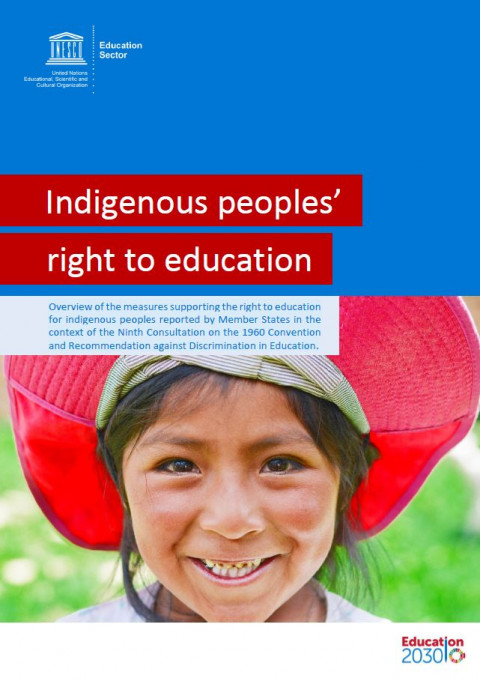 Indigenous Peoples’ Right to Education Year of publication: 2019 Corporate author: UNESCO Among the many inequalities that indigenous peoples face, the lack of access to quality education is particularly blatant. The 2030 Agenda commitment to ‘leave no one behind’, brings new impetus to ensure that indigenous peoples’ priorities are heard. In 2017, UNESCO adopted the Policy on engaging with indigenous peoples. Concurrently, as part of its mandate, UNESCO monitors the implementation of the 1960 Convention and Recommendation against Discrimination in Education. During the Ninth Consultation on the implementation of this instrument, several Member States reported upon measures they have taken in relation to the right to education for indigenous peoples. This document (Indigenous Peoples’ Right to Education: Overview of the Measures Supporting the Right to Education for Indigenous Peoples Reported by Member States in the Context of the Ninth Consultation on the 1960 Convention and Recommendation against Discrimination in Education) compiles practical examples extracted from these reports for information sharing and advocacy.
 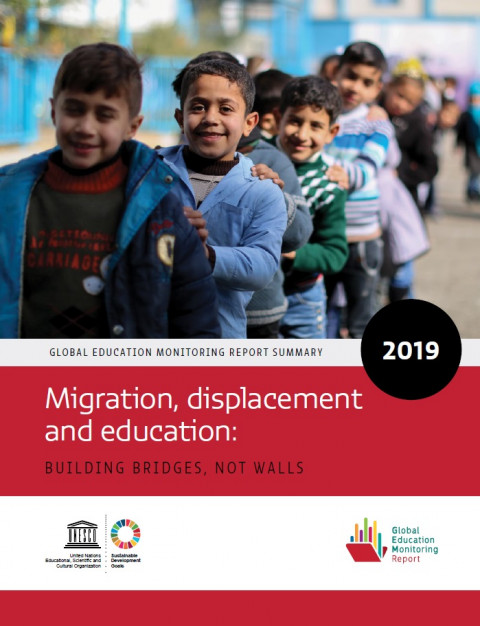 [Резюме] РЕЗЮМЕ ВСЕМИРНОГО ДОК ЛАДА ПО МОНИТОРИНГ У ОБРАЗОВАНИЯ 2019 г .: Миграция, перемещенные лица и образование: наводить мосты, а не возводить препятствия Year of publication: 2018 Corporate author: UNESCO | Global Education Monitoring Report Team В докладе четко указан один из главных вызовов: как обеспечить поддержку учителей в их инклюзивной работе. В нем увлекательно рассказывается об истории человечества и о феномене миграции, существующем с незапамятных времен. Я приглашаю вас рассмотреть содержащиеся в нем рекомендации и действовать в соответствии с ними. Настоящий доклад является важнейшим информационным источником для этих договоров, охватывающим вопросы политики, которые, среди прочего, касаются сезонных мигрантов, объединения сельских школ, межкультурных учебных программ, включения беженцев в национальные системы образования и борьбы с сегрегацией, признания квалификаций, целенаправленного финансирования школ, более эффективной гуманитарной помощи образованию и подготовленности учителей к работе в классах с разнообразным составом учащихся в чрезвычайных ситуациях, в условиях затянувшегося кризиса и в новых обстоятельствах, характерных для сегодняшнего дня. Настоящий доклад также содержит обращенный к странам призыв рассматривать образование как средство для регулирования миграции и перемещений и как возможность для тех, кто в этой возможности нуждается. [요약문] 세계 교육 현황 보고서 요약본: 이주, 강제이주와 교육: 장벽이 아닌 가교 만들기 Year of publication: 2018 Corporate author: 유네스코 | 세계교육현황보고서팀 『2019 세계 교육 현황 보고서』는 국경 내 및 국경 간, 자발적이거나 강제적인, 고용이나 교육을 위한 모든 인구 이동에 따른 이주 및 강제이주에 교육이 미치는 영향을 검토한다. 이 보고서는 또한 2030 지속가능발전의제에서 교육의 진전 상황도 평가한다. 다양성이 증가하면서 이 보고서는 교육이 어떻게 포용적인 사회를 구축하고, 어떻게 사람들이 관용을 넘어서서 함께 사는 법을 배울 수 있는지를 분석한다. 교육을 평등하게 제공하면 다리를 건설하지만, 교육을 불평등하게 제공하면 이주민, 난민 및 수용국 지역사회 사이에 벽을 쌓는다.이주민과 난민에 대한 두 가지 새로운 글로벌 콤팩트는 교육의 역할을 인식하고 ‘어느 누구도 뒤처지지 않게 한다’는 전 세계적인 약속과 일치하는 목표를 설정한다. 이 보고서는 이 글로벌 콤팩트를 위한 중요한 툴킷(toolkit)으로 다양한 정책 이슈를 다루고 있다. 즉, 계절 이주자, 농촌 학교 통합, 문화간 교육과정, 국가 교육제도에 난민 포용 및 분리 폐지, 자격 인정, 학교 기금 목표 설정, 보다 효과적인 인도주의적 교육 원조, 그리고 위기 상황, 장기화된 상황, ‘뉴 노멀(new normal)’ 상황에서 다양한 교실을 위한 교사의 준비 등을 포함한다. 이 GEM 보고서 요약본은 국가들이 교육을 이주와 강제이주를 관리하는 도구로 보고, 이를 필요로 하는 사람들을 위한 기회로 간주할 것을 요구한다.
  Mainstreaming SDG4-Education 2030 in sector-wide policy and planning: technical guidelines for UNESCO field offices Year of publication: 2016 Corporate author: UNESCO Mainstreaming SDG4-Education 2030 in sector-wide policy and planning offers technical guidelines for UNESCO field offices to ensure adequate technical support to national authorities. The guidelines take into account the different profiles of countries’ need and capacities, thus avoiding a one-size-fits-all approach. The document contains resources and pointers that can be combined and tailored to fit the particular context of each country. In all cases, UNESCO is expected to ensure that all the relevant information about SDG4-Education 2030 is properly disseminated in these guidelines. Field staff will adapt the guidelines provided here to the country they are serving to ensure that UNESCO plays its role as the leading United Nations agency in the field.