
Resources
Explore a wide range of valuable resources on GCED to deepen your understanding and enhance your research, advocacy, teaching, and learning.
3,401 Results found
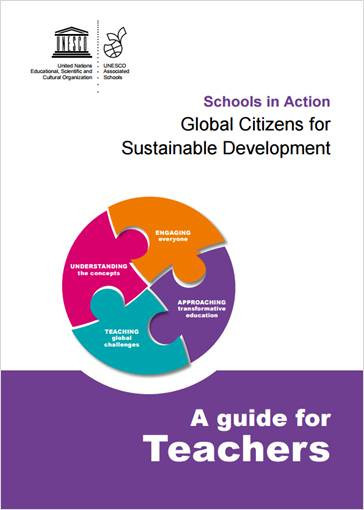 Le réSEAU en action: Citoyens du monde connectés pour le développement durable: guide à l'intention des enseignants Year of publication: 2016 Corporate author: Organisation des Nations Unies pour l'éducation, la science et la culture (UNESCO) The Global Citizens for Sustainable Development Teachers’ guide aims to introduce teachers to Global Citizenship Education (GCED) and Education for Sustainable Development (ESD). It provides secondary school teachers with ideas and activities to help students become global citizens and sustainable development actors. The Teachers’ guide draws on the discussions and activities of almost 1,100 participants from 104 countries, including ASPnet National Coordinators, school principals, teachers, students and experts who contributed to the Online Collaborative Platform ASPnet in Action: Global Citizens Connected for Sustainable Development in 2014 and 2015 [http://en.unesco. org/aspnet/globalcitizens] with associated activities and initiatives. The Teachers’ guide provides: An overview of what it means for learners to become global citizens and of how learners can contribute to sustainable development. Ideas for classroom activities that can help secondary school students to develop knowledge, skills, values, attitudes and behaviours that promote GCED and ESD. Selected activities on GCED and ESD from ASPnet schools around the world. Escuelas en acción, ciudadanos del mundo para el desarrollo sostenible: guía para el profesorado Year of publication: 2016 Corporate author: Organización de las Naciones Unidas para la Educación, la Ciencia y la Cultura (UNESCO) The Global Citizens for Sustainable Development Teachers’ guide aims to introduce teachers to Global Citizenship Education (GCED) and Education for Sustainable Development (ESD). It provides secondary school teachers with ideas and activities to help students become global citizens and sustainable development actors. The Teachers’ guide draws on the discussions and activities of almost 1,100 participants from 104 countries, including ASPnet National Coordinators, school principals, teachers, students and experts who contributed to the Online Collaborative Platform ASPnet in Action: Global Citizens Connected for Sustainable Development in 2014 and 2015 [http://en.unesco. org/aspnet/globalcitizens] with associated activities and initiatives. The Teachers’ guide provides: An overview of what it means for learners to become global citizens and of how learners can contribute to sustainable development. Ideas for classroom activities that can help secondary school students to develop knowledge, skills, values, attitudes and behaviours that promote GCED and ESD. Selected activities on GCED and ESD from ASPnet schools around the world.
  Contributing to peace and human development in an era of globalization Year of publication: 2002 Corporate author: UNESCO The Medium-Term Strategy (2002-2007) for the countries of the Africa region is an essential programme axis of UNESCO’s new decentralization policy. It forms an integral part of the Organization’s overall strategic objectives defined by the Member States in the UNESCO MediumTerm Strategy for 2002-2007 (31 C/4), which aims to contribute to peace and human development through education, the sciences, culture and communication.
 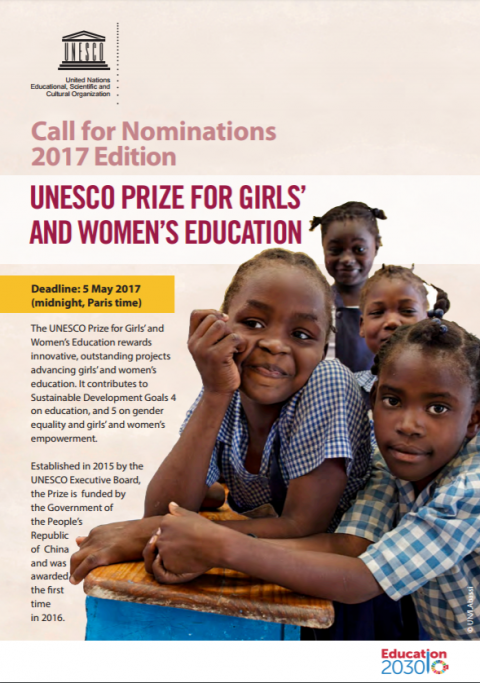 Prix UNESCO pour l'éducation des filles et des femmes, édition 2017: appel à candidatures Year of publication: 2017 Corporate author: Organisation des Nations Unies pour l'éducation, la science et la culture (UNESCO) The UNESCO Prize for Girls’ and Women’s Education rewards innovative, outstanding projects advancing girls’ and women’s education. It contributes to Sustainable Development Goals 4 on education, and 5 on gender equality and girls’ and women’s empowerment. Premio UNESCO de educación de las niñas y las mujeres, edición de 2017: solicitud de candidaturas Year of publication: 2017 Corporate author: Organización de las Naciones Unidas para la Educación, la Ciencia y la Cultura (UNESCO) The UNESCO Prize for Girls’ and Women’s Education rewards innovative, outstanding projects advancing girls’ and women’s education. It contributes to Sustainable Development Goals 4 on education, and 5 on gender equality and girls’ and women’s empowerment. Прием заявок в номинации Конкурс 2017. ПРЕМИЯ ЮНЕСКО ЗА ДОСТИЖЕНИЯ В ОБЛАСТИ ОБРАЗОВАНИЯ ДЕВОЧЕК И ЖЕНЩИН Year of publication: 2017 Corporate author: Организация Объединенных Наций по вопросам образования, науки и культуры (UNESCO) The UNESCO Prize for Girls’ and Women’s Education rewards innovative, outstanding projects advancing girls’ and women’s education. It contributes to Sustainable Development Goals 4 on education, and 5 on gender equality and girls’ and women’s empowerment. 联合国教科文组织女童和妇女教育奖 - 2017年 - 征集提名 Year of publication: 2017 Corporate author: 联合国教科文组织 (UNESCO) The UNESCO Prize for Girls’ and Women’s Education rewards innovative, outstanding projects advancing girls’ and women’s education. It contributes to Sustainable Development Goals 4 on education, and 5 on gender equality and girls’ and women’s empowerment.
  Out in the Open: Education Sector Responses to Violence Based on Sexual Orientation or Gender Identity/Expression: Summary Report Year of publication: 2016 Corporate author: UNESCO Violence in schools and other educational settings is a worldwide problem. Students who are perceived not to conform to prevailing sexual and gender norms, including those who are lesbian, gay, bisexual or transgender (LGBT), are more vulnerable. Violence based on sexual orientation and gender identity/expression, also referred to as homophobic and transphobic violence, is a form of school-related gender-based violence. It includes physical, sexual and psychological violence and bullying and, like other forms of school-related violence, can occur in classes, playgrounds, toilets and changing rooms, on the way to and from school and online. This report summarises the findings of a global review, commissioned by UNESCO, of homophobic and transphobic violence in schools and education sector responses.
  Statutes of the UNESCO Prize for Girls' and Women's Education (197 EX/47, October 2015) Year of publication: 2016 Corporate author: UNESCO The purpose of the ‘UNESCO Prize for girls’ and women’s education’ is to reward the outstanding efforts of individuals, institutions, organizations or other entities engaged in activities promoting girls’ and women’s Education. The Prize would contribute to two Sustainable Development Goals (SDGs): “Ensure inclusive and equitable quality education and promote lifelong learning opportunities for all” (Goal 4) and “Achieve gender equality and empower all women and girls” (Goal 5). The Prize would reward in particular activities that are innovative and/or have far-reaching sustainable impact. Statuts du Prix UNESCO pour l'éducation des filles et des femmes (197 EX/17, 14 octobre 2015) Year of publication: 2016 Corporate author: Organisation des Nations Unies pour l'éducation, la science et la culture (UNESCO) The purpose of the ‘UNESCO Prize for girls’ and women’s education’ is to reward the outstanding efforts of individuals, institutions, organizations or other entities engaged in activities promoting girls’ and women’s Education. The Prize would contribute to two Sustainable Development Goals (SDGs): “Ensure inclusive and equitable quality education and promote lifelong learning opportunities for all” (Goal 4) and “Achieve gender equality and empower all women and girls” (Goal 5). The Prize would reward in particular activities that are innovative and/or have far-reaching sustainable impact.