
Resources
Explore a wide range of valuable resources on GCED to deepen your understanding and enhance your research, advocacy, teaching, and learning.
2,193 Results found
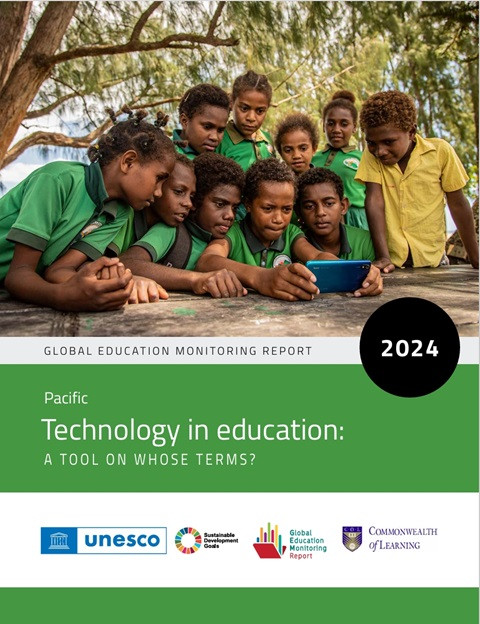 Global Education Monitoring Report 2024, Pacific: Technology in Education; A Tool on Whose Terms? Year of publication: 2024 Corporate author: UNESCO | Global Education Monitoring Report Team | Commonwealth of Learning Information transmission and connectivity is crucial in the Pacific, a region characterized by high geographic dispersion. While the application of ICT in education has significant potentials, it is hindered by the region's limited and costly infrastructure. This edition accompanies the 2023 Global Education Monitoring Report, which acknowledges technology as a useful tool but invites the education community to question on whose terms it is deployed. The report considered four key policy areas of the Pacific Regional Education Framework (PacREF) (2018–2030): In terms of quality and relevance, mobile technology has offered an affordable and flexible approach to learning, and social media have improved communication between institutions, parents and learners. Moodle is the most widely used digital platform in the region. Textbooks are being digitalised and digital resources made available. Yet content is not always developed or adapted to local languages and cultural contexts. Open and distance learning has historically expanded learning pathways in the Pacific, specially in higher education and as a response to natural hazards. The University of South Pacific is a leading example of open and distance learning connecting campus across 12 countries. With the aim to enhance student outcomes and well-being, efforts have been made to incorporate digital skills into curricula and initiatives have increased outside formal education. Yet regulations do not adequately address threats from the use of technology to privacy, safety and well-being. With a focus on the teaching profession, countries leverage technology to provide training opportunities and transform the teaching profession. However, ICT training varies greatly across the region and limited digital infrastructure hinders technology integration into classrooms and teacher training. Three conditions need to be met for technology's potential to be fulfilled: equitable access to technology, appropriate governance and regulation, and sufficient teacher capacity. Supporting this publication is seven background thematic studies that provide a comprehensive overview of education technology issues; Commonwealth of Learning’s short case studies on some of its projects; a survey administered to key informed respondents from the region; and a series of country profiles on PEER, a policy dialogue resource describing policies and regulations related to technology in the region’s education systems.
 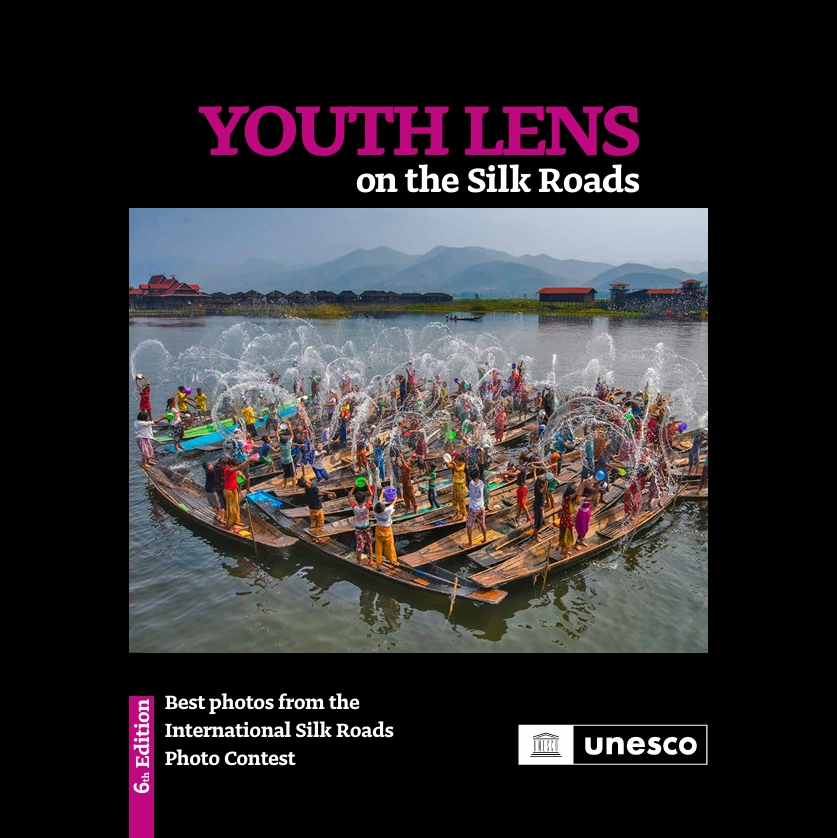 Youth Lens on the Silk Roads: Best Photos from the International Silk Roads Photo Contest; 6th Edition Year of publication: 2026 Corporate author: UNESCO This album presents the sixth edition of UNESCO’s Youth Eyes on the Silk Roads international photo contest. Organized by the UNESCO Silk Roads Programme, with the support of the Beijing International Peace Culture Foundation, this annual initiative invites talented young photographers from across the globe to explore the vibrant cultural heritage and diversity that thrive along these historic routes.The term “Silk Roads” symbolizes the vast network of historical trade routes linking East, South, and Southeast Asia with Central Asia, the Russian Steppes, the Indian Subcontinent, the Iranian and Anatolian Plateaus, and the Arabian Peninsula. These routes also extended into North and Northeast Africa and Europe, eventually reaching Western Europe and the Iberian Peninsula. Over centuries, these routes served as pathways for trade and vital corridors for cultural exchange, the dissemination of knowledge, and the blending of diverse traditions and practices. This intercultural exchange has significantly shaped contemporary societies, enriched identities, and fostered dialogue and mutual understanding among cultures.In this sixth edition, held under the theme ‘Life Celebrations’, young photographers have vividly documented festivities and cultural moments that highlight joy, unity, and shared heritage along the Silk Roads. Their powerful images capture how these celebrations and rituals continue to reflect and strengthen centuries-old connections between communities.The Youth Lens on the Silk Roads album presents 66 striking photographs from two age categories (14-17 and 18-25), illustrating the vibrant mosaic of cultural celebrations that unite communities across landscapes. Each image reveals the energy, resilience, and profound cultural richness of contemporary Silk Road societies. Together, these photographs celebrate the enduring legacy and dynamic spirit of the Silk Roads today.
  South-South and Triangular Cooperation in Action Year of publication: 2018 Corporate author: UNESCO | UN. Office for South-South Cooperation (UNOSSC) This publication is UNESCO’s first dedicated report on South-South cooperation and triangular cooperation. It presents an overall picture of the progress achieved to support technical cooperation, capacity building and knowledge sharing through South-South and triangular cooperation in UNESCO’s areas of competence with highlights of specific examples. It paves the way for deepening future cooperation in this area.
  Promoting Media and Information Literacy in Uzbekistan Year of publication: 2015 Corporate author: UNESCO The manual presents in popular visual form the fundamentals of Media and Information Literacy (MIL), using UNESCO's teacher education programs and other materials from the organization. This manual was developed within the framework of the joint program of the UN and the Government of the Republic of Kazakhstan "Improving the well-being and quality of life in the Kyzylorda region through the introduction of innovative approaches to the provision of economic, social and environmental services to the local population, including the most vulnerable", carried out jointly by the Government of the Republic Kazakhstan and UN agencies in Kazakhstan: UNESCO, UNDP, UNFPA, UN Women, WHO and UNICEF until December 2016. Узбекистан по пути развития медиаобразования Year of publication: 2015 Corporate author: Организация Объединенных Наций по вопросам образования, науки и культуры (UNESCO) Пособие представляет в популярной визуальной форме основы медийной и информационной грамотности (МИГ), используя программы обучения ЮНЕСКО для педагогов, а также другие материалы организации. Данное пособие разработано в рамках совместной программы ООН и Правительства Республики Казахстан «Повышение благосостояния и качества жизни в Кызылординской области через внедрение иннова-ционных подходов к оказанию экономических, социальных и экологи-ческих услуг местному населению, включая наиболее уязвимые слои», выполняемого совместно Правительством республики Казахстан и агентствами ООН в РК: ЮНЕСКО, ПРООН, ЮНФПА, ООН Женщины, ВОЗ и ЮНИСЕФ до декабря 2016 года.
  Media and Information Literacy: Training Materials Year of publication: 2015 Corporate author: UNESCO This compendium contains the reports of four studies on religion and democracy conducted by the International Alert project "Constructive Dialogues on Religion and Democracy". The studies were carried out by young professionals trained in the framework of the project in 2017 and 2018. Медийная и информационная грамотность Year of publication: 2015 Corporate author: Организация Объединенных Наций по вопросам образования, науки и культуры (UNESCO) Данный сборник содержит отчеты четырех исследований по вопросам религии и демократии, проведенных в рамках проекта International Alert "Конструктивные диалоги по религии и демократии". Исследования были проведены молодыми специалистами, обученными в рамках деятельности проекта в 2017 и 2018 гг.
  Reflect–Share–Act: A Guide to Community-based Education for Sustainable Development Year of publication: 2021 Corporate author: UNESCO This guidebook aspires to build a community where learning for sustainable development takes place everywhere for everyone as an ongoing practice. It introduces you to Reflect-Share-Act, a process to discover and define sustainable development in your own contexts together with others in your community. The guide compiles resources that can support this learning process, including stories of various communities’ actual experiences of Reflect-Share-Act. La cooperación Sur-Sur y la cooperación triangular en acción Year of publication: 2018 Corporate author: UNESCO | UN. Office for South-South Cooperation (UNOSSC) Esta publicación es el primer informe específico de la UNESCO sobre la cooperación Sur-Sur y la cooperación triangular. Se presenta un panorama general de los avances en la cooperación técnica, la creación de capacidades y el intercambio de conocimientos mediante la cooperación SurSur y la cooperación triangular en las esferas de competencia de la UNESCO y se mencionan ejemplos concretos. Se allana el camino para profundizar la cooperación en este ámbito en el futuro. La coopération Sud-Sud et triangulaire en action Year of publication: 2018 Corporate author: UNESCO | UN. Office for South-South Cooperation (UNOSSC) La présente publication est le premier rapport de l’UNESCO qui traite de la coopération SudSud et de la coopération triangulaire. Elle brosse un tableau d’ensemble, illustré par des exemples particuliers, des progrès que ces modalités de coopération ont permis d’accomplir pour faciliter la coopération technique, le renforcement des capacités et le partage des connaissances dans les domaines de compétence de l’UNESCO, et ouvre la voie à de plus amples efforts en la matière.