
Resources
Explore a wide range of valuable resources on GCED to deepen your understanding and enhance your research, advocacy, teaching, and learning.
3,446 Results found
 Innovating Technical and Vocational Education and Training: A Framework for Institutions Year of publication: 2020 Corporate author: UNESCO International Centre for Technical and Vocational Education and Training (UNEVOC) Global developments including the transition to greener economies, the application of digital technologies in the world of work, and the COVID-19 pandemic, amongst others, are changing the way we live and work. These developments are driving technical and vocational education and training (TVET) systems to improve their capacity to identify the future skills demands and to expand access to skills development opportunities. As TVET adapts itself to the impacts of significant social, environmental, and economic disruptions, innovative practices emerge with the potential to rejuvenate the future of skills development. Schools, training centres and colleges have the potential to play a leading role to drive innovation in their local skills and innovation ecosystem.This practical guide provides a systematic, institution-wide, measurable and evidence-based methodology that enables TVET institutions to streamline innovation into their strategic planning, products and services, ecosystem engagement, and teaching and learning processes.
 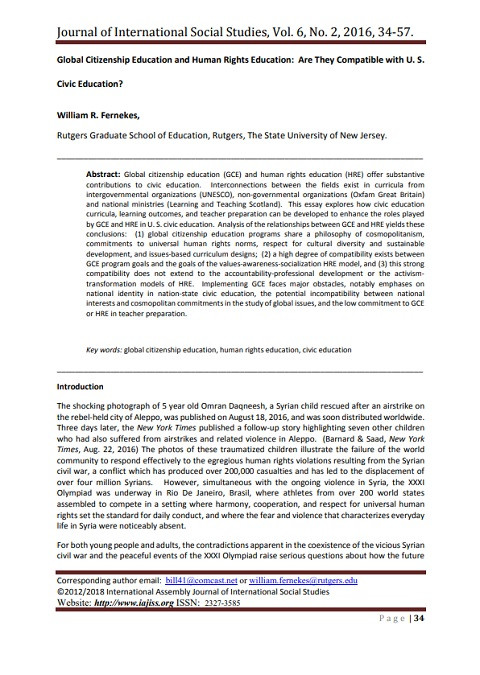 Global Citizenship Education and Human Rights Education: Are They Compatible With U. S. Civic Education? (Journal of International Social Studies; Vol. 6, No. 2) Year of publication: 2016 Author: William R. Fernekes Corporate author: International Assembly of the National Council for the Social Studies Global citizenship education (GCE) and human rights education (HRE) offer substantive contributions to civic education. Interconnections between the fields exist in curricula from intergovernmental organizations (UNESCO), non-governmental organizations (Oxfam Great Britain) and national ministries (Learning and Teaching Scotland). This essay explores how civic education curricula, learning outcomes, and teacher preparation can be developed to enhance the roles played by GCE and HRE in U. S. civic education. Analysis of the relationships between GCE and HRE yields these conclusions: (1) global citizenship education programs share a philosophy of cosmopolitanism, commitments to universal human rights norms, respect for cultural diversity and sustainable development, and issues-based curriculum designs; (2) a high degree of compatibility exists between GCE program goals and the goals of the values-awareness-socialization HRE model, and (3) this strong compatibility does not extend to the accountability-professional development or the activismtransformation models of HRE. Implementing GCE faces major obstacles, notably emphases on national identity in nation-state civic education, the potential incompatibility between national interests and cosmopolitan commitments in the study of global issues, and the low commitment to GCE or HRE in teacher preparation.
 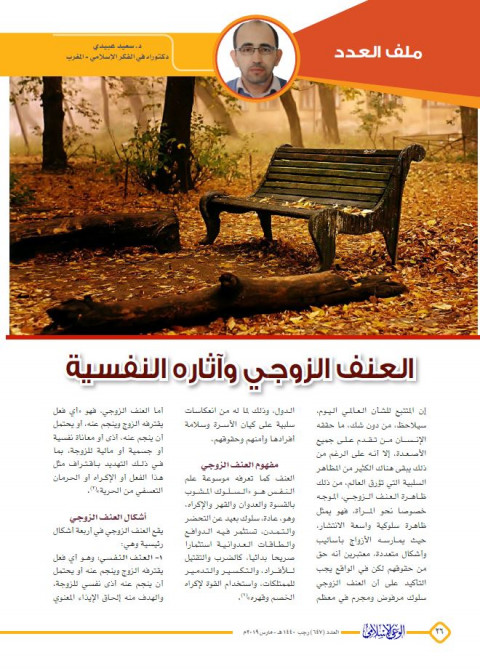 العنف الزوجي وآثاره النفسية Year of publication: 2019 Author: Saeed Abidi Corporate author: Journal of Islamic awareness يناقش هذا المقال العنف الأسري من حيث المفهوم والأشكال. ويبحث أيضا في العوامل المسببة للعنف الزوجي. وينتهي المقال بمناقشة الأثار المترتبة على العنف الزوجي. Marital Violence and Its Psychological Impact Year of publication: 2019 Author: Saeed Abidi Corporate author: Journal of Islamic awareness This article discusses domestic violence in terms of its concept and forms. It also examines the factors causing marital violence. The article ends with a discussion of the implications of marital violence.
  Research in Teaching and Learning About the Holocaust: A Dialogue Beyond Borders Year of publication: 2017 Author: Monique Eckmann | Doyle Stevick | Jolanta Ambrosewicz-Jacobs Corporate author: International Holocaust Remembrance Alliance (IHRA) | Metropol A multilingual expert team of the International Holocaust Remembrance Alliance (IHRA) collected and reviewed research on teaching and learning about the Holocaust in fifteen languages identified nearly 400 studies resulting in more than 600 publications.This systematic review includes research conducted in most IHRA Member Countries as well as several non-member countries. The multilingual focus of the project enables cross-cultural analyses and the transfer of knowledge between various regions and countries. The book’s two parts present the research first by language and then by selected themes. This innovative transnational, trans-lingual study reflects IHRA’s core mission: to shape and advance teaching and learning about the Holocaust worldwide.The second outcome is a set of bibliographies in fifteen languages. These bibliographies comprise references to empirical research on teaching and learning about the Holocaust. They also include abstracts or summaries of most of publications. Each bibliography includes research from a single language or related group of languages.
  Teaching about the Holocaust in English Secondary Schools : An empirical study of national trends, perspectives and practice Year of publication: 2009 Author: Alice Pettigrew | Stuart Foster | Jonathan Howson | Paul Salmons | Ruth Anne Lenga | Kay Andrews The aims were to examine when, where, how and why the Holocaust is taught in state-maintained secondary schools in England, and to inform the design and delivery of a continuing professional development (CPD) programme for teachers who teach about the Holocaust. A two-phase mixed methodology was employed. This comprised an online survey which was completed by 2,108 respondents and follow-up interviews with 68 teachers in 24 different schools throughout England. The research reveals that teachers adopt a diverse set of approaches to this challenging and complex subject. In the report, teachers’ perceptions, perspectives and practice are presented and a range of challenges and issues encountered by teachers across the country are explicitly identified. The research shows that, although most teachers believe that it is important to teach about the Holocaust, very few have received specialist professional development in this area. It also shows that many teachers find it a difficult and complicated subject to teach, and that they both want and need support to better equip them to teach about the Holocaust effectively.(By the author)
  초·중등 교과서의 미디어 리터러시 단원 개발 연구 Year of publication: 2016 Corporate author: 경인교육대학교 | 대한민국 교육부 본 연구는 21세기 핵심역량이 강조되고 국어, 미술, 도덕, 사회, 실과 등의 교과에 미디어 리터러시와 관련된 성취기준이 반영된 2015 개정 교육과정을 기반으로 하여, 통합 교육과정의 접근으로 학생들의 미디어 리터러시 향상을 도모하는 교과서 단원의 모형을 개발하고자 하였다.
 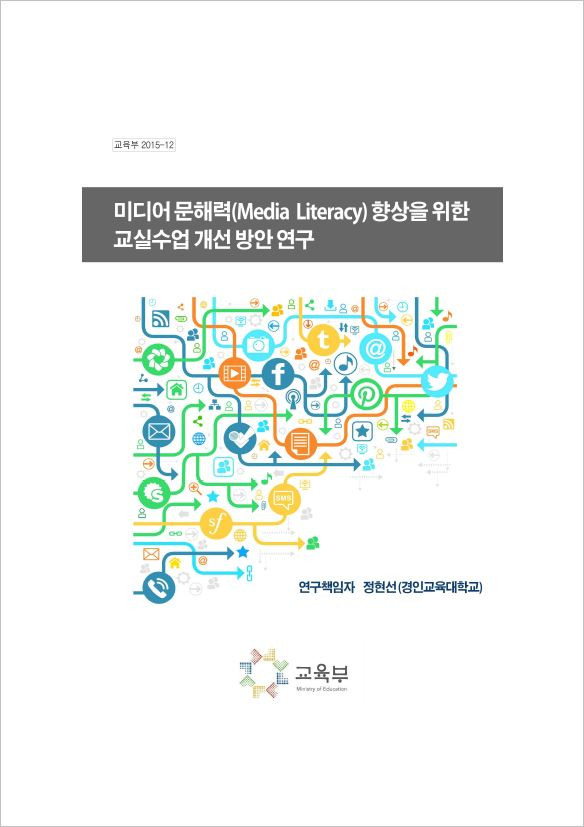 미디어 문해력(Media Literacy) 향상을 위한 교실수업 개선 방안 연구 Year of publication: 2015 Author: 박유선 | 전경란 | 박한철 Corporate author: 대한민국 교육부 우리가 살고 있는 지식기반사회에서는 다양한 미디어와 정보 기술을 통해 쏟아지는 방대한 양과 형태의 정보에 체계적으로 접근하여, 이를 비판적으로 분석하고 평가하여 활용할 수 있는 ‘미디어 리터러시(Media Literacy)’가 현대적 의사소통 및 지식정보처리 역량으로서 중요하게 부각 되고 있습니다.과거의 학교 교육에서는 ‘리터러시’가 주로 문자로 표현된 글이나 책의 내용을 읽고 쓸 수 있는 능력에 한정되어 모국어 과목에서 다루어졌습니다. 그러나 현대사회에는 ‘리터러시’가 글과 책의 범위를 넘어서 다양한 형태로 된 미디어의 의미를 이해하고 생산하는 것으로 확대되었습니다. 이에 따라 주요 국제기구, 교육단체 및 세계 여러 나라의 국가 교육과정에서는 미디어 리터러시와 관련된 학습을 중요하게 다루고 있습니다.본 보고서는 “미디어 문해력 향상을 위한 교실수업 개선 방안 연구”의 최종보고서로서 미디어 리터러시 교육의 이론적 배경과 연구 동향, 국내와 해외 교육과정의 미디어 리터러시 반영 상황, 우리나라 어린이와 청소년들의 미디어 이용 실태 등을 검토하고, 초·중·고 교사들의 인식 조사 결과 및 국내와 해외 전문가들의 견해를 바탕으로 하여, 미디어 리터러시 교육의 개념과 목표, 내용 체계를 도출하였습니다.
  Indicators for evaluating municipal policies aimed at fighting racism and discrimination Year of publication: 2005 Author: Jean Claude Icart | Micheline Labelle | Rachad Antonius Corporate author: Centre de recherche sur l'immigration, l'ethnicité et la citoyenneté (Canada). Observatoire international sur le racisme et les discriminations Ethnocultural diversity increasingly constitutes an important characteristic of major cities around the world. As the primary centres for national, ethnic and cultural intermixing, cities are becoming laboratories for new ways of “living together” (UNESCO, 2004). However, when this diversity is accompanied by inequalities, racism and discrimination, it can increase the social divide. Therefore, in order to benefit from the true advantages of the ethnocultural diversity that makes up the fabric of contemporary societies, it has become increasingly necessary to employ methods to correct social injustices, and to ensure the equality and the full exercise of citizens’ rights. Accordingly, the last few years have seen true efforts to conceptualize interventions by cities to manage ethnocultural diversity. These efforts rely on ideologies controlled by the state and on the values of equality, social justice, and respect for pluralism that are endorsed by different international organizations such as the UN and UNESCO, or by national organizations such as human rights commissions.To promote and reinforce municipal anti-discriminatory policies, UNESCO supported the launching of the International Coalition of Cities Against Racism1. The initial framework for this Coalition was the proposal of the Ten-Point Action Plan, which was adopted in December 2004 in Nuremburg.The present research report relating to the development of a series of indicators for evaluating municipal policies to fight racism and discrimination should be situated in this context. It was carried out with the goal of assisting cities that want to adopt public policies of diversity management and to fight racism and discrimination, and to evaluate the impact of such policies. The goal is to equip cities with tools that make it possible to evaluate, in quantitative and/or qualitative terms, whether their actions produce results that correspond to the major goals of adopted policies. Indicateurs pour l'évaluation des politiques municipales visant à contrer le racisme et la discrimination Year of publication: 2005 Author: Jean Claude Icart | Micheline Labelle | Rachad Antonius Corporate author: Centre de recherche sur l'immigration, l'ethnicité et la citoyenneté (Canada). Observatoire international sur le racisme et les discriminations Ethnocultural diversity increasingly constitutes an important characteristic of major cities around the world. As the primary centres for national, ethnic and cultural intermixing, cities are becoming laboratories for new ways of “living together” (UNESCO, 2004). However, when this diversity is accompanied by inequalities, racism and discrimination, it can increase the social divide. Therefore, in order to benefit from the true advantages of the ethnocultural diversity that makes up the fabric of contemporary societies, it has become increasingly necessary to employ methods to correct social injustices, and to ensure the equality and the full exercise of citizens’ rights. Accordingly, the last few years have seen true efforts to conceptualize interventions by cities to manage ethnocultural diversity. These efforts rely on ideologies controlled by the state and on the values of equality, social justice, and respect for pluralism that are endorsed by different international organizations such as the UN and UNESCO, or by national organizations such as human rights commissions.To promote and reinforce municipal anti-discriminatory policies, UNESCO supported the launching of the International Coalition of Cities Against Racism1. The initial framework for this Coalition was the proposal of the Ten-Point Action Plan, which was adopted in December 2004 in Nuremburg.The present research report relating to the development of a series of indicators for evaluating municipal policies to fight racism and discrimination should be situated in this context. It was carried out with the goal of assisting cities that want to adopt public policies of diversity management and to fight racism and discrimination, and to evaluate the impact of such policies. The goal is to equip cities with tools that make it possible to evaluate, in quantitative and/or qualitative terms, whether their actions produce results that correspond to the major goals of adopted policies.