
Resources
Explore a wide range of valuable resources on GCED to deepen your understanding and enhance your research, advocacy, teaching, and learning.
2,657 Results found
 Global Resources Outlook: 2024 Bend the Trend; Pathways to a Liveable Planet as Resource Use Spikes Year of publication: 2024 Author: Hans Bruyninckx, Steve Hatfield-Dodds, Stefanie Hellweg, Heinz Schandl Corporate author: United Nations Environment Programme (UNEP) | International Resource Panel (IRP) The world is in the midst of a triple planetary crisis of climate change, biodiversity loss and pollution and waste. The global economy is consuming ever more natural resources, while the world is not on track to meet the Sustainable Development Goals. The scientific community has never before been more aligned or more resolute on the need for urgent global transformation towards the sustainable use of resources. This 2024 edition of the Global Resources Outlook sheds light on how resources are essential to the effective implementation of the Agenda 2030 and multilateral environmental agreements to tackle the triple planetary crisis. The report brings together the best available data, modelling and assessments to analyse trends, impacts and distributional effects of resource use. It builds on more than 15 years of work by the International Resource Panel, including scientific assessments and inputs from countries, a vast network of stakeholders in the field and regional experts. The report illustrates how, since the 2019 edition of this report, rising trends in global resource use have continued or accelerated. The report also shows how demand for resources is expected to continue increasing in the coming decades. This means that, without urgent and concerted action, by 2060 resource extraction could rise by 60% from 2020 levels – driving increasing damage and risks. However, this fate is not sealed. The report also describes the potential to turn negative trends around and put humanity on a trajectory towards sustainability. For that, bold policy action is critical to phase out unsustainable activities, speed up responsible and innovative ways of meeting human needs and create conditions conducive to social acceptance and equity within the necessary transitions. This includes urgent action to embed resources in the delivery of multilateral environmental agreements, define sustainable resource use paths and roll out appropriate financial, trade and economic incentives. The pathway towards sustainability is increasingly steep and narrow, and the window of opportunity is closing. The science is clear: The key question is no longer whether a transformation towards global sustainable resource consumption and production is necessary, but how to make it happen now. Addressing this reality, based on evolving concepts of a just transition, is an essential part of any credible and justifiable way forward.
  Progress on the Sustainable Development Goals: The Gender Snapshot 2024 Year of publication: 2024 Author: Papa Alioune Seck | Antra Bhatt | Farrah Frick | Yongyi Min | Heather Page | Natalia Tosi | Sokunpanha You | Guillem Fortuny Fillo Corporate author: United Nations Entity for Gender Equality and the Empowerment of Women (UN Women) | UN. Department of Economic and Social Affairs (UN. DESA) This publication highlights new data and evidence on gender equality trends. It finds the world falling short on its commitments to women and girls. Despite declining poverty and narrowing gender gaps in education, not a single indicator under the global gender equality Goal has been achieved. The report stresses the high cost of not investing in women's rights and champions radical action to accelerate the pace of change.
  Global Priority Africa Flagships 2023: An Update from UNESCO Regional Office for Southern Africa Year of publication: 2024 Corporate author: UNESCO Harare Two years into the implementation of the Operational Strategy for Priority Africa 2022-2029 (OSPA), a new biennium has commenced through the Programme and Budget for 2024-2025. With a goal of achieving the Sustainable Development Goals (SDGs) of the United Nations’ Agenda 2030 and the African Union’s Agenda 2063 “The Africa We Want”, the OSPA remains pivotal in accelerating the achievement of SDGs amidst a growing threat of regression and stagnation on some of the SDG targets. The relentless climatic changes have resulted in droughts and cyclones whose incessant rains have caused food insecurity, waterborne diseases and loss of biodiversity. Geopolitical crisis and the remnants of the impacts of COVID-19 continue to waylay the aspirations of the continent. Gender inequality, youth unemployment, education and HIV and AIDS continue to be areas for concern. Despite this plethora of challenges, Member States remain committed to Agenda 2030 and 2063 and the strong partnership existing with UNESCO and the rest of the UN system. While the OSPA is driven to address challenges in the areas of demography and sustainable development, education and knowledge, climate change, cultural renaissance, and peace and democracy these all have far-reaching consequences beyond their focus hence addressing these contributes widely to other thematic areas. Priority Africa reinforces UNESCO’s partnerships with African governing bodies such as the African Union (AU), Regional Economic Communities (RECs), Member States as well as other UN agencies. Being also aligned with the Southern African Development Community (SADC) and UNESCO’s Joint Programme of Action (JPA) 2022-2025, the OSPA continues to demonstrate its relevance to the region.
  Our Common Agenda Policy Brief 10: Transforming Education Year of publication: 2023 Corporate author: United Nations (UN) Building on the Transforming Education Summit and the report of the International Commission on the Futures of Education, this policy brief takes a closer look at the current crisis in education and proposes ideas and guiding actions for countries and the international community to transform education. The right to education and lifelong learning is an essential part of the 2030 Agenda for Sustainable Development because education, knowledge and learning are fundamental to human dignity, growth and development. For centuries, education has been the great equalizer, the driving force of nation-building and the engine of social, cultural, economic and technological progress. But today, beset by a dual crisis of equity and relevance, education as we know it is no longer fit for purpose. Informe de políticas de nuestra agenda común 10: Transformar la educación Year of publication: 2023 Corporate author: United Nations (UN) Sobre la base de la Cumbre sobre la Transformación de la Educación y el informe de la Comisión Internacional sobre los Futuros de la Educación, el presente informe de políticas examina con más detalle la crisis actual de la educación y propone unas ideas y una serie de medidas orientativas para que los países y la comunidad internacional transformen la educación. El derecho a la educación y al aprendizaje permanente es una parte esencial de la Agenda 2030 para el Desarrollo Sostenible porque la educación, el conocimiento y el aprendizaje son fundamentales para la dignidad, el crecimiento y el desarrollo de la persona. Durante siglos, la educación ha sido la gran igualadora, la fuerza motriz de la construcción nacional y el motor del progreso social, cultural, económico y tecnológico. Sin embargo, en la actualidad, acosada por una doble crisis de equidad y pertinencia, la educación tal y como la conocemos ya no es idónea.
 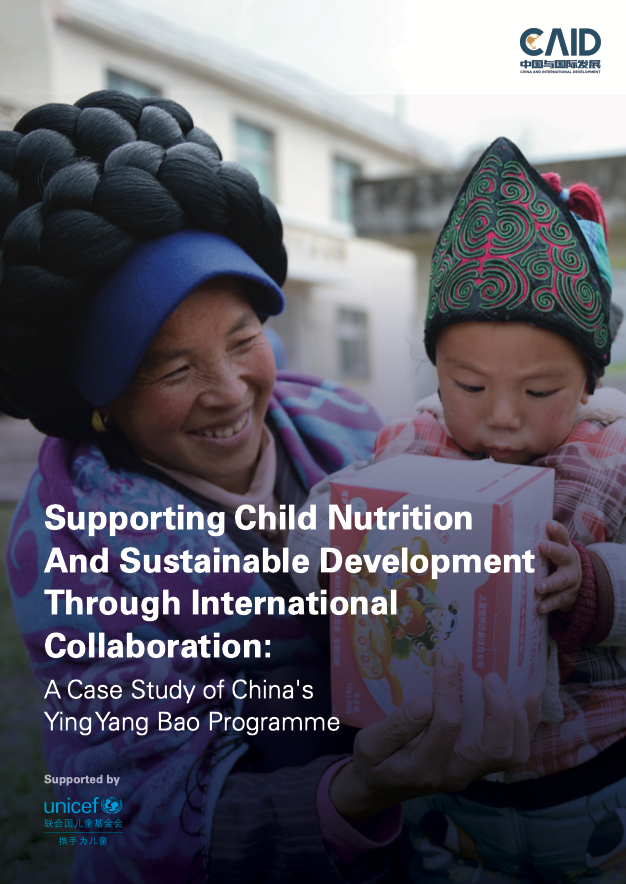 Supporting Child Nutrition and Sustainable Development through International Collaboration Year of publication: 2023 Author: Wang Luo | Chen Xiaoning | Huang Yangmu Corporate author: Chinese Academy of International Trade and Economic Cooperation(CAID) | United Nations Children's Fund (UNICEF) Child health and nutrition are key goals under the 2030 Sustainable Development Agenda. Currently, around 45% of deaths among children under five years of age are linked to undernutrition. These mostly occur in low- and middle-income countries. In June 2023, the Chinese Academy of International Trade and Economic Cooperation (CAITEC) and the UNICEF China Office convened a forum on “Supporting Child Nutrition and Sustainable Development Through International Co-operation”. Participating experts discussed China’s experience, and the potential presented, and challenges faced by Chinese product, in boosting the improvement of child nutrition in impoverished regions of Africa and Asia. The case study is a summary of the views presented at the forum. The content covers global needs and challenges in child nutrition, the importance of complementary food supplements in improving child nutrition, effective practices implemented by the international community to promote the use of complementary food supplements, advantages and on-the-ground results of China’s YYB, challenges to taking the YYB international and recommendations for driving product internationalization of the YYB. 国际合作支持儿童营养和可持续发展: 以营养包走出去为例 Year of publication: 2023 Author: Wang Luo | Chen Xiaoning | Huang Yangmu Corporate author: Chinese Academy of International Trade and Economic Cooperation(CAID) | United Nations Children's Fund (UNICEF) 儿童健康和营养是2030年可持续发展议程的重要目标。当前,5岁以下儿童死亡人数中约45%与营养不良有关,主要发生在中低收入国家。2023年6月,中国商务部国际贸易经济合作研究院与联合国儿童基金会驻华办事处开展 “国际合作支持儿童营养和可持续发展” 的研讨会。与会专家探讨了中国经验和产品在助力改善亚非贫困地区儿童营养问题的潜能和面临的挑战。本案例分析内容为研讨会的观点总结。内容包括:全球儿童面临的营养发展挑战和需求、辅食营养补充品对于促进儿童营养的重要性、国际社会推广辅食营养补充品的有效做法、中国营养包的优势与实践效果、营养包走出去面临的挑战、推进营养包走出去的政策建议。
  Food Sovereignty Year of publication: 2023 Corporate author: Quebec Association of International Cooperation Organizations (AQOCI) In 2023-2024, AQOCI and its members have chosen food sovereignty as the theme for their global citizenship education campaigns. These campaigns include videos explaining food sovereignty and related issues. Souveraineté alimentaire Year of publication: 2023 Corporate author: Association québécoise des organismes de coopération internationale (AQOCI) En 2023-2024, l’AQOCI et ses membres ont choisi la souveraineté alimentaire comme thématique pour les campagnes d’éducation à la citoyenneté mondiale . Ces campagne s'accompagne notamment de vidéos explicatives sur la souveraineté alimentaire, et des problématiques liés à ce thèmes.
 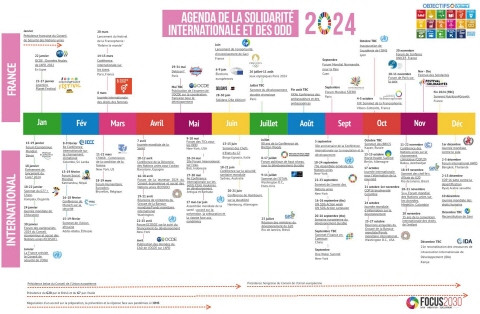 Solidarité Internationale 2024: Les grandes étapes à venir Year of publication: 2023 Corporate author: Focus 2030 2024 : fin du multilatéralisme ou renouveau ? Les Objectifs de développement durable en suspens. L’année à venir sera l’occasion de mobiliser de manière régulière la communauté internationale autour de nombreux sommets internationaux et rencontres dont les résultats seront susceptibles de changer la face du monde. 2024: End of Multilateralism or Renewal? Sustainable Development Goals in Limbo. The upcoming year will provide a regular platform for mobilizing the international community through numerous international summits and meetings, the outcomes of which have the potential to reshape the world.