
Resources
Explore a wide range of valuable resources on GCED to deepen your understanding and enhance your research, advocacy, teaching, and learning.
685 Results found
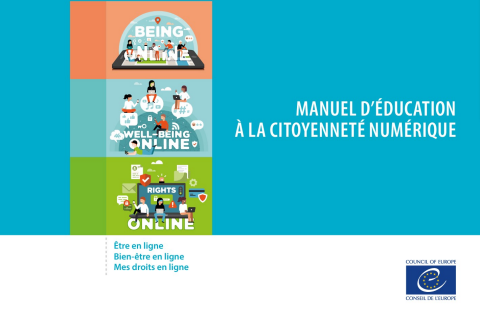 Manuel d'éducation à la citoyenneté Numérique Year of publication: 2020 Author: Janice Richardson | Elizabeth Milovidov Corporate author: Conseil de l'Europe Le manuel se divise en trois chapitres:Chapitre 1: Être en ligne – Quels sont nos modes d’action et d’existence en ligne? Ce chapitre propose une réponse en trois thèmes: accès et inclusion, apprentissage et créativité, éducation aux médias et à l’information.Chapitre 2: Bien-être en ligne – Comment nous sentons-nous en ligne? La réponse se décline là encore en trois thèmes: éthique et empathie, santé et bien-être, présence et communications en ligne.Chapitre 3: Mes droits en ligne – Qui rend compte de quoi sur internet ?Ce chapitre aborde quatre derniers thèmes: participation active, droits etresponsabilités, vie privée et sécurité, sensibilisation des consommateurs. The manual is divided into three chapters: Chapter 1: Being online - How do we act and exist online? This chapter proposes a response in three themes: access and inclusion, learning and creativity, media and information literacy. Chapter 2: Online well-being - How do we feel online? Again, the answer is divided into three themes: ethics and empathy, health and well-being, online presence and communications. Chapter 3: My rights online - Who is accountable for what online? This chapter covers four final themes: active participation, rights and responsibilities, privacy and security, and awareness.
  برامج الأطفال التليفزيونية بين راهن المتعة وعامل التثقيف Year of publication: 2022 Author: Issa Abdi Nouria تطرقنا في هذه الدراسة التحليلية إلى التعرف على العلاقة التي تجمع فئة الأطفال بجهاز التليفزيون، فحاولنا من خلالها الوقوف على مدى اعتماد برامج الأطفال التلفزيونية على بعد المتعة على حساب المواد التثقيفية والكشف عن التأثيرات الناتجة لتعرض الأطفال لبرامج تعتمد على بعد المتعة أكثر من بعد التثقيف، وتوصلنا في الأخير إلى أن برامج أطفال التلفزيونية تعتمد أكثر على المتعة لاستمالة جمهور الأطفال، كما تأثر برامج الأطفال التليفزيونية التي تعتمد على بعد المتعة أكثر من بعد التثقيف على سلوكيات الأطفال ،حيث تمس هذه السلوكيات الجانب النفسي، القيمي، الاجتماعي، التعليمي للأطفال. Children's Television Programs are between Entertainment and Education Year of publication: 2022 Author: Issa Abdi Nouria In this analytical study, we explored the relationship between children and television; we tried to determine the extent of the adoption of television programs by children where entertainment is superior to educational use, revealing the effects of children's exposure to programs that rely on having more entertainment than educational aspect we concluded that television programs directed to children rely more on entertainment aspect to attract children’s audience. Children's television programs that rely on the entertainment dimension have been affected more than educational programs on their behaviors and effects more their psychological, social and educational aspects.
  초·중등학교 사이버폭력 예방 및 대응을 위한 중장기 지원 방안 연구 Year of publication: 2020 Author: 정여주 | 신윤정 | 윤서연 | 고경희 | 김옥미 | 이도연 | 이은숙 | 김주한 Corporate author: 한국교육학술정보원 본 연구는 오늘날 스마트기기 보급과 사이버 공간 활용 문화가 확산되고 저연령화 되면서 학교 안에서 이뤄지고 일어나는 폐해인 사이버폭력을 효과적이면서도 지속적으로 예방 및 대응하고자 실시되었다. 본 연구를 시작하는데 앞서 국내·외의 사이버폭력 관련 자료를 수집하고, 문헌분석을 실시하였다. 문헌분석에는 최근 청소년이 경험하는 사이버 세계의 특성이 어떠한지와 그로 인해 나타나는 국내외 사이버폭력의 특징은 무엇인지를 조사하였다. 본 저작물은 한국교육학술정보원에서 2020년 작성하여 공공누리 제4유형으로 개방한 '초·중등학교 사이버폭력 예방 및 대응을 위한 중장기 지원 방안 연구(작성자:정여주)'를 이용하였으며, 해당 저작물은 한국교육학술정보원 홈페이지(https://www.keris.or.kr/)에서 무료로 내려받으실 수 있습니다.
 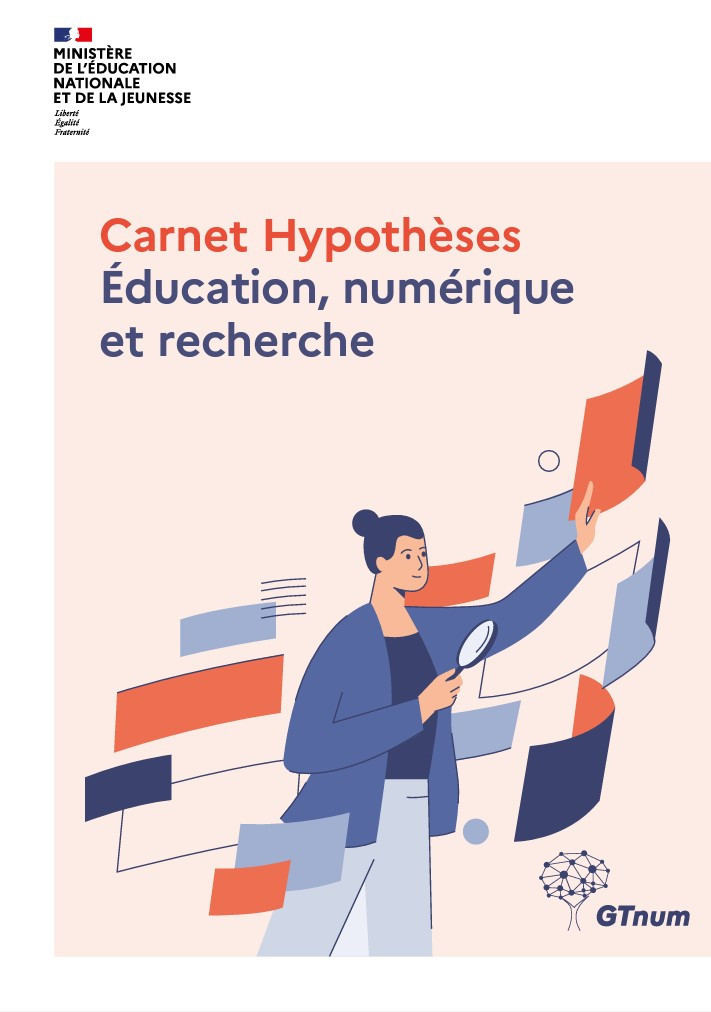 Comprendre les enjeux du numérique en éducation - Apports de la recherche Year of publication: 2022 Corporate author: France. Ministère de l'Éducation Nationale et de la Jeunesse Panorama de quelques apports de la recherche sur les enjeux du numérique en éducation (contexte socio-économique et culturel, parentalité et vie familiale, pratiques des jeunes, enseignement et apprentissages, intelligence artificielle, impact de la crise sanitaire) : infographie bilingue et livret.L’étude du numérique en éducation prend en compte le numérique comme « fait social total» et va des interfaces aux interactions, des pratiques aux représentations. C’est un champ de recherche qui recouvre une grande diversité d’objets : dispositifs technologiques utilisés (équipements, services, environnements de travail, ressources), évolution des pratiques professionnelles, pluralité des écosystèmes et des interactions entre acteurs (institutions, communauté éducative, collectivités, monde associatif, industriels…), etc. – et d’approches, disciplinaires ou pluridisciplinaires : psychologie, neurosciences, informatique et sciences du numérique, sciences de l’information et de la communication, sciences de l’éducation, sociologie, didactique, anthropologie, sociolinguistique, ingénierie des connaissances, etc. Dans un contexte international où l’éducation au numérique correspond à une demande sociale, celle-ci tend à une évolution des compétences portée par des référentiels communs mais avec des traductions dans les programmes officiels variables selon les pays. Overview of some research contributions on the challenges of digital education (socio-economic and cultural context, parenthood and family life, youth practices, teaching and learning, artificial intelligence, impact of the health crisis): bilingual infographic and booklet.The study of digital technology in education takes into account digital technology as a "total social fact", from interfaces to interactions, from practices to representations. This field of research covers a wide range of subjects: technological devices used (equipment, services, work environments, resources), changes in professional practices, the plurality of ecosystems and interactions between players (institutions, the educational community, local authorities, associations, industry, etc.), etc., as well as disciplinary and multidisciplinary approaches: psychology, neuroscience, social sciences, etc. - and disciplinary or multidisciplinary approaches: psychology, neuroscience, computer and digital sciences, information and communication sciences, educational sciences, sociology, didactics, anthropology, sociolinguistics, knowledge engineering, etc. In an international context where digital education corresponds to a social demand, the trend is towards an evolution of skills supported by common reference frameworks, but with translations into official programs that vary from country to country.
 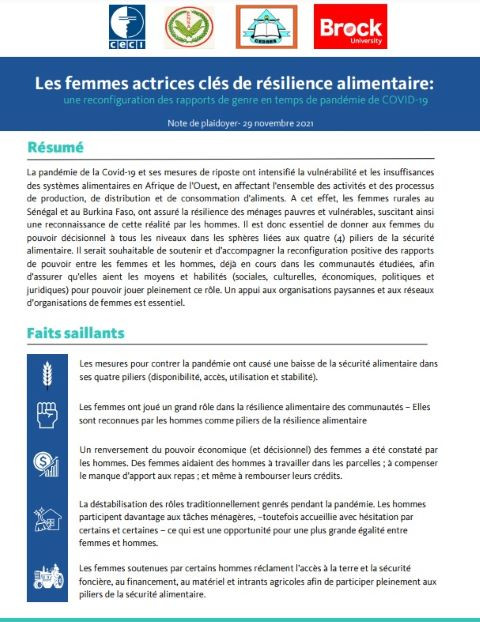 Women Key Actors of Food Resilience: A Reconfiguration of Gender Relations in Times of the COVID-19 Pandemic Year of publication: 2021 Corporate author: Centre for International Cooperation and Study (CECI) The Covid-19 pandemic and its response measures have intensified the vulnerability and shortcomings of food systems in West Africa, affecting all activities and processes of production, distribution, and consumption of food. To this end, rural women in Senegal and Burkina Faso, ensured the resilience of poor and vulnerable households, thus generating recognition of this reality by men. It is therefore essential to give women decision-making power at all levels in the spheres related to the four pillars of security eating. It would be desirable to support and accompany the positive reconfiguration of relationships of power between women and men, already in progress in the communities studied, to ensure that they have the means and skills (social, cultural, economic, political, and legal) to be able to fully play this role. Support for farmer organizations and networks of women's organizations is essential. Les femmes actrices clés de résilience alimentaire: Une reconfiguration des rapports de genre en temps de pandémie de COVID-19 Year of publication: 2021 Corporate author: Centre for International Cooperation and Study (CECI) La pandémie de la Covid-19 et ses mesures de riposte ont intensifié la vulnérabilité et les insuffisances des systèmes alimentaires en Afrique de l’Ouest, en affectant l'ensemble des activités et des processus de production, de distribution et de consommation d'aliments. A cet effet, les femmes rurales au Sénégal et au Burkina Faso, ont assuré la résilience des ménages pauvres et vulnérables, suscitant ainsi une reconnaissance de cette réalité par les hommes. Il est donc essentiel de donner aux femmes du pouvoir décisionnel à tous les niveaux dans les sphères liées aux quatre (4) piliers de la sécurité alimentaire. Il serait souhaitable de soutenir et d’accompagner la reconfiguration positive des rapports de pouvoir entre les femmes et les hommes, déjà en cours dans les communautés étudiées, afin d'assurer qu'elles aient les moyens et habilités (sociales, culturelles, économiques, politiques et juridiques) pour pouvoir jouer pleinement ce rôle. Un appui aux organisations paysannes et aux réseaux d’organisations de femmes est essentiel.
  State of the World's Forests 2022: Green Recovery, Creating Inclusive and Sustainable Economies Year of publication: 2022 Corporate author: Food and Agriculture Organization of the United Nations (FAO) Forests stand as a vital defense against climate change and biodiversity loss, while also providing livelihoods for millions of people across the world. But they are under threat. In the last 30 years, they’ve lost an area larger than Algeria and Libya combined. FAO’s latest State of the World’s Forests (SOFO) report identifies three pathways that can conserve forests while supporting environmental and economic recovery: halting deforestation, restoring degraded forests, and sustainably using forests to build resilient local economies. La Situation des forêts du monde 2022: Relance verte, créer des économies inclusives et durables Year of publication: 2022 Corporate author: Food and Agriculture Organization of the United Nations (FAO) Le rôle des forêts dans les écosystèmes de vie et les menaces actuelles. La perte des terres et le besoin de stopper la déforestation, de restaurer les forêts et d’intensifier l’utilisation durable.
  Disinformation and Peacebuilding in Sub-saharan Africa: Security Implications of AI-Altered Information Environments; Research Report Year of publication: 2024 Author: Eduardo Albrecht | Eleonore Fournier-Tombs | Rebecca Brubaker Corporate author: United Nations University | Interpeace This report aims to further explore the way in which AI technologies as they currently stand impact peace and conflict, and what methods might be used to mitigate their adverse effects - through the development of better tools and the inclusion of peace and conflict considerations in AI governance frameworks. The report proposes the following recommendations: 1. More funding and support should be provided to civil society organization efforts to expand media literacy and fact-checking initiatives using AI tools to enhance capabilities. 2. Governments need to work with civil society to develop and implement comprehensive, transparent legal frameworks combating disinformation. These legislative measures need to support digital and media literacy campaigns and fact-checking organizations. 3. Social media companies need to expand investment and research into understanding local information environments, so they can better identify and respond to instances of disinformation in all contexts in which they operate and enhance transparency. 4. Peacebuilding organizations need to carefully consider local media ecosystems and information environments when conducting conflict analyses, and factor these dynamics into their projects' frameworks.