
Resources
Explore a wide range of valuable resources on GCED to deepen your understanding and enhance your research, advocacy, teaching, and learning.
2,775 Results found
 [Video] How Many Languages Can You Recognize? Year of publication: 2018 Corporate author: UNESCO How many languages can you recognize in the video? People have the right to receive education in their mother language!More languages will be added to the SDG4 video!So don't forget to have a look at our playlist (link below) and let us know your mother tongue on our social media channels!SDG4 PLAYLIST: http://bit.ly/UNESCO-SDG4International Mother Language Day webpage: https://en.unesco.org/international-days/international-mother-language-day
 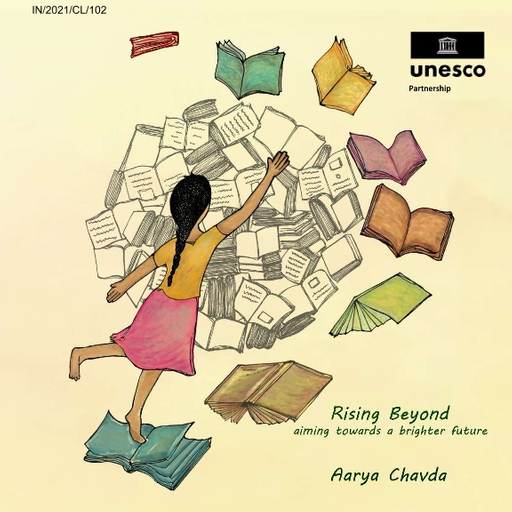 Rising Beyond: Aiming towards a Brighter Future Year of publication: 2021 Author: Aarya Chavda As children, how do we truly define a better understanding towards the right to choose, right to dream and right to self-express? This book emphasizes on the true meaning that there is no duty more important than ensuring that children’s rights are respected.
  Report on the Right to Education in Human Mobility in Central America, the Dominican Republic and Mexico: Towards Inclusive, Equitable, Quality Education With Lifelong Learning Opportunities Year of publication: 2024 Corporate author: UNESCO San José | Central American Educational and Cultural Coordination | Central American Integration System Although human mobility is not a new phenomenon, data indicate that the number of people in this situation has reached its highest point since records began and there are no signs that the trend will decrease in the coming years. This scenario threatens to become a structural situation, strongly impacting the right to education and educational systems. Therefore, it is imperative that States and other key actors make a deep commitment to guarantee the fundamental right to education of people in situations of mobility through urgent measures, in line with the provisions of Sustainable Development Goal (SDG) 4 of the United Nations 2030 Agenda. For this reason, the preparation of this Report on the right to education of people in situations of mobility in Belize, Costa Rica, El Salvador, Guatemala, Honduras, Mexico, Nicaragua, Panama and the Dominican Republic has been undertaken. The Report is an effort by UNESCO and the Central American Educational and Cultural Coordination (CECC/SICA) in collaboration with UNHCR, IOM, UNICEF, the Norwegian Refugee Council and RET International, and with the technical support of the SES Foundation and the UNESCO Chair for the Development of International Education at George Washington University (United States). Informe sobre el derecho a la educación en la movilidad humana en América Central, República Dominicana y México: Hacia una educación inclusiva, equitativa, de calidad y con oportunidades de aprendizaje permanente Year of publication: 2024 Corporate author: UNESCO San José | Central American Educational and Cultural Coordination | Central American Integration System Si bien la movilidad humana no es un fenómeno nuevo, los datos indican que la cantidad de personas en esta situación ha alcanzado su punto más alto desde que se tiene registro y no hay indicios de que la tendencia vaya disminuyendo en los próximos años. Este escenario amenaza con volverse una situación estructural, impactando fuertemente en el derecho a la educación y los sistemas educativos. Por ello, es perentorio el compromiso profundo de los Estados y otros actores clave para garantizar el derecho fundamental a la educación de las personas en situación de movilidad a través de medidas urgentes, en sintonía con lo estipulado en el Objetivo de Desarrollo Sostenible (ODS) 4 de la Agenda 2030 de las Naciones Unidas. Por ello se ha emprendido la elaboración del presente Informe sobre el derecho a la educación de las personas en situación de movilidad en Belice, Costa Rica, El Salvador, Guatemala, Honduras, México, Nicaragua, Panamá y República Dominicana. El Informe constituye un esfuerzo de la UNESCO y la Coordinación Educativa y Cultural Centroamericana (CECC/SICA) en colaboración con ACNUR, OIM, UNICEF, el Consejo Noruego para Refugiados y RET International, y con el apoyo técnico de la Fundación SES y la Cátedra UNESCO para el Desarrollo de la Educación Internacional en la Universidad George Washington (Estados Unidos)
  Educational Route: Lessons Learned Year of publication: 2024 Corporate author: Save the Children This report, prepared by Save the Children in partnership with HIAS and funded by ECHO, sets out the main lessons learned from the Educational Route project, which has had areas of intervention in Mexico, Panama, Costa Rica, Guatemala, Honduras and El Salvador. The objective of the project has been to contribute to reducing barriers to access to education for children, adolescents and families on the move along the Central American migratory routes. Within the framework of the project, a methodological package has been created containing an evaluation tool “HALDO on the move” (Holistic Assessment of Learning and Development Outcomes) that allows different humanitarian actors to quickly assess the educational level of children and adolescents and record their data on a platform in order to offer an emergency education response adapted to real learning needs, as well as achieve greater coordination to promote educational continuity along the route. Ruta educativa: Lecciones aprendidas Year of publication: 2024 Corporate author: Save the Children El presente informe, elaborado por Save the Children en alianza con HIAS y financiado por ECHO, expone las principales lecciones aprendidas del proyecto Ruta Educativa, que ha tenido como zonas de intervención México, Panamá, Costa Rica, Guatemala, Honduras y El Salvador. El objetivo del proyecto ha sido contribuir a reducir las barreras de acceso a la educación de niños, niñas, adolescentes y familias en movimiento en las rutas migratorias centroamericanas, y en el marco del mismo se ha creado un paquete metodológico que contiene una herramienta de evaluación “HALDO on the move” (Holistic Assessment of Learning and Development Outcomes) que permite a los diferentes actores humanitarios evaluar rápidamente el nivel educativo de los niños, niñas y adolescentes y registrar sus datos en una plataforma con el fin de ofrecer una respuesta de educación en emergencias adaptada a las necesidades de aprendizaje reales, así como lograr una mayor coordinación para promover la continuidad educativa a lo largo de la ruta.
  Voices Against Violence: Younger Years Corporate author: World Association of Girl Guides and Girl Scouts | International Women's Day (IWD) This resource aims to help children and young adolescents to understand gender stereotypes and develop the mindset and strategies to challenge them.The lesson objectives are to:think about what toys and films tell us about being a girl or a boyunderstand how these stereotypes are used in play and how they limit the lives and development of girls and boysnegotiate more positive gender rules and roles in the playgroundThe Pack materials are aimed at children aged:5 - 11 years
 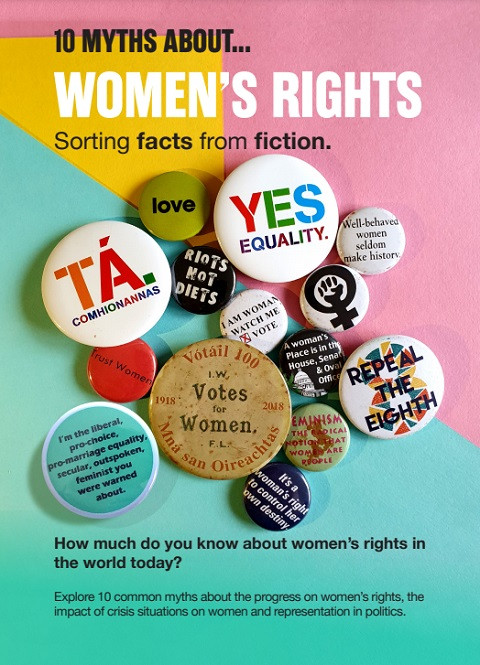 10 Myths About Women’s Rights: Sorting Facts From Fiction Year of publication: 2020 Author: Toni Pyke | Colm Regan Corporate author: DevelopmentEducation.ie Gender-based inequality is one of the most enduring and deep-seated discriminations. It affects all regions, classes and sectors. In most countries, it is maintained and defended in most of the same ways. One key component of that maintenance is a set of myths that are repeated time and time again.This pocket-size booklet includes:Why thinking about women’s rights matters10 short myths about progress on equality, who benefits from feminism, the realities of women’s health and the impact of COVID-19.Links to the Sustainable Development GoalsReferences per each myth following a fact or fiction approach and an explainerThe 10 Myths About…. series looks to sort facts from fiction on key global development, human rights and justice issues.Download 10 Myths About Women’s Rights PDFTest your knowledge and take the 10 Myths About Women’s Rights quiz or share with your group / class / friends For the latest fact checks and factsheets more on the fact checking project and development ideas, issues and debates, visit our What The Fact? project.
  Gender-Based Hate Crime Year of publication: 2021 Corporate author: Organization for Security and Co-operation in Europe (OSCE) Gender-based hate crimes are a consequence of gender inequalities and disproportionately affect women, as well as anyone perceived as not complying with prevailing gender norms. Gender-based hate crimes often seek to intimidate and suppress ways of life or expressions of identity that are perceived as not complying with traditional gender norms. They have a significant, long-lasting impact on the victims, and undermine security and social cohesion by perpetuating gender inequalities. The existence of such crimes also underscores wider trends of intolerance towards other groups. Everyone has a role to play in countering this and all forms of intolerance.
  International Symposium on Cultivating Wisdom, Harvesting Peace: Educating for a Culture of Peace through Values, Virtues, and Spirituality of Diverse Cultures, Faiths, and Civilizations; Symposium Recommendations Year of publication: 2005 Corporate author: Griffith University. Multi-Faith Centre On the 10-13th August 2005, over 120 delegates from 25 countries gathered at the International Symposium to share their inspirational insights and experiences on the theme of “Cultivating Wisdom, Harvesting Peace.” The Symposium was organized and hosted by the Multi-Faith Centre of Griffith University, Brisbane, Australia with the support of Pure Land Learning College, UNESCO and various UNESCO National Commissions, centres or offices, and numerous faith, interfaith, educational and civil society organizations and institutions. Reflecting a diversity of cultures, faiths and spirituality traditions, the delegates presented rich and empowering stories as well as critical analyses of how communities, institutions, civil society organizations, and international or global agencies have organized educational projects and programs to address the root causes of violence and conflicts and build a culture of peace at all levels of life. Over four intensive days of inter-faith and intra-faith dialogue, the Symposium participants engaged with humility and passion in sharing their wisdoms on ways to promote mutual understanding, solidarity, and cooperation across cultures and national boundaries. While recognizing that differences between faiths and cultures need to be understood, the dialogue also clearly showed that all faiths, cultures, and civilizations have, at their core, key values, virtues, and ethical principles that inspire and sustain peaceful relationships, communities and societies.The Symposium also highlighted the urgent need for exemplars and possibilities for transforming principles, values and visions into personal and social actions and practices in all the multiple dimensions of a culture of peace. In this first decade of the 21st century, it is clear that there are still many formidable challenges of building peace posed by prevailing realities of conflicts and violence in local, national, international and global contexts. The Symposium on “Cultivating Wisdom, Harvesting Peace” was therefore a most timely and relevant event, not only for promoting the urgent dialogue needed, but also most importantly in proposing constructive policies for educational transformation worldwide. This Summary of the Symposium Recommendations will hopefully be a very helpful document for the implementation of effective and creative strategies and practices of educating for wisdom towards a culture of peace. It is offered to government leaders, policy makers, educators, and leaders and members of diverse faith and interfaith institutions and communities in all societies and regions, in the hope that we will join our minds, hearts and spirit in solidarity to build a “one world” of peace, compassion, justice, love and diverse shared values for the well being of a common humanity and earth community