
Resources
Explore a wide range of valuable resources on GCED to deepen your understanding and enhance your research, advocacy, teaching, and learning.
3,446 Results found
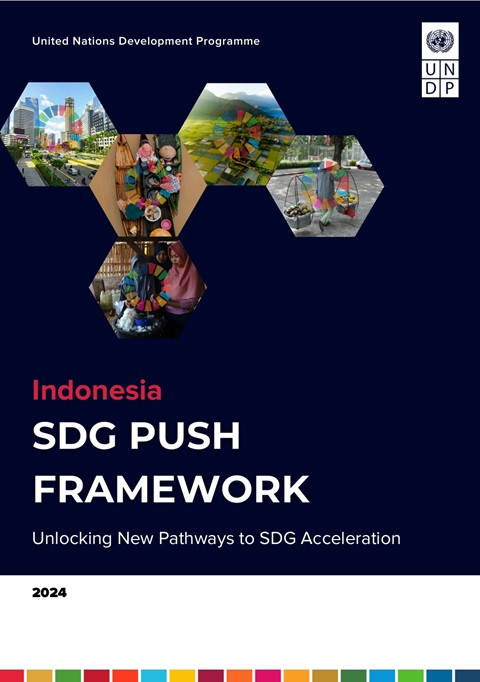 Indonesia SDG Push Framework: Unlocking New Pathways to SDG Acceleration Year of publication: 2024 Corporate author: United Nations Development Programme (UNDP) SDG Push is about realizing development ambition and redefining how we build acceleration pathways. It helps pinpoint policy choices that ‘move the needle’ towards the achievement of the Sustainable Development Goals. A UNDP flagship initiative, SDG Push uses digital and data innovation, systems thinking, and futures approaches to provide a comprehensive and country-specific tool to plan and implement SDG breakthroughs in a variety of development contexts. SDG Acceleration Pathways, specific to context and need, were co-created in collaboration with Indonesia, Moldova, Namibia, Peru and South Africa. These pilots helped to refine the SDG Push approach and the digital SDG Push Diagnostic and formed the foundation of the Integrated SDG Insights Reports, presented at the 2023 SDG Summit. This integrated, modular approach includes the analysis of development trends and priorities with data visualization, integrating generative dialogue, foresight methods and economic modelling to assess the impact of potential accelerators.
 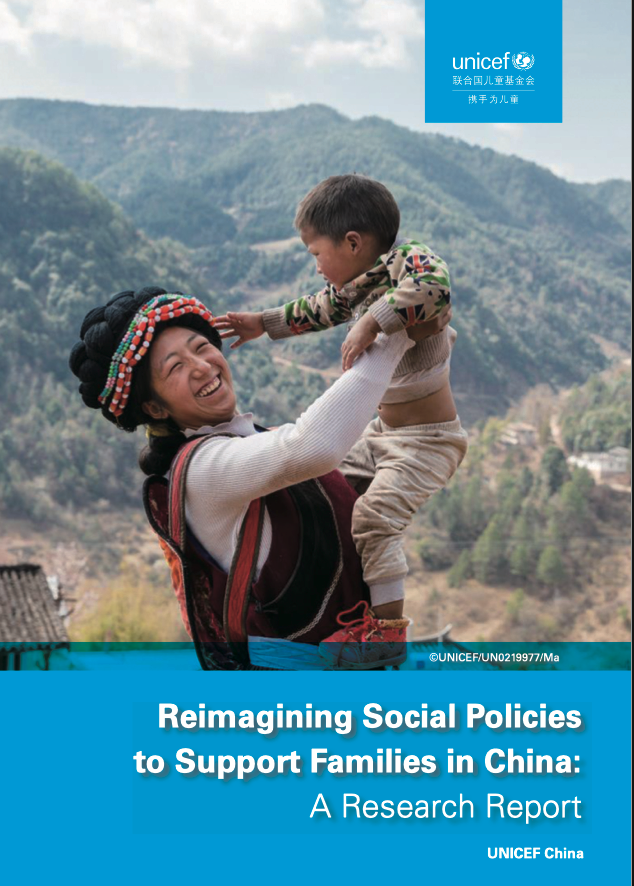 Reimagining Social Policies to Support Families in China: A Research Report Year of publication: 2023 Corporate author: 联合国儿童基金会驻华办事处 There have been significant changes in the population and society in China over recent decades. The birth rate has declined, and the population has aged. The average family size shrank from 3.1 people in 2010 to 2.8 in 2022[i], and the one-child policy has been reversed. Urbanization, rural-urban migration and the growth of the informal sector have changed how people live and work. Gender inequality persists, with women frequently facing discrimination and barriers to employment. All these changes have implications for family policy – statutory policies and government-led programmes that aim to improve conditions for adult family members, particularly those caring for children up to the age of 18.A new report, ‘Reimaging Social Policies to Support Families in China’ by UNICEF synthesizes the context and challenges of family policies in China and reviews over 180 evaluations of family policies worldwide. The report highlights case studies of policies that could be adapted and incorporated into family policy in China, and it identifies implications for designing and implementing innovative policy. 探讨适合中国的家庭友好社会政策: 研究报告 Year of publication: 2023 Corporate author: 联合国儿童基金会驻华办事处 近几十年来,中国的人口规模和结构以及社会发生了重大变化:出生率下降,人口老龄化;平均家庭户规模由2010年的一户3.1人降至2022年的一户2.8人[i];独生子女政策于2015年被取消,“三孩政策”从2021年开始实施;城镇化、农村人口向城镇地区迁移和灵活就业人员的增加改变了人们的生活和工作方式;与此同时,性别不平等现象依然存在,女性经常面临就业歧视和阻碍。上述一系列变化都影响着家庭政策——旨在支持父母等家庭成员养育儿童(18岁以下)、改善养育条件的相关法定政策及政府主导的项目。 联合国儿童基金会发布的新报告——《探讨适合中国的家庭友好社会政策》总结了中国家庭政策的背景概况和面临的挑战,并梳理了全球180多篇评估家庭政策有效性的研究。该报告重点介绍了可供中国参考借鉴的政策案例,并提出设计和实施创新政策的建议。
 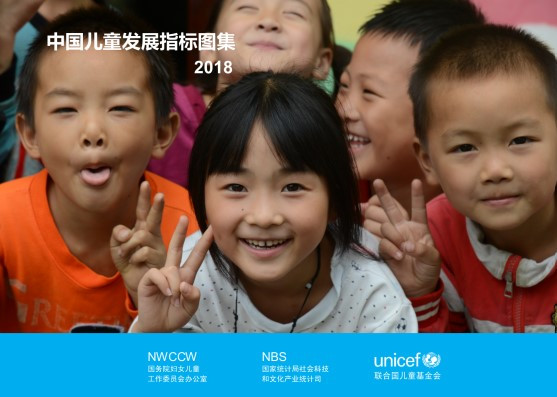 An Atlas of Social Indicators of Children in China 2018 Year of publication: 2018 Corporate author: United Nations Children's Fund (UNICEF) | National Working Committee on Children and Women (NWCCW) | National Bureau of Statistics (NBS). Department of Social, Science, Technology and Cultural Statistics By bringing together the latest authoritative, official data on the main indicators of child survival, development and protection and presenting them in a visual manner, the Atlas has faithfully reflected the achievements, as well as issues and challenges in realizing children’s rights in China. 中国儿童发展指标图集 2018 Year of publication: 2018 Corporate author: United Nations Children's Fund (UNICEF) | National Bureau of Statistics (NBS). Department of Social, Science, Technology and Cultural Statistics | National Working Committee on Children and Women (NWCCW) 本图集汇集了有关中国儿童生存、发展、保护状况的主要指标和最新权威数据信息,以可视化图表的形式,集中展现了中国儿童发展取得的成就,客观反映了中国实现儿童权利所面临的问题和挑战。
  Progress on the Sustainable Development Goals: The Gender Snapshot 2021 Year of publication: 2021 Corporate author: United Nations Entity for Gender Equality and the Empowerment of Women (UN Women) | UN. Department of Economic and Social Affairs (UN. DESA) The pandemic has tested and even reversed progress in expanding women’s rights and opportunities. Women have not recovered lost jobs and income, hunger is on the rise, and school closures threaten girls’ educational gains. Women’s participation in government, research and resource management remains far from equal. Vulnerable groups of women, including migrants, those with disabilities and those affected by conflict, are frequently left behind. Disparities between rich and poor countries are preventing equal access to lifesaving COVID-19 vaccines and treatments, putting women in poorer countries at disproportionate risk. Moreover, despite women’s central roles in responding to COVID-19, including as front-line health workers, they do not have the leadership positions they deserve. Building forward differently and better will require placing women and girls at the centre of all aspects of response and recovery, including through gender- responsive laws, policies and budgeting.Progress on the Sustainable Development Goals: The Gender Snapshot 2021 presents the latest evidence on gender equality across all 17 Sustainable Development Goals, highlighting the progress made since 2015 but also the continued alarm over the COVID-19 pandemic, its immediate effect on women’s well-being and the threat it poses to future generations. Progrès vers la réalisation des objectifs de développement durable: Gros plan sur l’égalité des sexes 2021 Year of publication: 2021 Corporate author: United Nations Entity for Gender Equality and the Empowerment of Women (UN Women) | UN. Department of Economic and Social Affairs (UN. DESA) La pandémie a mis à l’épreuve et même inversé les progrès dans l’élargissement des droits et des opportunités des femmes. Les femmes n’ont pas récupéré les emplois et les revenus perdus, la faim augmente et les fermetures d’écoles menacent les progrès scolaires des filles. La participation des femmes au gouvernement, à la recherche et à la gestion des ressources est loin d’être égale. Les groupes de femmes vulnérables, y compris les migrants, les personnes handicapées et celles touchées par les conflits, sont souvent laissés pour compte. Les disparités entre les pays riches et les pays pauvres empêchent l’égalité d’accès aux vaccins et aux traitements vitaux contre la COVID-19, ce qui expose les femmes des pays les plus pauvres à un risque disproportionné. De plus, malgré le rôle central des femmes dans la réponse à la COVID-19, y compris en tant que professionnelles de santé de première ligne, elles n’ont pas les postes de direction qu’elles méritent. Pour aller de l’avant différemment et mieux, il faudra placer les femmes et les filles au centre de tous les aspects de la réponse et de la relance, notamment par le biais de lois, de politiques et d’une budgétisation sensibles au genre. Le rapport Progrès vers la réalisation des objectifs de développement durable : Gros plan sur l’égalité des sexes, 2021 présente les dernières données probantes sur l’égalité des sexes dans l’ensemble des 17 Objectifs de développement durable, soulignant les progrès réalisés depuis 2015, mais aussi l’inquiétude continue liée la pandémie de COVID-19, son effet immédiat sur le bien-être des femmes et la menace qu’elle représente pour les générations futures. El progreso en el cumplimiento de los Objetivos de Desarrollo Sostenible: Panorama de género 2021 Year of publication: 2021 Corporate author: United Nations Entity for Gender Equality and the Empowerment of Women (UN Women) | UN. Department of Economic and Social Affairs (UN. DESA) La pandemia puso a prueba e incluso revirtió el progreso alcanzado en la expansión de los derechos y las oportunidades de las mujeres. Las mujeres no han recuperado el empleo y los ingresos perdidos, el hambre ha aumentado, y el cierre de las escuelas supone una amenaza para los logros de las niñas en la esfera educativa. La participación de las mujeres en el Gobierno, la investigación y la gestión de los recursos sigue lejos de ser igualitaria. Los grupos vulnerables de mujeres, incluidas las migrantes, aquellas con discapacidad, y las afectadas por los conflictos, con frecuencia quedan rezagadas. Las disparidades entre países ricos y pobres impiden el acceso a los tratamientos y vacunas tan vitales contra el COVID-19, lo que pone a los países más pobres frente a un riesgo desproporcionado. Por otra parte, pese al papel central de las mujeres en la respuesta al COVID-19, incluidas las trabajadoras sanitarias de la primera línea, estas no ocupan los puestos de liderazgo que merecen. En adelante, una reconstrucción mejor y diferente exigirá colocar a las mujeres y las niñas en el centro de todos los aspectos de la respuesta y la reconstrucción, entre otras cosas, a través de leyes, políticas y presupuestos con perspectiva de género. En El progreso en el cumplimiento de los Objetivos de Desarrollo Sostenible: Panorama de Género 2021 se presenta la evidencia más reciente sobre igualdad de género en la totalidad de los 17 Objetivos de Desarrollo Sostenible. Se destaca el progreso alcanzado desde 2015, así como la alarma continua de la pandemia del COVID-19, sus efectos inmediatos en el bienestar de las mujeres y la amenaza que supone para las generaciones futuras.
  Women’s Meaningful Participation in Transitional Justice: Advancing Gender Equality and Building Sustainable Peace Year of publication: 2022 Author: Lorena Mellado | Emily Kenney | Hariwa Adil Corporate author: United Nations Entity for Gender Equality and the Empowerment of Women (UN Women) | United Nations Development Programme (UNDP) This detailed research paper explores what women’s meaningful participation in transitional justice means and “looks like” in policy and practice. It focuses specifically on women and addressing the unique barriers to women’s meaningful participation in transitional justice processes as a result of gender-based discrimination.This publication reviews the current policy framework and assertions for women’s meaningful participation in transitional justice and highlights critical gaps between policy and practice. The research paper suggests a definition for women’s meaningful participation in transitional justice, as well as typologies of women stakeholders and roles that women play within transitional justice.
  Crisis Centers - A Pillar of Activism Against Gender-Based Violence Year of publication: 2021 Author: Bermet Baryktabasova | Gaziya Moldakulova | Dina Smailova | Elena Tkacheva | Zulfia Baysakova | Margarita Uskembaeva | Nazgul Turdubekova | Oksana Ibragimova | Raushan Khudayishukurova | Sanzhar Kurmanov | Tatyana Musagalieva | Ukei Murataliyeva | Khurshida Ibragimova | Shakhnoza Khasanova Corporate author: United Nations Entity for Gender Equality and the Empowerment of Women (UN Women) The publication is based on the speeches of 14 experts from Kazakhstan, Kyrgyzstan, and Uzbekistan, who shared their approaches to responding to domestic violence and the experience of crisis centers and gave recommendations on facilitating the work of crisis centers and other services.