
Resources
Explore a wide range of valuable resources on GCED to deepen your understanding and enhance your research, advocacy, teaching, and learning.
1,405 Results found
 Discours de Mme Irina Bokova, Directrice générale de l'UNESCO, à l'occasion de la Présentation du Rapport Mondial de l'UNESCO: Investir dans la Diversité Culturelle et le Dialogue Interculturel Year of publication: 2010 Corporate author: UNESCO. Director-General, 2009-2017 (Bokova, I.G.) This address was delivered by Irina Bokova, Director-Geneeral of UNESCO on the occasion of the presentation of the UNESCO world report in investing in cultural diversity and intercultural dialogue during UNESCO week at the Shanghai World Expo 2010. In this address she highlited the importance of cultural diversity and intercultural communication, and requested the protection of Chinese cultural heritage by Chinese governments.
 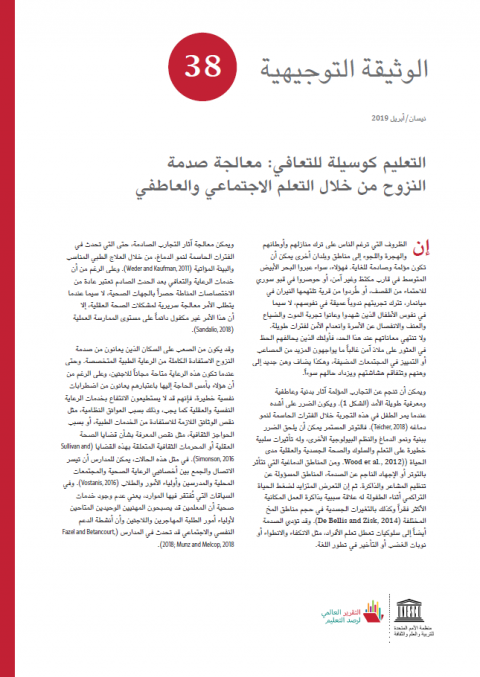 التعليم كوسيلة للتعافي: معالجة صدمة النزوح من خلال التعلم الاجتماعي والعاطفي Year of publication: 2019 وتتناول هذه الوثيقة أنشطة التعليم النظامي وغير النظامي، ولا سيما الأنشطة التي تركز على التعلم الاجتماعي والعاطفي، كنهج واعد لتوفير الدعم النفسي والاجتماعي للمهاجرين واللاجئين في مواجهة الآثار السلبية للصدمات التي تعرضوا لها. وتغطي الوثيقة سياقات الطوارئ والأوضاع المجتمعية التي تقود فينهاية المطاف إلى استقرار أطفال المهاجرين واللاجئين. كما تغطي الدراسة مسألة توفير التعليم وبيئة التعلم؛ ومحتوى التعليم والتعلم لكل من الأطفال وأولياء أمورهم؛ والدور الذي يمكن أن يقوم به المعلمون وغيرهم من المهنيين . Education as healing: addressing the trauma of displacement through social and emotional learning Year of publication: 2019 The conditions under which migrants and refugees have to leave their homes and homelands can be traumatic in the extreme. Whether they have crossed the Mediterranean in an overcrowded and unsafe boat, been barricaded in a Syrian basement for protection from shelling, or been chased away from a burning village in Myanmar, the events of their departures and their journeys can leave scars on those affected – and none more than on children who have witnessed and experienced death, loss, violence, separation from family and prolonged insecurity. Even those fortunate enough to find a sanctuary often face further hardship or discrimination in their host communities that can exacerbate their vulnerability.
 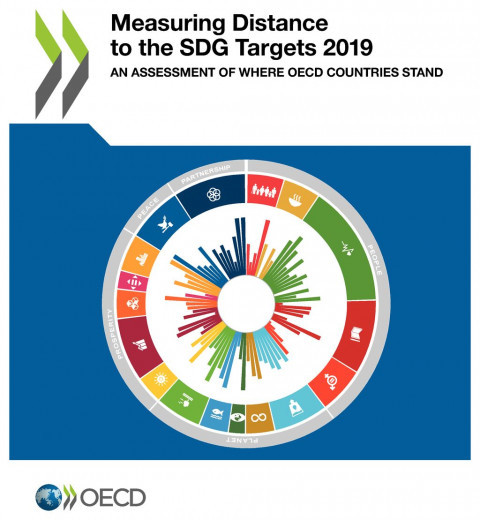 Measuring Distance to the SDG Targets 2019 - An Assessment of Where OECD Countries Stand Year of publication: 2019 Corporate author: Organisation for Economic Co-operation and Development (OECD) The Sustainable Development Goals (SDGs) set a broad and ambitious programme for the world to achieve by 2030. With 17 Goals, underpinned by 169 Targets, the complex and integrated nature of the 2030 Agenda presents national governments with huge challenges for implementation. To assist countries, the OECD has developed a unique methodology allowing comparison of progress across SDG goals and targets. Based on the UN Global List of 244 indicators, this study evaluates the distance that OECD countries need to travel to meet SDG targets for which data is currently available. This 2019 edition of the study presents the latest results for OECD countries, both on average and individually, as well as new exploratory approaches to assessing progress over time and transboundary aspects of the SDGs. By providing a high-level overview of countries’ strengths and weaknesses in performance across the SDGs, this study aims to support member countries in navigating the SDGs and in setting their own priorities for action within the broad 2030 Agenda.
  Trends Shaping Education 2019 Year of publication: 2019 Corporate author: Organisation for Economic Co-operation and Development (OECD) This book, published every two to three years, is designed to give policy makers, researchers, educational leaders, administrators and teachers a robust, non-specialist source to inform strategic thinking and stimulate reflection on the challenges facing education, whether in schools, universities or programmes for older adults. Trends Shaping Education 2019 is designed to support long-term strategic thinking in education. It provides an overview of key economic, social, demographic and technological trends and raises pertinent questions about their impact on education. This book fills an important need: decision makers and practitioners in education often have only anecdotal or local information on the megatrends that play out in their context; too often they do not have solid facts in front of them, especially about trends.` Les grandes mutations qui transforment l'éducation 2019 Year of publication: 2019 Corporate author: Organisation for Economic Co-operation and Development (OECD) Vous êtes-vous déjà demandé si l’éducation avait un rôle à jouer dans la préparation de nos sociétés à l’ère de l’intelligence artificielle ? Ou quel peut être l’impact du réchauffement climatique sur nos établissements scolaires, nos familles et collectivités ? La publication Les grandes mutations qui transforment l’éducation 2019 donne un aperçu des principales tendances économiques, politiques, sociales et technologiques qui affectent l’éducation. Si les mesures sont robustes, les questions soulevées dans ce recueil sont suggestives et ont pour objet d’informer la pensée stratégique et de stimuler une réflexion sur les défis de l’éducation – et montrer si et comment l’éducation peut influencer ces tendances. L’ouvrage couvre une riche variété de sujets liés à la mondialisation, la démocratie, la sécurité, le vieillissement et les cultures modernes. Le contenu pour l’édition 2019 a été révisé et étendu avec une large sélection d’indicateurs. En plus des différentes tendances et de leur interaction avec l’éducation, la publication inclut également une nouvelle section dédiée à la réflexion sur le futur, inspirée par des méthodologies de la prospective stratégique. Cet ouvrage a pour objet de fournir aux décideurs politiques, aux chercheurs, aux chefs d’établissements, aux administrateurs scolaires et aux enseignants, une source non spécialisée de tendances qui affectent l’éducation comparables à l’échelle internationale, dans les écoles, les universités ou encore dans les programmes de formation pour adultes. Cet ouvrage s’adresse également aux élèves/ étudiants et à la société dans son ensemble, notamment aux parents.
 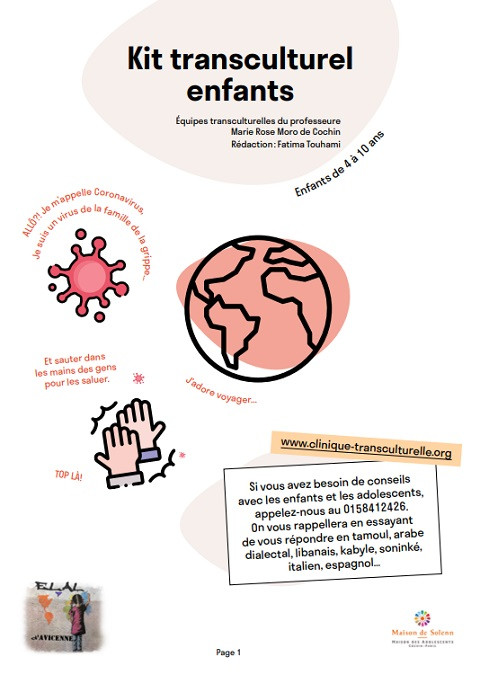 Kit transculturel enfants Year of publication: 2020 Author: Marie Rose Moro Corporate author: Maison de Solenn Ce kit transculturel est destiné à aider les les familles migrates en période de confinement où il devient crucial d’expliquer à chacun, avec les bons mots et dans sa langue, ce qui se passe. Il est nécéssaire d’aider l’enfant à continuer sa vie d’enfant.
 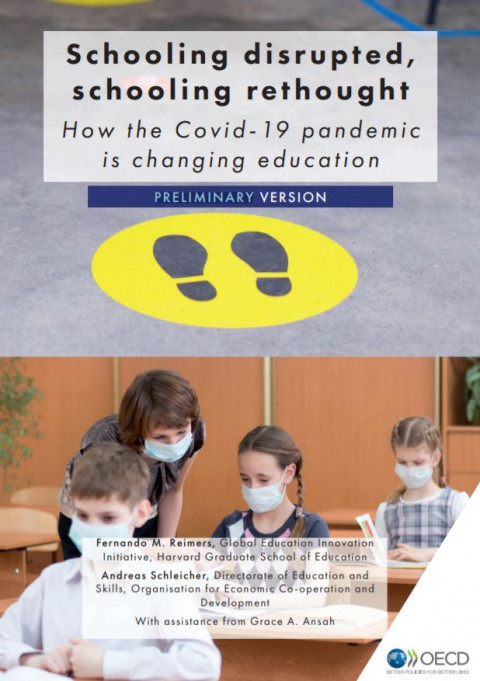 Schooling Disrupted, Schooling Rethought: How the Covid-19 Pandemic is Changing Education Year of publication: 2020 Author: Fernando Reimers | Andreas Schleicher Corporate author: Organisation for Economic Co-operation and Development (OECD) This report looks at how the Covid-19 pandemic is changing education and is based on a survey conducted between 25 April and 7 May 2020 that received responses from government officials, education administrators, teachers, and school administrators in 59 countries.
 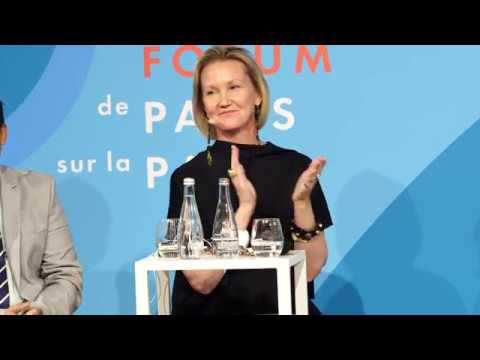 How Can Pluralism Strengthen Peace?: Global Centre for Pluralism at the 2019 Paris Peace Forum Year of publication: 2019 Author: Meredith P. Mcghie | Aung K. Moe | Bojana Dujkovic Corporate author: Global Pluralism Award Many of the most intractable challenges we face today − from entrenched poverty to conflict-driven migration − stem from the exclusion and resentment of groups defined as “the other”.Group-based grievances arising from inequality, exclusion and feelings of injustice increase the risk of instability and conflict. Pluralism is the choice to see diversity contribute to the common good. Making this choice is essential to building more secure, peaceful and resilient societies.Meredith Preston McGhie, the Secretary General of the Global Centre for Pluralism, was joined by two winners of the 2019 Global Pluralism Award to discuss how history education and community-based reconciliation can help strengthen pluralism, sustain peace and prevent conflict in diverse societies. Comment le pluralisme peut-il renforcer la paix?: Centre mondial du pluralisme au Forum de la paix de Paris 2019 Year of publication: 2019 Author: Meredith P. Mcghie | Aung K. Moe | Bojana Dujkovic Corporate author: Global Pluralism Award Plusieurs des épineux défis auxquels nous faisons face aujourd’hui – de l’appauvrissement endémique à la migration causée par des conflits – découlent de l’exclusion de groupes définis comme « l’autre » et du ressentiment à leur égard.Les griefs collectifs résultant de l’inégalité, de l’exclusion et de sentiments d’injustice augmentent le risque d’instabilité et de conflit. Le pluralisme est une option pour que la diversité contribue au bien commun. Il est essentiel de faire ce choix pour bâtir des sociétés plus sécuritaires, pacifiques et résilientes.Meredith Preston McGhie, secrétaire générale du Centre mondial du pluralisme, était accompagnée de deux lauréats du Prix mondial du pluralisme 2019 pour aborder la manière dont l’enseignement de l’histoire et la réconciliation à l’échelle communautaire peuvent aider à renforcer le pluralisme, entretenir la paix et prévenir l’éclatement de conflits dans les sociétés diversifiées.