
Resources
Explore a wide range of valuable resources on GCED to deepen your understanding and enhance your research, advocacy, teaching, and learning.
1,727 Results found
 Cochon d'Inde VF (S. Prijot) Year of publication: 2015 Corporate author: Îles de Paix Au Pérou, le cochon d'Inde est élevé pour sa chair riche en protéines. Longtemps, ceux-ci grandissaient au sein même de la famille, sans aucune précaution particulière au niveau de l'hygiène et des soins à leur prodiguer. Grâce à l'intervention d'Iles de Paix, une centaine de femmes a été formée à l'élevage de ces animaux, permettant ainsi d'améliorer la qualité et la quantité de la production. À travers cette action, beaucoup de familles ont vu leur alimentation s'enrichir considérablement et pour certaines, leurs revenus s'améliorer.
  Discourses and Strategies for Solving Environmental Issues in Central Asia Year of publication: 2020 Author: Muslimbek Buriev Corporate author: Central Asian Bureau for Analytical Reporting (CABAR) | Institute for War and Peace Reporting (IWPR) The representative office of the Institute for War and Peace Reporting (IWPR) in Central Asia and CABAR.asia present an analytical note entitled “Discourses and Strategies for Solving Environmental Issues in Central Asia”. This work is an effort to outline the most significant environmental issues in the region and to analyze measures to solve them. In addition, it attempts to highlight cases of successful practice as well as to identify existing programs with significant shortcomings.The work is meant for young experts and consultants, researchers, decision-makers, as well as a wide range of readers interested in environmental issues and governance in Central Asia. Дискурсы и стратегии решения экологических проблем: В Центральной Азии Year of publication: 2020 Author: Muslimbek Buriev Corporate author: Central Asian Bureau for Analytical Reporting (CABAR) | Institute for War and Peace Reporting (IWPR) IWPR и CABAR.asia представляют аналитическую записку “Дискурсы и стратегии решения экологических проблем в Центральной Азии”. В работе предпринята попытка раскрыть основные экологические вызовы, проанализировать меры по решению экологических проблем, а также выявить успешные кейсы и определить основные недочёты проводимых программ в регионе.Публикация предназначена для молодых экспертов и консультантов, исследователей, лиц, принимающих управленческие решения, а также широкого круга читателей, интересующихся экологическими вопросами в Центральной Азии.
  A Coherent European Approach to SDG Target 4.7 Year of publication: 2021 Author: Ana Teresa Santos Corporate author: Bridge 47 This document aims to showcase why a coherent approach to Target 4.7 of the Sustainable Development Goals’ (SDG) will strengthen the European Union’s role in achieving the targets and goals set out in Agenda 2030. The report suggests some pathways to follow in order to make this coherent approach a reality.It explores: Relevance of a coherent European approach to SDG Target 4.7 and connections with other EU processes Funding lines Possible pathways to make the coherent approach a reality
  Universal Declaration of Human Rights Year of publication: 2015 Corporate author: United Nations (UN) It introduces the equal and basic human rights that everyone in the world are entitled to enjoy. It also clarifies the responsibilities that different countries should take to protect human rights. 世界人权宣言漫画图册 Year of publication: 2015 Corporate author: United Nations (UN) 该宣言指出了地球上的每个人所应平等享有的基本权利,以及缔约各国为保护人权而应承担的责任。
  Why Is Transformative Education a Vital Response to the Multiple Challenges of the Future? Year of publication: 2021 Author: Tereza Čajková Corporate author: Bridge 47 This report explores the role of transformative education as described in SDG Target 4.7 in responding to the global challenges, risks and trends of the future, and is split into three sections: Part 1 sets the context based on several foresight reports, suggesting that the physical effects of climate change are likely to intensify during the next two decades as humanity looks unlikely to meet the goal of limiting global warming to under 2°C. The burden of climate disruption and environmental decline is already felt by everyone, but disproportionately by the most vulnerable populations. Social challenges described in foresight reports reflect increasing levels of uncertainty, precarity, fragility and complexity. The future world will likely be more connected, yet more fragmented, characterised by multiple changes taking place at an unprecedented pace.Part 2 reflects on the role of education in times of social and ecological transformation. There is currently increasing momentum for questioning established education approaches in terms of whether they are able to equip future generations to cope with the multiple crises the foresight reports warn us of. Transformative education can contribute to this process given that preparing learners to address future challenges is one of its core commitments. Part 3 provides an insight into the types of learning which may be more suited to coping with these numerous challenges. Transformative learning develops the cognitive abilities to learn from the social and historical shortcomings of the dominant world-view and to address the driving forces responsible for degradation of life on the planet. It can support development of dispositions enabling learners to relate to each other and the world in a radically different way, understanding that we cannot separate humanity from the planet and all other living beings and that humanity may need to learn how to live in, and with the world, without occupying its centre.
 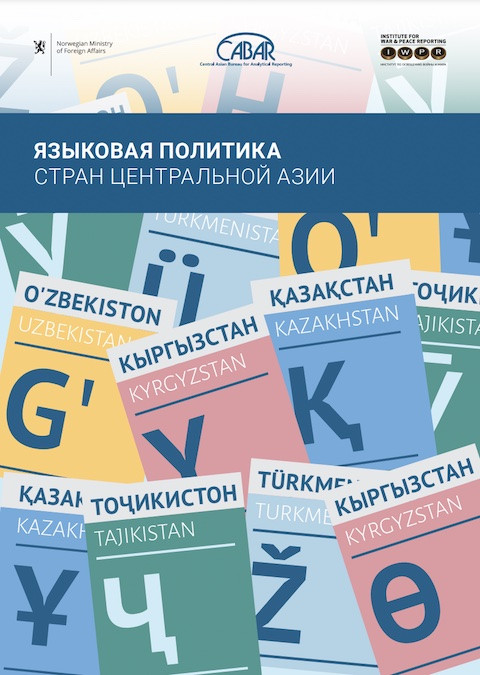 Language Policies of the Central Asian States Year of publication: 2020 Author: Nurbek Bekmurzayev Corporate author: Central Asian Bureau for Analytical Reporting (CABAR) | Institute for War and Peace Reporting (IWPR) The policy brief “Language Policy of the Central Asian States” is presented jointly by IWPR and CABAR.asia. The publication outlines the ways of the formation of state languages in the countries of Central Asia, analyzes their functioning along with the Russian language, draws conclusions and forecasts for the future, and provides recommendations for improving language policy.The publication is intended for young experts and consultants, researchers, management decision makers, and a wide range of readers. Языковая политика стран Центральной Азии Year of publication: 2020 Author: Nurbek Bekmurzayev Corporate author: Central Asian Bureau for Analytical Reporting (CABAR) | Institute for War and Peace Reporting (IWPR) Аналитическая записка “Языковая политика стран Центральной Азии” представлена совместно IWPR и CABAR.asia. В публикации изложены пути становления государственных языков в странах Центральной Азии, проанализировано их функционирование наряду с русским языком, сделаны выводы и прогнозы на будущее и предоставлены рекомендации для улучшения языковой политики.Публикация предназначена для молодых экспертов и консультантов, исследователей, лиц, принимающих управленческие решения, а также широкого круга читателей.
 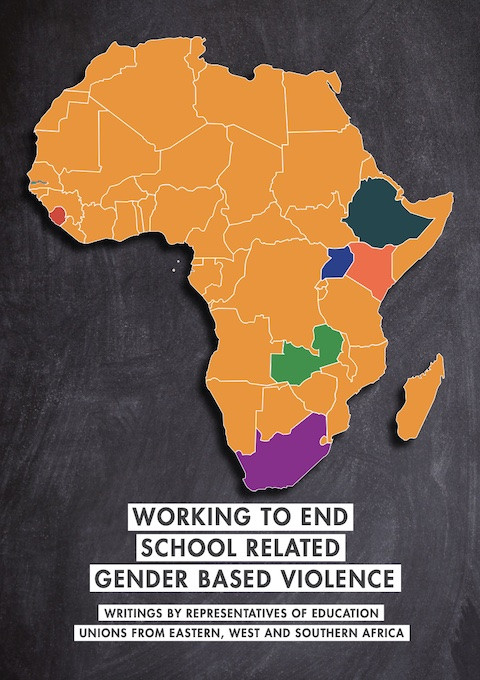 Trabajando para acabar con la violencia de género en el ámbito escolar: Ensayos por representantes de sindicatos de la educación de África Oriental, Occidental y Austral Year of publication: 2019 Author: Shamim Meer Corporate author: Gender at Work | Labour Research Service (LRS) | Global Affairs Canada (GAC) | United Nations Girls' Education Initiative (UNGEI) | Education International (EI) La Violencia de Género en el Ámbito Escolar (VGAE) es una forma de violencia que menoscaba la integridad corporal, los derechos humanos y la igualdad de género de todas las personas involucradas, pero especialmente de los niños y niñas escolares. En 2016, 7 docentes sindicales - SADTU y NAPTOSA de Sudáfrica, BETUZ y ZNUT de Zambia, UNATU de Uganda, ETA de Etiopía y KNUT de Kenia y en 2018, SLTU de Sierra Leona, GTU de Gambia y el personal de la Oficina Regional de África de la Internacional de la Educación con base en Ghana – participaron activamente en Gender at Work (G@W) – Proceso de Acción de Aprendizaje en Género (GAL, por sus siglas en inglés). El objetivo principal de este proceso GAL específico fue crear un programa piloto participativo de la IE en África, oriental, occidental y del sur enfocado en la capacidad de docentes individuales y sindicatos de docentes para abordar la VGAE. Con el apoyo de facilitadoras de Gender at Work, las y los participantes fortalecieron su comprensión de la desigualdad de género y la violencia basada en el género en el contexto escolar. A lo largo del proceso GAL, las y los participantes hablaron con el corazón, compartiendo historias inspiradoras sobre el cambio.