
Resources
Explore a wide range of valuable resources on GCED to deepen your understanding and enhance your research, advocacy, teaching, and learning.
3,436 Results found
 Homegrown terrorism and transformative learning: an interdisciplinary approach to understanding radicalization Year of publication: 2010 Author: Alex S. Wilner | Claire-Jehanne Dubouloz Since 2001, a preponderance of terrorist activity in Europe, North America and Australia has involved radicalized Westerners inspired by Al Qaeda. Described as ‘homegrown terrorism’, perpetrators are citizens and residents born, raised, and educated within the countries they attack. While most scholars and policy-makers agree that radicalization plays a central role in persuading Westerners to embrace terrorism, little research properly investigates the internal and cognitive processes inherent to radicalization. Transformative learning theory, developed from the sciences in education, health and rehabilitation, provides an unconventional and interdisciplinary way to understand the radicalization process. The theory suggests that sustained behavioural change can occur when critical reflection and the development of novel personal belief systems are provoked by specific triggering factors. Homegrown terrorism and transformative learning: an interdisciplinary approach to understanding radicalization Year of publication: 2010 Author: Alex S. Wilner | Claire-Jehanne Dubouloz Depuis 2001, une grande partie de l'activité terroriste en Europe, en Amérique du Nord et en Australie a impliqué des Occidentaux radicalisés inspirés par Al Qaïda. Décrite comme un « terrorisme venant de l’intérieur », leurs auteurs sont des citoyens et des résidents qui sont nés, ont grandi et ont été éduqués dans les pays qu'ils attaquent. Alors que la plupart des chercheurs et des décideurs conviennent que la radicalisation joue un rôle central pour convaincre les Occidentaux d'embrasser le terrorisme, peu de recherche étudie d’une manière adéquate les processus internes et cognitifs inhérents à la radicalisation. La théorie de la pédagogie transformative, développée à partir des sciences de l'éducation, de la santé et de la réadaptation, fournit une manière peu commune et interdisciplinaire de comprendre le processus de radicalisation. Cette théorie suggère que le changement de comportement de manière durable peut se produire lorsque la réflexion critique et le développement de nouveaux systèmes de croyance personnelle sont provoqués par des facteurs déclencheurs spécifiques.
  Abu Dhabi Memorandum on Good Practices for Education and Countering Violent Extremism Year of publication: 2014 Author: Sara Zeiger Corporate author: Hedayah Foundation The contents of this brief are based on the discussions that occurred from 3 to 4 November 2014 at an expert workshop on Research Trends in Countering Violent Extremism hosted by Hedayah in Abu Dhabi, United Arab Emirates. The purpose of this two-day expert roundtable was to bring together researchers, policymakers and practitioners in a closed discussion of the current trends in CVE research. The goals at the meeting were to address the current research outcomes in countering violent extremism; determine the critical gaps in research on CVE; identify the new and emerging threats of violent extremism; and establish a recommended research agenda for Hedayah and CVE researchers in the coming two years. Abu Dhabi Memorandum on Good Practices for Education and Countering Violent Extremism Year of publication: 2014 Author: Sara Zeiger Corporate author: Hedayah Foundation Le contenu de cette note est basé sur les discussions qui ont eu lieu les 3 et 4 Novembre 2014 dans un atelier d'experts sur les orientations de la recherche dans la lutte contre l'extrémisme violent, organisé par Hedayah à Abu Dhabi aux Emirats Arabes Unis. Cette table ronde d'experts de deux jours avait comme objectif de réunir des chercheurs, des décideurs et des praticiens autour d’une discussion close sur les orientations actuelles de la recherche contre l’extrémisme violent. Ils ont examiné les résultats des recherches actuelles dans la lutte contre l'extrémisme violent (CVE) ; déterminé les lacunes importantes ; identifié les nouvelles menaces et les menaces émergentes de l'extrémisme violent ; et établi un programme recommandé de recherche à l’intention des chercheurs de Hedayah et tous les chercheurs qui travaillent sur la lutte contre l’extrémisme violent, pour les deux années à venir. Gain or Drain: Understanding Public Private Partnerships in Education Year of publication: 2013 Corporate author: Asia South Pacific Association for Basic and Adult Education (ASPBAE) As a facilitating tool for education campaign coalitions and other education campaigners to begin to build deeper appreciation and understanding of the issue, this Primer specifically seeks to:• Contribute to achieving clarity on the origin, scope and context of PPPs in education• Provide a simple guideline in assessing PPP initiatives to measure how they relate to realising the right to education• Help education campaign coalitions and networks deepen their analyses and define their operational positions for policy engagement on PPP initiatives.
 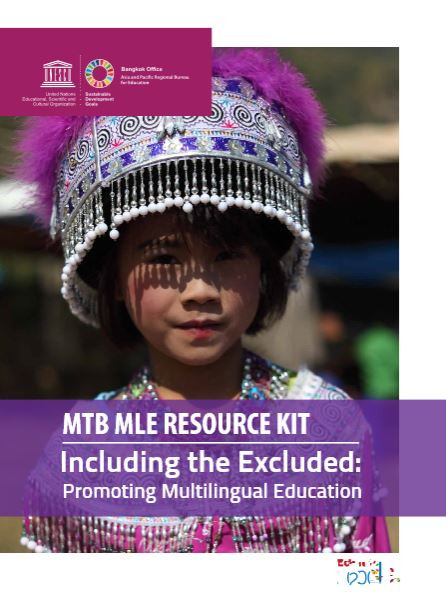 MTB MLE resource kit: Including the excluded: promoting multilingual education (chi) Year of publication: 2016 Author: Susan Malone Corporate author: UNESCO Bangkok Who Can Use this Resource Kit?This MTB MLE Resource Kit is for people who are committed to the idea that all children have the right to quality education in a language they speak and understand. MTB MLE programmes that are sustained within the formal education system require contributions from all stakeholders, working together and supporting one another. The next three booklets were developed for three specific stakeholder groups: policy makers, programme implementers and community members. These three booklets, with the case studies, provide a “big picture” of successful MTB MLE programmes and suggestions for the roles each group can take as they plan, implement and maintain their programmes. How Can You Use this Resource Kit?Each booklet is organized around key questions about MTB MLE that are frequently asked by policy makers, implementers and community members. Responses to each question include examples of specific activities that are part of successful MTB MLE programmes in a variety of contexts. Working together, stakeholders can identify the specific activities that are best suited for their own situation and make the best use of all available resources.
 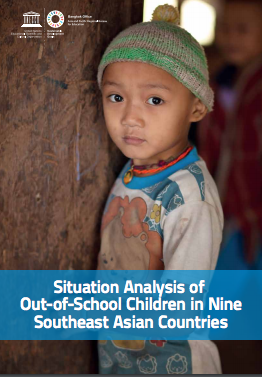 Situation analysis of out-of-school children in nine southeast Asian countries Year of publication: 2017 Corporate author: UNESCO Bangkok In a world that continually aspires for every child and youth to have access to education, there are still large numbers of out-of-school children (OOSC) who are yet to claim their right to basic education. In 2013, the number of children who are not in school, who have dropped out, and who have never been to school have risen to 124 million after seeing the numbers continuously drop for much of the first decade of the 21st century. In much of Southeast Asia, close to seven million children of both primary and lower secondary school-age find themselves in the same situation. In an effort to assist the countries in Southeast Asia to develop more robust policies and programmes for OOSC in their respective countries, this report was commissioned to map out the current legislations, policies, characteristics, and interventions on out-of-school children in nine countries across the region, which include Cambodia, Indonesia, Lao PDR, Malaysia, Myanmar, the Philippines, Thailand, Timor-Leste and Vietnam. Using a desk review of available and relevant secondary data, the study covered OOSC of primary and lower secondary school-age. Situation analysis of out-of-school children in nine southeast Asian countries Year of publication: 2017 Corporate author: UNESCO Bangkok In a world that continually aspires for every child and youth to have access to education, there are still large numbers of out-of-school children (OOSC) who are yet to claim their right to basic education. In 2013, the number of children who are not in school, who have dropped out, and who have never been to school have risen to 124 million after seeing the numbers continuously drop for much of the first decade of the 21st century. In much of Southeast Asia, close to seven million children of both primary and lower secondary school-age find themselves in the same situation. In an effort to assist the countries in Southeast Asia to develop more robust policies and programmes for OOSC in their respective countries, this report was commissioned to map out the current legislations, policies, characteristics, and interventions on out-of-school children in nine countries across the region, which include Cambodia, Indonesia, Lao PDR, Malaysia, Myanmar, the Philippines, Thailand, Timor-Leste and Vietnam. Using a desk review of available and relevant secondary data, the study covered OOSC of primary and lower secondary school-age. Situation analysis of out-of-school children in nine southeast Asian countries Year of publication: 2017 Corporate author: UNESCO Bangkok In a world that continually aspires for every child and youth to have access to education, there are still large numbers of out-of-school children (OOSC) who are yet to claim their right to basic education. In 2013, the number of children who are not in school, who have dropped out, and who have never been to school have risen to 124 million after seeing the numbers continuously drop for much of the first decade of the 21st century. In much of Southeast Asia, close to seven million children of both primary and lower secondary school-age find themselves in the same situation. In an effort to assist the countries in Southeast Asia to develop more robust policies and programmes for OOSC in their respective countries, this report was commissioned to map out the current legislations, policies, characteristics, and interventions on out-of-school children in nine countries across the region, which include Cambodia, Indonesia, Lao PDR, Malaysia, Myanmar, the Philippines, Thailand, Timor-Leste and Vietnam. Using a desk review of available and relevant secondary data, the study covered OOSC of primary and lower secondary school-age.
  LEARNING to Realize Education’s Promise Corporate author: World Bank The World Development Report 2018 (WDR 2018)—LEARNING to Realize Education’s Promise—is the first ever devoted entirely to education. And the timing is excellent: education has long been critical to human welfare, but it is even more so in a time of rapid economic and social change. The best way to equip children and youth for the future is to place their learning at the center. The 2018 WDR explores four main themes: 1) education’s promise; 2) the need to shine a light on learning; 3) how to make schools work for learners; and 4) how to make systems work for learning.