
Resources
Explore a wide range of valuable resources on GCED to deepen your understanding and enhance your research, advocacy, teaching, and learning.
2,657 Results found
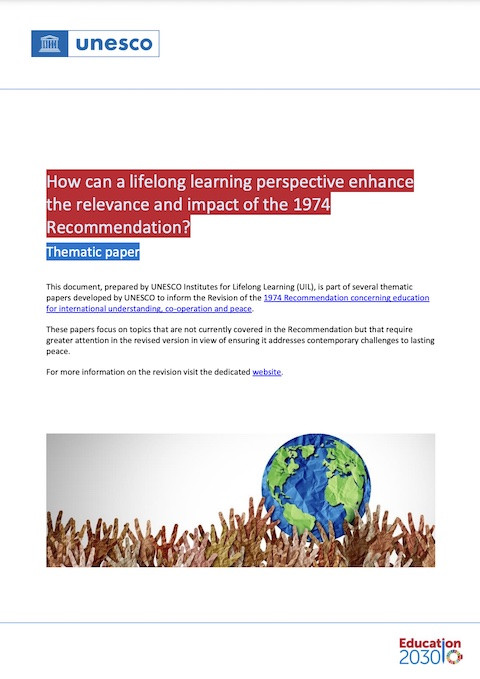 How Can a Lifelong Learning Perspective Enhance the Relevance and Impact of the 1974 Recommendation?: Thematic Paper Year of publication: 2022 Corporate author: UNESCO Institute for Lifelong Learning (UIL) Lifelong learning is rooted in the integration of learning with participation in society. It includes learning activities for people of all ages, in all life-wide contexts and spaces (family, school, community, workplace and more), and through a variety of modalities (formal, non-formal and informal).The purpose of this background paper is to propose ways in which the significance of lifelong learning can be reflected in the revision of the 1974 Recommendation concerning Education for International Understanding, Cooperation and Peace and Education relating to Human Rights and Fundamental Freedoms. It does this by recalling previous international contributions to the promotion of lifelong learning, including the landmark publications Learning to Be: The World of Education Today and Tomorrow (Faure et al., 1972) and Learning: The Treasure Within (Delors et al., 1996), which show the benefits of lifelong learning not only for employment but for the whole life of an individual and their participation in society.
 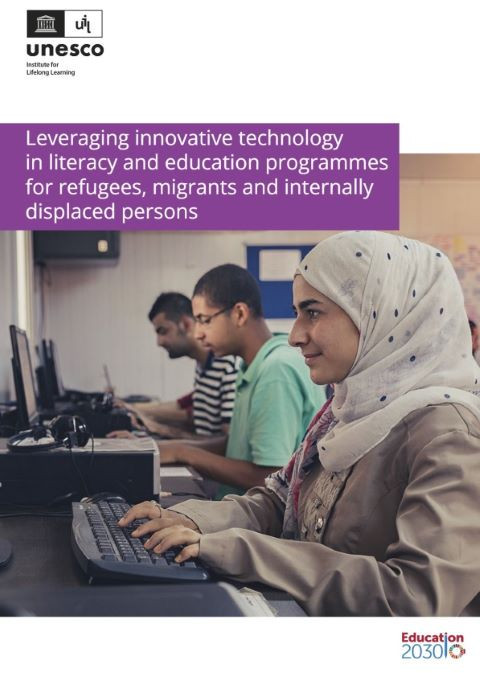 Leveraging Innovative Technology in Literacy and Education Programmes for Refugees, Migrants and Internally Displaced Persons Year of publication: 2022 Corporate author: UNESCO Institute for Lifelong Learning (UIL) The publication Leveraging innovative technology in literacy and education programmes for refugees, migrants and internally displaced persons brings together a selection of 21 case studies showcasing how ICTs can be integrated both innovatively and effectively into literacy and education programmes for refugees, migrants and IDPs. The case studies in this compilation demonstrate the potential of technology to support learners’ acquisition of literacy skills through arts-based learning, integrated literacy programmes, entrepreneurship training or in combination with tertiary education opportunities. They highlight the multitude of stakeholders that have come together across sectors to shape innovative responses that can make a real difference to learners’ lives. At the same time, the compilation shows the various modalities through which technology can be harnessed to deliver effective literacy and educational opportunities in diverse and challenging environments while recognizing and remaining sensitive to the needs of learners, be they refugees, IDPs or migrants.
  Institutional practices of implementing lifelong learning in higher education: research report Year of publication: 2023 Corporate author: UNESCO Institute for Lifelong Learning (UIL) | Shanghai Open University In many countries, higher education is gaining prominence as a means for the general population to engage in lifelong learning (LLL), whether for personal or professional development, or to participate in broader societal change. In some cases, national governments have introduced policies or funding instruments that create incentives for higher education institutions (HEIs) to align their offerings more closely with changing labour market demands and societal needs, and to expand access for groups previously underrepresented in higher education. Key trends in the higher education sector and the associated global socio-economic transformations were discussed in detail in the international survey report, which was published as part of the research project on the contribution of higher education institutions to LLL (UIL and SOU, 2023). This case study report moves from an international overview of the policies, structures and mechanisms that support LLL in higher education to the close study of institutional practices. It explores the interrelations between national policy environments and institutional strategies. It examines different approaches taken by universities to develop, implement and monitor LLL activities, and further provides practical examples of how universities engage with diverse groups of learners through their LLL mission. As such, this report’s value lies in offering both general insights into the implementation of LLL in HEIs, and case-specific descriptions and analyses of institutional policies and practices. 高等教育机构实施终身学习的实践: 研究报告 Year of publication: 2023 Corporate author: UNESCO Institute for Lifelong Learning (UIL) | Shanghai Open University 在许多国家,高等教育作为大众参与终身学习以获得个 人或职业发展或参与更广泛社会变革的一种手段,日益 受到重视。在某些情况下,国家政府推出了政策或资助 工具,为高等教育机构提供激励,使其提供的服务更紧 密地贴合不断变化的劳动力市场需求和社会需求,并为 以前在高等教育中代表性不足的群体提供更多学习机 会。国际调查报告详细介绍了高等教育部门的主要趋势 以及相关的全球社会经济转型,该报告作为高等教育机 构对终身学习贡献的研究项目一部分发布(终身学习研 究所和上海开放大学,2023年)。本案例研究报告提供了对支持高等教育终身学习的政 策、结构和机制的国际性概述,介绍了对机构实践的深 入研究,探讨了国家政策环境与机构性战略之间的相互 关系,研究了大学为开发、实施和监测终身学习活动而采 取的不同方法,进一步提供了大学如何通过其终身学习 任务与不同群体学习者互动的实例。因此,本报告价值 在于既提供了高等教育机构实施终身学习的一般见解, 也提供了对机构政策和实践具体案例的描述和分析。
  Report on Improving the Care System in the Republic of Uzbekistan: A Path to Economic Growth, Poverty Reduction and Improved Quality of Life Year of publication: 2024 Author: Maigul Nugmanova | Adiba Nuruddinova Corporate author: UNDP Uzbekistan This Report explores the crucial role of care system policies in sustainable equitable economic growth, poverty reduction, and improved quality of life, aligning with UN Sustainable Development Goals. Conducted within the framework of the initiative of UNDP in Uzbekistan, the study aims to analyze current care provision, identify critical points, and propose recommendations for an inclusive and sustainable care economy, contributing to overall economic growth and reducing regional inequalities. Отчет по совершенствованию системы ухода в Республике Узбекистан: Путь к Экономическому Росту, Борьбе с Бедностью и Повышению Качества Жизни Year of publication: 2024 Author: Maigul Nugmanova | Adiba Nuruddinova Corporate author: UNDP Uzbekistan В этом докладе исследуется решающая роль политики системы ухода в устойчивом справедливом экономическом росте, сокращении бедности и повышении качества жизни в соответствии с Целями ООН в области устойчивого развития. Исследование, проведенное в рамках инициативы ПРООН в Узбекистане, направлено на анализ текущего предоставления медицинской помощи, определение критических точек и предложение рекомендаций для инклюзивной и устойчивой экономики ухода, способствующей общему экономическому росту и снижению регионального неравенства.
 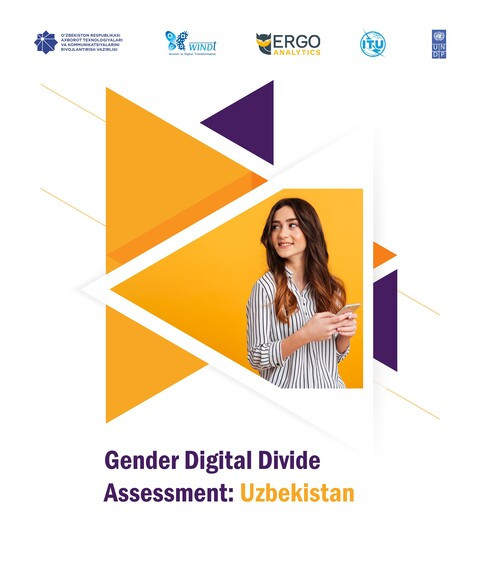 Gender Digital Divide Assessment: Uzbekistan Year of publication: 2023 Corporate author: UNDP Uzbekistan The Government of the Republic of Uzbekistan, realizing the negative impact of the gender digital divide on the development of the country, has included the issue of ensuring gender digital equality among its priorities. The United Nations Development Programme in Uzbekistan conducted an assessment to measure and analyze the main factors affecting the digital inclusion (or isolation) of women and girls, and recommended a number of actions that the Government can take to address existing gaps. Оценка гендерного цифрового разрыва: Республика Узбекистан Year of publication: 2023 Corporate author: UNDP Uzbekistan Правительство Республики Узбекистан, осознавая негативное влияние гендерного цифрового разрыва на развитие страны, включило вопрос обеспечения гендерного цифрового равенства в число своих приоритетов. Программа развития ООН в Узбекистане провела оценку с целью измерения и анализа основных факторов, влияющих на цифровую инклюзию (или изоляцию) женщин и девочек, и рекомендовала ряд действий, которые правительство может предпринять для устранения существующих разрывов.
  Curriculum GlobALE: Competency Framework for Adult Educators Year of publication: 2021 Corporate author: DVV International | German Institute for Adult Education, Leibniz Centre for Lifelong Learning | International Council for Adult Education | UNESCO Institute for Lifelong Learning (UIL) This publication introduces Curriculum globALE, a basic com- petence framework for the training of adult educators worldwide. By providing a modular, competency-based framework and cross-curricular approach, Curriculum globALE is unique in its aim to professionalize adult learning and education (ALE) on an international scale, via the competencies that support adult educators to work in any educational setting, field or form.It strives to ensure that educators’ knowledge, competencies, skills and attitudes are of a professional standard.Curriculum globALE is suitable to different contexts and its character and structure enables its inclusion in diverse national education systems.Curriculum globALE aims to: enhance the professionalization of ALE by providing a common reference framework for adult learning programmes and a suggested standard of competencies for adult educators; support ALE providers in the design and implementation of ‘train-the-trainer’programmes; foster knowledge exchange and mutual understanding between adult educators worldwide. Curriculum GlobALE: Un curriculum mondial sur l’apprentissage et l’éducation des adultes Year of publication: 2021 Corporate author: DVV International | German Institute for Adult Education, Leibniz Centre for Lifelong Learning | International Council for Adult Education | Institut de l’UNESCO pour l’apprentissage tout au long de la vie (UIL) Cette publication présente Curriculum globALE, un cadre de compétences de base pour la formation des éducateurs d'adultes dans le monde. En fournissant un cadre modulaire basé sur les compétences et une approche interdisciplinaire, Curriculum globALE est unique dans son objectif de professionnaliser l'apprentissage et l'éducation des adultes (ALE) à l'échelle internationale, via les compétences qui aident les éducateurs d'adultes à travailler dans n'importe quel cadre éducatif, champ ou formulaire. Il s'efforce de veiller à ce que les connaissances, les compétences, les aptitudes et les attitudes des éducateurs soient d'un niveau professionnel. Curriculum globALE est adapté à différents contextes et son caractère et sa structure permettent son inclusion dans divers systèmes éducatifs nationaux. Curriculum globALE vise à : améliorer la professionnalisation de l'AEA en fournissant un cadre de référence commun pour les programmes d'apprentissage des adultes et une proposition de norme de compétences pour les éducateurs d'adultes soutenir les prestataires d'AEA dans la conception et la mise en œuvre de programmes de « formation des formateurs » favoriser l'échange de connaissances et la compréhension mutuelle entre les éducateurs d'adultes du monde entier.