
Resources
Explore a wide range of valuable resources on GCED to deepen your understanding and enhance your research, advocacy, teaching, and learning.
3,229 Results found
 Establishing a Monitoring System for Global Citizenship Education in South Korea: A Preliminary Study with a Focus on Policy Area Year of publication: 2019 Corporate author: APCEIU The Asia-Pacific Centre of Education for International Understanding published a report titled "Establishing a Monitoring System for Global Citizenship Education in South Korea: A Preliminary Study with a Focus on Policy Area." The purpose of this research report is to provide implications for the development of indicators for Global Citizenship Education (GCED) which is the target 4.7 of the Sustainable Development Goals (SDGs) and the establishment of a Korean monitoring system for data accumulation. It is difficult for GCED to set up common indicators to monitor the implementation of each country, as it comprehensively deals with the direction and contents of education, whereas other targets of SDG4 are relatively clear targets and goals such as guaranteeing educational opportunities and improving educational conditions. For this reason, this study proposed Korean indicators based on domestic and international trends and analysis of issues concerning the development of SDG4.7.1 indicators and reviewed the domestic status in implementation based on them, thereby contributing to the development and consolidation of global indicators development and monitoring systems in the future. 세계시민교육 지표 개발 및 데이터 축적을 위한 모니터링 체제 구축 연구 Year of publication: 2019 Corporate author: 유네스코 아시아태평양 국제이해교육원 유네스코 아태교육원은 “세계시민교육 지표 개발 및 데이터 축적을 위한 모니터링 체제 구축 연구” 보고서를 발간하였다. 본 연구보고서는 지속가능발전목표(SDGs)의 4번 교육 목표 중 7번째 세부목표(SDG4.7)인 세계시민교육의 지표 개발과 데이터 축적을 위한 국내 모니터링 체제 구축을 위한 시사점을 제공하는데 목적이 있다. SDG4.7이 추구하는 세계시민교육은 교육기회의 보장이나 교육여건 개선 등 비교적 대상과 목표가 명확한 다른 SDG4의 세부목표와 달리 교육의 방향성과 내용을 포괄적으로 다루기 때문에, 국가별로 이행 여부를 모니터링하기 위한 공동의 지표 설정에 어려움이 있다. 이와 같은 이유로, 본 연구에서는 SDG4.7.1 지표 개발에 대한 국내외 동향과 쟁점 분석을 토대로 국내 지표를 제안하고 이를 바탕으로 국내 이행 수준을 검토함으로써, 향후 글로벌 지표 개발과 모니터링 체제를 발전 및 공고화하는데 기여하고자 하였다.
 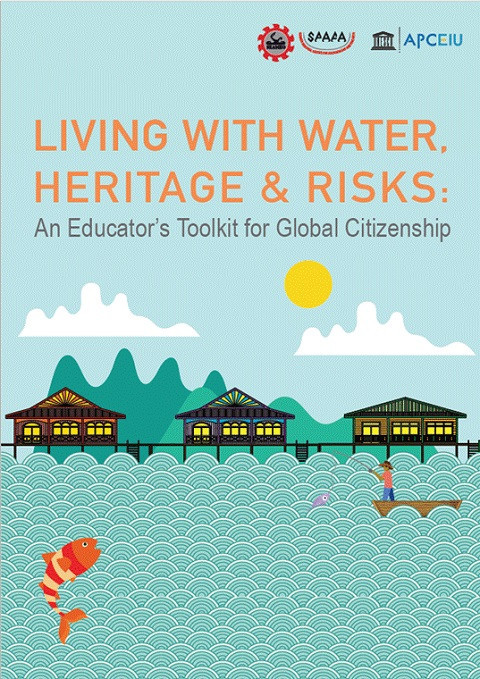 Living with Water, Heritage & Risks: An Educator’s Toolkit for Global Citizenship Year of publication: 2019 Corporate author: APCEIU | SEAMEO. Regional Centre for Archeology and Fine Arts (SPAFA) Designed to help young global citizens gain an awareness of the culture-nature connection in heritage conservation, this toolkit provides visual learning aids and ideas to explore water heritage in Southeast Asia. It is composed of an Educator's Booklet, Activity Sheets, and Inquiry-Based and Self-Learning Photocards. Learners are encouraged to THINK, SHARE and ACT in ways that will enable them to become critical thinkers who can make compassionate and ethical decisions.
 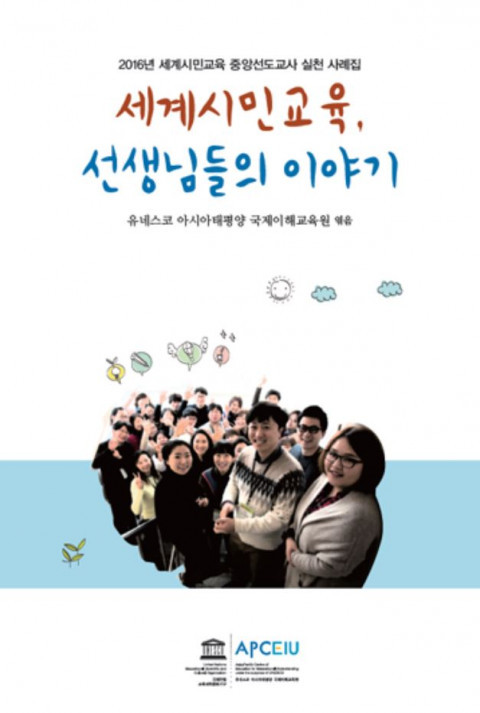 세계시민교육, 선생님들의 이야기: 2016년 세계시민교육 중앙선도교사 실천 사례집 Year of publication: 2016 Author: 이진희 | 고아라 | 박성기 | 서지혜 | 이원향 | 최제오 | 박지윤 | 남윤정 | 박지현 | 류진원 | 정명자 | 박재준 | 정혜선 | 홍윤빈 | 정용민 | 정영남 Corporate author: 유네스코 아시아태평양 국제이해교육원 유네스코 아태교육원이 출간한 “세계시민교육, 선생님들의 이야기”는 2016년 세계시민교육 중앙 선도교사로 활동했던 선생님들의 세계시민교육 현장 이야기들을 모아 만든 책이다. 교사들이 생각하는 세계시민교육이란 무엇인지, 학교에서 세계시민교육을 어디부터 시작하면 좋을지, 세계시민교육을 하면 어떤 의미 있는 변화가 일어날지와 같은 질문들에 대한 답을 찾고 있는 중이라면 이 책이 자신만의 답을 찾을 수 있도록 도와주는 친절한 길잡이가 되어줄 것이다. <목차>여는 글더불어 사는 시민을 위한 세계시민교육 - 이진희(화정초등학교)세계시민의 능력과 자질을 키워주기 - 고아라(명인초등학교)실천으로 현실을 변화시키는 배움 - 박성기(하남고등학교)행동하는 세계시민을 위한 씨뿌리기 - 서지혜(평원초등학교)작지만 멋진 세계시민을 위한 교육 - 최제오(동산초등학교)작은 몸짓이 모여 큰 바다를 이루기를 바라며 - 박지윤(송원초등학교)동아리 활동과 결합한 세계시민교육 - 남윤정(강서고등학교)충만한 공동의 미래 준비하기 - 박지현(한솔중학교)고맙고 행복한 세계시민교육 바이러스 - 류진원(간재울중학교)교실에서의 세계시민교육 - 정명자(다운중학교)어울림을 위한 세계시민교육 - 홍윤빈(정원여자중학교), 정용민(건국대학교사범대학부속고등학교), 정혜선(충무초등학교), 박재준(공연초등학교)작은 것에서 시작하는 세계시민교육- 정영남(김천여자고등학교)수원에서 아프리카 친구들을 돕는 법 - 이원향(동신초등학교)
 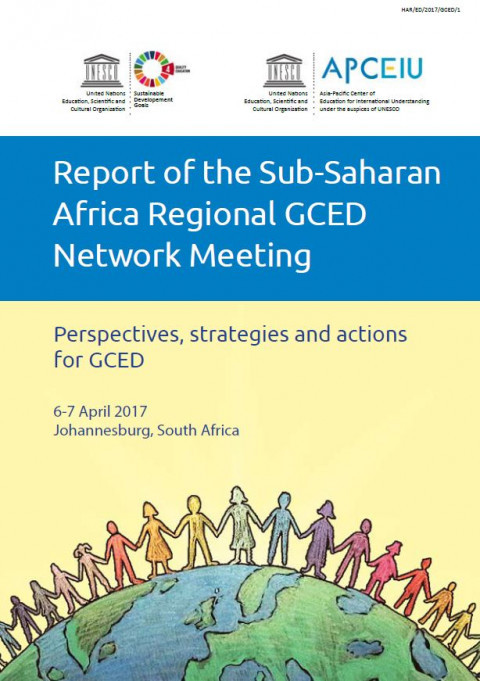 Report of the Sub-Saharan Africa Regional GCED Network Meeting: Perspectives, Strategies and Actions for GCED Year of publication: 2017 Author: Gertie Steukers | Carolyn Medel-Añonuevo | Abdoul Wahab Coulibaly Corporate author: UNESCO Harare | APCEIU An increasingly globalized world has raised questions about what constitutes meaningful citizenship as well as about its global dimensions. Global Citizenship Education (GCED) aims to empower learners to assume active roles to face and resolve global challenges and to become proactive contributors to a more peaceful, tolerant, inclusive and secure world.Education is the most important tool for equipping young people, our future generation of leaders, with the knowledge, skills and attitudes to tackle prejudice and hostility, and to build more peaceful, tolerant and equitable societies. While there are different understandings and manifestations of GCED in different countries, GCED in its various forms is fast becoming an important and necessary component of education systems in sub-Saharan Africa and across the world.The commitment of actors around the world to promoting GCED has contributed highly to the development of GCED, including raising awareness and catalysing action. Furthermore, this has led to the incorporation of GCED in the Sustainable Development Goals (SDGs) through Target 4.7, which captures the clear call for an education that addresses the needs of the twenty-first century, empowering learners to act towards a more peaceful, just, inclusive and sustainable world.GCED reflects the aim of education to go beyond just access and ‘ensure inclusive and equitable quality education and promote lifelong opportunities for all’ in the next fifteen years.UNESCO Regional Office for Southern Africa (ROSA) and the Asia-Pacific Centre of Education for International Understanding (APCEIU) invited partners across Africa for the 2017 Sub-Saharan Africa GCED Regional Network Meeting on 6–7 April 2017 in Johannesburg. The meeting was designed to jumpstart the formation of the Africa Regional GCED Network, map different GCED programmes in the region, and explore areas of possible collaboration in light of solidifying regional action on GCED.
  Global Citizenship Education Tools and Piloting Experiences of Four Countries: Cambodia, Colombia, Mongolia and Uganda Year of publication: 2018 Author: Opertti Renato | Hyekyung Kang | Magni Giorgia Corporate author: UNESCO International Bureau of Education (IBE) | APCEIU This report analyses the progresses made by Cambodia, Colombia, Mongolia and Uganda in the development and piloting of GCED tools, designed within the framework of UNESCO Asia-Pacific Centre of Education for International Understanding (APCEIU)’s and International Bureau of Education (IBE)’s three-year cooperation project, “Global Citizenship Education Curriculum Development and Integration”. Based on the needs identified through the situational analyses carried out during Phase I, the four countries have developed tailored tools to mainstream GCED in their own context and piloted them during Phase II. Through an in-depth analysis of the tools as well as of their piloting processes, this report aims at understanding the extent to which GCED concepts are embedded and integrated into these tools and the way in which these tools contribute to the overall GCED teaching and learning practices in each context. What results from the findings is that the four countries, despite some setbacks due mainly to the strict timeline, have made significant progress in developing innovative strategies to integrate GCED principles into their education policies and practices. Finally, this report concludes with the suggestions for these tools to be effectively implemented during Phase III, particularly for this project, and for any further initiative around GCED areas.
  3rd Global Capacity-Building Workshop on GCED: Final Report Year of publication: 2018 Corporate author: APCEIU This report provides an overview of the activities and outcomes of the 3rd Global Capacity-Building Workshop on GCED held in Seoul, Republic of Korea from 29 August - 11 September 2018.APCEIU organized the 3rd Global Capacity-Building Workshop on GCED with the aim of enhancing the capacities of teacher educators in developing countries on utilizing GCED. This 2-week intensive workshop provided participants opportunities to better understand the concept and principles of GCED, while engaging in meaningful dialogues and sharing experiences with educators from different countries, cultures, and contexts, and to develop their own action plans.
  Youth Advocacy Kit on Global Citizenship Education Year of publication: 2018 Corporate author: APCEIU APCEIU has published the Youth Advocacy Kit on Global Citizenship Education (GCED) in order to provide youth leaders a guideline on advocacy for GCED. Targeting youth activists who currently participate in GCED programmes around the world, the kit offers the overview of GCED and advocacy as well as tips and tools to effectively implement advocacy campaign for GCED in local and global context. Furthermore, by sharing cases of youth advocacy in diverse fields, this kit also provides the real life examples which can be easily referred by youth interested in GCED advocacy. <Table of Contents> Youth Advocacy Kit on GCEDChapter 1 - What is Global Citizenship Education (GCED)?Chapter 2 - What is GCED Advocacy?Chapter 3 - Youth as an Active Agent for GCEDChapter 4 - Sharing Cases of Youth AdvocacyChapter 5 - Youth Initiatives on GCED
  1st International Conference on GCED (SangSaeng no. 47 winter 2016) Year of publication: 2017 Corporate author: APCEIU The 47th issue of SangSaeng, a special edition dedicated to the successful hosting of the 1st International Conference on GCED, has been released. This winter edition introduces how the Conference served as a platform for sharing GCED ideas. This issue also covers the various sessions conducted at the Conference and highlights some of the important moments. 3 Director’s Message4 Introduction to the Conference5 Outside the Sessions6 Opening CeremonyThe Rise of GCED and APCEIU’s Role in Promoting GCED Worldwide10 Focus10. [Keynote Session] GCED for Sustainable and Peaceful Societies: What Practices and Pedagogies? 16 Panel Discussion] What Does It Mean to Be a Global Citizen22 [GCED Talks] Learning to Live Together28 Concurrent Session IActors of GCED32 Concurrent Session IIThematic Approaches to GCED36 Concurrent Session IIILearning Process and Assessment 40 After the Conference42 Best Practices42. Planting the Seeds of Bhutan’s Agricultural Progress46 Little Circle for Embracing Diversity, Bridging Differences50 LetterCJK Youths as Global Citizens: Sharing Perspectives, Extending Identities 제1회 세계시민교육 국제회의 (상생 제47호 2016년 겨울호) Year of publication: 2017 Corporate author: 유네스코 아시아태평양 국제이해교육원 47호 <상생>이 제 1회 세계시민교육 국제회의의 성공적 개최를 소개하는 특집호로 발간되었다. 이번 겨울호는 이번 국제회의가 어떤 방식으로 세계시민교육에 대한 경험과 활동을 공유하는 장을 제공하였는지 살펴보고, 회의를 구성한 각 섹션에서 다루어진 내용들을 소개한다. 3 발간사4 국제회의 소개5 회의장 밖에는 (기타행사)6 개회사세계시민교육의 부상과 아태교육원의 역할10 포커스[기조세션] 지속가능하고 평화로운 사회를 만들기 위한 세계시민교육: 어떤 실천과 페다고지가 필요한가? 16 [패널토크] 내가 생각하는 세계시민이란?22 [GCED Talks] 더불어 살기 위한 교육28 분과세션 I세계시민교육 실천가32 분과세션 II세계시민교육의 주제별 접근36 분과세션 III세계시민교육의 학습과정 및 평가 40 국제회의를 마치며참가자들의 후기42 국제이해교육 모범사례42 부탄의 농업 발전에 싹을 틔우기46 차이를 받아들이고 다양성을 육성하는 NGO, Little Circle50 APCEIU에 보내는 편지세계시민이 된 한·중·일 대학생, 관점을 나누고 경계를 허물다