
Resources
Explore a wide range of valuable resources on GCED to deepen your understanding and enhance your research, advocacy, teaching, and learning.
3,797 Results found
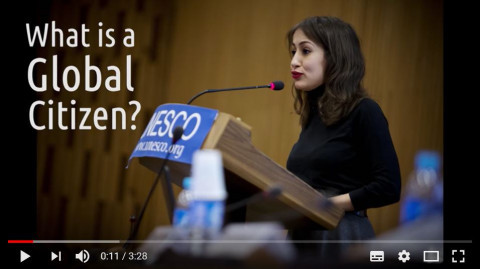 La citoyenneté mondiale est ... Year of publication: 2015 Corporate author: Organisation des Nations Unies pour l'éducation, la science et la culture (UNESCO) Les participants du deuxième Forum de l'UNESCO sur l’éducation à la citoyenneté mondiale (ECM) Construire des sociétés pacifiques et durables: la préparation pour l'après-2015 (28-30 Janvier 2015, Siège de l'UNESCO, Paris) à réfléchir sur ce que la citoyenneté mondiale est. Le Forum a été organisé par la Division de l'enseignement, l'apprentissage et du contenu, Secteur de l'éducation, l'UNESCO, avec le soutien de l'Autriche, le Sultanat d'Oman et la République de Corée, et First Éducation Mondiale Initiative du Secrétaire général de l'ONU (GEFI).
 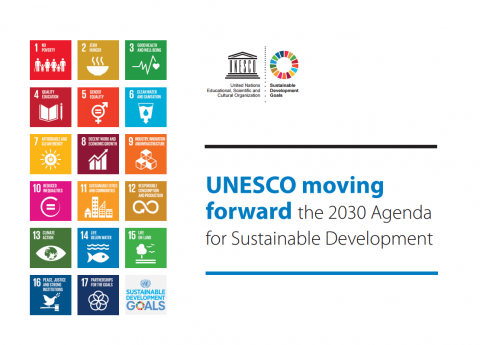 La UNESCO avanza la Agenda 2030 para el Desarrollo Sostenible Year of publication: 2017 Corporate author: Organización de las Naciones Unidas para la Educación, la Ciencia y la Cultura (UNESCO) The United Nations 2030 Agenda for Sustainable Development, with its 17 Sustainable Development Goals, sets forth a bold new framework for development cooperation over the next 15 years. This agenda aspires to ensure prosperity and well-being for all women and men, while protecting our planet and strengthening the foundations for peace. ЮНЕСКО: работа по осуществлению Повестки дня в области устойчивого развития на период до 2030 г. Year of publication: 2017 Corporate author: Организация Объединенных Наций по вопросам образования, науки и культуры (UNESCO) The United Nations 2030 Agenda for Sustainable Development, with its 17 Sustainable Development Goals, sets forth a bold new framework for development cooperation over the next 15 years. This agenda aspires to ensure prosperity and well-being for all women and men, while protecting our planet and strengthening the foundations for peace. 教科文组织助力 《2030年可持续发展议程》 Year of publication: 2017 Corporate author: 联合国教科文组织 (UNESCO) The United Nations 2030 Agenda for Sustainable Development, with its 17 Sustainable Development Goals, sets forth a bold new framework for development cooperation over the next 15 years. This agenda aspires to ensure prosperity and well-being for all women and men, while protecting our planet and strengthening the foundations for peace.
  Study on challenges in the development of local equality indicators: a human-rights-centred model; Commitment 2 of the Ten-Point Plan of Action Year of publication: 2010 Author: Klaus Starl | Jennifer Pinno Corporate author: UNESCO | European Training and Research Centre for Human Rights and Democracy (Austria) The study aims at: Providing a theoretical fundament of ECCAR Indicators to measure racism or (in)equality1 and to evaluate municipal anti-discrimination policies (framework concept), and Discussing related legal and practical issues such as legality and reliability of available ‘ethnic’ data (legal and practical preconditions) in the context of ECCAR’s endeavours to set up an ECCAR-wide applicable system of monitoring racism, discrimination, equality and respective municipal policies. The study is structured in three parts. In the first part, preliminary questions concerning legality and practical feasibility of ‘ethnic’ data collection as a prerequisite for the development of and work with adequate indicators will be discussed. The second part deals with the conceptualization of human rights law as the constructing principle of ECCAR Indicators. It includes the discussion of the proposed model of the ECCAR-ADIX. The third part of the study describes practical examples of indicator use in selected ECCAR member cities. The section shows various approaches and gives evidence on different attempts by municipalities to set up fact-based anti-racism policies but also highlights the variety of methods, data, measurement topics, goals, etc.
 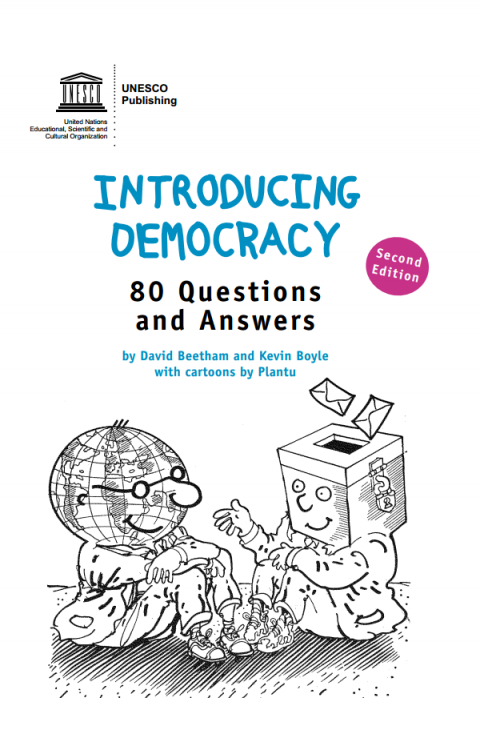 Introducing democracy: 80 questions and answers Year of publication: 2009 Author: David Beetham | Kevin Boyle Corporate author: UNESCO Humorously illustrated by Plantu, the famous cartoonist of the French newspaper Le Monde, this book is a valuable tool for all those who want to know more about democracy and human rights, whether it be students, activists, civil servants, or simply as interested citizens. What is democracy? What is the relation between democracy and individual rights? Is majority rule always democratic? How can democracy be maintained and improved? This book tackles these and other questions about democracy, covering six broad areas: basic concepts and principles; free and fair elections; open and accountable government; individual rights and their defence; democratic or civil society; the future of democracy. Démocratie: questions et réponses Year of publication: 2009 Author: David Beetham | Kevin Boyle Corporate author: Organisation des Nations Unies pour l'éducation, la science et la culture (UNESCO) Humorously illustrated by Plantu, the famous cartoonist of the French newspaper Le Monde, this book is a valuable tool for all those who want to know more about democracy and human rights, whether it be students, activists, civil servants, or simply as interested citizens. What is democracy? What is the relation between democracy and individual rights? Is majority rule always democratic? How can democracy be maintained and improved? This book tackles these and other questions about democracy, covering six broad areas: basic concepts and principles; free and fair elections; open and accountable government; individual rights and their defence; democratic or civil society; the future of democracy. الديمقراطية: أسئلة وأجوبة Year of publication: 2009 Author: David Beetham | Kevin Boyle Corporate author: منظمة الأمم المتحدة للتربية والعلم والثقافة (UNESCO) Humorously illustrated by Plantu, the famous cartoonist of the French newspaper Le Monde, this book is a valuable tool for all those who want to know more about democracy and human rights, whether it be students, activists, civil servants, or simply as interested citizens. What is democracy? What is the relation between democracy and individual rights? Is majority rule always democratic? How can democracy be maintained and improved? This book tackles these and other questions about democracy, covering six broad areas: basic concepts and principles; free and fair elections; open and accountable government; individual rights and their defence; democratic or civil society; the future of democracy. UNESCO moving forward the 2030 Agenda for Sustainable Development Year of publication: 2017 Corporate author: UNESCO The United Nations 2030 Agenda for Sustainable Development, with its 17 Sustainable Development Goals, sets forth a bold new framework for development cooperation over the next 15 years. This agenda aspires to ensure prosperity and well-being for all women and men, while protecting our planet and strengthening the foundations for peace. L'UNESCO fait avancer le Programme de développement durable à l'horizon 2030 Year of publication: 2017 Corporate author: Organisation des Nations Unies pour l'éducation, la science et la culture (UNESCO) The United Nations 2030 Agenda for Sustainable Development, with its 17 Sustainable Development Goals, sets forth a bold new framework for development cooperation over the next 15 years. This agenda aspires to ensure prosperity and well-being for all women and men, while protecting our planet and strengthening the foundations for peace.