
Resources
Explore a wide range of valuable resources on GCED to deepen your understanding and enhance your research, advocacy, teaching, and learning.
1,451 Results found
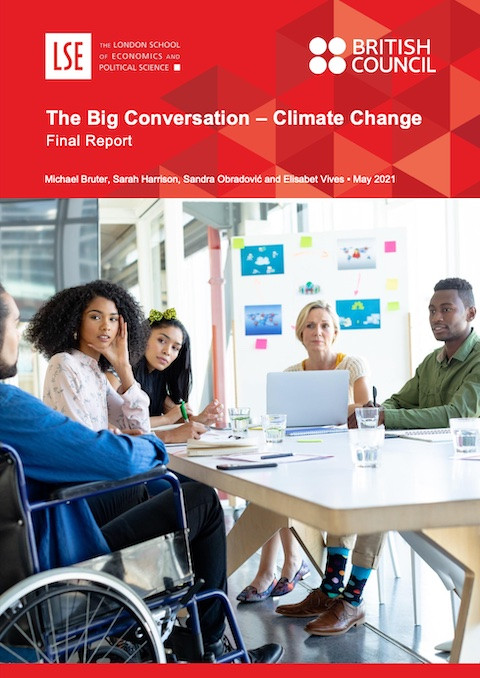 The Big Conversation: Climate Change; Final Report Year of publication: 2021 Author: Michael Bruter | Sarah Harrison | Sandra Obradović | Elisabet Vives Corporate author: British Council | London School of Economics and Political Science This research draws on experience from the field of international cultural relations as well as the latest academic research on values, behaviours and norms to understand more about how we can create the conditions for co-operation on shared global challenges.It delivers new insight on values and attitudes towards climate change among the populations of China, India, Japan and Mexico – selected to represent a diverse range of major world economies who are also important players in the global climate change debate.The research also draws on the experience of international cultural relations experts to provide new insight on how to strengthen international cooperation on climate change and the important role that cultural relations can play in supporting that.
 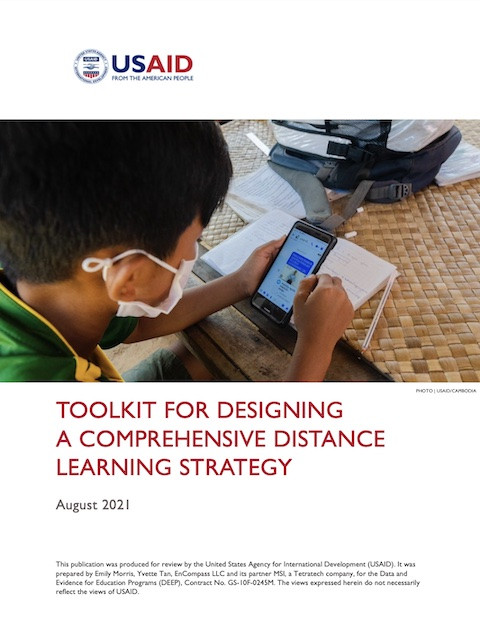 Toolkit for Designing a Comprehensive Distance Learning Strategy Year of publication: 2021 Author: Emily Morris | Yvette Tan Corporate author: United States Agency for International Development (USAID) The purpose of this toolkit is to provide practical guidance (tools, examples, and resources) for designing a comprehensive distance learning strategy that covers an entire education sector or system.
 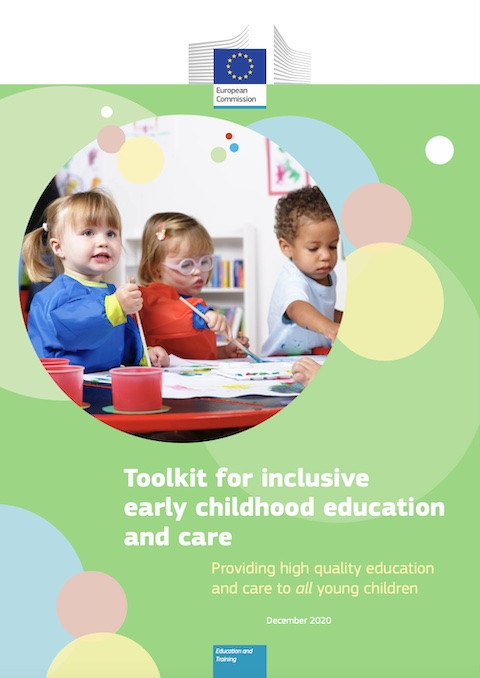 Toolkit for Inclusive Early Childhood Education and Care (ECEC): Providing High Quality Education and Care to All Young Children Year of publication: 2021 Corporate author: European Commission | European Union (EU) Early childhood education and care (ECEC) is the first step on the lifelong learning ladder. It provides young children with professional support to grow, learn and flourish. While it benefits all children, it is even more crucial to children who may face additional needs or difficulties due to individual or family circumstances, e.g. children living in poverty or precarious conditions, children with disabilities or special learning needs, or children from a migrant background or from a minority ethnic community. All children must therefore be able to benefit from high quality ECEC, independently from their individual or family circumstances. It helps them develop to the best of their abilities and supports their well-being. The European Union 2019 Council Recommendation for High-Quality Early Childhood Education and Care Systems offers a Quality framework for ECEC to support Member States to work towards achieving higher quality and more inclusive ECEC systems. The 2020 Communication from the European Commission on achieving the European Education Area by 2025 announced the release of a European toolkit for inclusion in ECEC, drawing on exchange of best practice and the input of experts and stakeholders. The Toolkit for inclusion in ECEC recalls political commitments made e.g. in the European Pillar of Social Rights, policy recommendations which have been adopted by EU Member States as well as research findings. They all converge towards the need and will to develop more inclusive ECEC systems and settings. To ensure equity for all children in accessing and benefitting from ECEC, the toolkit includes a set of practical solutions and measures to inspire ECEC policy makers at the national, regional or local level, as well as ECEC practitioners. It includes examples of good practice in ECEC settings and identifies useful ideas and resources to inspire leaders and staff across Europe to progress towards practice that is more inclusive. The toolkit aims to inspire decision-makers to use the examples of good practice to create appropriate conditions that can benefit all children and families.
  Media and Information Literacy in the Digital Age: How to Teach the Teachers Year of publication: 2021 Corporate author: UNESCO Institute for Information Technologies in Education (IITE) This publication includes articles reflecting some trends in the development of the digital media environment, approaches to the formation of media and information literacy (MIL), practices describing the experience of implementing MIL training for teachers and students of various levels and forms of education. The publication also contains recommendations aimed to integrate MIL into teacher education and professional development.
  Global Education and Climate Change: Looking at Climate Change Education Through the Lens of Global Education Year of publication: 2020 Author: Douglas Bourn | Knut Hjelleset Corporate author: Global Education Network Europe (GENE) This briefing aims to address how Global Education can contribute to the discourses and practices around education for climate change. It will also look at the benefits of seeing Climate Change Education through the lens of Global Education. There will be a recognition that within Global Education, themes of social justice, importance of a pedagogy of hope, participatory learning approaches and the skills of critical thinking can enrich the traditional approaches to learning about climate change. Finally, the briefing notes the impact of the various movements by young people on the climate emergency, and what can be learnt from these activities for Global Education policies and practices.
 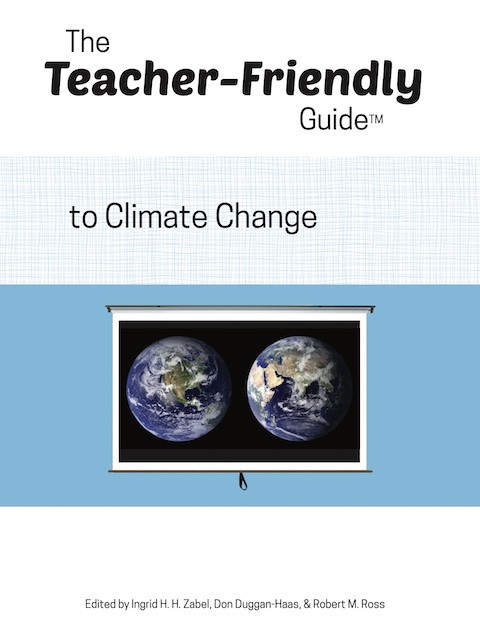 The Teacher-Friendly Guide to Climate Change Year of publication: 2017 Author: Ingrid H. H. Zabel | Don Duggan-Haas | Robert M. Ross Corporate author: Paleontological Research Institution This book includes both the basics of climate change science and perspectives on teaching a subject that has become socially and politically polarized. The focus audience is high school Earth science and environmental science teachers, and it is written with an eye toward the kind of information and graphics that a secondary school teacher might need in the classroom. It is the tenth book in our Teacher-Friendly Guide series.
 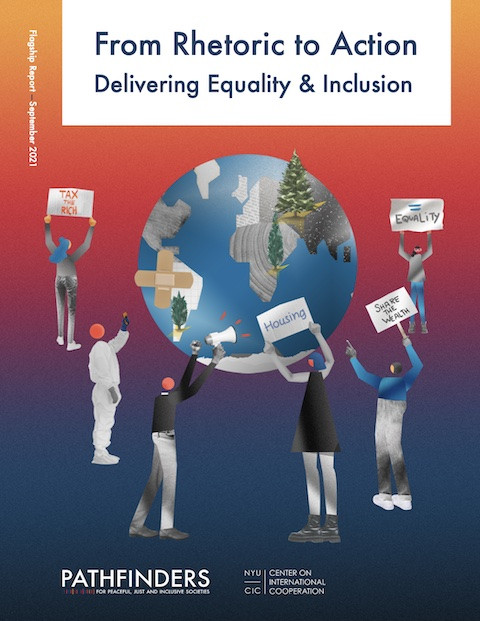 From Rhetoric to Action: Delivering Equality & Inclusion Year of publication: 2021 Author: Faiza Shaheen | Alexander Bossakov | Avner Cohen | Amanda Lenhardt | Nendirmwa Noel | Paula Sevilla Núñez | Paul von Chamier Corporate author: Pathfinders for Peaceful, Just and Inclusive Societies, NYU. Center on International Cooperation This flagship report of the Pathfinders Grand Challenge on Inequality and Exclusion is about the solutions that will deliver equality and inclusion.The report constructs a bridge between the rhetoric of “build back better” and action: a bridge between promise and progress. It underlines the need for renewed social contracts between citizens, civil society, the private sector, and governments, as well as between high and low- and middle-income countries. These social contracts must be built to serve future generations, to guard against climate breakdown and pandemics while delivering respect, opportunity, and justice for all.This report should serve as a practical handbook for policymakers and influencers; as a source of possibility for the public; and, as a call to all political leaders to act.
 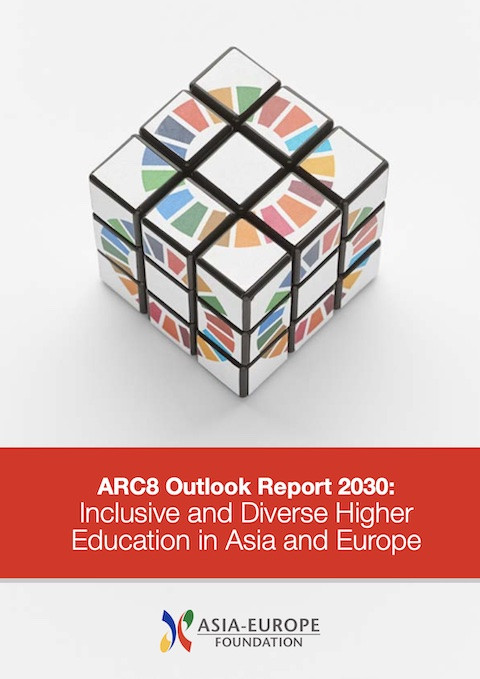 ARC8 Outlook Report 2030: Inclusive and Diverse Higher Education in Asia and Europe Year of publication: 2021 Corporate author: Asia-Europe Foundation (ASEF) The ARC8 Outlook Report 2030 on ʻInclusive and Diverse Higher Education in Asia and Europe’ was initiated with the objective of better understanding the current state, policies and practices of inclusion in higher education and identifying actions that could accelerate greater inclusion in a post-pandemic era.The ARC8 Outlook Report outlines emerging issues that could grow into major challenges and/ or opportunities in the coming 10 years related to inclusion in higher education. Inputs for the report came from an in-depth consultation process and from previous research done by Asian and European stakeholders. The Report consists of 4 chapters which analyse the future of inclusion from different perspectives: Inclusive Learning and Teaching in a Digital World Inclusive and Flexible Lifelong Learning Pathways Inclusive International Mobility of People and Knowledge Equitable Access and Success in Higher Education
  Violence and Urban Life Year of publication: 2011 Corporate author: Complexus Poverty is not the cause of violence in cities. In Brazil, an example used by the antrhopologist from the university of California interviewed by Eduard Punset, Teresa caldeira, and author of the book "Cities of walls", there was always poverty but the level of violence has viaried. In this video, the question is raised about how violence has changed and why this phenomenom has changed. Violencia y vida urbana Year of publication: 2011 Corporate author: Complexus La pobreza no es la causa de la violencia en las ciudades. En Brasil, ejemplo que emplea la antropóloga de la Universidad de California entrevistada por Eduard Punset, Teresa Caldeira, y autora del libro "Ciudad de muros", siempre hubo pobreza pero el nivel de violencia ha variado. En este video se plantea la pregunta sobre cómo ha variado la violencia y el porque de este fenómeno.