
Resources
Explore a wide range of valuable resources on GCED to deepen your understanding and enhance your research, advocacy, teaching, and learning.
1,187 Results found
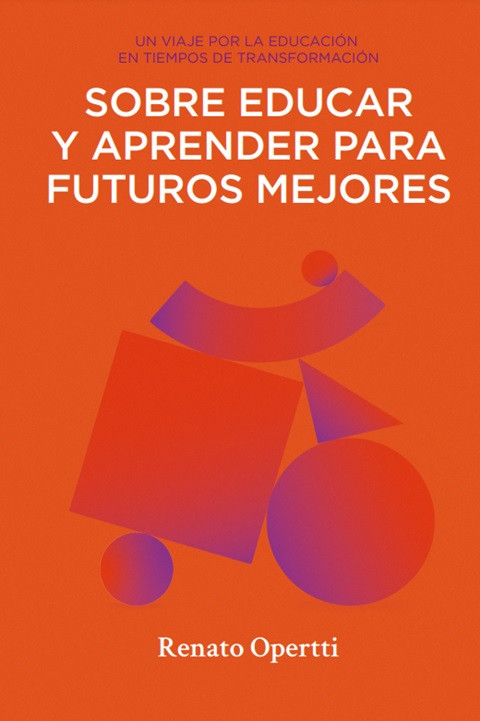 Sobre educar y aprender para futuros mejores: Un viaje por la educación en tiempos de transformación Year of publication: 2024 Author: Renato Opertti El autor del libro, Renato Opertti presidente del Consejo Asesor de la OEI, nos presenta esta publicación que divide en seis capítulos: Sobre lo global y lo local, Sobre Iberoamérica, oportunidades y desafíos pendientes, Sobre pensar, educar y aprender, Hallazgos de pisa y la resiliencia de los sistemas educativos, A propósito de Meirieu y los educadores y Sobre las nuevas generaciones y los futuros de la educación en Uruguay.
  The Impact of AI on Curriculum Systems: Towards an Orbit-Shifting Dialogue (In-Progress Reflection; no. 32, 2019) Year of publication: 2019 Corporate author: UNESCO International Bureau of Education (IBE) ‘Artificial Intelligence’ (AI) refers to the theory and development of computer systems able to perform tasks normally requiring human intelligence. In order to achieve transformational change in contemporary curriculum systems and learning environments, we need to engender an orbitshifting dialogue about the potential relationship between AI and education, in terms of both independent variables (threats), and dependent variables (opportunities). Through such a dialogue, we need to create foresight indicators that can predict the process of this relationship. It is, however, crucial that the relationship between AI and education is strong and directly proportionate. If the potential of the relationship is not exploited sufficiently, then underdeveloped education systems will lag behind and fail to achieve their potential for transformation, whether radical or incremental. Indeed, some may even become obsolete. The paper contends that in order to effectively contribute to the knowledge economy and to sustainable development in the age of the 4th Industrial Revolution (characterized by a fusion of cyber-physical technologies) modern educational systems need to overcome obstacles to innovation in order to maximize the potential for transformative change. To achieve this will require an ‘orbital shift’ in educational planning, practice and resourcing, to enable schools to respond more effectively to the rapidly changing needs of young people, society, the economy and environment in the third decade of the 21st century. Schools, educational institutions and environments, need to transform from being primarily spaces for teaching and taking exams, into spaces for innovation and personal learning, based on a culture of actively listening to the voices, choices, needs and goals of learners. Teachers need to become facilitators, coaches and mentors for learners. Schools need to create AI-enabled, flexible, collaborative working spaces. Visionary, energetic educational leaders need to communicate effectively with all stakeholders, including employers and parents, to inspire and manage change and smart decision-making to develop schools of the future. The aim of this reflection is to initiate an ‘orbit-shifting’ dialogue about the potential of AI applications to transform all components of the curriculum system to meet emergent 21st century educational goals. The conceptualization aims to explore the variable roles and impact of curriculum learning and assessment on these emerging educational goals. Theme 1 of the paper outlines the concepts and characteristics of a range of existing AI systems and their potential to enhance teaching learning and assessment. Theme 2 reflects on the potential to embrace AI systems across the curriculum system. Theme 3 proposes an action model to enable AI to have an ‘orbit shifting impact’ on all the components of the curriculum system (i.e. learners, teachers, learning environments, leadership and management, content, pedagogy and assessment) by enhancing opportunities for individualization, creativity and uniqueness.
 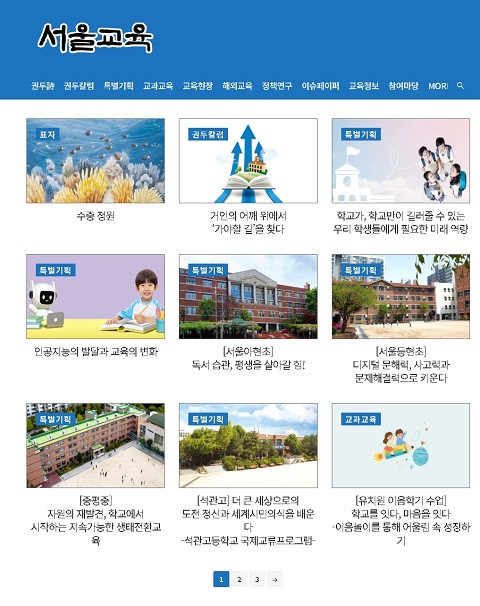 서울교육 2024년 여름호 (제66권 통권 255호) Year of publication: 2024 Corporate author: 서울특별시교육청 교육연구정보원 권두칼럼: 거인의 어깨 위에서 ‘가야할 길’을 찾다 특별기획:- 학교가, 학교만이 길러줄 수 있는 우리 학생들에게 필요한 미래 역량- 인공지능의 발달과 교육의 변화- [서울아현초] 독서 습관, 평생을 살아갈 힘!- [서울등현초] 디지털 문해력, 사고력과 문제해결력으로 키운다- [중평중] 자원의 재발견, 학교에서 시작하는 지속가능한 생태전환교육- [석관고] 더 큰 세상으로의 도전 정신과 세계시민의식을 배운다: 석관고등학교 국제교류프로그램 교과교육:- [유치원 이음학기 수업] 학교를 잇다, 마음을 잇다: 이음놀이를 통해 어울림 속 성장하기- [특수학급 국제 공동 수업] 바다를 넘고 장애를 넘는 특별한 우정 프로젝트- [초등학교 생태전환교육 수업] 기후 위기? 예술로 공존!- [중학교 역지사지 공존형 토론 수업] 경쟁이 아닌 공존을 위한 토론!교과교육- [고등학교 인공지능 활용 수업] 인공지능과 함께 성장하는 수학수업- [학급운영 현장보기] 육개장 사발면반 제자들과의 시간- [체험·문화·예술활동 Ⅰ] 예술의 언어로 소통하며 공동체를 이루다: 중학교 맞춤형 예술 교육- [체험·문화·예술활동 Ⅱ] 나를 발견하게 하고, 나를 표현하게 하는 “예술교육”: 고등학교 협력종합예술활동- [학교현장 미리보기] AI 디지털교과서를 통한 미래교육 엿보기 정책연구: 학교수업 내 에듀테크 활용 정도가 중학생의 교육적 성장에 미치는 영향 분석 정책연구 교육정보:- 2024년 강화된 교육활동 보호 정책, 이것만큼은 꼭 알아두세요- 돌봄과 배움이 공존하는 서울형 늘봄학교- 수업-평가의 연계성 강화를 위한 초 · 중등학교 정보공시(교수학습 및 평가계획 관련) 개정 안내- 메타버스는 정말 끝났을까? 참여마당:- [웹툰] 알찬 여름방학 보내기- [수기] 뮤지컬 배우가 꿈이었던 교사, 학교에서 뮤지컬을 꿈꾸다- [서평] 쉬운 공공의 언어는 인권이다: 이건범 『언어는 인권이다』를 읽고- [후기] 모니터단 2024 ‘봄호’ 후기 갤러리: “어린이·청소년의 미래역량 신장을 위해 노력합니다!”
 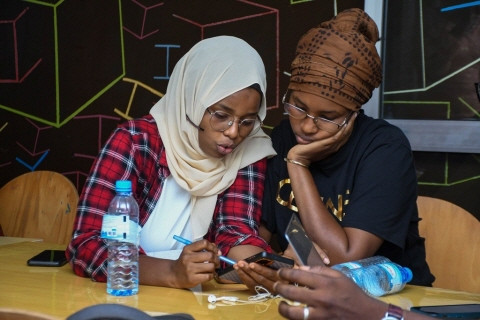 Fighting Against Disinformation and Hate Speech Year of publication: 2024 Corporate author: Association of Guinean Bloggers (ABLOGUI) This online MOOC is completely free. It is offered by the Association des Blogueurs de Guinée (ABLOGUI) through the IMPACT project (Implication of Digital Media in the Active Prevention of Conflicts and Tensions). It aims at raising awareness among young Guineans of the dangers of misinformation and hate speech, and to equip them with the knowledge and skills they need to combat information disorder in a digital world. Lutte contre la désinformation et les propos haineux Year of publication: 2024 Corporate author: Association of Guinean Bloggers (ABLOGUI) Ce MOOC en ligne est entièrement gratuit. Il est proposé par l'Association des Blogueurs de Guinée (ABLOGUI) dans le cadre du projet IMPACT (Implication des médias numériques dans la prévention active des conflits et des tensions). Il vise à sensibiliser les jeunes Guinéens aux dangers de la désinformation et des discours de haine, et à les doter des connaissances et des compétences nécessaires pour lutter contre le désordre de l'information dans un monde numérique.
  Are Journalists Objective?: The Keys to the Media Year of publication: 2021 Corporate author: Centre pour l’éducation aux médias et à l’information (CLEMI) Dans cette vidéo proposée par Clemi nous suivons l'arrivée d'une nouvelle professeur de mathématiques dans un collège. Chacun a un avis très tranché sur elle. Kamel l’adore, Cindy ne comprend rien à ce qu’elle raconte, Leonard la trouve sévère et Fama l’aime bien. Qui a raison, qui a tort ? Peut-être un peu tout le monde… Chacun la regarde selon son point de vue. Cette comparaison permet de s'interroger sur l'objectivité des médias. In this video from Clemi, we follow the arrival of a new maths teacher at a secondary school. Everyone has a very strong opinion of her. Kamel adores her, Cindy doesn't understand a word she says Leonard thinks she's harsh and Fama likes her. Who's right, who's wrong? Maybe a bit of everyone... Everyone looks at her from their own point of view. This comparison raises questions about the objectivity of the media. Les journalistes sont-ils objectifs ? : Les clés des médias Year of publication: 2021 Corporate author: Centre pour l’éducation aux médias et à l’information (CLEMI) Dans cette vidéo proposée par Clemi nous suivons l'arrivée d'une nouvelle professeur de mathématiques dans un collège. Chacun a un avis très tranché sur elle. Kamel l’adore, Cindy ne comprend rien à ce qu’elle raconte, Leonard la trouve sévère et Fama l’aime bien. Qui a raison, qui a tort ? Peut-être un peu tout le monde… Chacun la regarde selon son point de vue. Cette comparaison permet de s'interroger sur l'objectivité des médias. In this video from Clemi, we follow the arrival of a new maths teacher at a secondary school. Everyone has a very strong opinion of her. Kamel adores her, Cindy doesn't understand a word she says Leonard thinks she's harsh and Fama likes her. Who's right, who's wrong? Maybe a bit of everyone... Everyone looks at her from their own point of view. This comparison raises questions about the objectivity of the media.
 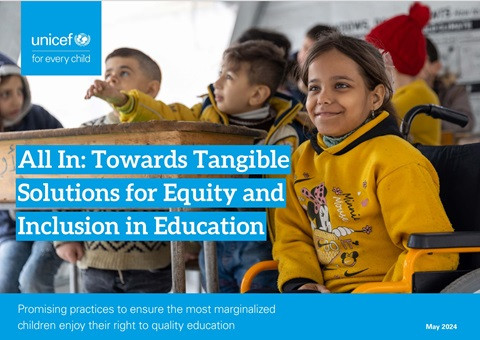 All In: Towards Tangible Solutions for Equity and Inclusion in Education Year of publication: 2024 Corporate author: United Nations Children's Fund (UNICEF) All In: Towards Tangible Solutions for Equity and Inclusion in Education showcases promising practices that were successfully implemented to ensure that inclusive education really does include all children, so that the most marginalized learners – including children with disabilities, children who are out of school, children living in poverty, marginalized girls, and refugee children – have access to quality education. While many of the promising practices were initiated in response to the COVID-19 crisis, or draw upon the pandemic experience, they go beyond the immediate focus of pre- or post-COVID-19 education systems to an overall view of child well-being and the need to focus on skills for the 21st century. Many of these practices have the potential to be applied more widely within education systems and can be adapted and replicated by stakeholders in any context where innovative and inclusive approaches are needed to protect and promote children’s right to education. Ingenuity, flexibility and a commitment to true inclusion and forward-looking policies are the common thread of promising practices in this document. This publication is a complementary resource to the 2021 report: Reimagining Girls’ Education: Solutions to Keep Girls Learning in Emergencies.
  Strengthening Social and Emotional Learning in Hybrid Modes of Education: Building Support for Students, Teachers, Schools and Families; A UNESCO-IBE Discussion Paper Year of publication: 2024 Corporate author: UNESCO International Bureau of Education (IBE) The COVID-19 pandemic intensified existing educational disparities globally, prompting a reevaluation of school curricula to include Social and Emotional Learning (SEL). This shift recognized the holistic needs of learners, teachers, and families, emphasizing competencies beyond traditional knowledge acquisition. Despite SEL's increasing global recognition, it is often absent from formal curricula, prompting the UNESCO-IBE to address this gap. This Discussion Paper explores the crucial role of SEL in the broader transformation of global education, particularly in the post-COVID-19 era. It highlights six key topics, presenting diverse experiences in integrating SEL into education. Experts from various fields contribute insights, focusing on socio-emotional and hybrid learning advancements worldwide. The report aims to inspire global change-makers, advocating for robust policies aligned with UNESCO's Futures of Education framework. This call to action aligns with the UNESCO-IBE's HELA initiative, promoting flexible hybrid learning models for crisis response and sustainable educational strategies in line with the UN Transforming Education Summit's vision.
 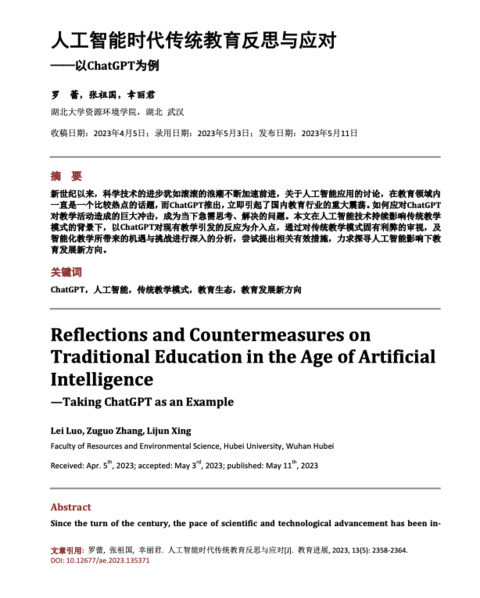 Reflections and Countermeasures on Traditional Education in the Age of Artificial Intelligence: Taking ChatGPT as an Example (Advances in Education; Vol.13, No.5) Year of publication: 2023 Author: 罗蕾 | 张祖国 | 幸丽君 Since the turn of the century, the pace of scientific and technological advancement has been increasing rapidly, like a rolling wave gaining momentum. As a result, the topic of artificial intelli-gence and its potential applications has remained a hot topic in the field of education. The introduction of ChatGPT had an immediate and significant impact on the domestic education industry. Addressing how to manage this impact on teaching activities has become an urgent issue that requires prompt consideration and resolution. In light of the ongoing impact of artificial intelligence technology on traditional teaching methods, this article focuses on ChatGPT’s response as an intervention point, delving into a thorough analysis of the inherent strengths and weaknesses of traditional teaching modes, as well as the opportunities and challenges presented by intelligent teaching. Through our analysis of artificial intelligence, we aim to propose effective measures and explore new directions for the development of education in its influence.