
Resources
Explore a wide range of valuable resources on GCED to deepen your understanding and enhance your research, advocacy, teaching, and learning.
3,229 Results found
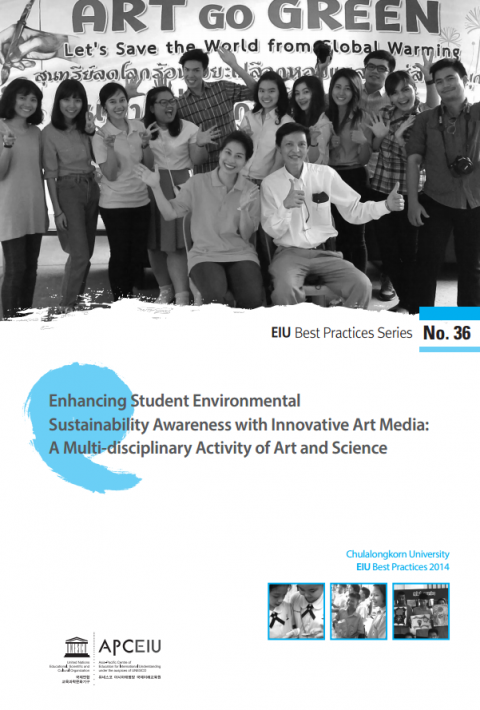 EIU Best Practices Series No. 36: Enhancing Student Environmental Sustainability Awareness with Innovative Art Media: A Multidisciplinary of Art and Science Activities Year of publication: 2014 Author: Poonarat Pichayapaiboon Corporate author: APCEIU This issue is one of APCEIU's EIU Best Practices Series, which aims to encourage educators, scholars, and activists to implement and share local initiatives on EIU. The Series No.36 introduces a multidisciplinary programme of art and science activities implemented in Thailand’s Chulalongkorn University to raise students’ awareness of environmental sustainability. Given the country’s large volume of green mussels, there is increasing concern for shell waste management and global warming. As students of varied age learn how shells can be transformed into pigment and clay, and use to create artwork as part of “Turning Waste into Art to Live a Sustainable Life” project, students come to appreciate the value of environmental protection and management. The programme is an exemplary case in which children are educated to live in harmony with the earth, following one of the key pillars of EIU.
 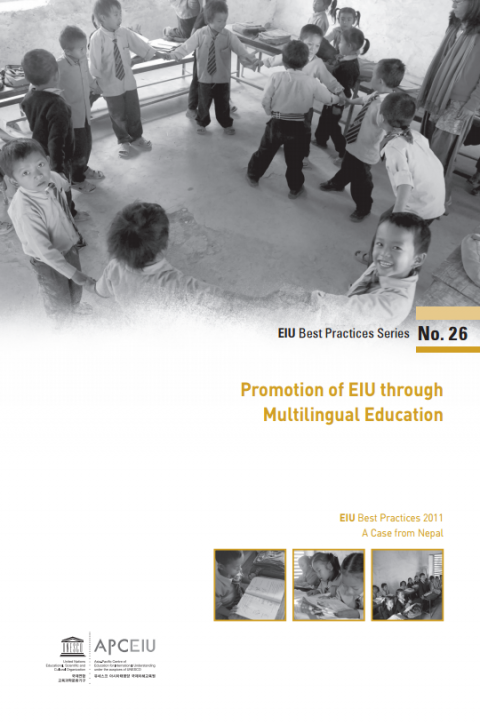 EIU Best Practices Series No. 26: Promotion of EIU through Multilingual Education Year of publication: 2011 Author: Narayan Prasad Subedi Corporate author: APCEIU This monograph is one of APCEIU's EIU Best Practices Series, which aims to encourage educators, scholars, and activists to implement and share local initiatives on EIU. The Series No.26 showcases a Multilingual Education Programme initiated by the Magar community in Nepal, that fosters EIU and multiculturalism. As there are over 200 local languages within Nepal, the MEP seeks to address the educational needs of non-Nepali speaking population. The program helps to enhance teacher capacity building, training manual development, and curriculum development, thereby allowing non-Nepali students to study in respective mother tongue.
 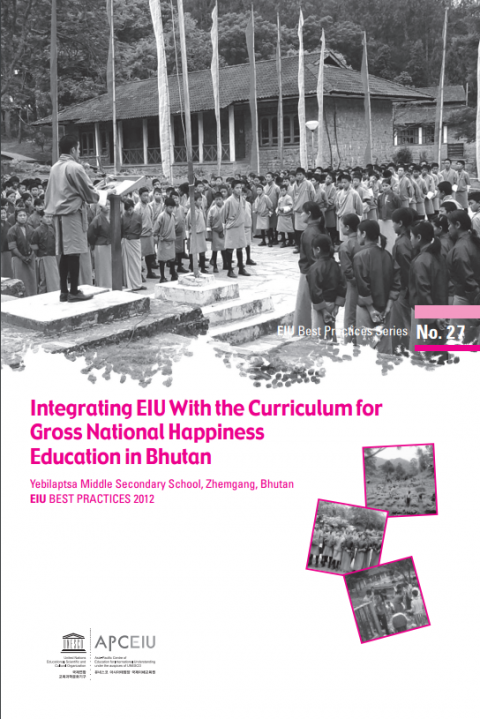 EIU Best Practices Series No. 27: Integrating EIU with the Curriculum for Gross National Happiness Education in Bhutan Year of publication: 2012 Author: Udhim Subba Corporate author: APCEIU This monograph is one of APCEIU's EIU Best Practices Series, which aims to encourage educators, scholars, and activists to implement and share local initiatives on EIU. The Series No.27 introduces Bhutan’s Yebilaptsa Middle Secondary School, in its effort to promote values of EIU as a complementary component of the Gross National Happiness Education efforts. Activities such as UNESCO club community activities, environmental learning, EIU cultural night, international exchange altogether exemplify effective ways to integrate EIU practices in the curriculum and extracurricular programs of schools.
 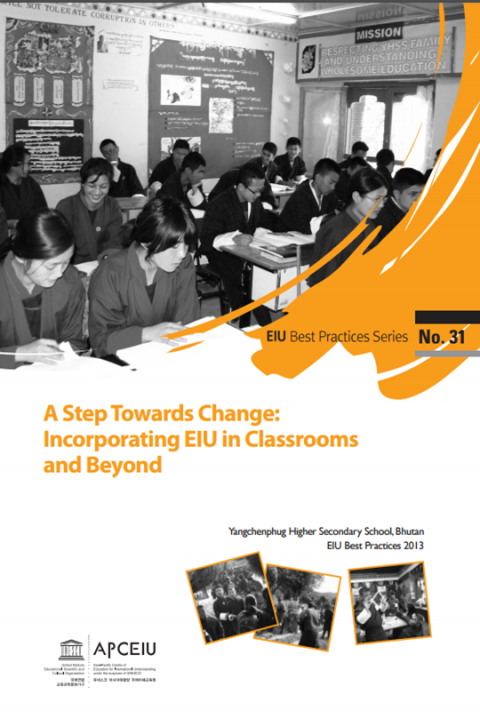 EIU Best Practices Series No.31: A Step towards Change: Incorporating EIU in Classrooms and Beyond Year of publication: 2013 Corporate author: APCEIU This monograph is one of APCEIU's EIU Best Practices Series, which aims to encourage educators, scholars, and activists to implement and share local initiatives on EIU. The Series No.31 introduces a case study in which Bhutanese school carried out activities and curriculum development to successfully promote EIU and ESD for students and teachers. While the school’s curriculum already embodies a degree of EIU, the school strived to be more creative in upholding the existing content by exploring newer issues of media ethics, human rights, culture, and environmental conservation for fruitful engagement. This in turn allowed the target audience to learn the values of EIU/ESD for a culture of peace.
 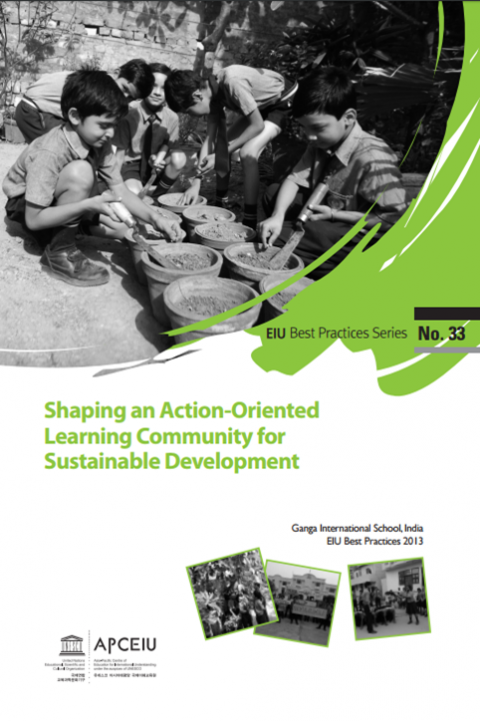 EIU Best Practices Series No.33: Shaping an Action-Oriented Learning Community for Sustainable Development Year of publication: 2013 Corporate author: Centre Asie-Pacifique d'éducation pour la compréhension internationale (APCEIU) This monograph is one of APCEIU's EIU Best Practices Series, which aims to encourage educators, scholars, and activists to implement and share local initiatives on EIU. The Series No.33 introduces a program implemented at the Ganga International School in India to promote eco-friendly and multicultural society. Teachers, students, and local community members engaged in awareness raising events such as Recycled Paper Art exhibition, Tree Plantation Drive, and Anti-Malaria Project, allowing everyone to absorb the meaning of EIU and sustainable development. Furthermore, students partook in seed exchange program and video conferences to discuss environmental issues with students of partner schools, which amplified impact at local and global levels.
 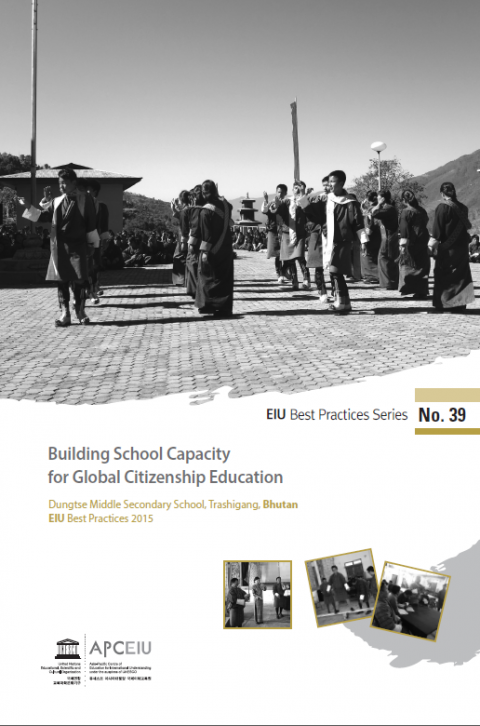 EIU Best Practices Series No.39: Building School Capacity for Global Citizenship Education: Dungtse Middle Secondary School, Trashigang, Bhutan Year of publication: 2015 Corporate author: APCEIU This monograph is one of APCEIU's EIU Best Practices Series, which aims to encourage educators, scholars, and activists to implement and share local initiatives on EIU. The Series No.39 introduces the Training of Trainers (TOT) program, a workshop for teachers to better incorporate GCED/EIU concepts into respective curriculum and school environment. Upon participating in the APCEIU training workshop, Mr. Yeshi Dorji from Dungtse Middle Secondary School in Bhutan sought to create a forum in which teachers and school officials can learn to incorporate GCED. Such exemplary initiative not only enhances capacity building of educators in the school, but also has potential to have larger impact in the local and regional communities.
 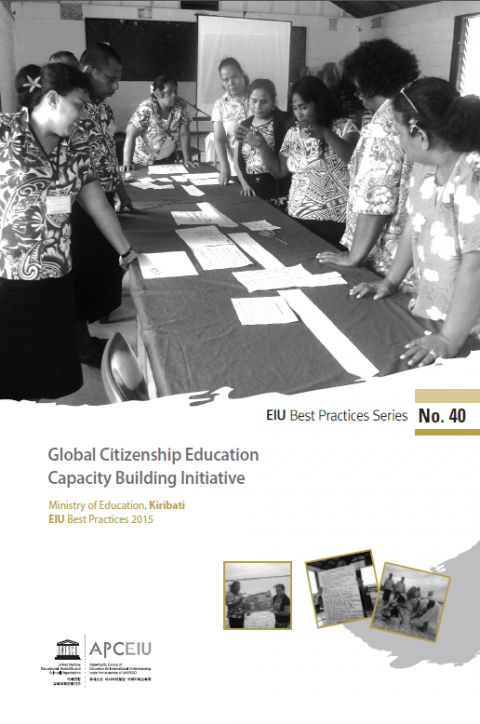 EIU Best Practices Series No.40: Global Citizenship Education Capacity Building Initiative: Misitry of Education, Kiribati Year of publication: 2015 Corporate author: APCEIU This monograph is one of APCEIU's EIU Best Practices Series, which aims to encourage educators, scholars, and activists to implement and share local initiatives on EIU. The Series No. 40 introduces a successful hosting of workshop on GCED in Kiribati. Considered the first of its kind in Kiribati, the workshop brought together education officers and teachers to learn about emerging concept of GCED and EIU and means for implementation. The exemplary workshop involving fieldtrips and seminars has created a wave of learning opportunities for key stakeholders at all levels, paving way to put GCED into practice.
 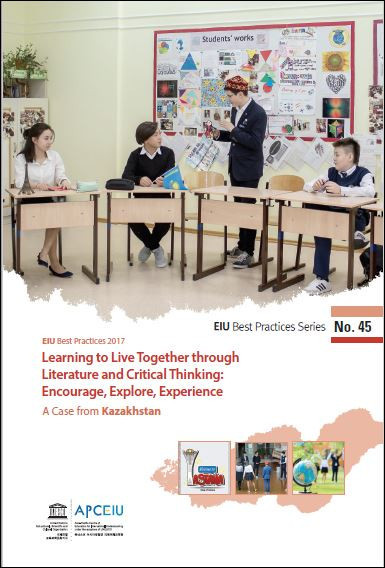 EIU Best Practices Series No.45: Learning to Live Together through Literature and Critical Thinking: Encourage, Explore, Experience Year of publication: 2017 Corporate author: APCEIU This monograph is one of APCEIU's EIU Best Practices Series, which aims to encourage educators, scholars, and activists to implement and share local initiatives on EIU. The Series No. 45 introduces a programme called “Learning to Live Together through Literature and Critical Thinking: Encourage, Explore, Experience.” With critical thinking at its heart, students learn the concepts of GCED through the perspectives of literary masterpieces, diverse cultural traditions, and teambuilding activities. By guiding students through the 3 Es, this exemplary programme motivates and equips students to demonstrate their global citizenship by launching useful projects for the city community.
 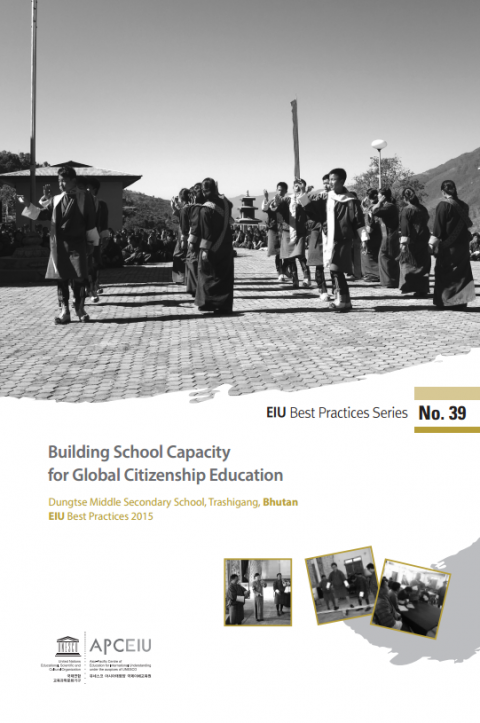 EIU Best Practices Series No. 39: Building School Capacity for Global Citizenship Education Year of publication: 2015 Corporate author: APCEIU This monograph is one of APCEIU's EIU Best Practices Series, which aims to encourage educators, scholars, and activists to implement and share local initiatives on EIU. The Series No.39 introduces the Training of Trainers (TOT) program, a workshop for teachers to better incorporate GCED/EIU concepts into respective curriculum and school environment. Upon participating in the APCEIU training workshop, Mr. Yeshi Dorji from Dungtse Middle Secondary School in Bhutan sought to create a forum in which teachers and school officials can learn to incorporate GCED. Such exemplary initiative not only enhances capacity building of educators in the school, but also has potential to have larger impact in the local and regional communities.
 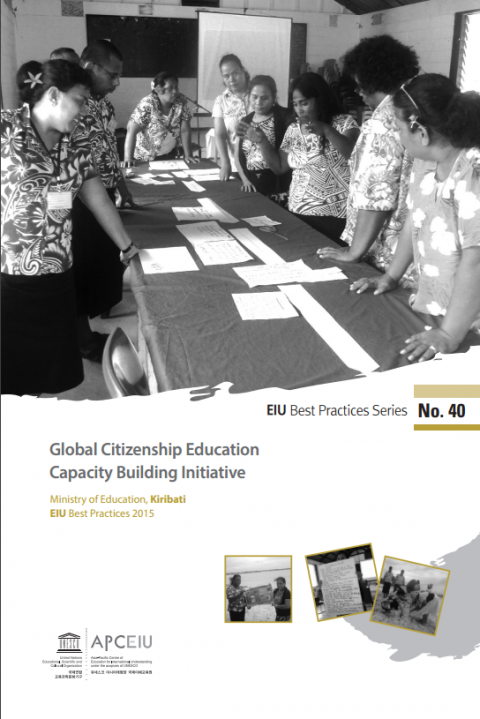 EIU Best Practices Series No. 40: Global Citizenship Education Capacity Building Initiative Year of publication: 2015 Author: Eretia Monite Corporate author: APCEIU This monograph is one of APCEIU's EIU Best Practices Series, which aims to encourage educators, scholars, and activists to implement and share local initiatives on EIU. The Series No. 40 introduces a successful hosting of workshop on GCED in Kiribati. Considered the first of its kind in Kiribati, the workshop brought together education officers and teachers to learn about emerging concept of GCED and EIU and means for implementation. The exemplary workshop involving fieldtrips and seminars has created a wave of learning opportunities for key stakeholders at all levels, paving way to put GCED into practice.