
Resources
Explore a wide range of valuable resources on GCED to deepen your understanding and enhance your research, advocacy, teaching, and learning.
2,772 Results found
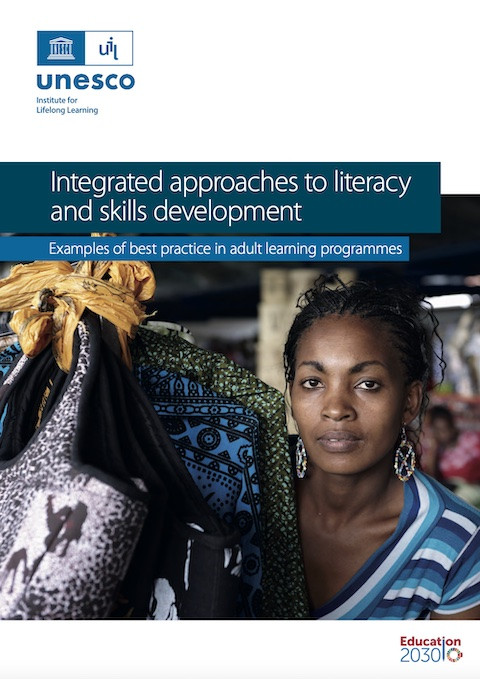 Integrated Approaches to Literacy and Skills Development: Examples of Best Practice in Adult Learning Programmes Year of publication: 2021 Corporate author: UNESCO Institute for Lifelong Learning (UIL) Since the first coronavirus case was reported to the World Health Organization in December 2019, millions of youth and adults around the globe – especially those with low literacy skills – have faced increased challenges to securing meaningful work and safeguarding their livelihoods. A more integrated approach to youth and adult learning and education, combining basic literacy, vocational and life skills, is needed now more than ever.This publication showcases selected examples of integrated youth and adult learning and education programmes featured in the UNESCO Effective Literacy and Numeracy Practices Database, also known as LitBase. Implemented in various social, cultural and economic contexts around the world, the programmes featured herein reveal not only the transformative potential that enhancing the quality of youth and adult learning and education can have, but also lay bare the hurdles and potential pathways to consider when planning effective integrated programmes.Integrated approaches to literacy and skills development: Examples of Best Practice in Adult Learning Programmes is useful not only for policy-makers, providers and educators who plan to implement integrated adult education programmes but also for those trying to help the most vulnerable groups reach their highest potential.
 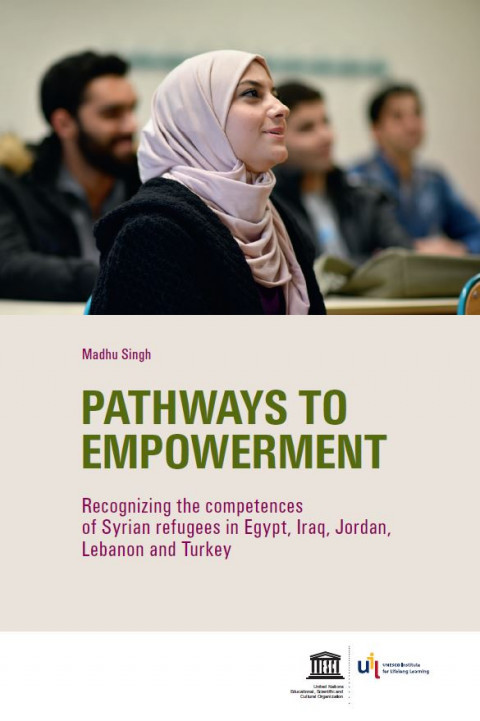 Pathways to Empowerment: Recognizing the Competences of Syrian Refugees in Egypt, Iraq, Jordan, Lebanon and Turkey Year of publication: 2018 Author: Madhu Singh Corporate author: UNESCO Institute for Lifelong Learning (UIL) For Syrian refugees living in Egypt, Iraq, Jordan, Lebanon and Turkey, recognition is a transformative mechanism that can help them enter or re-enter education, integrate into the world of work and participate fully in their host communities. However, while policy-makers in the region have prioritized the recognition, validation and accreditation of non-formal and informal learning, it remains a major challenge to develop systems that do this effectively. Pathways to Empowerment lays the essential groundwork for such a system, urging governments to develop comprehensive national strategies rather than ad hoc projects to recognize the competences of Syrian refugees. Its recommendations will contribute to dialogue between national authorities and social partners, and guide policy actions and RVA practices both in the region and in other parts of the world where recognition of refugees’ learning is a critical issue.
  Teachers’ Toolkit: UNESCO Schools Network in Canada Year of publication: 2020 Corporate author: Canadian Commission for UNESCO This toolkit draws on a variety of resources to give educators a range of activities and best practices for students of all ages. Students will learn about human rights and global citizenship, sustainable development, climate action and reconciliation with Indigenous peoples.
 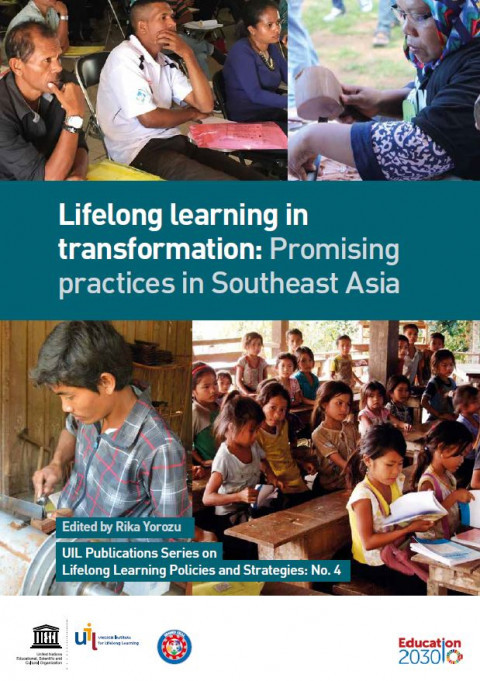 Lifelong Learning in Transformation: Promising Practices in Southeast Asia Year of publication: 2017 Author: Rika Yorozu Corporate author: UNESCO Institute for Lifelong Learning (UIL) This report is an outcome of a project on building a lifelong learning agenda in Southeast Asian countries, which aims to address the region’s remaining educational challenges in ensuring ‘inclusive and equitable quality education and promot[ing] lifelong learning opportunities for all’ (Goal 4 of the 2030 Agenda for Sustainable Development). By sharing promising policies and practices in implementing integrated lifelong learning from different perspectives, countries can learn from one another and move their visions for lifelong learning fully into practice. The publication documents a variety of promising practices from 11 countries, focusing particularly on the features critical to the promotion of lifelong learning for all; namely, inclusive and gender-responsive teaching and learning practices, recognition of learning outcomes from non-formal and informal learning, collaboration between social and economic development sectors and coherent national government policies and strategies. The report comprises three main sections: a reflection on lifelong learning in international and national documents, a collection of good practice drawn from their national reports, and a set of recommendations for policies and programmes promoting lifelong learning. It is hoped that these recommendations will stimulate discussion and new developments, in both policy and practice, in the region.
 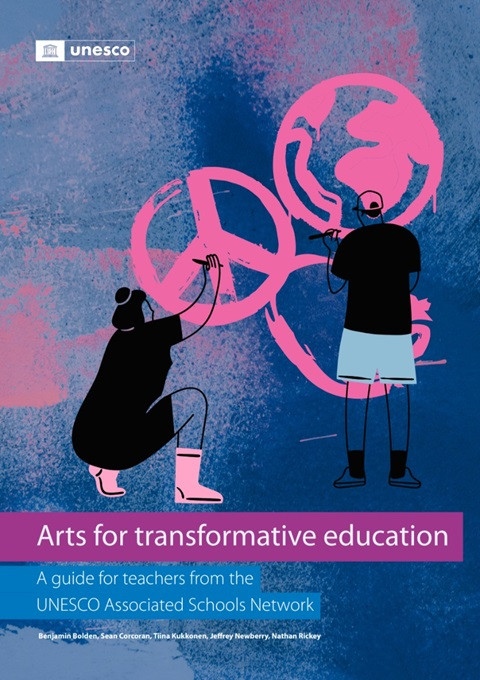 Arts for Transformative Education: A Guide for Teachers from the UNESCO Associated Schools Network Year of publication: 2024 Author: Benjamin Bolden | Sean Corcoran | Tiina Kukkonen | Jeffrey Newberry | Nathan Rickey Corporate author: UNESCO | Canadian Commission for UNESCO UNESCO’s vision of transformative education involves building learners’ capacities and empowering them to take action for a more peaceful and sustainable world. The arts offer tremendous potential for supporting learning that transforms individuals and communities. To fully realize that potential, teachers need to structure and support educational experiences that optimize what students will take away from them. This guide presents the research-informed Arts for Transformative Education model, a pioneering approach and thinking tool for teachers. The model was developed from data provided by over 600 teachers of the UNESCO Associated Schools network from 39 countries. The publication presents Learning Experience Descriptions and Snapshots illustrating how the model functions in real-world projects from around the globe, as well as Guidelines for Teachers outlining a step-by-step process for activating arts learning to empower transformative education.
  Global Citizenship Education in ASPnet Schools: An Ethical Framework for Action Year of publication: 2018 Author: Lynette Shultz | Maren Elfert Corporate author: Canadian Commission for UNESCO This report proposes global citizenship not so much as a curriculum subject or a pedagogical approach, but as an ethical position, a worldview that emphasizes human rights and earth rights, the interconnectedness of all human beings with each other, the animals and the planet, and an awareness of our global responsibilities in the face of the key challenges that we are facing today on our planet.This document is structured into three sections: It starts by introducing the UNESCO Associated Schools Network and the UNESCO perspective on global citizenship. In the second section, it shows the framework to implement GCED in schools, which will serve as the foundation for a whole school approach to the integration of a GCED perspective in curricula, lesson plans and broader school and community activities. It also gives some selected resources and examples in section three.
  Old Ways Are the New Way Forward: How Indigenous Pedagogy Can Benefit Everyone Year of publication: 2017 Author: Jean-Paul Restoule | Chaw-win-is Corporate author: Canadian Commission for UNESCO This report explores traditional Indigenous ways of teaching and how they are the way forward for "new" innovations in education.
 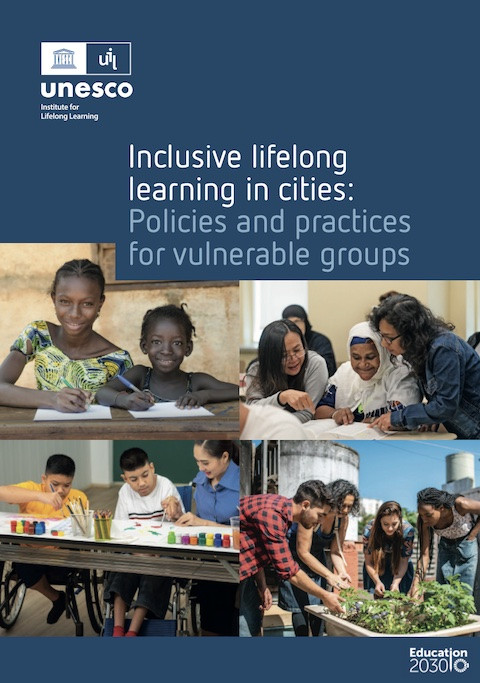 Inclusive Lifelong Learning in Cities: Policies and Practices for Vulnerable Groups Year of publication: 2021 Corporate author: UNESCO Institute for Lifelong Learning (UIL) This publication features chapters on learning cities’ endeavours to promote inclusive lifelong learning for vulnerable groups. It is based on research papers prepared for the fourth International Conference on Learning Cities, which took place in 2019 in Medellín, Colombia, under the theme ‘Inclusion – A principle for lifelong learning and sustainable cities’ and hence marks a transition between the learning city conferences of 2019 and 2021.
  From Emergency to Resilience: Building Healthy and Resilient Cities Through Learning; Fifth International Conference on Learning Cities, Yeonsu, Republic of Korea, 27 to 30 October 2021 Year of publication: 2022 Corporate author: UNESCO Institute for Lifelong Learning (UIL) Responding to and recovering from the COVID-19 pandemic remains an enormous challenge for cities worldwide. Lifelong learning lays the foundation for healthy and resilient cities. Hence, these municipalities are working hard to promote learning for health, and to build long-term resilience among their local populations so that they can deal both with the pandemic and with future emergencies, including those caused by climate change.The fifth International Conference on Learning Cities (ICLC 5) was hosted by UIL in collaboration with Yeonsu City, Republic of Korea, and took place from 27 to 30 October 2021. Entitled ‘From emergency to resilience: Building healthy and resilient cities through learning’, the conference attracted over 2,000 participants, who attended either online or in-person. This was an opportunity for cities to come together and share their responses to the COvID-19 pandemic.
  Lifelong Learning Opportunities for All: Medium-Term Strategy 2022–2029 Year of publication: 2022 Corporate author: UNESCO Institute for Lifelong Learning (UIL) The 2021 Futures of Education report calls for a new social contract for education, with recognition of an extended right to education throughout life. It represents an important restatement of the principles of UNESCO, and particularly its historic focus on our shared humanity, the universal right to education and its rich potential in addressing social, economic and political challenges. The need for a formal recognition of a universal entitlement to lifelong learning was also highlighted in the United Nations Secretary General’s Common Agenda report (also published in 2021) and is increasingly an avowed priority of the global development agenda for education, labour, human rights and sustainability. It is in this context that the UNESCO Institute for Lifelong Learning (UIL) advances its strategy for the next eight years. With this new Medium-Term Strategy (MTS), UIL aims to strike a balance between priorities rooted in the challenges faced by the global community and this new and emerging thinking about – and interest in – lifelong learning. The world must embrace lifelong learning if we are to build fairer societies and a sustainable world.