
Resources
Explore a wide range of valuable resources on GCED to deepen your understanding and enhance your research, advocacy, teaching, and learning.
2,657 Results found
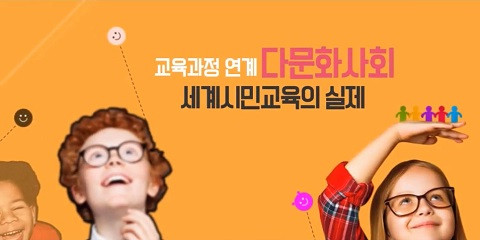 교육과정연계 다문화사회 세계시민교육의 실제 Year of publication: 2020 Corporate author: 한국교육학술정보원 본 영상자료는 교육과정과 연계한 실제 사례 중심의 교육 콘텐츠로, 모든 학생대상으로 효과적인 다문화사회 세계시민교육 방안을 모색할 수 있다.
 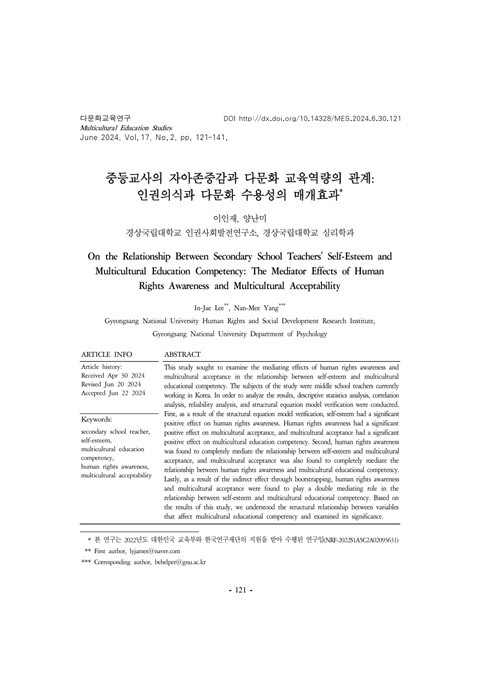 중등교사의 자아존중감과 다문화 교육역량의 관계: 인권의식과 다문화 수용성의 매개효과 (다문화교육연구; Vol. 17, No. 2) Year of publication: 2024 Author: 이인재 | 양난미 Corporate author: 한국다문화교육학회 본 연구는 자아존중감과 다문화 교육역량의 관계에서 인권의식과 다문화 수용성의 매개 효과를 살펴보고자 하였다. 연구대상은 국내 재직 중인 중등교사를 대상으로 하였다. 결과 분석을 위해 기술 통계 분석, 상관 분석, 신뢰도 분석, 구조 방정식 모형검증을 실시하였다. 연구결과는 첫째, 구조방정식 모형 검증 결과, 자아존중감은 인권의식에 유의한 정적인 영향을 미쳤다 인권의식은 다문화 수용성에 유의한 정적인 영향을 미쳤고 다문화 수용성은 다문화 교육역량에 유의한 정적 영향을 미쳤다. 둘째, 인권의식은 자아존중감과 다문화 수용성의 관계에서 완전매개하는 것으로 나타났고 다문화 수용성 또한 인권의식과 다문화 교육역량의 관계를 완전매개하는 것으로 나타났다. 마지막으로, 부트스트랩을 통해 간접효과를 본 결과 인권의식과 다문화 수용성은 자아존중감과 다문화 교육역량의 관계에서 이중매개를 하는 것으로 나타났다. 본 연구의 결과를 바탕으로 다문화 교육역량에 영향을 미치는 변인들의 구조적 관계를 이해하고 의의를 살펴보았다.
 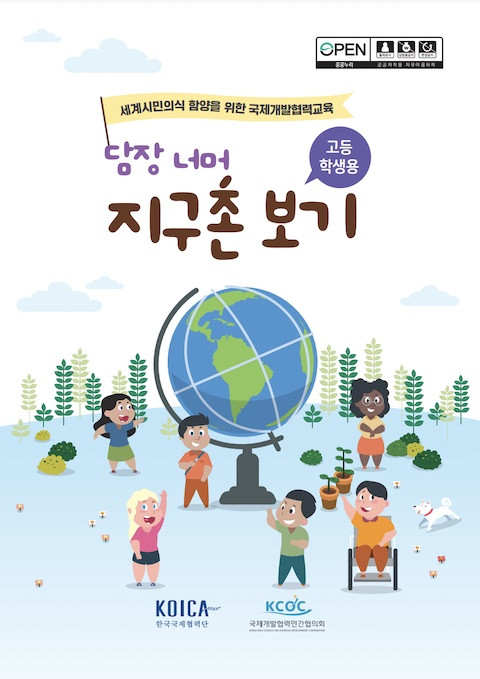 담장 너머 지구촌 보기: 세계시민의식 함양을 위한 국제개발협력교육; 고등학생용 Year of publication: 2021 Author: 이태주 | 김다원 | 김현주 Corporate author: 한국국제협력단 | 국제개발협력민간협의회 세계화, 문화다양성, 지속가능발전, 평화 등을 주제로 한 고등학생용 세계시민교육 교수학습자료로 다양한 모둠별 학습활동지를 담고 있다.본 자료는 한국국제협력단과 국제개발협력민간협의회에서 2021년 작성하여 공공누리 제4유형으로 개방한 ‘담장 너머 지구촌 보기: 세계시민의식 함양을 위한 국제개발협력교육; 고등학생용’ 을 이용하였으며 국제개발협력민간협의회 홈페이지(http://www.ngokcoc.or.kr)에서 다운로드 하실 수 있습니다.
 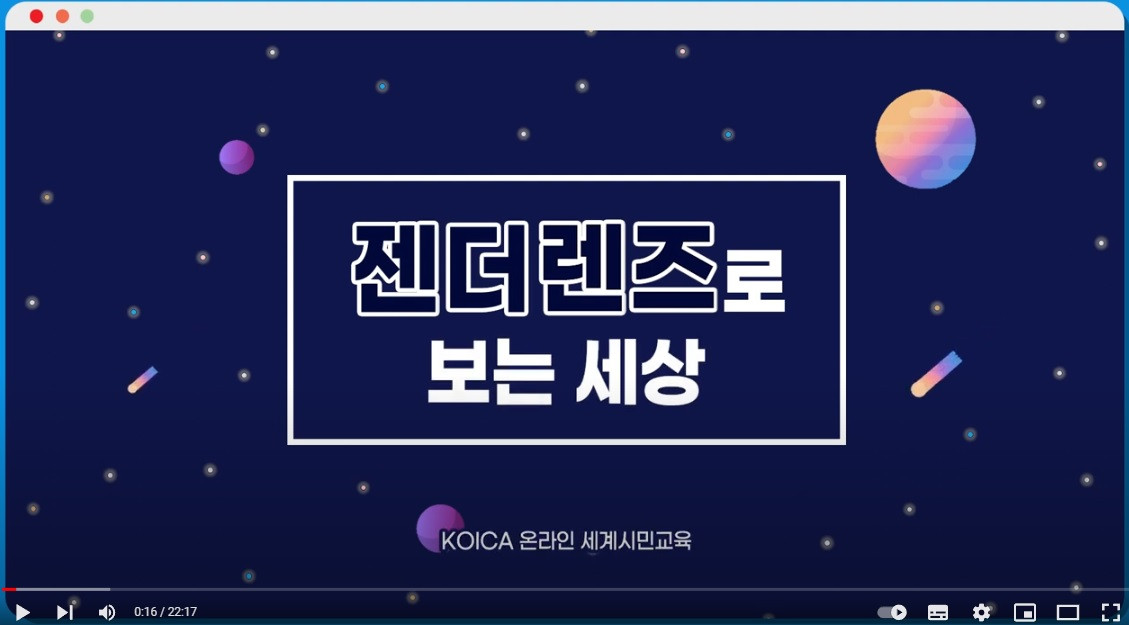 세계시민교육 시리즈 5편: 젠더렌즈로 보는 세상 Year of publication: 2021 Corporate author: 한국국제협력단 KOICA는 SDGs, 긴급구호, 환경, 평화, 성평등, 난민에 대한 국민들의 이해를 높이고자, 6개의 세계시민교육 동영상을 만들어 유튜브로 공유하고자 합니다.5. 젠더렌즈로 보는 세상
 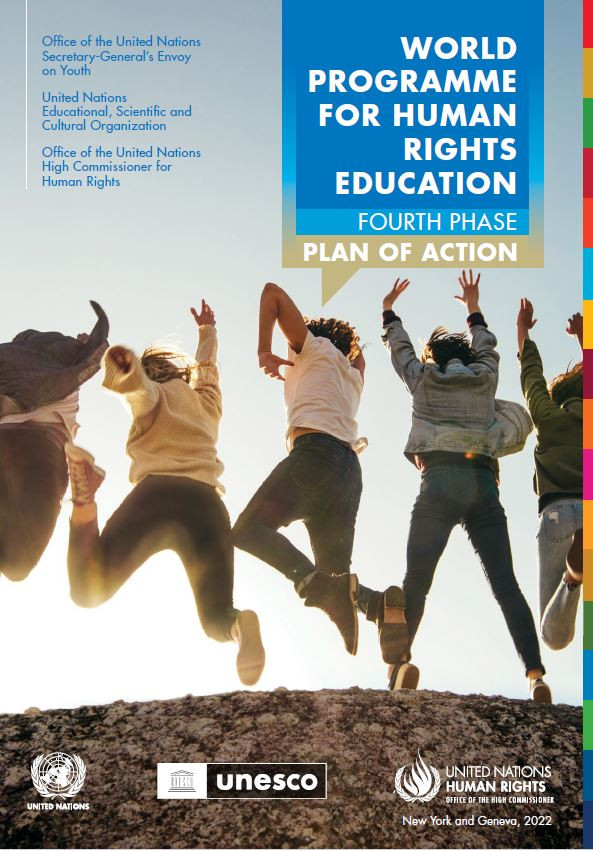 World Programme for Human Rights Education, Fourth Phase: Plan of Action Year of publication: 2022 Corporate author: Organización de las Naciones Unidas para la Educación, la Ciencia y la Cultura (UNESCO) | UN. Office of the Secretary-General’s Envoy on Youth | UN. Office of the United Nations High Commissioner for Human Rights (UN. OHCHR) Human rights education for youth, in both formal and non-formal settings, promotes a shared sense of humanity and fosters a common understanding that all human beings are equally deserving of dignity, respect and justice. It empowers youth to fulfil their role as active citizens, to take action and uphold their human rights and those of others, and to participate meaningfully in public affairs and democratic decision-making processes.In recognition of this, the United Nations Member States launched the fourth phase (2020–2024) of the World Programme for Human Rights Education to advance human rights education programming for youth at the national level. This focus also contributes to the achievement of the 2030 Agenda for Sustainable Development, particularly Goal 4 on Education and target 4.7, which touches upon the aims of education.
 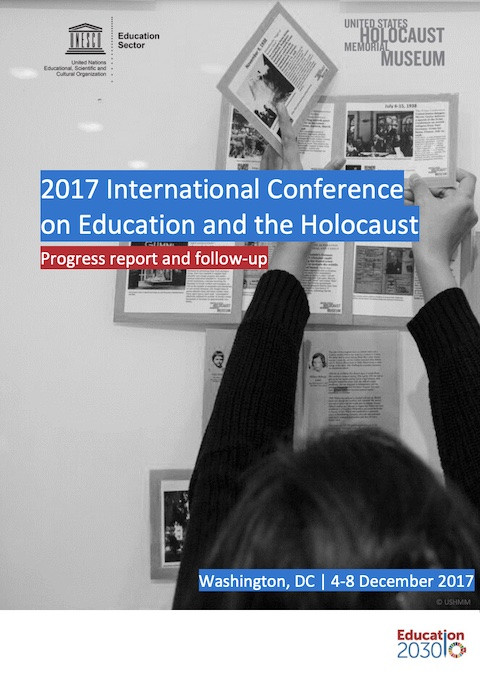 2017 International Conference on Education and the Holocaust: Progress Report and Follow-up Year of publication: 2018 Corporate author: UNESCO | United States Holocaust Memorial Museum (USHMM) From December 4-8 2017, UNESCO and the United States Holocaust Memorial Museum (USHMM) jointly organized the second International Conference on Education and the Holocaust (ICEH) in Washington, DC. The conference brought together 26 participants from 10 countries with the goal of strengthening their capacities to advance education about the Holocaust and genocide in their respective countries. Of great importance was the relevance of this education within the teams’ national contexts. The conference ultimately led to the development of 10 country-specific initiatives. The 2017 ICEH cohort comprises representatives of institutions from Argentina, Colombia, India, Indonesia, Kenya, Mexico, Namibia, South Africa, Tunisia and Ukraine.
  Online Antisemitism: A Toolkit for Civil Society Year of publication: 2022 Corporate author: Institute for Strategic Dialogue (ISD) | B’nai B’rith International | UNESCO This guide looks to build literacy among Jewish professionals, lay leaders and community members at large – as well as wider allies from across civil society – to tackle antisemitism online. Recognising the enormous capacity for positive action that the digital space offers, it aims to consolidate knowledge and provide a wide range of policy and community avenues for action.The guide provides an assessment of the online antisemitism threat landscape, an overview of existing policy responses on an international and national level across a range of European countries, and, importantly, a broad set of recommendations for engagement with governments, platforms and within communities to address these issues.
 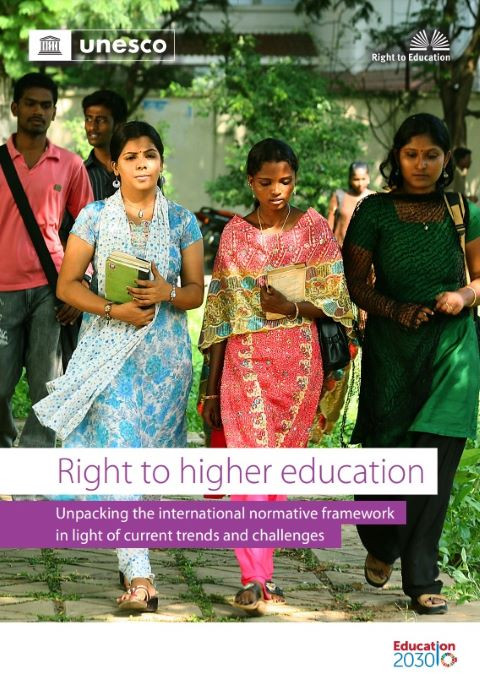 Right to Higher Education: Unpacking the International Normative Framework in Light of Current Trends and Challenges Year of publication: 2022 Corporate author: UNESCO | Right to Education Initiative (UK) The right to higher education is well-established in international human rights law. It requires states to progressively introduce free higher education and ensure that all have access on the basis of capacity. Yet, access to education is unequal from the very early years, which together with deep-rooted discrimination in education as well as differences in upbringing, often result in unfair admission procedures when reaching higher education. Drastic changes worldwide, due to rising inequalities, human movement, growing digitalization and the effects of the COVID-19 pandemic, are further challenging how this right can be concretely implemented. This publication seeks to bring clarity not only to existing obligations and rights, but also to unravel what aspects of the right to higher education might require further explanation in light of new contexts and challenges. It provides policy recommendations to guide states in their endeavour to ensure effective equal opportunities to higher education for all.
  Citizenship Education in the Global Digital Age: Thematic Paper Year of publication: 2022 Corporate author: UNESCO This document, prepared by UNESCO Section on Global Citizenship and Peace Education with the contribution of Laura Engel and Evelyne Koumtingue, is part of several thematic papers developed by UNESCO to inform the Revision of the 1974 Recommendation concerning education for international understanding, co-operation and peace. These papers focus on topics that are not currently covered in the Recommendation but that require greater attention in the revised version in view of ensuring it addresses contemporary challenges to lasting peace.
  Freedom of Expression, Media and Information Literacy and Digital Competencies to Support Peace and Human Rights: Thematic Paper Year of publication: 2022 Corporate author: UNESCO This document is part of the thematic papers developed by UNESCO to inform the Revision of the 1974 Recommendation concerning education for international understanding, co-operation and peace. It focuses on Freedom of Expression, Media and Information Literacy and Digital Competencies that are not currently covered in the Recommendation but that require greater attention in the revised version in view of ensuring it addresses contemporary challenges to lasting peace.