
Resources
Explore a wide range of valuable resources on GCED to deepen your understanding and enhance your research, advocacy, teaching, and learning.
518 Results found
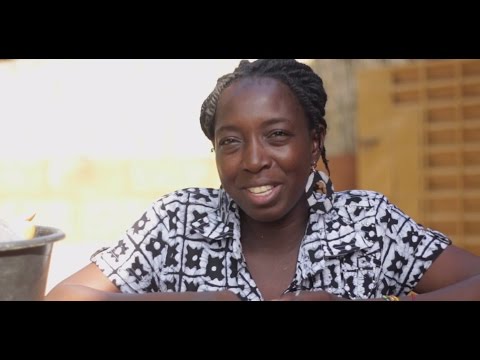 L'émancipation des femmes Year of publication: 2015 Corporate author: Îles de Paix Iles de Paix mène au Bénin un programme dédié aux femmes. Il concerne le développement de leurs activités rémunératrices, mais aussi des formations en gestion, au crédit, à l’épargne et des sensibilisations pour une amélioration de leur position dans la société. Ce programme ambitieux, qui concernera directement, sur trois ans, plus de 600 femmes, engendre de profonds bouleversements et, pour bien de ses bénéficiaires, des changements majeurs dans leur vie quotidienne. En témoigne cette femme, qui y a participé. « Au début, quand je voulais suivre une formation pour mener une activité, mon mari me battait pour m’en empêcher. Il me disait que ma place était à la maison.Mais aujourd’hui, il constate que, grâce à cette formation et aux choses que j’ai apprises, je gagne beaucoup mieux ma vie. Alors, il m’encourage à continuer et… il me supplie de lui donner de l’argent ! »Il reste à souhaiter que tous ses gains ne finissent pas dans l’escarcelle de son mari et qu’ils servent avant tout à répondre à ses besoins personnels et à ceux de ses enfants.
  How Children Living in Poor Informal Settlements in the Greater Accra Region, Ghana, Perceive Global Citizenship (International Journal of Development Education and Global Learning; Vol. 12, No. 1) Year of publication: 2020 Author: Jane Leithead | Steve Humble Corporate author: UCL Press This investigation looks at the antecedents and outcomes of 141 children living in poor informal settlements in the Greater Accra Region of Ghana identifying with global citizenship. It finds that the model of global citizenship devised by Reysen and Katzarska-Miller (2013) is a moderately good fit for this group of children. Structural equation modelling demonstrates that antecedents of global awareness as well as friends and family supporting global citizenship (normative environment) predict the child’s self-identification as a global citizen. This in turn predicts six prosocial traits: intergroup empathy, valuing diversity, social justice, environmental sustainability, intergroup helping and responsibility to act. The research suggests that there may be other elements to a global citizenship model that could be investigated in future research.
  Development Education in Theory and Practice: An Educator’s Resource Year of publication: 2016 Author: Michal Cenker | Louiza Hadjivasiliou | Patrick Marren | Niamh Rooney Corporate author: UNIDEV | NGO Support Centre (Cyprus) | Pontis Foundation (Slovakia) | Kimmage Development Studies Centre (Ireland) This publication has been produced to provide a new teaching resource for academics and educators active in the field of Development Education and related disciplines. It covers twelve themes, each chapter includes both a conceptual overview and a teaching methodology section. The conceptual overview introduces the topic, explores the key concepts, theories and current debates. The teaching methodology section gives educators a set of tools that could help them introduce the topic in both formal and non-formal settings.
  Epistemology from the South: A Decolonized Vision of the Objectives for Sustainable Development Year of publication: 2016 Author: Javier Collado Ruano Corporate author: Universidade de Sao Paulo The research object of this article is to identify the different epistemological and methodological perspectives that have emerged from the global South. It also addresses the irruption of globalization and cross-border processes of climate change from the called “epistemology of the South” perspective. As a result, it claims the need for cross-cultural bridges between people from all over the world to overcome the paradigmatic crossroads at which we find ourselves as a world-system, with the aim to achieve the Sustainable Development Goals set by the United Nations for the year 2030. Epistemología del Sur: una visión descolonial a los Objetivos de Desarrollo Sostenible Year of publication: 2016 Author: Javier Collado Ruano Corporate author: Universidade de Sao Paulo El objeto de investigación del presente artículo es identificar las diferentes perspectivas epistemológicas y metodológicas que han emergido desde el Sur global. También se aborda la irrupción de la globalización y los procesos transfronterizos del cambio climático desde la denominada “epistemología del sur”. Como resultado, se manifiesta la necesidad de crear puentes transculturales entre los pueblos de todo el mundo para superar la encrucijada paradigmática en la que nos encontramos como sistema-mundo, con la finalidad de alcanzar los Objetivos de Desarrollo Sostenible establecidos por los Naciones Unidas para el año 2030.
 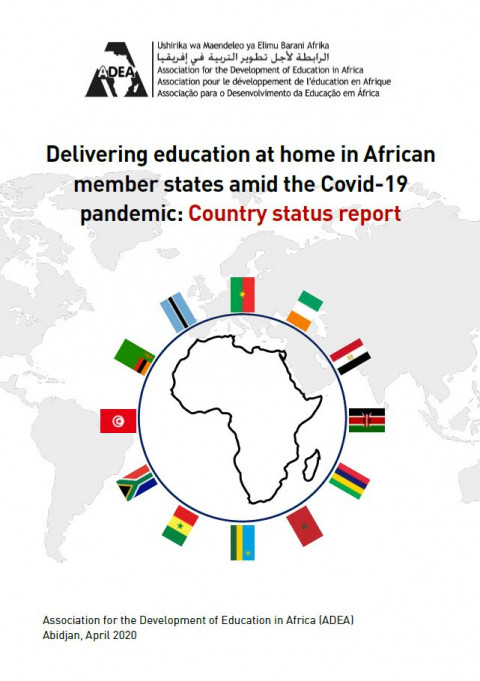 Assurer l’éducation à domicile dans les États membres africains dans le contexte de la pandémie de COVID-19 : rapport sur la situation dans les pays Year of publication: 2020 Corporate author: Association for the Development of Education in Africa (ADEA) Depuis son émergence à la fin de 2019, la maladie à coronavirus 2019 (COVID-19) est devenue une pandémie, affectant fortement la vie de milliards de personnes à travers le monde, avec un impact énorme prévu sur l'économie mondiale et l'Afrique en particulier. L'éducation est l'un des secteurs les plus touchés, la fermeture des établissements d'enseignement dans de nombreux pays africains risquant d'affecter négativement la qualité de l'éducation.Afin d'obtenir une vision plus claire de l'état de l'apprentissage au cours de cette période et de mieux soutenir les pays dans l'immédiat, à court et à long terme, l'ADEA a engagé en mars 2020 certains des pays africains les plus touchés pour schématiser la situation nationale du secteur de l'éducation. Ce qui précède est un résumé des commentaires reçus par l'Afrique du Sud, le Burkina Faso, la Côte d'Ivoire, l'Égypte, le Ghana, le Kenya, l’île Maurice, le Maroc, le Rwanda, le Sénégal, la Tunisie et la Zambie en termes de stratégies nationales, de plateformes, d'outils ou d'applications d’apprentissage, de lacunes et défis, d’engagement des partenaires, de bonnes pratiques et d’enseignements tirés avec quelques recommandations.
 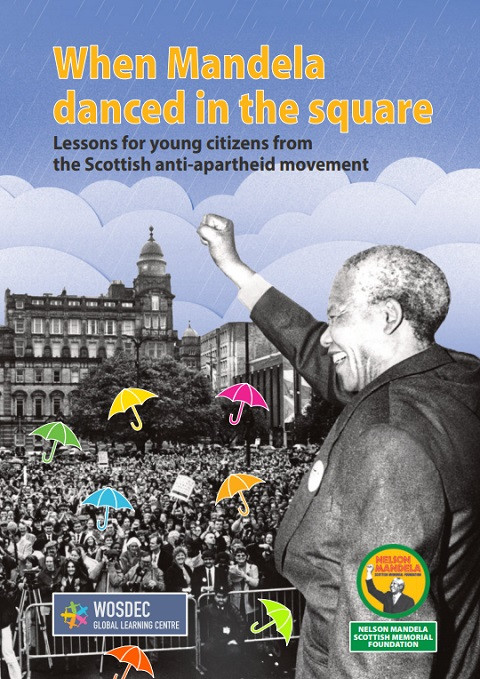 When Mandela Danced in the Square: Lessons for Young Citizens from the Scottish Anti-Apartheid Movement Year of publication: 2020 Corporate author: West of Scotland Development Education Centre (WOSDEC) | Nelson Mandela Scottish Memorial Foundation This resource aims to understand the context of apartheid South Africa, the life of Nelson Mandela and the connections to the Scottish anti-apartheid movement. The activities in this resource support second and third level learners within Scotland's Curriculum for Excellence to explore Scotland’s connection with Nelson Mandela and feel empowered to take action on issues of importance to them today.
  Acteurs et partenariats dans le secteur de la formation professionnelle Year of publication: 2019 Corporate author: UNESCO IIEP Regional Office for Africa | Institut de la Francophonie pour l'éducation et la formation (IFEF) Une des voies reconnues pour améliorer l'efficacité des systèmes de formation professionnelle est le développement de partenariats entre acteurs publics, acteurs privés et société civile. Mais qu'entend-t-on précisément par partenariats ? Et sous quelles formes sont-ils les plus efficaces ? La diversité des contextes nationaux et locaux montre combien le domaine de la formation professionnelle est complexe et multidimensionnel. Dès lors, il est important de clarifier les types de partenariats à mettre en place, les domaines d'interventions des acteurs, ainsi que leurs rôles respectifs. Pour cette étude, l'IIPE-Pôle de Dakar et l'IFEF ont associé leur expertise dans le but d'appréhender les processus-clés de la formation professionnelle et d'offrir un portrait global des différents types de partenariats envisageables.
  2019 Africa: SDG Index and Dashboards Report Year of publication: 2019 Author: Eve de la Mothe Karoubi | Olive Dushime | Grayson Fuller | Enock Nyorekwa Twinoburyo | Abigail Simkoko | Gary Verburg Corporate author: SDG Center for Africa | Sustainable Development Solutions Network (SDSN) The 2019 Africa SDG Index and Dashboards Report is a call for action not only to meet the SDGs but also to ensure timely and high-quality data on SDG indicators. The report focuses on the efforts that African governments are taking to incorporate the SDGs into their national strategies, budgets, public engagements, and coordination among branches of government. Delivering Education at Home in African Member States Amid the Covid-19 Pandemic: Country Status Report Year of publication: 2020 Corporate author: Association for the Development of Education in Africa (ADEA) Since its emergence in late 2019, the coronavirus disease 2019 (COVID-19) has evolved into a pandemic, heavily affecting the lives of billions of people across the world with an anticipated huge impact on the global economy and Africa in particular. Education is one of the sectors heavily affected, with the closure of learning institutions in many African countries likely to negatively affect the education quality.In order to obtain a clearer view of the status of learning during this period, and to better support countries in the immediate, short and long term, ADEA engaged some of the most affected African countries in March 2020 to map the national situation in the education sector. The foregoing is a synopsis of the feedback from Burkina Faso, Côte d’Ivoire, Egypt, Ghana, Kenya, Mauritius, Morocco, Rwanda, Senegal, South Africa, Tunisia, and Zambia in terms of national strategies, platforms and tools or applications, gaps and challenges, partner engagement, good practices and lessons learnt with some recommendations.