
Resources
Explore a wide range of valuable resources on GCED to deepen your understanding and enhance your research, advocacy, teaching, and learning.
3,777 Results found
 Engaging and Educating Women and Girls in the Prevention of Violent Conflict and Violent Extremism Year of publication: 2014 Author: Kathleen Kuehnast Corporate author: United States Institute of Peace (USIP) Dr. Kathleen Kuehnast, directrice du Centre pour le genre et la construction de la paix (Center for Gender and Peacebuilding) à l’Institut américain pour la paix (United States Institute of Peace), témoigne de l'importance d'impliquer et d'éduquer les femmes et les jeunes filles dans les zones de conflit afin de prévenir et de contenir les conflits violents et l'extrémisme violent.
 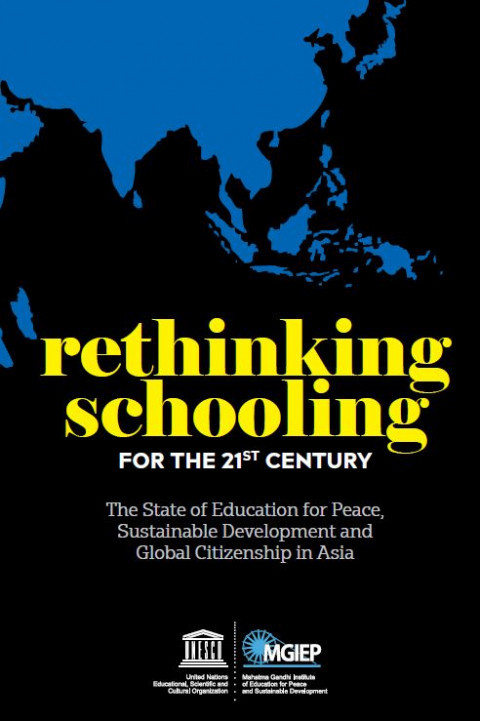 Переосмысление школьного обучения ДЛЯ XXI ВЕКА Состояние образования ради мира, устойчивого развития и глобальной гражданственности в Азии Year of publication: 2017 Corporate author: Mahatma Gandhi Institute of Education for Peace and Sustainable Development (MGIEP) В публикации «Переосмысление школьного образования в XXI веке: состояние образования в интересах мира, устойчивого развития и в духе глобальной гражданственности в Азии» Института ЮНЕСКО Махатмы Ганди по образованию в интересах мира и устойчивого развития (МГИЭП) обсуждается о необходимости изменения фундаментальных целей школьного образования, включая идеалы образования в интересах устойчивого развития, в духе глобальной гражданственности и мира и (ЦУР 4.7). Кроме того, в исследовании рассматривается разработка сравнительных показателей – так называемые «бенчмарки», позволяющие оценить будущий прогресс в этой области.В этом отчете приняли участие более 60 исследователей из 22 стран Азии и он также основан на анализе ключевой образовательной политики и образовательных стандартов этих стран. Отчет также включает обширный обзор литературы по школьному образованию в Азии. В шестой главе публикации можно найти анализ текущего состояния и вопросов, стоящих по внедрению образования в интересах мира, устойчивого развития и в духе глобальной гражданственности в различных субрегионах Азии, включая Центральной Азии. Во-первых, глава раскрывает реформы в школьном образовании в постсоветской Центральной Азии, которые проводились в целях удовлетворения потребности в быстром создании собственной государственности в странах региона, которые не были готовы к независимости при распаде СССР. Во-вторых, в главе подчеркивается трансформация понимания советского восприятия образования как «общего блага» и его вытеснение, по крайней мере, на уровне политического дискурса, с неустанным акцентом на образование как инструмента развития «человеческих ресурсов» с учетом спроса рынка на компетенции.Глобальное сообщество обязалось достичь целей устойчивого развития (ЦУР), включая ЦУР4 по образованию, к 2030 году. Задача ЦУР4.7 направлена на предоставление учащимся знаний и компетенций, необходимых им для реализации всех целей устойчивого развития. Основное внимание уделяется когнитивным, социально-эмоциональным и поведенческим результатам обучения, которые помогают учащимся решать конкретные задачи, рассматриваемые ЦУР. Поскольку государства-члены Организации Объединенных Наций работают над достижением ЦУР, им предлагается переосмыслить образование для внесения вклада в ЦУР. В то время как ЦУР4.7 обеспечивает необходимую структуру в этом отношении.
  The Role of Educational Policy in Promoting National Belonging: A Critical Analytical Study Year of publication: 2010 Author: Salem AlShamsi Corporate author: University of Aden This study focuses on analyzing the role of educational policy in promoting national belonging. It examines how education affects political participation. It also discusses the role that education should play in establishing national belonging. دور السياسة التربوية في تعزيز الانتماء الوطني : دراسة تحليلية نقدية Year of publication: 2010 Author: Salem AlShamsi Corporate author: University of Aden تركز الدراسة على تحليل دور السيساة التربوية في تعزيز الانتماء الوطني. وتبحث في كيفية تأثير التعليم على المشاركة السياسة. وأيضا تناقش الدور الذي يجب أن يلعبه التعليم في تأصيل الانتماء الوطني. Global citizenship curriculum in higher education: evolving policy and practice and a future research agenda; proceedings of a symposium held on 9-10 December 2013 in Hong Kong Year of publication: 2013 Corporate author: Bath Spa University | General Education Centre (Hong Kong) | Polytechnic University This symposium was an outgrowth of a UK Economic and Social Research Council (ESRC) funded International Networking Project. A collaboration between academics in the United Kingdom/Europe, North America, and Asia, this project responds to the fact that there is an increasing interest in understanding how universities can educate students to become more engaged and globally-minded citizens. The premise is that higher education should contribute to the public good by training more global citizens with cultural awareness, a strong sense of civic responsibility and skills to participate in a knowledge-based global economy. The following report documents the symposium proceedings, summarises the presentations and provides key insights drawn from presentations. Comments made by individuals are paraphrased and/or synthesized. Programme de Citoyenneté Mondiale dans l'enseignement supérieur: la politique et la pratique en évolution et un futur programme de recherche; actes d'un colloque tenu les 9-10 Décembre 2013 à Hong Kong Year of publication: 2013 Corporate author: Bath Spa University | General Education Centre (Hong Kong) | Polytechnic University Ce symposium était une excroissance du Conseil de la recherche économique et sociale du Royaume-Uni (en. ESRC) financé Projet international de réseautage. Une collaboration entre les universitaires au Royaume-Uni / Europe, Amérique du Nord, et en Asie, ce projet répond au fait qu'il ya un intérêt croissant pour comprendre comment les universités peuvent éduquer les élèves à devenir des citoyens plus engagés et ouverts sur le monde. La prémisse est que l'enseignement supérieur doit contribuer au bien public par la formation des citoyens plus globales avec la conscience culturelle, un fort sentiment de responsabilité et les compétences civiques de participer à une économie mondiale fondée sur le savoir. Le rapport suivant documente les actes du colloque, résume les présentations et fournit des informations clés tirées des présentations. Commentaires formulés par les individus sont paraphrasés et / ou synthétisés.
 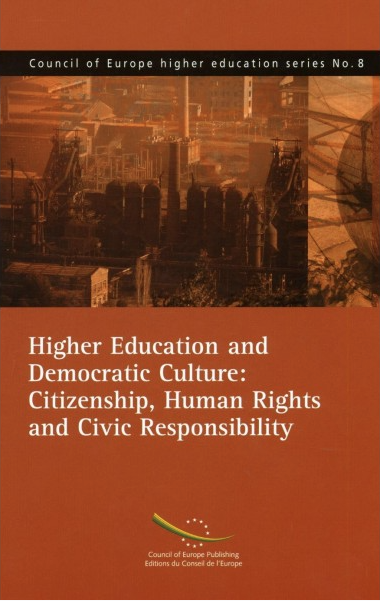 Higher Education and Democratic Culture: Citizenship, Human Rights and Civic Responsibility (Council of Europe Higher Education Series No.8) Year of publication: 2008 Author: Josef Huber | Ira Harkavy Corporate author: Council of Europe This book on the responsibility of higher education for a democratic culture is the 8th volume in the Council of Europe's Higher Education series. It is the direct result of a Higher Education Forum held in June 2006 on the responsibility of higher education for citizenship, human rights and sustainability. This forum was a part of the Council of Europe's long-standing commitment to work in the area of education for democratic citizenship and human rights. It complements earlier work on the public responsibility for higher education and research which led to a recommendation of the Committee of Minister to the member states of the Council of Europe in 2007. If our aim is to work for sustainable democratic societies, the responsibility of public authorities for a high-quality higher education system must go hand in hand with the responsibility of higher education institutions towards the advancement of society.
  Communication Strategy and Addressing the Phenomenon of Child Abduction in Algeria Year of publication: 2023 Author: Saeed Abdul Razzaq The study aimed to identify the role of the communication strategy in treating one of the communication strategy of the General Directorate of National Security in the process of protecting children, and the role of various communication tools and activities in treating and reducing the phenomenon of abduction of children in Algeria . We found that the communication strategy of the Directorate General of National Security plays an important role in the process of reducing the risk of child abduction in Algeria through the preventive communication strategy aimed at protecting children from abduction. الاستراتيجية الاتصالية ومعالجة ظاهرة اختطاف الأطفال في الجزائر Year of publication: 2023 Author: Saeed Abdul Razzaq هدفت الدراسة إلى معرفة دور الاستراتيجية الاتصالية في معالجة احدى الظواهر الاجتماعية المتمثلة في ظاهرة اختطاف الأطفال في الجزائر، من خلال عرض الاستراتيجية الاتصالية الخاصة بالمديرية العامة للأمن الوطني في عملية حماية الأطفال، ودور الوسائل والأنشطة الاتصالية المختلفة في معالجة والحد من ظاهرة اختطاف الأطفال في الجزائر. وقد وتوصلنا من خلال دراستنا أن للاستراتيجية الاتصالية للمديرية العامة للأمن الوطني دور مهم في عملية الحد من خطورة ظاهرة اختطاف الأطفال في الجزائر عبر الاستراتيجية الاتصالية الوقائية التي تهدف لحماية الأطفال من الاختطاف.
 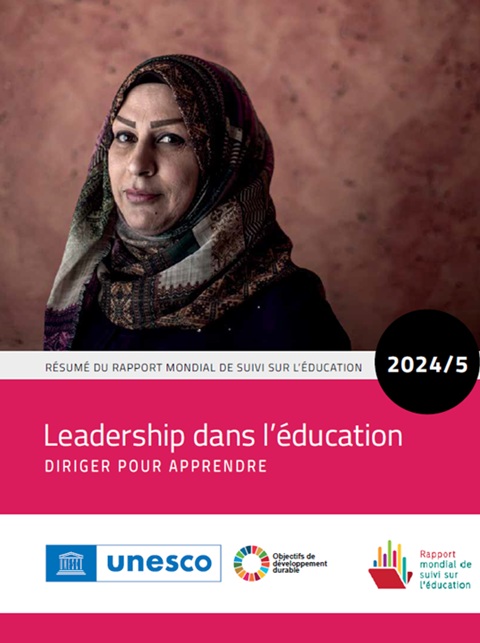 Résumé du rapport mondial de suivi sur l'éducation 2024/5: leadership dans l'éducation: diriger pour apprendre Year of publication: 2024 Corporate author: Global Education Monitoring Report Team Le Rapport mondial de suivi sur l'éducation 2024/5 évalue les progrès accomplis dans la réalisation des objectifs du Programme 2030 et montre que, si le nombre d'enfants scolarisés et achevant l'enseignement secondaire n'a jamais été aussi élevé, de nombreux domaines connaissent une stagnation. Le leadership joue un rôle central pour y remédier. Aucune école n’améliore les résultats des élèves sans un bon leader pour montrer la voie. Sur la base d’un examen des lois et politiques concernant la sélection, la préparation et les conditions de travail des chefs d'établissement de 211 systèmes éducatifs, le rapport analyse les leviers stratégiques permettant d'attirer et de retenir des leaders de talent.Les possibilités d’exercer un leadership ne se limitent pas aux dirigeants des écoles, elles s’étendent à des personnes qui occupent d’autres postes dans le système éducatif et en dehors de celui-ci, telles que les directeurs adjoints, les enseignants et les élèves lorsque le leadership est partagé, les responsables politiques, la société civile, les organisations internationales, les syndicats et les médias, qui contribuent à définir les objectifs en matière d’éducation.Le rapport préconise que des efforts soient faits pour former des leaders dans quatre dimensions essentielles : fixer des objectifs, donner la priorité à l’apprentissage, encourager la collaboration et faire évoluer les personnes. Pour que ces dimensions se concrétisent, il faut faire confiance aux personnes occupant des postes de direction et leur donner les moyens d’agir ; il faut les recruter grâce à des pratiques d’embauche équitables ; les soutenir dans leur évolution ; et les encourager à mettre en place une culture de collaboration. Le rapport appelle également à investir dans la capacité des responsables de l'éducation à jouer un rôle de leader au sein du système, en mettant particulièrement l'accent sur la direction pédagogique et l'assurance qualité