
Resources
Explore a wide range of valuable resources on GCED to deepen your understanding and enhance your research, advocacy, teaching, and learning.
2,775 Results found
 Integral Education of Sexuality: Concepts, Approaches and Competencies Year of publication: 2014 Corporate author: UNESCO Santiago The objective of this document is to understand that sexuality is an integral part of people's lives (in their different stages or ages, and in all their diversity), and that it contributes to the development of their identity and, therefore, to their development Social. It is about capacities rather than content, which must be developed in an interdisciplinary way and progressively so that people act responsibly towards themselves and with others. The document explains that the education of sexuality is closely related to understanding, reflection and discernment, and strengthens the bases for lifelong learning, preparing young people for adult life. Thus, the focus is on achieving sustainable human development and well-being.
  Education for Sustainable Development Conference in Support of Cultural and Biological Diversity, 24-26 January 2011 Year of publication: 2011 Author: Salem bin Hilal Al-Habsi | Mahmoud bin Abdullah Al-Abri Corporate author: Oman National Commission for Education, Culture and Science The text talks about a conference held in the Omani capital, Muscat. The conference focuses on sustainable development to support cultural and biological diversity. This conference comes to support international efforts and help educational systems understand diversity and its importance in the renaissance of peoples. مؤتمر التربية من أجل التنمية المستدامة لدعم التنوع الثقافي والبيولوجي 24 - 26 يناير 2011م Year of publication: 2011 Author: Salem bin Hilal Al-Habsi | Mahmoud bin Abdullah Al-Abri Corporate author: Oman National Commission for Education, Culture and Science يتحدث النص عن مؤتمر تم إقامته في العاصمة العمانية مسقط، ويركز المؤتمر على التنمية المستدامة لدعم التنوع الثقافي والبيولوجي. ويأتي هذا المؤتمر لدعم الجهود الدولية ومساعدة الانظمة التعليمية في فهم التنوع وأهميته في نهضة الشعوب.
  Formation of a Resilient Generation in Central Asia and Europe Year of publication: 2021 Corporate author: ЮНИСЕФ | Европейский фонд образования In this joint report of the United Nations Children's Fund (UNICEF) and the European Education Foundation (ETF) reflect the views, views and sentiments of young people in Central Asia and Europe, which will be taken into account in regional and international discussions on options for creating more effective lifelong learning systems, more inclusive communities and a more "green" society. Формирование жизнестойкого поколения в Центральной Азии и Европе Year of publication: 2021 Corporate author: ЮНИСЕФ | Европейский фонд образования В этом совместном отчете Детского фонда ООН (ЮНИСЕФ) и Европейского фонда образования (ЕФО) отражены точки зрения, взгляды и настроения молодежи в регионе ЕЦА, которые будут учитываться в региональных и международных обсуждениях вариантов создания более эффективных систем обучения в течение всей жизни, более инклюзивных сообществ и более «зеленого» общества.
  Embracing Peace through UNESCO World Heritage Year of publication: 2024 Author: 장정아 | 김민성 | 김수진 | 김원호 | 안치영 | 오성희 | 오창현 | 이성영 | 이현경 | 전원희 Corporate author: Korean National Commission for UNESCO This resource kit is the product of long labor by 10 researchers consisting of scholars on UNESCO heritage and teachers working in schools that belong to the UNESCO Associated Schools Network (ASPnet). It is distinct from existing educational resources in several ways. First, this kit goes beyond introducing the variously inscribed World Heritage properties one after another, to explain the rich significance of the heritage properties through keywords such as peace, cultural diversity, and sustainability. We also sought to overcome misconceptions about World Heritage and presented the content through various interesting cases for easy, hands-on application in classroom settings. In 2024, KNCU has pilot-tested the teaching materials presented in this resource kit in Korean middle and high schools belonging to UNESCO ASPnet. An online teacher training course based on this book has also been provided in June this year. 유네스코 유산, 평화를 품다 Year of publication: 2024 Author: 장정아 | 김민성 | 김수진 | 김원호 | 안치영 | 오성희 | 오창현 | 이성영 | 이현경 | 전원희 Corporate author: 유네스코한국위원회 이 책은 유네스코 등재유산을 연구해온 학자, 유네스코학교 담당 교사 등 10명의 연구진이 오랜 기간동안 고심해서 만들어낸 결과물로 각종 유네스코 등재유산에 대한 정보를 '평화, 문화다양성, 지속가능성' 등의 키워드를 중심으로 이들 유산이 갖는 의미들을 담아내고자 하였다. 또한 다양한 사례를 중심으로 학교 현장에서 참여형 수업을 통해 손쉽게 활용할 수 있도록 내용을 구성했으며 이 책을 기반으로 국내 중/고등 유네스코학교에서 시범수업을 실시하는 한편 2024년부터는 교사들이 활용할 수 있도록 교원연수용 온라인 콘텐츠를 제공할 예정이다.
 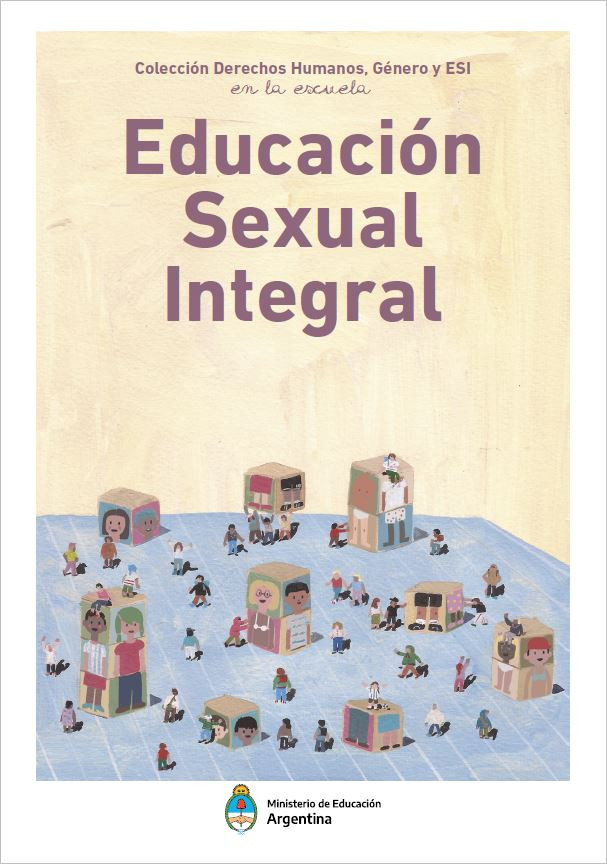 Comprehensive Sex Education Year of publication: 2021 Corporate author: Ministry of Education, Argentina What are we talking about when we say Comprehensive Sex Education? What challenges does integrality take on? In this issue of the Human Rights, Gender and CSE at school collection you will find a series of activities to work in the classroom and a theoretical framework to think about CSE. Educación Sexual Integral Year of publication: 2021 Corporate author: Ministry of Education, Argentina ¿De qué hablamos cuando decimos Educación Sexual Integral? ¿Qué desafíos asume la integralidad? En este número de la colección Derechos Humanos, Género y ESI en la escuela encontrarán una serie de actividades para trabajar en el aula y un marco teórico para pensar ESI.
  Learning to live together: education for conflict resolution, responsible citizenship, human rights and humanitarian norms Year of publication: 2013 Author: Margaret Sinclair Corporate author: Education Above All (Qatar) Education cannot offer immediate remedies to the local and global problems that we see on the news screens every day, but it can contribute to solving them over the longer term. This book examines specifically the contribution that education for learning to live together can make, even in countries where teacher training and classroom resources are limited. Many countries have diverse populations (ethnic, linguistic, religious, etc) and seek to maintain harmony among the different groups. In some countries, however, especially where economic stress or climate change have intensified arguments over resources, tensions have led to armed conflict. This brings with it all the misery of death, injury, displacement and poverty, along with disruption of education systems. In some instances education itself has been a contributory factor to the outbreak of conflict, notably through unequal education opportunities for different groups, and through biased school curricula.Civil conflict has brought untold suffering in recent years, and in a globalised world it has negative spill-over effects to neighbouring and other countries. It is vital to develop education policies and curricular reforms that can help convey values and skills for learning to live together to young people, to help lessen tensions, within and between countries.Education policy-makers can help lay the foundations for a better future by adjusting the content and process of education to reflect skills and values for human rights, humanitarian norms, peaceful resolution of conflicts, sustainable development and other issues as elements of local, national and global citizenship.Education reform is not enough, of course, to resolve the numerous problems of our times. The focus of this volume is on the contribution that can be made through aligning the content of education to the goal of learning to live together. This work will have greater impact when it takes place within education systems and policies that are consistent with human rights values and of course when other sectors besides education make their respective contributions.This book shows that transformative education for conflict resolution and peace, for local, national and global citizenship, for human rights and humanitarian values can be implemented even under difficult conditions if there is a policy commitment to do so. Authors have provided examples and lessons learned from their own experiences as eminent practitioners in the field.