
Resources
Explore a wide range of valuable resources on GCED to deepen your understanding and enhance your research, advocacy, teaching, and learning.
3,224 Results found
 Generation Z: Global Citizenship Survey Year of publication: 2017 Corporate author: Varkey Foundation The Varkey Foundation commissioned Populus to carry out research on a global scale into the attitudes of 15- to 21-year-olds on a variety of ethical, personal, community and political issues. We chose twenty countries to poll: Argentina, Australia, Brazil, Canada, China, France, Germany, India, Indonesia, Israel, Italy, Japan, New Zealand, Nigeria, Russia, South Africa, South Korea, Turkey, the UK and the US. We chose a range of countries that would give a geographic spread, include some of most populous nations, and would also include those that have particular political significance – as rising powers and/or countries that are important in global geopolitics and cultural influence.The first part of the survey asked about young people’s wellbeing, hopes and ambitions – from their relationships and future careers, to their physical and mental health.. The second part focused on their personal, community and religious values – from their attitudes towards abortion, same sex marriage and transgender rights, to the importance of religion in their lives and whether they feel equipped to contribute to their own community. Finally, it covered issues of global citizenship – attitudes towards migrants, the factors that make young people hopeful and fearful for the future, and their views on whether the world is becoming a better or worse place. This is the first time that there has been an international comparative study of the attitudes of young people on these matters. Not only have we asked them how they feel, what their attitudes are, and who influenced them: we have also reflected on what differences and similarities there may be in terms of their wellbeing, fears, hopes and views across the world.With this survey, we do not aim to document the events that loomed large in young people’s lives or the social forces that have shaped their emotions and opinions. That is a huge subject for expert analysis. Rather, we wanted to hold up a mirror to Generation Z and simply record the reflection that they give us – providing some illumination to help us all understand them better.
  Peace education in formal schools of West Africa: an implementation guide Year of publication: 2012 Corporate author: West Africa Network for Peacebuilding (WANEP) This guide, first and foremost, seeks to bring hope and provide opportunity for practitioners to use tried and tested techniques to develop capacities of young people to build requisite knowledge and skills to become credible and responsible leaders. It provides both a conceptual and practical framework of peace education and confirms the potential benefits of Peace Education, particularly in the formal sector. It has been developed based on the extensive experience of WANEP’s Peace Education programme across West Africa and this experience has been outlined in great detail throughout the manual. The guide lays emphasis on entry points for developing and initiating Peace Education programmes in schools and provides practical tools for engaging various stakeholders and the wide range of potential roles they can play. In terms of the content of a peace education programme, guidelines are provided on developing a comprehensive programme that integrates effectively key concepts such as Gender and Human Rights. Critical issues of sustainability, resource mobilisation and monitoring and evaluation are covered using practical case studies based on the WANEP experience. The concluding chapter is devoted to addressing some Frequently Asked Questions. This laudable initiative and recommend this guide for adoption by West African states and institutions especially the educational sector as a tool for inculcating a culture of peace and nonviolence amongst children.The guide is divided into six chapters.Chapter 1 consists of introduction and the conceptual definition of basic philosophy that influenced the peace education program of WANEP. It also examines the role of peace education on the psycho social behaviour of youths in West Africa.Chapter 2 highlights WANEP’s guiding principles to the development of its peace education in the sub region and also the basic steps it took to implement its program in the seven (7) pilot states.Chapter 3 looks at how to mobilise resources to sustain the peace education program especially within the context of West Africa.Chapter 4 highlights the challenges that WANEP encountered in implementing the program.Chapter 5 emphasises the importance of monitoring and evaluation for impact and success of a peace education program.Chapter 6 deals with frequently asked questions by interested stakeholders. L’éducation à la paix dans les écoles formelles de l'Afrique de l'Ouest: un guide de mise en œuvre Year of publication: 2012 Corporate author: West Africa Network for Peacebuilding (WANEP) Ce guide, d'abord et avant tout, cherche à apporter l'espoir et offrir la possibilité pour les praticiens à utiliser essayé et testé des techniques pour développer les capacités des jeunes à acquérir des connaissances et des compétences nécessaires pour devenir des leaders crédibles et responsables. Il fournit à la fois un cadre conceptuel et pratique de l'éducation de la paix et confirme les avantages potentiels de l'éducation pour la paix, en particulier dans le secteur formel. Il a été développé sur la base de la longue expérience du programme Education à la Paix de WANEP à travers l'Afrique de l'Ouest et cette expérience a été décrite en détail dans le manuel. Le guide met l'aCECnt sur les points d'entrée pour le développement et le lancement de programmes d'éducation de la paix dans les écoles et fournit des outils pratiques pour engager divers intervenants et le large éventail de rôles potentiels qu'ils peuvent jouer. En termes de contenu d'un programme d'éducation à la paix, les lignes directrices sont prévues sur l'élaboration d'un programme complet qui intègre les concepts efficacement clés tels que le genre et droits de l'homme. Les questions critiques de la durabilité, la mobilisation des ressources et de Suivi et de l'évaluation sont couverts au moyen d'études de cas pratiques fondées sur l'expérience WANEP. Le chapitre final est consacré à aborder quelques questions fréquemment posées. Cette initiative louable et recommande ce guide pour adoption par les Etats et les institutions ouest-africaines en particulier le secteur de l'éducation comme un outil pour inculquer une culture de la paix et de la non-violence chez les enfants. Le guide est divisé en six chapitres. Chapitre 1 est constitué d'introduction et la définition conceptuelle de la philosophie de base qui a influencé le programme d'éducation à la paix de WANEP. Il examine également le rôle de l'éducation de la paix sur le comportement social psycho des jeunes en Afrique de l'Ouest. Le chapitre 2 met en évidence les principes directeurs de WANEP au développement de son éducation à la paix dans la sous-région et aussi les étapes de base qu'il a fallu pour mettre en œuvre son programme dans les sept (7) Etats pilotes. Le chapitre 3 examine comment mobiliser des ressources pour soutenir le programme d'éducation à la paix en particulier dans le contexte de l'Afrique de l'Ouest. Le chapitre 4 met en évidence les défis que WANEP rencontrés dans la mise en œuvre du programme. Le chapitre 5 met l'aCECnt sur l'importance de Suivi et de l'évaluation de l'impact et le succès d'un programme d'éducation à la paix. Chapitre 6 traite des questions fréquemment posées par les parties intéressées. The education we want: youth advocacy toolkit Year of publication: 2015 Author: James Edleston | Dan Smith, Sumaya Saluja | David Crone | Chernor Bah | Emily Laurie Corporate author: UN Global Education First Initiative - Youth Advocacy Group (YAG) | Plan | A World at School This toolkit is for anyone who believes passionately in the power of education as a force for good in the world and the right for all children to get a good quality education, no matter where they are and what the circumstances. We hope this toolkit will support you to carry out your own advocacy campaign. If you are just beginning to think about taking action on education, you can work your way through the toolkit from start to finish. But you can also dip in to pick up useful hints or activities to help you carry out your existing plans. We know this toolkit doesn’t cover everything you might need and we’ve tried to sign-post you to other resources where possible. Included in here are lots of real stories of change, led by young people, from all over the world. We hope they inspire you. The young global movement for education is growing, and you can be part of it.
 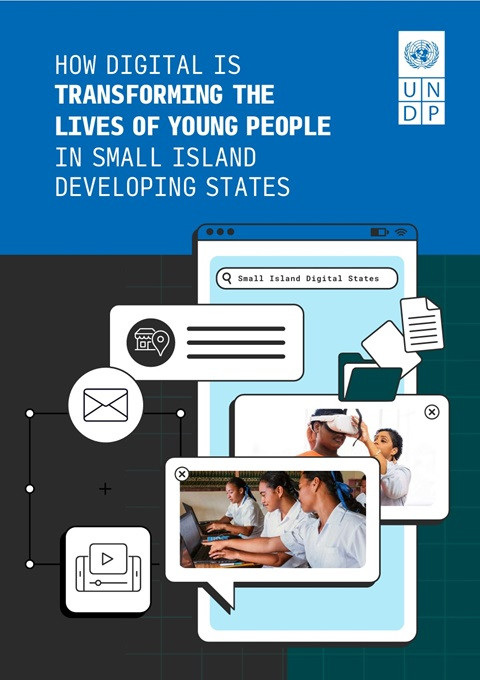 How Digital is Transforming the Lives of Young People in Small Island Developing States Year of publication: 2024 Corporate author: United Nations Development Programme (UNDP) Young people represent a sizeable and vital population in Small Island Developing States (SIDS). For them, digital technologies are more than just tools; they are gateways to new horizons. Digital is creating fresh opportunities, opening doors to unconventional careers, and redefining how knowledge is acquired and shared. Young people are using digital to start new businesses, explore new opportunities, learn new knowledge and skills, and to build global connections. However, young people are also cautious about digital – and they recognise risks and issues posed by digital channels, tools, and technologies. ‘How Digital is Transforming the Lives of Young People in SIDS’ explores these opportunities and challenges by hearing from young people – in their own words. Through a bespoke survey chatbot, running on messaging platforms most used by young people living in SIDS, more than 5,000 respondents from over 30 countries discuss how they’re using digital to transform their lives and livelihoods. And the barriers and challenges that they are facing on their digital journeys.
  Emerging Horizons: Youth Insights on Climate Change and Breakthrough Solutions; 2024 Leading Minds on Climate Action Year of publication: 2024 Corporate author: UNICEF Innocenti | United Nations Development Programme (UNDP) This paper shares insights from a participatory foresight workshop designed and facilitated by UNICEF Innocenti in the framework of the Youth4Climate: Sparking Solutions event co-hosted by UNDP and the Government of Italy. This convened 100 youth-led solutions in the areas of climate education, energy, food and agriculture, and urban sustainability. By using the Three Horizons foresight approach, a dialogue was created that delineated the patterns of change young people envisaged, their shared visions for the future, and the high potential innovations they felt could be leveraged to bring that future about. The paper identifies research and policy questions to be further explored by young climate leaders, UNDP, UNICEF, and their partners.
 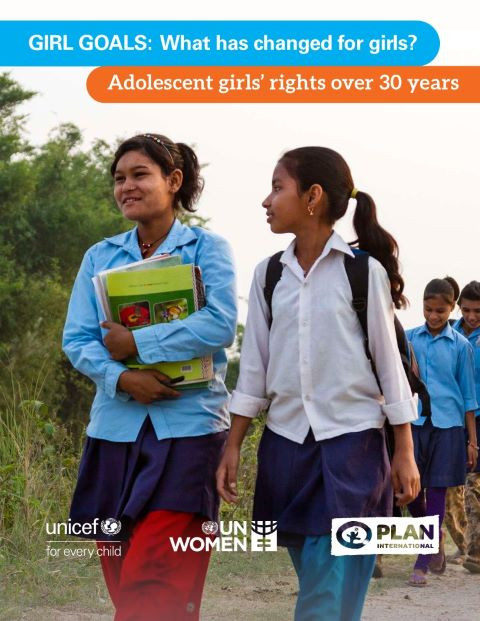 Girl Goals: What has Changed for Girls? Adolescent Girls’ Rights over 30 Years Year of publication: 2025 Corporate author: United Nations Children's Fund (UNICEF) | United Nations Entity for Gender Equality and the Empowerment of Women (UN Women) | Plan International This report makes three key recommendations on action we can take now to advance adolescent girls’ rights at scale, in ways that account for fiscally constrained contexts and multiple competing priorities: 1. Ensure tangible and actionable support for adolescent girls’ voices, advocacy and action. The current generation of girls are raising their voices to be heard and are already at the forefront of making change around the world. With the right support, resources and seats at the table, adolescent girls can help transform the world for the better, shaping better policy outcomes for themselves and everyone. This is not about girls’ voices above all others, or endless consultation, but about specific, meaningful actions that ensure girls get the support they need and are heard on policy issues that matter to them. 2. Establish and track explicit targets for change for adolescent girls, who are too often invisible and sidelined Setting explicit targets to monitor outcomes for adolescent girls is key to making progress. Context-specific prioritization will be necessary, but there are some issues that stand out globally. Gaps in progress (such as child marriage gains accruing disproportionately to wealthier households) demonstrate the need forprogrammes that address poverty and economic realities alongside harmful social norms. The disproportionate number of adolescent girls not in education, employment or training, not entering the labour market as young women, and left behind when it comes to digital skills, is a threat to the gains made for girls and to economic growth that will benefit everyone. Stagnation on issues like underweight also stand out. Country- specific priorities supported by data- driven accountability mechanisms and investments are needed to translate policy commitments into change on the ground. 3. Resource and deliver smartly to unlock the social and economic dividend Governments and partners should invest in solutions proven to change outcomes across multiple SDGs at scale – for example, investing in education and skills, cash transfers and economic empowerment programmes designed to support girls. Existing systems, from maternal health care to school curricula, should be adapted to meet girls’ needs rather than creating small- scale, separate projects. Streamlined, evidence-based ‘add-ons’ – such as adding parenting support to existing maternal health-care programmes – can be cost effective and accelerate outcomes if well designed. Change is possible, and this report shows that great gains have been made. Smart investments now can transform the world for girls, families, communities and national economies. It is time to act.
 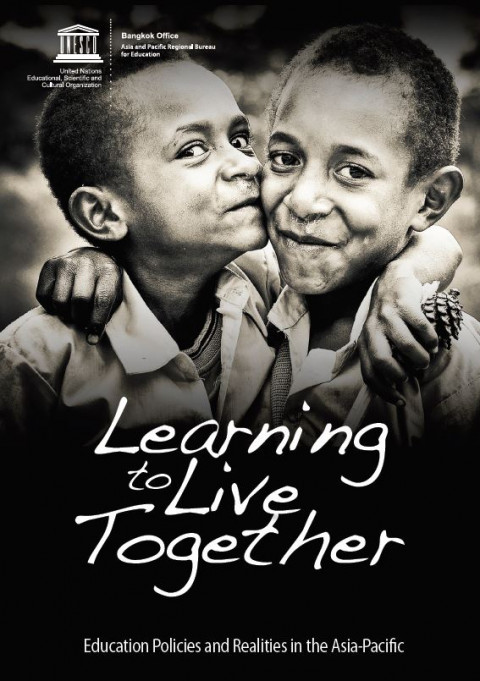 Learning to live together Year of publication: 2014 Corporate author: UNESCO Bangkok The importance of LTLT has increased in recent years. Indeed, relevant competencies appear to be gaining focus in international frameworks and educational initiatives across countries. This is all the more necessary as Voogt and Roblin (2012) argue, given the demands of our increasingly knowledge-based society in which “ideas and knowledge function as commodities” (p. 299 –300) and to which effective social and emotional skills are critical. It is perhaps all the more critical given the multivariate global challenges in the 21st Century and the need for unified global commitment to effectively combat these challenges. In this context, the significance of LTLT is reflected in both the rise of and growing interest in Global Citizenship Education (GCE), Education for Sustainable Development (ESD), Education for International Understanding (EIU) as well as peace and human rights education. The UN Secretary-General’s Global Education First Initiative, which lists ‘Fostering Global Citizenship’ as one of its three global priorities, also implicitly recognizes the significance of LTLT as a precursor to the building of a more peaceful society, one in which discrimination is intolerable and common challenges such as climate change and abject poverty are tackled together.Yet despite the significance of LTLT in the 21st Century, and despite numerous international initiatives to foster LTLT competencies, there is a large gap of evidence identifying how this supposition is translated into effective policy and curricula, and eventually into the reality of schools, teachers and learners. This report is a response to this gap, and attempts to understand how ten selected countries in the Asia-Pacific region – Afghanistan, Australia, Indonesia, Malaysia, Myanmar, Nepal, The Philippines, Republic of Korea, Sri Lanka and Thailand – have reflected and integrated LTLT into their education policies and initiatives. This variety of countries aims to reflect their diverse experiences in terms of reflecting LTLT through their education systems. By exploring a number of areas, namely policy, curricula, teachers and assessment, this study aims to identify what has so far been achieved in education systems of the Asia-Pacific region in the area of LTLT.This report is therefore targeted predominantly at education policy makers, researchers, academics as well as education practitioners of the Asia-Pacific region. Given its connection to Global Citizenship Education and other relevant international initiatives around sustainability and peace education, this report is also relevant to UNESCO’s partner organizations and the broader educational development community.This report will first present the research framework for the study, before exploring the social and economic contexts in the ten selected countries and wider regional factors in the Asia-Pacific in relation to global challenges in Chapter Two. Chapter Three will then examine national policy frameworks, including the vision of those policies in defining LTLT in education. Chapter Four focuses on the national curriculum in selected countries and the extent to which they incorporate learning objectives, subjects, and extra-curricular activities reflecting the concept of LTLT and related skills and competencies. In Chapter Five, teaching practices are examined, including the role of teachers and teacher education, as well as teaching methods and application of media and information literacy (MIL) in the classroom. Chapter Six then looks at assessment, and how far countries have attempted to develop assessment frameworks that measure the skills and competencies related to LTLT. Finally, Chapter Seven provides reflections and conclusions based on the main findings of the study, while also identifying trends across policy domains, shortcomings and some policy considerations.
  Education for Sustainable Development Policy for the Education Sector Year of publication: 2017 Corporate author: Kenya. Ministry of Education | UNESCO Nairobi This ESD Policy provides for the incorporation of key themes of sustainable development such as poverty alleviation, human rights, innovation, health and environmental protection and climate change into the Kenyan education system. It promotes competencies such as critical thinking, crativity and making decisions in a collaborative way.
 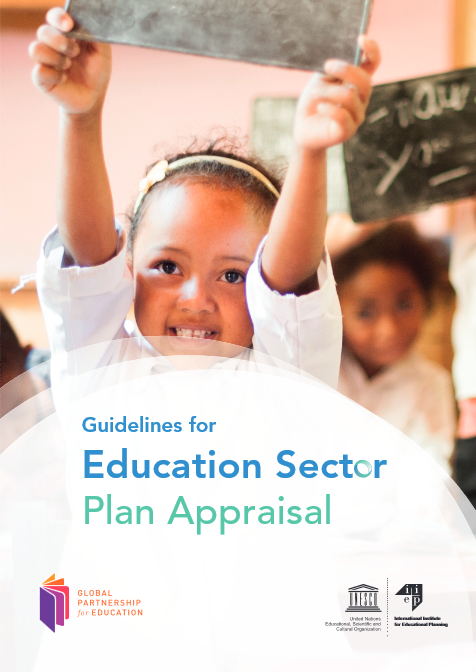 Guidelines for education sector plan appraisal Year of publication: 2015 Corporate author: UNESCO International Institute for Educational Planning (IIEP) | Global Partnership for Education (GPE) At the World Education Forum, in Dakar in 2000, the international community pledged that no country with a credible plan to achieve the Education for All goals would be thwarted by a lack of resources. Since then, the development of an education sector plan (ESP) has become a priority in many countries. ESPs present the policies and strategies for national education reform, and are a powerful tool for coordinating partners and for mobilizing additional domestic and external resources. They have become a critical instrument for governments to signal to all potential investors that their education policies are credible, sustainable, and worthy of investment.The consensus on the need for credible ESPs is strong. However, what does a credible plan require in terms of government leadership, knowledge and data, institutional and human capacities, and dialogue among the education stakeholders? What are the criteria that establish the credibility of a plan? The purpose of these guidelines is to assist education stakeholders in appraising the soundness, relevance, and coherence that form the credibility of ESPs. The primary objective of an appraisal report is to support the finalization of a credible ESP. It provides a fair review of the ESP strengths and areas in need of improvement before the endorsement by partners which signifies their commitment to support the implementation of the ESP. These guidelines are meant to be adapted to national contexts and needs. The stakeholders should discuss the scope and the methodology of the appraisal to be used, and develop a common vision of the whole process. The appraisal process should be participatory, and grounded in the political and technical dialogue for ESP development. It should involve consultations, interviews with key stakeholders, and field visits, in addition to a desk review of the ESP and any other relevant documents. It is good practice to organize a validation workshop of the appraisal report’s findings, conclusions, and recommendations to feed into the ESP finalization. The appraisal process should occur early enough in the ESP development process to allow time for decision-makers to open consultations on these conclusions and recommendations in order to improve the final version of the ESP.