
Resources
Explore a wide range of valuable resources on GCED to deepen your understanding and enhance your research, advocacy, teaching, and learning.
2,657 Results found
 Перспективы развития сотрудничества республики Узбекистан и ООН в обеспечении экологических прав человека (ORIENS; Выпуск 3, № 5) Year of publication: 2023 Author: Арзиев Алишер Бахритдинович В данной статье раскрываются основные аспекты направления сотрудничества Республики Узбекистан и ООН в обеспечении экологических прав человека. Рассмотрена и проанализирована деятельность государства в реализации международных проектов и нормативно-правовой активности, направленных на сохранение окружающей среды, экологического климата и здоровья граждан. Определены основные проблемы, являющиеся наиболее актуальными на сегодняшний день в сфере защиты экологических прав человека.
  一起重新构想我们的未来:为教育打造新的社会契约 Year of publication: 2021 Corporate author: International Commission on the Futures of Education | 联合国教科文组织 (UNESCO) 我们人类和地球正遭受着威胁。新冠肺炎疫情只不过证明了我 们的脆弱性和相互关联性。我们现在需要采取紧急行动,一起改变 方向,重新构想我们的未来。“教育的未来”国际委员会的这份报 告认可教育可以带来深刻变革。我们目前面临着双重挑战,即兑现 尚未实现的承诺,确保每位儿童、青少年和成年人都有权接受优质 教育,以及把教育当作我们通往可持续共同未来的路径, 充分实现其变革潜力。为了做到这一点,我们需要一 份能够在改变未来的同时, 修复现有不公正的新的教育社会契约。这一新的社会契约必须以人权为依据, 以 非歧视性、 社会正义、 尊重生命、 人的尊严和 文化多样性等原则为基础。 它必须包含关怀、 互惠和团结的伦理。 它必须加强教育作为公共事 业、 共同利益的地位。这份报告建立在历时两年、约100万人参与的全球协商过程的基 础之上,它邀请世界各地政府、机构、组织和公民为教育订立一份 新的社会契约,帮助我们为所有人创造和平、公正和可持续的未来。这份报告所提出的愿景、原则和建议只是一个起点。对其进行 解读和本土化实践,是我们需要共同努力完成的事业。目前的工作 中已经存在许多亮点,本报告试图捕捉这些亮点,同时也以其为基 础进行构建。本报告既不是一部指南,也不是一幅蓝图,而是一场 至关重要的对话的起点。
  [ملخص] وضع تصورات جديدة لمستقبلنا معاً: عقد اجتماعي جديد للتربية والتعليم Year of publication: 2021 Corporate author: International Commission on the Futures of Education | منظمة الأمم المتحدة للتربية والعلم والثقافة (UNESCO) إن إنسان ّيتُنا وكوكبُنا الأرض في خطر. مما يستدعي حاجة ما ّسة إلى وضع إجراءات عاجلة، لتُتخذ معاً، من أجل تغيير المسار وإعادة تخيل مستقبلنا. وأضحى للتعليم، الذي لطالما أُ ِقر بدوره كقو ًة ُّ ّفاعل ًة لإحداث تغيير إيجابي، مه ّم ًة جديد ًة وعاجلة وها ّمة يتع ّين عليه النهوض بها. وبنا ًء على عملية تشاور عالمية شارك فيها حوالي مليون شخص، يدعو هذا التقرير الصادر عن اللجنة الدولية المعنية بمستقبل التربية والتعليم الحكومات والمؤسسات والمنظمات والمواطنين في جميع أنحاء العالم إلى ً صياغة عقد اجتماعي جديد للتعليم يساعدنا على بناء مستقبل ي ّتسم بال ِّسلم والعدالة والاستدامة معا ومن أجل الجميع. يلقي التقرير نظر ًة متعمق ًة على التكنولوجيات الرقمية، وتغير المناخ، والتدهور الديمقراطي، ُ ّ ُّ والاستقطاب المجتمعي، وحالة عدم اليقين التي تكتنف مستقبل فرص العمل. ولا يتوَّ ّخى التقرير مج ّرد فتح باب الحوار ّحول اًلتعليم للجميع وتحفيز الأفكار ذات الصلة، وإنما يح ُّث كل واحد م ّنا على العمل. ويرى التقرير أنه، أولا وقبل كل شيء، يمكننا من خلال الملايين من الأعمال الفردية والجماعية التي ت ّتسمّبالشجاعة والقيادة والمقاومة والإبداع والرعاية تغيير المسار وإحداث تح ّول جذري في التعليم يمكننا من بناء مستقبل عادل و ُمنصف ومستدام. [Summary] Reimagining Our Futures Together: A New Social Contract for Education Year of publication: 2021 Corporate author: International Commission on the Futures of Education | UNESCO Our humanity and planet Earth are under threat. Urgent action, taken together, is needed to change course and reimagine our futures. Education, long acknowledged as a powerful force for positive change, has new, urgent and important work to do. Informed by a global consultation process engaging about one million people, this report of the International Commission on the Futures of Education invites governments, institutions, organizations, and citizens around the world to forge a new social contract for education that will help us build peaceful, just, and sustainable futures together and for all.The report features in-depth looks at digital technologies, climate change, democratic slippage and societal polarization and the uncertain future of work. It aims not only to open the conversation about education to everyone and provoke thought, but to spur each of us on to action. It argues, above all, that it is through millions of individual and collective acts of courage, leadership, resistance, creativity and care that we will change course and transform education to build just, equitable and sustainable futures. [Resumen] Reimaginar juntos nuestros futuros: Un nuevo contrato social para la educación Year of publication: 2021 Corporate author: International Commission on the Futures of Education | UNESCO La humanidad y el planeta Tierra se encuentran en peligro. Tenemos que adoptar medidas consensuadas de forma urgente para cambiar de rumbo y replantearnos nuestros futuros. En el plano educativo, que desde antaño se reconoce como un importante motor que propicia cambios positivos, se nos plantean desafíos nuevos, urgentes e importantes. Este informe de la Comisión Internacional sobre Los futuros de la educación, que se ha nutrido de un proceso mundial de consultas en el que han participado aproximadamente 1 millón de personas, insta a los gobiernos, las instituciones, las organizaciones y los ciudadanos de todo el mundo a preparar un nuevo contrato social en materia educativa que nos permita colaborar con el objetivo de forjar futuros pacíficos, justos y sostenibles para todas las personas. En el informe se abordan de forma detallada las tecnologías digitales, el cambio climático, el retroceso democrático y la polarización social, y el incierto futuro de la esfera laboral. Mediante este documento, no solo se pretende contribuir a que todas las personas participen en la conversación sobre la educación y promover la reflexión, sino también instar a todos los individuos a actuar. Según la tesis fundamental del informe, a través de millones de actos individuales y colectivos caracterizados por su valentía, liderazgo, resistencia, creatividad y atención, cambiaremos de rumbo y transformaremos el ámbito educativo a fin de forjar futuros justos, equitativos y sostenibles. [Résumé] Repenser nos futurs ensemble: Un nouveau contrat social pour l’éducation Year of publication: 2021 Corporate author: International Commission on the Futures of Education | Organisation des Nations Unies pour l'éducation, la science et la culture (UNESCO) Devant la menace qui pèse sur les futurs communs de l’humanité et de la planète Terre, il est devenu urgent d’entreprendre une action commune pour changer de cap et repenser nos futurs. Des responsabilités nouvelles, pressantes et importantes incombent notamment à l’éducation, un secteur qui a été et continue d’être un puissant vecteur de changement positif. Publié par la Commission internationale sur Les futurs de l’éducation, le présent rapport est le résultat d’une consultation mondiale qui a mobilisé près d’un million de personnes. Il invite les gouvernements, les institutions, les organisations et les citoyens à travers le monde à élaborer un nouveau contrat social pour l’éducation qui nous aidera à construire, ensemble et pour tous, des futurs pacifiques, justes et durables. À travers un examen approfondi de différentes questions ayant trait aux technologies numériques, au changement climatique, au recul démocratique, à la polarisation sociétale et à l’avenir incertain du marché du travail, ce rapport entend non seulement lancer un débat ouvert sur l’éducation pour susciter la réflexion, mais aussi inciter chacun d’entre nous à agir ; son argument central étant que grâce à des millions d’actes individuels et collectifs de courage, de leadership, de résistance, de créativité et d’intérêt pour autrui, nous parviendrons à changer de cap et à transformer l’éducation pour favoriser l’avènement de futurs justes, équitables et durables. [Резюм] Совместное переосмысление наших перспектив: Новый социальный договор в интересах образования Year of publication: 2021 Corporate author: International Commission on the Futures of Education | Организация Объединенных Наций по вопросам образования, науки и культуры (UNESCO) Все человечество и планета Земля находятся под угрозой. Для изменения ситуации и переосмысления будущего необходимы безотлагательные действия, предпринятые каждым из нас. Перед образованием, которое уже давно признано влиятельным фактором позитивных изменений, стоит новая, срочная и важная задача. Данный доклад Международной комиссии по Перспективам образования, основанный на глобальном процессе консультаций с участием около миллиона человек, предлагает правительствам, учреждениям, организациям и гражданам всего мира заключить новый общественный договор в области образования, который поможет нам построить мирные отношения, создавая справедливое и устойчивое будущее вместе и для каждого. В докладe подробно рассматриваются цифровые технологии, изменение климата, отсутствие успеха в достижении демократии и поляризация общества, а также неопределенные перспективы трудоустройства. Доклад направлен не только на то, чтобы стимулировать обсуждение о вопросах образования и побудить к размышлениям, но и на то, чтобы призвать каждого из нас к активным действиям. Основная его идея заключается в том, что только через миллионы индивидуальных и коллективных актов мужества, лидерства, сопротивления, творчества и заботы мы сможем изменить курс и преобразить систему образования для построения справедливого, равноправного и устойчивого будущего. [摘要] 一起重新构想我们的未来:为教育打造新的社会契约 Year of publication: 2021 Corporate author: International Commission on the Futures of Education | 联合国教科文组织 (UNESCO) 人类和地球正受到威胁。我们需要共同采取紧急行动,改变发展方向,重新构 想我们的未来。长期以来,教育都被认为是促进积极变革的强大力量,而现在教育 面临着全新的、紧迫的和重要的任务。“教育的未来”国际委员会的这份报告在约 百万人参与的全球协商进程的基础上,邀请世界各地的政府、机构、组织和公民出 谋划策,为教育缔结一项新的社会契约,齐心协力地建设一个面向所有人的和平、 公正和可持续的未来。 报告深入探讨了数字技术、气候变化、民主滑坡、社会两极分化以及不确定的 工作前景等问题,其目的不仅仅是让每个人参与教育对话,引发思考,而且要鞭策 我们每个人都采取行动。报告认为,只有通过数以百万计的个人和集体,凭借行动 力、领导力、抗压力、创造力和关爱力,我们才能改变发展方向,实现教育转型, 最终建设一个公正、公平和可持续的未来。
  How Youth Drive Change (The UNESCO Courier no. 3; July-September 2011) Year of publication: 2011 Corporate author: UNESCO Considering school history as a place of confrontation of discourse and knowledge from competing socialization spaces (school, family, media), we are interested in citizenship education work and challenges posed by these plural socializations. In an important context media coverage of debates on the recognition of minority memories in France and their entry into the school programs of the college in 2008, how do students appropriate the ""socially vivid issues"" of immigration, colonization, and decolonization? Fromcontent analysis of a corpus made up of around a hundred interviews semi-structured conducted between 2007 and 2010 with 3rd year college students (end of lower secondary and compulsory education), we analyze and highlight contrasting interpretations of these heritages by majority students and minority students, respectively supplied by categories of public debate and family narratives. We show, following work relating to the sociology of school curricula, which learning citizenship in the light of these historical legacies results from the confrontation of the pupils with the discourses and knowledge different spaces in which they take part. But it is above all the product oftheir position in the face of these historical legacies, according to their experiences social and the role they give to these stories in building a common identity and belonging.
 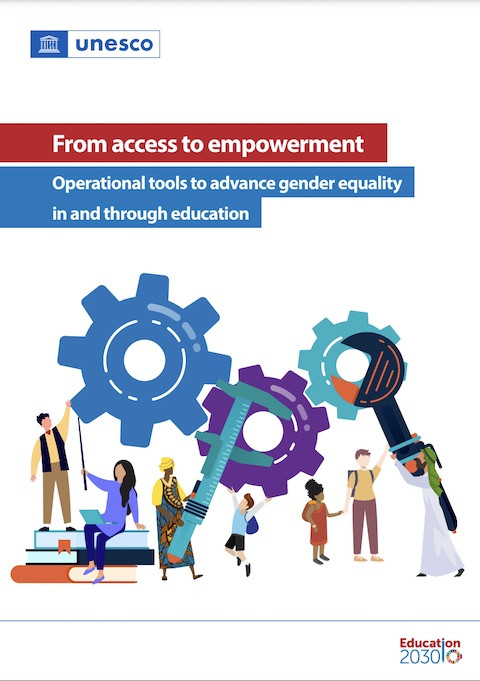 De l’accès à l’autonomisation: Outils opérationnels pour promouvoir l’égalité des genres dans et par l’éducation Year of publication: 2021 Corporate author: UNESCO Ce guide a été conçu pour renforcer la capacité individuelle et institutionnelle à intégrer de manière efficace l’égalité des genres aux programmes éducatifs. Ce guide a été préparé pour l’ensemble du personnel du Secteur de l’éducation de l’UNESCO, notamment pour celles et ceux travaillant au Siège, dans les bureaux hors Siège/régionaux/multipays et dans les instituts, ainsi que pour les partenaires d’exécution. Ce guide fournit des outils d’orientation et opérationnels pour intégrer efficacement le genre à tous les programmes relatifs à l’éducation. La première partie est une présentation succincte des concepts clés de l’égalité des genres dans et par l’éducation, et un aperçu de la manière dont l’égalité des genres dans l’éducation s’inscrit dans la vision de l’UNESCO et dans les objectifs fixés au niveau international. La deuxième partie fournit des conseils pratiques sur la manière d’intégrer l’égalité des genres aux programmes éducatifs, d’élaborer des programmes transformateurs et, enfin, de suivre et d’évaluer les résultats en matière de genre dans les programmes éducatifs.