
Resources
Explore a wide range of valuable resources on GCED to deepen your understanding and enhance your research, advocacy, teaching, and learning.
2,776 Results found
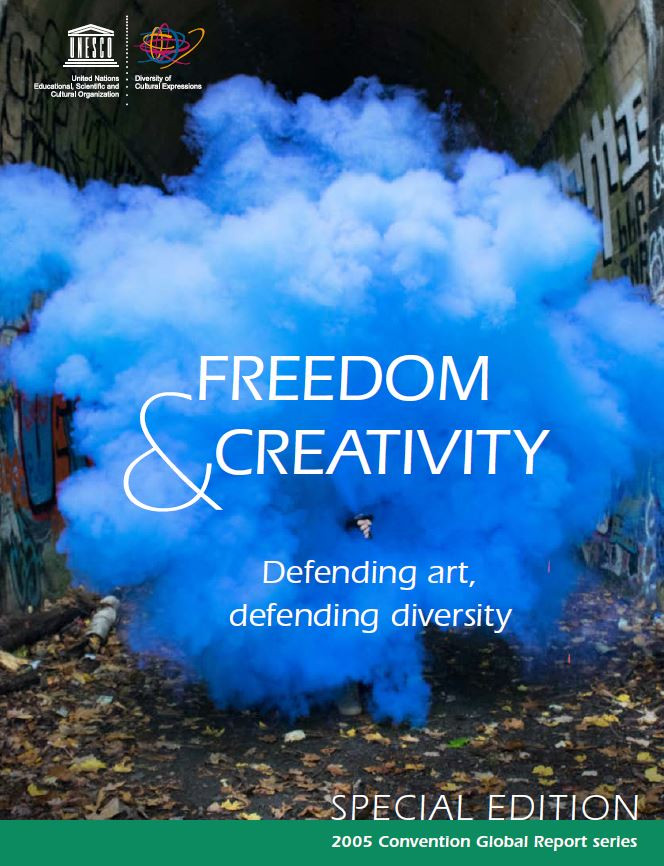 Liberté et créativité: défendre l'art, défendre la diversité; édition spéciale Year of publication: 2020 Author: Laurence Cuny Corporate author: Organisation des Nations Unies pour l'éducation, la science et la culture (UNESCO) En prévision de la troisième édition de Re|Penser les politiques culturelles, cette édition spéciale de la série des Rapports mondiaux, qui suit la mise en œuvre de la Convention de 2005 sur la protection et la promotion de la diversité des expressions culturelles, se concentre sur l'un des objectifs primordiaux de la Convention : la promotion des droits de l'homme et des libertés fondamentales et, en particulier, de la liberté artistique. La liberté d'expression, d'information et de communication, ainsi que la possibilité pour les individus de choisir les expressions culturelles sont des conditions préalables à la protection et à la promotion de la diversité des expressions culturelles.S'appuyant sur les recommandations formulées dans le Rapport mondial de 2018, cette édition spéciale offre un aperçu des avancées et des défis actuels en matière de protection juridique de la liberté artistique, de protection des droits sociaux et économiques des artistes et des professionnels de la culture et de suivi de la liberté artistique aux niveaux national, régional et international.En produisant de nouvelles données et des analyses approfondies, la série des Rapports mondiaux de la Convention 2005 se veut un outil de référence pour l'élaboration des politiques culturelles et la promotion de la créativité en faveur du développement.
 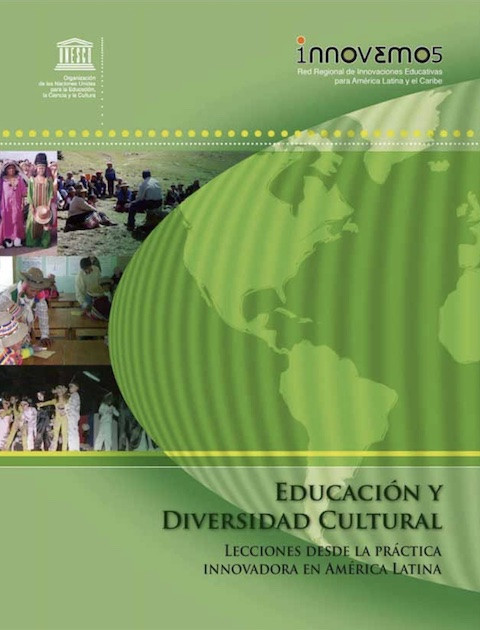 Educación y diversidad cultural: Lecciones desde la práctica innovadora en América Latina Year of publication: 2008 Author: Carolina Hirmas R. Corporate author: UNESCO Esta publicación, que constituye el segundo volumen de la colección, es el resultado del análisis y la reflexión acerca de un conjunto experiencias educati- vas innovadoras de varios países de Latinoamérica, que responden con pertinen- cia pedagógica al contexto cultural de los estudiantes y ofrecen una educación orientada al conocimiento, comprensión y diálogo entre personas de diferentes culturas. El aporte significativo de las experiencias referidas, reside en el reco- nocimiento y valoración de la diversidad étnica y cultural de sus estudiantes y comunidades, como punto de partida para el desarrollo de nuevos aprendizajes y afirmación de su identidad. A su vez, la vida en los centros educativos promueve relaciones interculturales de respeto y fraternidad en un contexto sociogeográfico local y subregional, caracterizado por la multiculturalidad.
 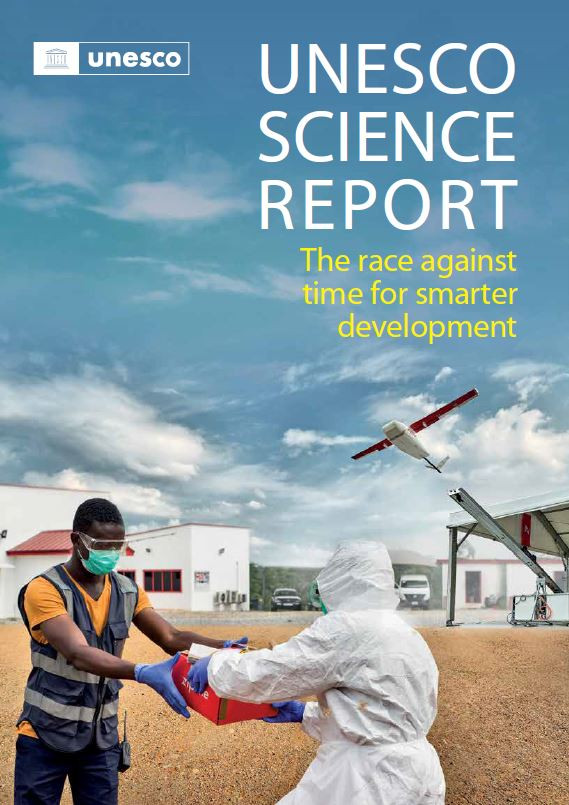 UNESCO Science Report: The Race Against Time for Smarter Development Year of publication: 2021 Author: Susan Schneegans | Tiffany Straza | Jake Lewis Corporate author: UNESCO This seventh edition of the report monitors the development path that countries have been following over the past five years from the perspective of science governance. It documents the rapid societal transformation under way, which offers new opportunities for social and economic experimentation but also risks exacerbating social inequalities, unless safeguards are put in place.The report concludes that countries will need to invest more in research and innovation, if they are to succeed in their dual digital and green transition. More than 30 countries have already raised their research spending since 2014, in line with their commitment to the Sustainable Development Goals. Despite this progress, eight out of ten countries still devote less than 1% of GDP to research, perpetuating their dependence on foreign technologies.
  Participatory Diagnosis of Youth Perceptions and Attitudes Towards Hate Speech and Denialism of Gender Violence and Rights of Migrants From the Approaches of Global Citizenship Education Year of publication: 2024 Author: Bárbara Biglia | Aloe Cubero Corporate author: InteRed | Agencia Española de Cooperación Internacional para el Desarrollo (AECID) This diagnosis seeks to respond to the need to explore the perceptions and attitudes of youth regarding hate speech, specifically those that deny gender violence and the rights of migrants. We wanted to carry out this process recognizing the agency of young people and therefore we seek to generate collective and mobilizing reflections that increase their commitment as agents of change in our society. To this end, we place ourselves within the framework of Feminist Activist Research (IAF) using photovoice as a research strategy. Diagnóstico participativo a través de photovoice sobre percepciones y actitudes de la juventud en torno a los discursos de odio y negacionistas de la violencia de género y de los derechos de las personas migrantes desde los enfoques de la educación para Year of publication: 2024 Author: Bárbara Biglia | Aloe Cubero Corporate author: InteRed | Agencia Española de Cooperación Internacional para el Desarrollo (AECID) Este diagnóstico busca responder a la necesidad de explorar las percepciones y actitudes de la juventud en torno a los discursos de odio, específicamente sobre aquellos negacionistas de las violencias de género y en contra de los derechos de las personas migrantes. Hemos querido hacer este proceso reconociendo la agencia de las personas jóvenes y por ello buscamos generar reflexiones colectivas y movilizadoras que aumenten su compromiso como agentes de cambio en nuestra sociedad. Para tal fin, nos ubicamos en el marco de la Investigación Activista Feminista (IAF) haciendo uso del photovoice como estrategia de investigación.
  노년층 미디어교육 활성화 방안 Year of publication: 2019 Author: 조재희 | 나은영 | 이혜선 Corporate author: 한국언론진흥재단 미디어 생태계가 급격히 변하고 있는 현대 사회에서 미디어 소수자들에 대한 디지털 격차는 여전히 확장되고 있다. 특히 환경의 변화에 유연하게 적응하기 어려운 노년층들은 이러한 미디어 생태계 변화에 적절히 대처하기 어려우며 이로 인해 디지털 격차를 겪게 된다. 이에 미디어 소수자로서의 노년층에 대한 미디어교육의 필요성이 강조되고 있고 정부와 지자체를 비롯한 다양한 기관에서 노년층을 대상으로 미디어교육을 실시하고 있다.본 연구는 다양한 방법론을 통해 노인 미디어교육을 활성화시키기 위한 방안을 다각도로 탐색해 보았다. 본 연구의 연구결과는 노년층에 특화된 미디어교육 프로그램을 개발하고 진행하기 위한 실질적인 제언을 줄 수 있으며 노인 미디어교육 활성화를 위한 정책 마련을 위해 고려해야 하는 구체적인 사항들을 제시한다.
  We Need to Talk: Measuring Intercultural Dialogue for Peace and Inclusion Year of publication: 2022 Corporate author: UNESCO | Institute for Economics and Peace An analysis into the power of intercultural dialogue and the new UNESCO Framework for Enabling Intercultural Dialogue, We Need to Talk presents the first evidence of the link between intercultural dialogue and peace, conflict prevention and non-fragility, and human rights. Using data covering over 160 countries in all regions, the report presents a framework of the structures, processes and values needed to support intercultural dialogue, examining the dynamics and interlinkages between them to reveal substantial policy opportunities with broad spanning benefits. Providing policy support and guidance, the report also includes information on regional trends as well as deep diving case studies.The data, case studies, and think pieces contained in this report highlight key policy and intervention opportunities for intercultural dialogue as an instrument for inclusion, peace and wider societal benefits. Policy makers, development workers, peace and security actors, academics and more are invited to leverage the analysis in this report and findings of the Framework to strengthen intercultural dialogue around the world. Parlons-en : mesurer le dialogue interculturel pour la paix et l’inclusion Year of publication: 2022 Corporate author: Organisation des Nations Unies pour l'éducation, la science et la culture (UNESCO) | Institute for Economics and Peace Parlons-en ! Alors que le monde devient de plus en plus interconnecté, l’amélioration des capacités à engager et à mener un dialogue efficace est nécessaire afin de relever les défis mondiaux. Actuellement, 1,5 milliard de personnes vivent dans des pays où le dialogue interculturel est faible et où les enjeux mondiaux tels que la pauvreté absolue, le terrorisme et les déplacements forcés de population sont plus répandus. Pour forger une coopération efficace et maintenir la paix, le renforcement du dialogue interculturel doit être une priorité.Pour la première fois, Parlons-en présente des preuves empiriques du lien entre le dialogue interculturel et la paix, la prévention de conflits, la non-fragilité, ainsi que les droits de l'Homme. En s'appuyant sur les données innovantes du nouveau Cadre de l'UNESCO pour favoriser le dialogue interculturel, ce rapport met en évidence les principales politiques et opportunités d'intervention pour le dialogue interculturel en tant qu'instrument d'inclusion et de paix.À l'aide de données couvrant plus de 160 pays dans toutes les régions, le rapport présente un cadre des structures, des processus et des valeurs nécessaires pour soutenir le dialogue interculturel, en examinant les dynamiques et les liens entre eux pour révéler des opportunités politiques substantielles aux avantages étendus.Les décideurs politiques, les agents de développement, les acteurs de la paix et de la sécurité, les universitaires et bien d'autres sont invités à tirer parti de l'analyse de ce rapport et des conclusions du Cadre pour renforcer le dialogue interculturel à travers le monde.Ensemble, parlons-en !
  National Distance Learning Programmes in Response to the COVID-19 Education Disruption: Case Study of the Republic of Korea Year of publication: 2022 Corporate author: UNESCO This document is one of several case studies on national distance learning programmes in response to the COVID-19 education disruptions. The case of the Republic of Korea was drawn from the 2020 edition of Mobile Learning Week, organized online in October 2020 under the theme of 'Beyond Disruption: Technology Enabled Learning Futures'. Envisaged to be a continuously enriched mechanism for knowledge sharing and dissemination, the case studies aim to surface best practices worldwide in leveraging digital technology to build inclusive and crisis-resilient learning systems, and to inform the planning of digital transformation of education towards SDG 4 and the futures of learning. Each case study documents governance and funding mechanisms, needs-driven planning of distance learning solutions, evaluation of digital learning’s effects on mitigating disruptions and ensuring inclusion, and pedagogical innovations to maintain or improve the quality of learning.
  Reimaginar juntos nuestros futuros: un nuevo contrato social para la educación Year of publication: 2021 Corporate author: International Commission on the Futures of Education | UNESCO Nuestra humanidad y el planeta Tierra están bajo amenaza. La pandemia solo ha servido para demostrar nuestra fragilidad y nuestra interconexión. Ahora se necesita una acción urgente, tomada en conjunto, para cambiar el rumbo y reimaginar nuestro futuro. Este informe de la Comisión Internacional sobre el Futuro de La educación reconoce el poder de la educación para generar cambios profundos. Nos enfrentamos al doble desafío de cumplir la promesa incumplida de garantizar el derecho a una educación de calidad para todos los niños, niñas, jóvenes y adultos y realizar plenamente el potencial transformador de la educación como vía para futuros colectivos sostenibles Para ello, necesitamos un nuevo contrato social para la educación que pueda reparar las injusticias mientras transforma el futuro. Este nuevo contrato social debe fundamentarse en los derechos humanos y basarse en los principios de no discriminación, justicia social, respeto por la vida, la dignidad humana y la diversidad cultural. Debe abarcar una ética del cuidado, la reciprocidad y la solidaridad. Debe fortalecer la educación como un esfuerzo público y un bien común. Este informe, que se preparó durante dos años y se basó en un proceso de consulta global en el que participaron alrededor de un millón de personas, invita a los gobiernos, instituciones, organizaciones y ciudadanos de todo el mundo a forjar un nuevo contrato social para la educación que nos ayudará a construir un futuro pacífico, justo y futuros sostenibles para todos. Las visiones, principios y propuestas que aquí se presentan son meramente un punto de partida. Traducirlos y contextualizarlos es un esfuerzo colectivo. Ya existen muchos puntos brillantes. Este informe intenta capturarlos y construir sobre ellos. No es ni un manual ni un anteproyecto, sino la apertura de una conversación vital.